Modal Labs raises $355M at $4.65B valuation as AI coding and compute demand surge


2 Sources
[1]
Serverless AI infrastructure startup Modal Labs seals $355M funding round - SiliconANGLE
Serverless AI infrastructure startup Modal Labs seals $355M funding round Artificial intelligence startups are facing two massive headaches: there's too much AI-generated code to deal with, and not nearly enough compute power to run it all on. Modal Labs Inc., which has just raised $355 million in
[2]
Modal Labs valued at $4.65 billion as AI coding takes off
AI startups have been whipped by two shifts this year: the surge in AI coding and the increasing scarcity of computing power. Modal Labs is confronting both. AI startup Modal raised $355 million in a new round of financing, valuing the company at $4.65 billion, CEO Erik Bernhardsson told
Share
Copy Link
Modal Labs secured $355 million in new funding at a $4.65 billion valuation, up from $1.1 billion in September. The serverless AI infrastructure startup helps companies rent GPUs for AI inference workloads and test AI-generated code, seeing revenue jump from $60 million to $300 million annually as AI coding tools drive unprecedented demand for compute capacity.
Modal Labs Secures $355M Funding Round Amid AI Infrastructure Boom
Modal Labs has closed a $355 million funding round led by Redpoint Ventures and General Catalyst, with participation from Accel and Menlo Ventures, pushing the company's valuation to $4.65 billion
1
. This marks a dramatic increase from the $1.1 billion valuation the New York City-based serverless AI infrastructure startup commanded when it last raised capital in September2
. The Series C round came in two separate tranches, with the first group of investors backing the company at a $2.5 billion valuation before a second wave pushed it higher1
.The sharp jump in Modal Labs' worth reflects broader trends reshaping the AI landscape. AI companies are grappling with dual challenges: an explosion of AI-generated code that needs testing and deployment, and an intensifying scarcity of computing power to run it all
2
. CEO Erik Bernhardsson told Reuters that the past six months have been transformative, with AI coding tools like Anthropic's Claude Code driving enterprise adoption at unprecedented speed1
.
Source: ET
Revenue Growth Accelerates as AI Coding Takes Off
Modal's financial performance mirrors this acceleration. The company now generates approximately $300 million in annual revenue, a fivefold increase from the $60 million annualized rate it reported in September
1
. "Coding for the last six months has been driving everything," Bernhardsson explained, noting that Modal's customer base spans biotech companies, hedge funds, and even two weather-forecasting firms2
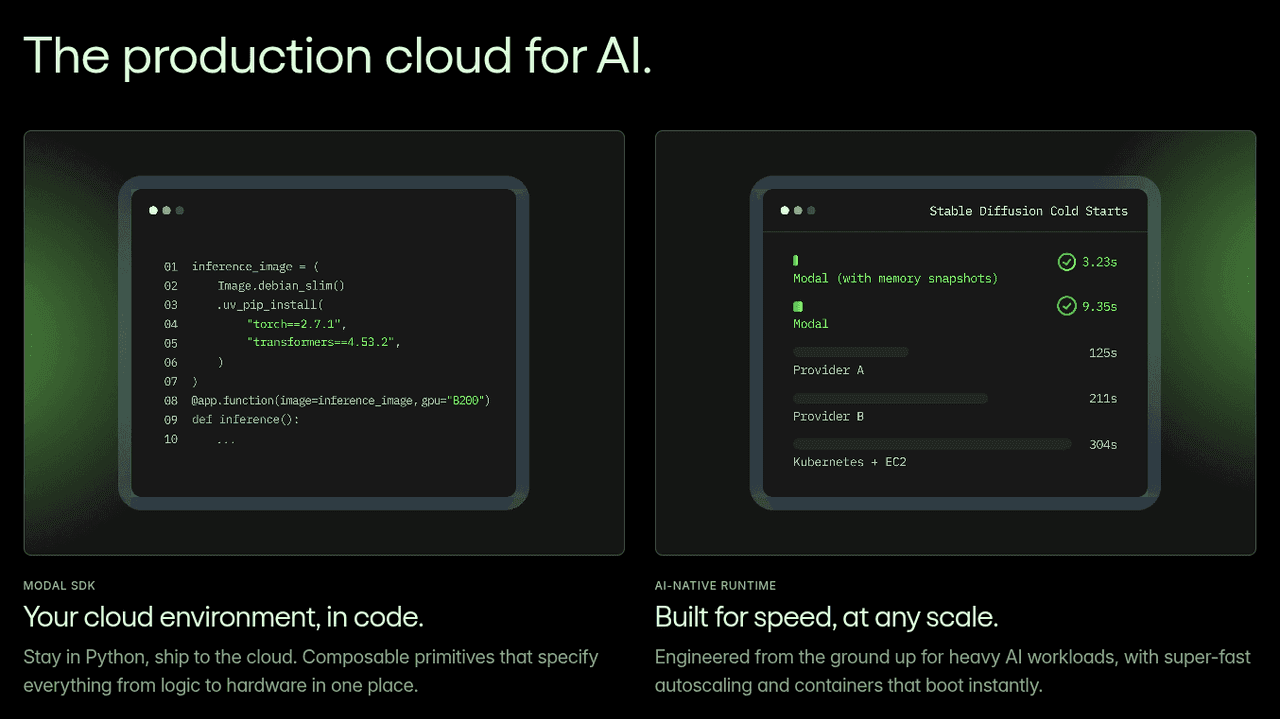
.The platform addresses critical pain points for developers building AI applications. Modal enables companies to rent GPUs for AI inference workloads—the process of executing trained AI models—without managing underlying cloud servers
1
. The startup also offers a sandbox product that allows developers to test AI-generated code before deploying it to production environments2
.
Source: SiliconANGLE
Related Stories

Navigating Compute Scarcity Through Strategic Partnerships
As demand surged, Modal Labs faced mounting pressure to secure access to necessary chips and compute capacity. Bernhardsson acknowledged that computational resources have become both more expensive and harder to find during the same period that drove revenue growth
2
. The company doesn't own the underlying servers it provides to clients, instead renting capacity in bulk from third-party cloud providers1
.To meet customer needs, Modal expanded its network of infrastructure partners dramatically. The company now works with 13 different cloud providers, up from just five previously
1
. Bernhardsson noted that some of these compute providers were completely unknown to him just months earlier, illustrating how rapidly the AI infrastructure landscape is evolving2
.Co-founded by Bernhardsson and Chief Technology Officer Akshat Bubna, Modal Labs sits at the intersection of two defining trends in AI development: the velocity at which AI tools enable code creation and the infrastructure bottlenecks that threaten to constrain that growth
1
. As enterprises continue adopting AI coding capabilities, the demand for platforms that simplify deployment and provide reliable access to compute resources shows no signs of slowing.References
Summarized by

Navi
[1]
Related Stories
Modal Raises $750M Series D as AI Infrastructure Demand Pushes Valuation to $15.75 Billion
Yesterday•Startups

Modal Labs pursues $2.5B valuation as AI inference infrastructure attracts investor interest
12 Feb 2026•Startups

Modular Raises $250M to Challenge Nvidia's AI Software Dominance
24 Sept 2025•Technology

Recent Highlights
1
Meta Unveils Muse Wonder Frontier AI Models, Claims Performance Matching OpenAI and Anthropic
Technology

2
IMF Report Warns AI Market Correction Could Spark Global Financial Crisis With $1.4T at Risk
Business and Economy

3
OpenAI Releases 722 AI-Generated Math Solutions, Triggering Existential Crisis in Mathematics
Technology

Recent Highlights
Today's Top Stories







Don’t drown in AI news. We cut through the noise - filtering, ranking and summarizing the most important AI news, breakthroughs and research daily. Follow topics that matter to you and stay ahead.


