Next-gen memory takes shape with faster, shorter modules and a long wait ahead


8 Sources
[1]
DDR6 RAM shrinks by 44% while delivering 4X DDR5's baseline bandwidth -- JEDEC previews 12.8 GT/s modules with up to 1 terabyte of capacity per slot
Today's best RAM will look huge compared to upcoming DDR6 memory. JEDEC has just released a preview of the DDR6 specification, confirming that next-generation memory modules will be 44% shorter than DDR5. That is only the physical aspect, though. From a performance perspective, DDR6 will debut at
[2]
DDR6 memory could be 44% shorter than DDR5 while delivering over 50% more bandwidth
Serving tech enthusiasts for over 25 years. TechSpot means tech analysis and advice you can trust. Forward-looking: JEDEC is looking forward to a point when buying DRAM doesn't require selling a kidney and DDR6 is available. In an early preview of the next-gen memory standard, the organization
[3]
DDR6 memory modules to be almost half the size of DDR5 and almost double the max speed
Now imagine how many of those bad boys you can shove into a data center. You may not be able to buy memory right now, but the good news for a hopeful future is there's potentially quicker and smaller RAM on the horizon. JEDEC, the council that sets industry standards for RAM, has published a
[4]
JEDEC previews DDR6 with 12.8 GT/s starting rates and shorter modules
JEDEC has published an early preview of DDR6, outlining a next-generation memory standard that remains under development. Its proposed initial RDIMM data rate is 12.8 GT/s, with a roadmap extending to 14.4 GT/s and higher. JEDEC compares that starting point with DDR5's 9.2 GT/s ceiling in the
[5]

JEDEC previews DDR6 memory with speeds up to 14.4 GT/s
JEDEC has previewed its DDR6 DRAM standard, proposing initial RDIMM data rates of 12.8 GT/s and a roadmap to 14.4 GT/s and beyond. The standard remains under development and its specifications may change during JEDEC's approval process. DDR6 is intended for AI, cloud, data-center, server and
[6]

DDR6 RAM just got its first real specs, and it makes DDR5 look slow
Kunal is technology journalist covering consumer technology throught his career of over 13 years. With an expertise in PC hardware, he is currently obssessed with small form factor gaming PCs and is on a mission to perfect his DIY Steam Machine. He is also a typical nerd having a keen interest in
[7]

JEDEC Unveils Next-Gen DDR6 Memory: Starts at 12.8 GT/s & Goes Up To 14.4 GT/s, Wider Bus, 50% Bandwidth Uplift, Up To 128 Gb Dies & Narrow Design Versus DDR5
JEDEC has just unveiled the preview of its next-generation DDR6 memory standard, which will offer up to 14,400 MT/s speeds. DDR6 Memory Will Scale From UDIMMs, RDIMMs and CAMM Design, Bringing 12.8 GT/s Out-of-the-Box Speeds & Efficiency Improvements JEDEC Solid State Technology Association, the
[8]

JEDEC previews DDR6 DRAM standard with speeds up to 14.4 GT/s
JEDEC Solid State Technology Association has previewed its next-generation DDR6 DRAM standard, which is currently under development. The standard is being developed to address the growing memory requirements of AI, cloud computing, data centers, servers, and client computing. DDR6 will introduce
Share
Copy Link
JEDEC, the industry body that develops memory standards, has published a preview of DDR6, the next generation of double-data-rate main memory. The draft proposes faster transfers, more capacity and modules much smaller than today's DDR5, aimed first at the data centers running AI workloads
7
4
8
5
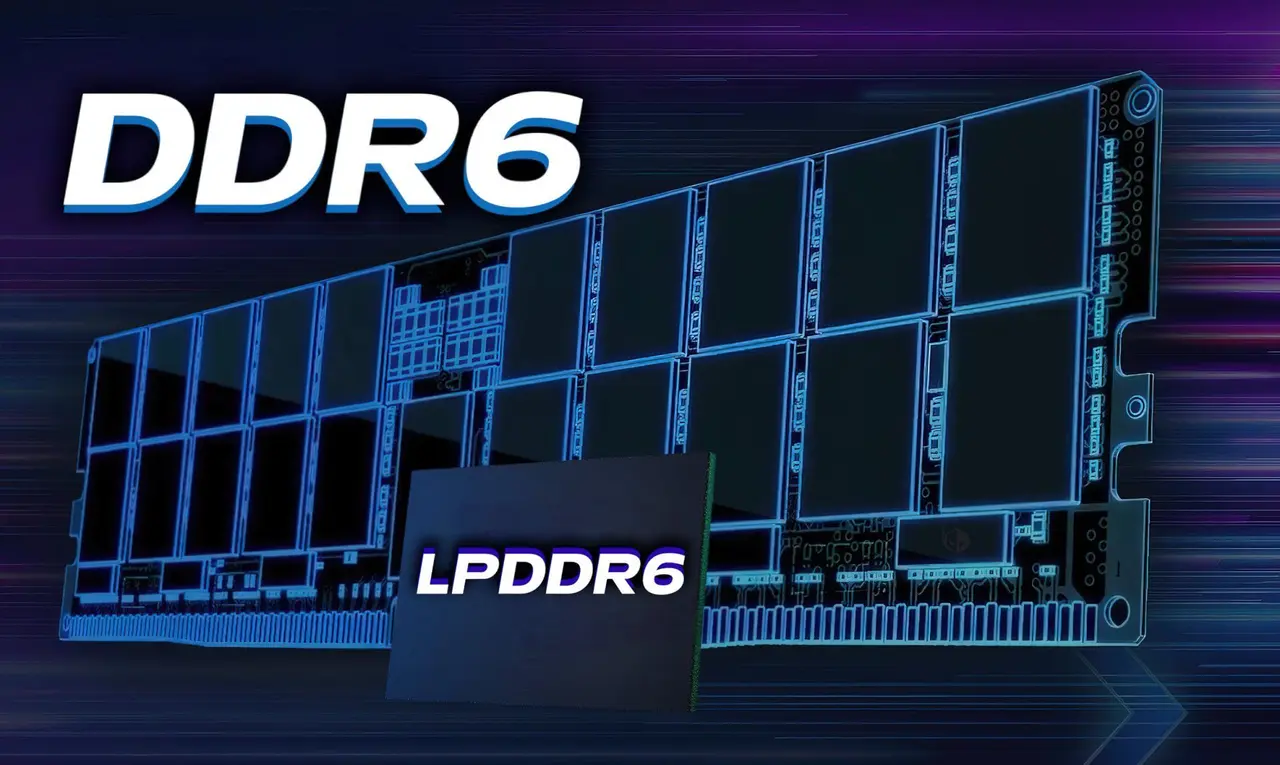
.
Source: Wccftech
The reason for the push is workload demand. Committee chair Christopher Cox says AI and data-intensive workloads keep pushing system requirements higher, and DDR6 is meant to answer with gains in bandwidth, capacity and reliability. "As AI and data-intensive workloads continue to drive system requirements higher, DDR6 is being designed to deliver meaningful advances in memory bandwidth, capacity, and reliability," Cox said
7
8
5
.What the draft proposes
The headline figure is speed. DDR6 server modules are proposed to start at 12.8 gigatransfers per second, above the 9.2 ceiling for the fastest DDR5 server modules, with a path to 14.4 and higher
7
4
1
5
. The data bus widens from 64 connections to 96, a 50% increase that helps move more data at once4
1
5
. Put together, JEDEC says DDR6 targets more than 50% more bandwidth than DDR5 when it arrives7
4
8
5
. It is explicit that the figure is a memory-bandwidth target rather than a promise that applications run 50% faster7
4
.The modules themselves shrink too: 74mm long against DDR5's 133mm, about 44% shorter and only slightly longer than a laptop memory module
4
1
5
. That smaller footprint lets dense servers fit more memory on the same board. DDR6 supports dies holding up to 16GB each, stacked inside a package. Per Tom's Hardware, modules could reach 128GB or 256GB, with server slots taking 1TB or more1
3
2
. Those capacity figures are rough projections, not JEDEC specifications1
3
2
. Under the hood, the draft proposes four narrower sub-channels per module instead of two wider ones, and doubles the bank count7
1
8
. All of these figures are development targets, and they could still change before the standard is finalized7
4
5
6
.
Source: TechSpot
Built for the data center first
JEDEC says the interface is optimized for high-capacity modules serving general-purpose compute, AI inferencing and agentic AI, workloads that need capacity and performance close to the processor
7
8
5
. The preview lands in the middle of a memory supply crisis, with prices soaring and manufacturers reportedly prioritizing high-bandwidth memory for AI data centers3
6
. One forecast puts the squeeze running at least through 20273
. Consumers are expected to come last in that queue.Related Stories

Years away, and your motherboard won't care
No launch date, pricing or consumer platform support was announced. Reporting estimates commercialization around 2028 or 2029
4
1
3
6
. DDR5 systems cannot be assumed to work with DDR6 either; compatibility would take new modules, motherboard traces and processor memory controllers4
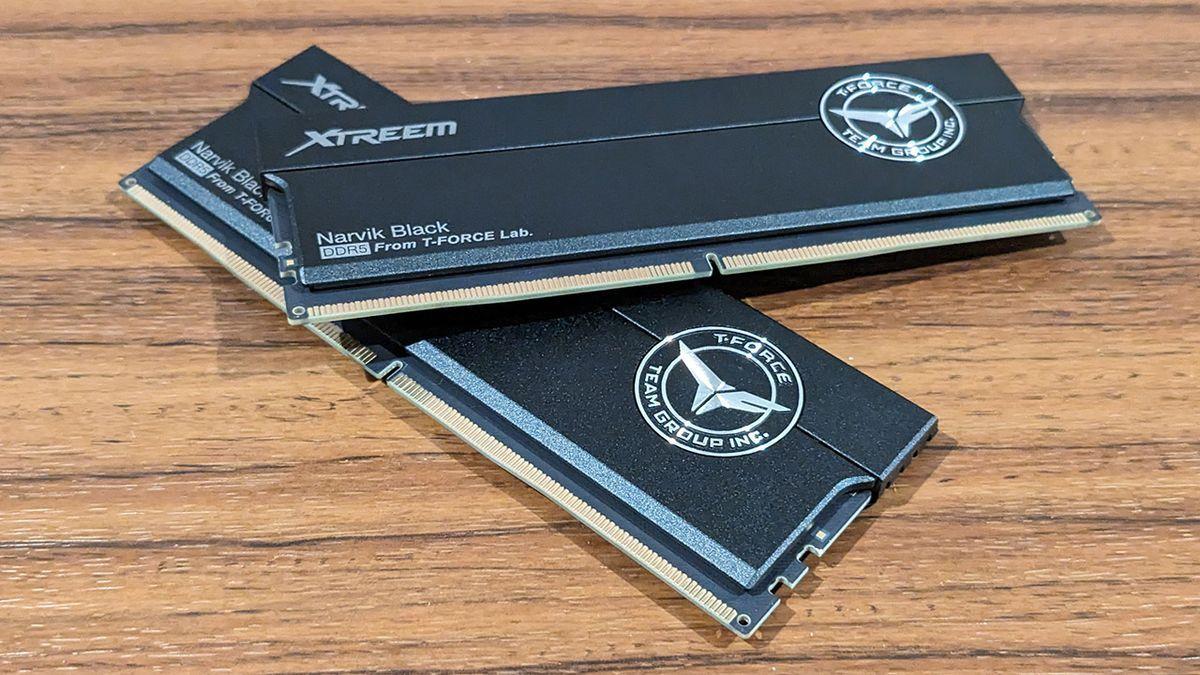
. PC Gamer adds two caveats. The generational speed jump is smaller than DDR5's leap over DDR4, and the outlet doubts DDR6 will be affordable for gamers or relevant to gaming at all3
.
Source: PC Gamer
There is vendor-side work behind the timeline
2
. TechSpot recalls a May report that Samsung, SK Hynix and Micron had already begun DDR6 work with substrate suppliers, with the first commercial modules tipped for 2028 or 20292
. Tom's Hardware estimates 2029 as a realistic target, while warning setbacks are likely along the way1
.References
Summarized by

Navi
[1]
[5]
Related Stories
DDR6 Memory: Next-Gen Standard Set to Double DDR5 Speeds by 2027
24 Jul 2025•Technology
JEDEC Unveils LPDDR6 Memory Standard: Boosting Performance and Efficiency for AI and Mobile Devices
10 Jul 2025•Technology

Micron samples 256GB DDR5 memory at 9200 MT/s, targeting AI infrastructure with major efficiency gains
12 May 2026•Technology

Recent Highlights


Recent Highlights
Today's Top Stories









Don’t drown in AI news. We cut through the noise - filtering, ranking and summarizing the most important AI news, breakthroughs and research daily. Follow topics that matter to you and stay ahead.


