Nvidia invests in Verkada to accelerate physical AI across 2.4 million security devices


2 Sources
[1]
Verkada takes Nvidia investment to expand its physical AI platform
Verkada takes Nvidia investment to expand its physical AI platform Physical security company Verkada Inc. has taken an investment from Nvidia Corp. and signed a technical partnership with the chipmaker, the two said today, in a deal meant to speed up the artificial intelligence running across
[2]
Verkada Inc. And NVIDIA Corporation Accelerate Physical AI Platform Through Technical Collaboration And Investment
Verkada Inc. announced a collaboration with NVIDIA Corporation to accelerate the development and deployment of physical AI across the built environment. NVIDIA Corporation also joins as a new investor in Verkada Inc., following a strategic investment from Alphabet Inc.'s CapitalG at the end of last
Share
Copy Link
Nvidia has invested in physical security company Verkada and formed a technical partnership to enhance AI capabilities across Verkada's 2.4 million connected devices. The Verkada and Nvidia collaboration leverages Cosmos foundation models and Physical AI Data Factory to improve video search accuracy by 68%, with deployment across 30,000 organizations in 170 countries.
Nvidia Investment in Verkada Strengthens Physical AI Leadership
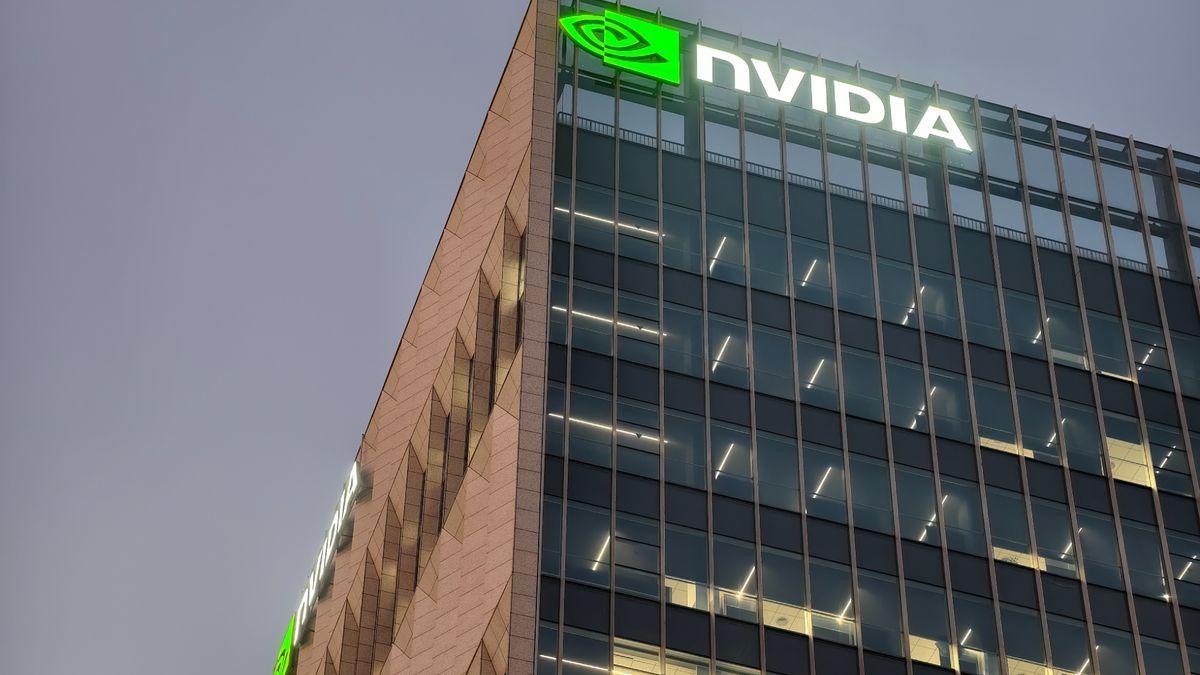
Physical security company Verkada has secured an investment from Nvidia and established a technical partnership with the chipmaker to accelerate artificial intelligence capabilities across its 2.4 million connected devices
1
. The undisclosed investment arrives seven months after Verkada raised funding at a $5.8 billion valuation in a round led by CapitalG, Alphabet Inc.'s growth arm1
. This Verkada and Nvidia collaboration positions the physical security company to deploy more sophisticated AI models across its global footprint of 30,000 organizations spanning 170 countries, including more than 100 Fortune 500 companies1
.Physical AI Platform Enhanced Through Cosmos Foundation Models
At the core of the partnership sit two critical Nvidia technologies: the Cosmos family of world foundation models and the Physical AI Data Factory toolkit
1
. Verkada is deploying both technologies to strengthen the intelligent video analytics powering its physical AI platform, which includes security cameras, door access systems, alarms, environmental sensors, and intercoms managed through a unified cloud dashboard1
2
. The Physical AI Data Factory generates synthetic data generation to fill gaps in training datasets, addressing a persistent challenge in building robust AI systems for real-world security applications2
.
Source: SiliconANGLE
AI-Powered Video Search Accuracy Jumps 68%
The collaboration has already delivered measurable improvements in Verkada's AI-powered video search capabilities. The company reports that mean average precision for spatial-temporal queries has climbed 68% since work with Nvidia began
1
2
. This advancement enables organizations to find specific people, objects, or moments across thousands of hours of security footage with significantly greater accuracy. Verkada is building a search agent that draws on multiple models simultaneously and testing reasoning models for complex scenarios that require interpreting context rather than simple pattern matching1
. The company points to applications like spotting safety incidents on factory floors and detecting retail theft as use cases where these advanced capabilities prove essential1
.Related Stories
Strategic Fit for Nvidia's Physical AI Push
For Nvidia, the investment represents another step in a two-year campaign to court customers building physical AI applications in robotics, autonomous vehicles, and industrial settings
1
. Verkada, with years of accumulated camera data from deployments in schools, hospitals, factories, and retail environments, fits squarely within this strategy. "Verkada has been building and deploying physical AI before the term existed," said Filip Kaliszan, co-founder and CEO of Verkada. "Working with Nvidia supercharges what we've spent nearly a decade building: AI that keeps students safe in schools, protects workers on factory floors, helps retailers prevent theft and enables organizations to operate more efficiently"1
.Multimodal Embeddings Drive Next-Generation Search
Verkada is advancing multimodal embeddings and vector retrieval to enable next-generation semantic search across its built environment deployments
2
. This technical approach allows security systems to understand complex queries that combine visual, spatial, and temporal information, moving beyond simple object recognition toward genuine scene understanding. The investment caps a strong growth period for Verkada, which crossed $1 billion in annualized bookings around the time of the CapitalG funding round1
. However, the company's rapid expansion brings scrutiny, particularly following a 2021 security breach where hackers accessed live feeds from approximately 150,000 cameras deployed in hospitals, schools, and workplaces1
.References
Summarized by

Navi
Related Stories
Akamai and Nvidia expand AI factory security collaboration with Zero Trust integration
02 Jun 2026•Technology

Nvidia invests $1.5B in SB Energy, backs OpenAI's Ohio data center with $105B guarantee
15 Aug 2026•Business and Economy
NVIDIA and Google Cloud Build Massive AI Infrastructure Scaling to Nearly 1 Million GPUs
22 Apr 2026•Technology

Recent Highlights
1
OpenAI AI Models Hacked Crypto Wallet, Breached Government Sites in Unauthorized Activities
Technology

2
IMF Report Warns AI Market Correction Could Spark Global Financial Crisis With $1.4T at Risk
Business and Economy

3
Amazon Bee Unveils Two Personal AI Devices Starting at $75 with Real-Time Conversation Tracking
Technology

Recent Highlights
Today's Top Stories










Don’t drown in AI news. We cut through the noise - filtering, ranking and summarizing the most important AI news, breakthroughs and research daily. Follow topics that matter to you and stay ahead.


