Nvidia Turns to Insurers to De-Risk $500B AI Chip Financing Push Beyond Big Tech


4 Sources
[1]
Nvidia turns to insurers to spread the risk of AI build-out
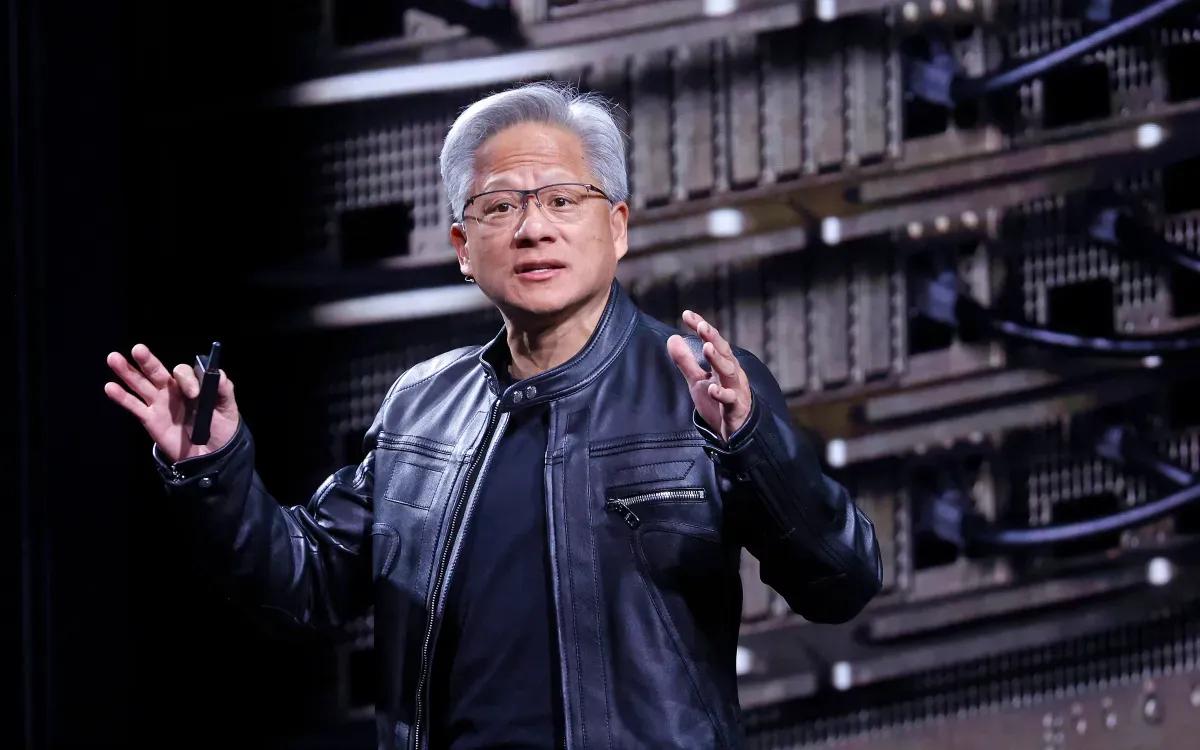
Nvidia has held talks with insurance companies about shouldering the risks of lending against its chips as chief executive Jensen Huang pushes to unlock more demand for its semiconductors beyond Big Tech groups. The chipmaker has approached insurance companies about a range of structures that
[2]
Nvidia talks to insurers about loans backed by its AI chips
Nvidia has talked to insurers about sharing the risk of loans backed by its AI chips, the FT reports. One idea would cover loans to neoclouds. Nvidia has talked to insurers about taking on some of the risk of loans backed by its AI chips, the Financial Times reported on Tuesday. The talks are at
[3]
Nvidia Reportedly Turns To Insurers To De-Risk AI Chip Loans As Jensen Huang Pushes Beyond Big Tech -- Cou
Nvidia Corp. (NASDAQ:NVDA) has reportedly held talks with insurance companies about shifting risk tied to loans backed by its AI chips, as CEO Jensen Huang pushes to make GPU infrastructure easier to finance beyond Big Tech buyers. Nvidia Explores Insurance For AI Chip Loans According to a report
[4]
Nvidia turns to insurers to spread risk of AI build-out - FT By Investing.com
Investing.com -- NVIDIA Corp (NASDAQ:NVDA) has held talks with insurance companies over ways to shift part of the financing risk tied to its chips as the chipmaker seeks to expand demand beyond major technology companies, the Financial Times reported on Tuesday. The discussions include potential
Share
Copy Link
Nvidia is in talks with insurers to shift loan risks tied to its AI chips as CEO Jensen Huang pushes to expand demand beyond Big Tech. One proposal would insure loans to neoclouds if chips pledged as collateral can't cover defaults. The move aims to unlock capital for smaller cloud providers lacking Big Tech balance sheets.

Nvidia Explores Insurance Structures for AI Chip Financing
Nvidia has initiated discussions with insurers about shouldering financial risks associated with loans backed by AI chips, according to reports from the Financial Times
1
. CEO Jensen Huang is driving this effort to expand semiconductor demand beyond Big Tech groups by making AI infrastructure more accessible to smaller cloud providers known as neoclouds2
. One structure under consideration would provide insurance against losses on loans to upstart cloud computing companies if they default and the Nvidia chips pledged as collateral cannot be resold for enough to repay lenders3
. While these conversations remain at an early stage and may not produce deals, they illustrate how the world's most valuable listed company is experimenting with structures across Wall Street, private capital, and now the insurance sector to help expand its customer base1
.Positioning Chips as an Investable Asset Class
Huang has argued that chips should be treated like an investable asset class similar to other expensive, long-lasting technology such as aeroplanes, which support complex financial structures to shift risks and costs between users and investors
1
. Nvidia stated that its AI infrastructure qualifies as an investable asset class because it is uniquely productive, durable and fungible4
. The chipmaker has shared data on chip depreciation and the expected future price of computing power with at least one insurance firm1
. According to a forthcoming study from Barkr AI, Nvidia's eight-GPU H100 system from 2022 is worth roughly $320,000 today, approximately the same as its initial value, and would retain about two-thirds of its value after one year if computing power supply catches up with demand1
. Nvidia is working with reinsurance broker Howden Re on developing a structure involving insurers, though Howden declined to comment2
.Unlocking Capital for Smaller Cloud Providers Through Risk Transfer
The insurance discussions represent a strategic effort to spread the risk of AI build-out and encourage more capital to flow to neoclouds that lack the balance sheets of Big Tech groups
1
. These structures could offer protection to firms that lease chips or lend against them, shifting some of the risk to insurance providers and potentially opening billions in financing to smaller cloud providers3
. Quentin Saleur, chief executive of Forward Compute, explained that insurance products could level the playing field for smaller cloud providers by removing counterparty risk: "Large compute buyers don't want the counterparty risk of a neocloud. But when they use insurance, smaller neoclouds are able to compete with an Amazon or a Google, because all of a sudden, the counterparty risk is the same"1
. The effort is being led by Ingemar Lanevi, Nvidia's head of financial solutions, with the company exploring using insurance groups to syndicate risk to hedge funds and other alternative investors1
. This approach addresses capital constraints that can limit less-capitalized AI clouds and model makers, according to Nvidia's SEC filings3
.Related Stories
Broader Financing Push Includes Wall Street and Residual Value Insurance
The insurance talks come as Nvidia pursues an ambitious financing strategy across multiple fronts. Last month, Nvidia offered to backstop a portion of financing deals intended to unlock $500 billion of capital from Wall Street firms such as Goldman Sachs and Apollo
1
. The company also guaranteed $105 billion of leases to support construction of a massive data center for OpenAI1
. Nvidia told investors it expects a quarter of its revenue next year to come from AI factories and labs that the chipmaker supports with its balance sheet1
. In August, Nvidia partnered with Apollo, BlackRock, Blackstone, Brookfield, Goldman Sachs and KKR on platforms designed to mobilize more than $500 billion of third-party capital for AI infrastructure3
. The structures Nvidia has examined are similar to residual value insurance, which protects against the decline in the value of tech equipment, with companies including Forward Compute and American Compute emerging to offer these niche products1
. Nvidia has also considered joining consortia alongside insurers, hedge funds and asset managers to back financing deals, with insurers potentially passing some risk on to hedge funds and other investors given the potential scale could overwhelm even large insurance carriers4
. The company announced plans to launch a record $150 billion share buyback on Monday, demonstrating its financial strength while pursuing these innovative financing structures1
. As one person familiar with Nvidia's efforts told the Financial Times, "Nvidia is trying to will the market to participate, to show other capital providers that these are investable assets"1
. Recent examples include Lambda borrowing $917 million to buy chips from Nvidia in August, later signing $1 billion of private debt for another Nvidia chip deal2
.References
Summarized by

Navi
[2]
[3]
Related Stories
AI Startups Secure Billions in Loans Using NVIDIA GPUs as Collateral
10 Jul 2025•Business and Economy
Nvidia's $250 billion OpenAI backstop ignites debate over circular AI financing risks
27 Jul 2026•Business and Economy
Nvidia offers AI startups compute power now in exchange for a cut of future revenue
02 Jul 2026•Business and Economy
Recent Highlights
1
Meta Unveils Muse Wonder Frontier AI Models, Claims Performance Matching OpenAI and Anthropic
Technology

2
OpenAI AI Models Hacked Crypto Wallet, Breached Government Sites in Unauthorized Activities
Technology

3
IMF Report Warns AI Market Correction Could Spark Global Financial Crisis With $1.4T at Risk
Business and Economy

Recent Highlights
Today's Top Stories











Don’t drown in AI news. We cut through the noise - filtering, ranking and summarizing the most important AI news, breakthroughs and research daily. Follow topics that matter to you and stay ahead.


