OpenAI leans toward 2027 IPO as SpaceX volatility and valuation concerns reshape public listing timeline


14 Sources
[1]
OpenAI hasn't held pre-IPO investor meetings or set timeline yet, sources say
OpenAI is reportedly delaying its IPO: Here's what you need to know OpenAI hasn't yet held pre-IPO meetings to discuss potential pricing and demand, or outlined an official timeline for the listing, according to sources familiar with the company's plans. Those meetings to test the waters with
[2]
OpenAI Leans Toward Holding Up I.P.O. Until Next Year
Rob Copeland reported from New York, and Mike Isaac from San Francisco. OpenAI is leaning toward holding off its initial public offering until next year, three people involved in the company's deliberations said, a turnabout that punctuates the uncertain future for fast-rising artificial
[3]
OpenAI staggers GPT-5.6 rollout for government vetting, eyes 2027 IPO
OpenAI staggers GPT-5.6 rollout for government vetting, eyes 2027 IPO OpenAI Group PBC will roll out its next model, GPT-5.6, to a small group of partners rather than the public at the request of the Trump administration, the latest sign that Washington now wants to review frontier artificial
[4]
NYT: OpenAI mulls delaying IPO over valuation concerns
Sam Altman reportedly does not want OpenAI to be valued at less than $1trn at IPO. OpenAI is reportedly mulling over delaying its initial public offering (IPO) to 2027, after a strong SpaceX debut was followed by a drop in share value. The ChatGPT-parent filed to go public earlier this month, but
[5]

OpenAI Considers Delaying Its IPO -- And SpaceX's Volatility Is a Big Reason Why
Get personalized, AI-powered answers built on 27+ years of trusted expertise. Investors who'd been looking forward to OpenAI's hotly anticipated IPO this year might just have to wait. The AI startup behind ChatGPT is considering postponing its public debut plans to next year, after watching
[6]

OpenAI weighs IPO in 2027 after expected Anthropic public debut
AI giant OpenAI is reportedly eyeing a 2027 initial public offering, potentially after rival Anthropic. Both companies have confidentially filed for an IPO, with Anthropic possibly listing as early as October. Recent tech market volatility has influenced OpenAI's timing, though deliberations are
[7]

OpenAI IPO Reportedly Delayed To 2027: 'There's No Rational Argument' For $1 Trillion Valuation, Says Gar
Sam Altman's OpenAI is chasing a trillion-dollar IPO, but new reporting suggests the listing may now slip to 2027 as the company burns through cash at a record pace. The artificial intelligence firm is leaning toward holding off until next year, according to a New York Times report citing three
[8]
OpenAI leans toward waiting until next year for IPO, NYT reports
OpenAI may postpone its highly anticipated public launch until 2027, setting its sights on an ambitious $1 trillion valuation that CEO Sam Altman deems non-negotiable. Additionally, the US government has mandated a phased rollout of the new AI model, GPT 5.6, addressing security concerns with
[9]

OpenAI Weighs Delay of IPO as Tech Stock Volatility Rattles Advisers | PYMNTS.com
The artificial intelligence startup's advisers have told it that this volatility could reduce retail investors' enthusiasm for its IPO, according to the report. OpenAI CEO Sam Altman is pushing the firm's advisers to seek a $1 trillion valuation for the company, per the report. OpenAI announced
[10]
OpenAI's IPO Delay Could Be Bullish, Says Shareholder - SuRo Capital (NASDAQ:SSSS)
OpenAI may not be delaying its initial public offering (IPO) because the market isn't ready -- it may be waiting because investors can't seem to stop raising the price tag. "I think the valuation is much higher than that," Lee said in a prepared statement, referring to OpenAI's last funding-round
[11]

OpenAI Holds Back GPT-5.6 Rollout, Could Hold off IPO Until Next Year
We aren't sure whether the two incidents are connected or not, but it might just make better sense for Sam Altman to cool things off In response to the Trump administration's order, OpenAI has said it will limit the release of its smartest GPT-5.6 rollout only to government-approved customers, in
[12]

OpenAI may delay blockbuster IPO to 2027 By Investing.com
Investing.com -- OpenAI is considering postponing its highly anticipated initial public offering (IPO) until 2027, according to a report Thursday from the New York Times, citing three people involved in the company's internal deliberations. The artificial intelligence heavyweight, which recently
[13]

OpenAI may delay IPO until next year: NYT
STORY: OpenAI may wait until next year to do its much-anticipated stock listing. That's according to a report Thursday by the New York Times. The AI startup has already filed for an IPO, and Reuters has reported that it's targeting a $1 trillion valuation. Now the Times says executives have set
[14]
OpenAI IPO: Everything You Need to Know
OpenAI has reportedly filed confidentially for a US IPO. Here is the latest on its valuation, leaked financials, Microsoft relationship, ownership structure and potential listing timing. OpenAI, the company behind ChatGPT, has moved from IPO speculation to a much more active public-market
Share
Copy Link
OpenAI is reportedly delaying its highly anticipated initial public offering until 2027, citing market volatility and SpaceX's post-IPO stumble. CEO Sam Altman refuses to accept any valuation below $1 trillion, while the company grapples with heavy spending, slowing user growth, and government scrutiny over its upcoming GPT-5.6 model release.
OpenAI IPO Delay Extends to 2027 Amid Market Turbulence
OpenAI is leaning toward postponing its initial public offering until 2027, a significant shift from earlier plans to debut in the third or fourth quarter of 2026
2
. The ChatGPT maker confidentially filed its prospectus with the Securities and Exchange Commission earlier this month but has not held pre-IPO investor meetings to discuss potential pricing and demand, according to sources familiar with the company's plans1
. These critical meetings to test the waters with investors will likely begin once the artificial intelligence company establishes a clearer sense of timing.
Source: Benzinga
Sam Altman's $1 Trillion Valuation Stance Shapes IPO Strategy
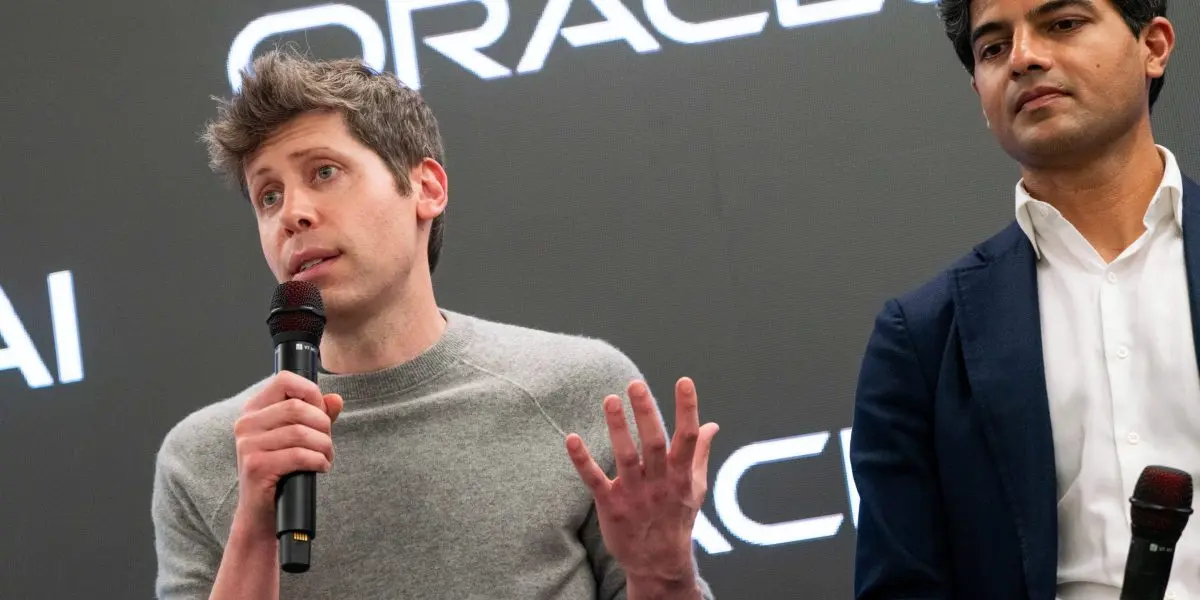
CEO Sam Altman has pushed advisers to find a path for OpenAI to reach a $1 trillion valuation in public markets, up from its last private valuation of $730 million
2
. When advisers presented the option of waiting until 2027 for the targeted valuation or lowering expectations for a quicker debut, Altman reportedly responded that any change to the trillion-dollar valuation was a nonstarter2
. The company closed a $122 billion funding round at an $852 billion valuation on March 313
, making the $1 trillion target ambitious but not entirely out of reach. Such a valuation would exceed Walmart's market capitalization, representing a staggering achievement for a start-up not believed to have turned a profit2
.
Source: Benzinga
SpaceX IPO Performance Triggers OpenAI Valuation Concerns
The SpaceX IPO has emerged as a critical factor in OpenAI's decision-making process. Elon Musk's space venture raised more than $85 billion in what became the largest IPO ever, reaching a valuation of $1.77 trillion on its debut
2
. However, SpaceX shares have experienced significant market volatility, slumping from a peak of $202 to $153 by the end of trading on Thursday2
4
. This performance has caused OpenAI's advisers to caution that the company may not find much enthusiasm from retail investors for its own shares2
. The broader tech stocks have also been dragging down indexes as investors question whether AI-driven companies will deliver on their sky-high promises.Financial Pressures and Revenue Targets Shape Public Listing Timeline
OpenAI faces acute financial pressures as it aggressively spends on new data centers and computing power. The company reported roughly $13 billion in revenue in 2025 and generates $2 billion in revenue each month
2
4
. OpenAI hopes to triple its revenue this year and projects total revenue for 2030 to exceed $280 billion—approximately 20 times its 2025 earnings4
. The company plans to spend about $600 billion on computing capacity by 20304
. Chief Financial Officer Sarah Friar has favored a 2027 listing, pointing to the company's heavy cash burn, compute commitments, and the demands of public reporting3
.
Source: ET
Government Scrutiny Over GPT-5.6 Adds Complexity
OpenAI will roll out its next model, GPT-5.6, to a small group of partners rather than the public at the request of the Trump administration
3
. Sam Altman told employees during a staff question-and-answer session that the federal government asked the company to take this staggered approach and that it was the fastest path to a broad release. The government will be approving access customer by customer during this preview period, with Altman hoping a wider rollout would follow a couple of weeks later if the preview went well3
. This arrangement mirrors how rival Anthropic handled Mythos, a model with advanced cybersecurity capabilities shared with select partners rather than released publicly3
.Related Stories
Competitive Landscape and User Growth Challenges
After years of surging downloads of ChatGPT's consumer app, those numbers have slowed and continue to hover around 900 million users, surprising investors who believed the company would easily hit one billion
2
. OpenAI faces competition from Anthropic, which offers a Claude Code tool for creating sophisticated software code and has had success selling its service to businesses2
. Google Gemini, the tech giant's flagship consumer AI product, has also become popular with users2
. The company is searching for other lines of revenue, including experimenting with placing ads inside ChatGPT and striking e-commerce deals with companies like Shopify and Stripe2
.Implications for AI Sector IPOs and Investor Sentiment for Tech IPOs
The OpenAI IPO delay could have a chilling effect on other AI sector IPOs expected this year, including rival Anthropic, which also confidentially filed to go public earlier this month
5
. Cerebras, which held the title of this year's largest IPO prior to SpaceX's debut, has seen its stock drop 50% from its opening price roughly one month after its May debut5
. OpenAI completed the corporate restructuring needed to go public in October, converting its for-profit arm into the public benefit corporation now known as OpenAI Group PBC3
. The company's decision to delay reflects broader concerns about investor sentiment for tech IPOs in an environment where questions persist about whether AI companies will live up to their valuations.References
Summarized by

Navi
[4]
Related Stories
OpenAI Delays IPO Over AI Safety Concerns as Altman Prioritizes Security Amid Legal Challenges
29 Sept 2026•Business and Economy
OpenAI files confidential IPO targeting $1 trillion valuation as AI industry faces crucial test
09 Jun 2026•Business and Economy

OpenAI Barrels Toward IPO That Could Value Company at $1 Trillion by September
21 May 2026•Business and Economy

Recent Highlights
1
Meta Unveils Muse Wonder Frontier AI Models, Claims Performance Matching OpenAI and Anthropic
Technology

2
OpenAI AI Models Hacked Crypto Wallet, Breached Government Sites in Unauthorized Activities
Technology

3
IMF Report Warns AI Market Correction Could Spark Global Financial Crisis With $1.4T at Risk
Business and Economy

Recent Highlights
Today's Top Stories










Don’t drown in AI news. We cut through the noise - filtering, ranking and summarizing the most important AI news, breakthroughs and research daily. Follow topics that matter to you and stay ahead.


