18 Sources
[1]
OpenAI limits GPT-5.6 rollout after government request, says restrictions shouldn't be the norm
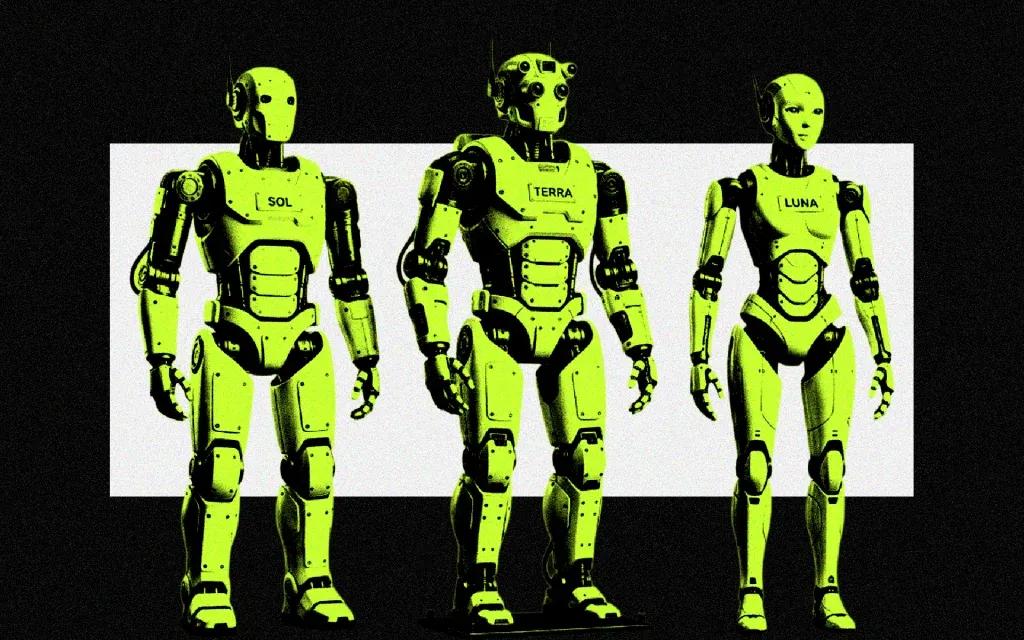
OpenAI is limiting the release of its newest AI models to a "small group of trusted partners" at the behest of the U.S. government, the company said Friday. The next generation GPT-5.6 lineup includes Sol, its flagship model; Terra, a more balanced model for everyday use; and Luna, a faster, lower cost option. Although Sol is the company's most powerful mode, the Trump administration has restricted the release of all three. OpenAI said the preview is limited to partners "whose participation has been shared with the government." The administration's request comes as the US government puts new pressure on AI companies to restrict their most advanced systems. After Anthropic released its most powerful public model Fable 5, the administration ordered the company to remove access for any foreign national, prompting Anthropic to take the model down entirely. The incident has brought up questions of how much power the government should have over AI model releases. Dean Ball, a former White House AI advisor and soon-to-be OpenAI employee, says President Trump's recent executive order -- which asks certain AI companies to voluntarily submit their most advanced models for government review up to 30 days before release -- has created a de facto involuntary licensing regime for frontier AI, leading to heavy-handed restrictions. The problem compounds, Ball argues, when the government doesn't have clearly defined safety standards, which could lead to endless launch delays that might not only give a hand to China in the AI race, but also jeopardize the billions of dollars going to AI infrastructure buildouts. And while OpenAI did as the administration asked this time around, the AI firm made it clear it wasn't happy with the arrangement. "We don't believe this kind of government access process should become the long-term default," reads a Friday blog post. "It keeps the best tools from users, developers, enterprises, cyber defenders, and global partners who need them." OpenAI called the preview a "short-term step" that will put GPT-5.6 on the path to broader availability in the coming weeks, as the company works with the administration to develop a new executive order framework on cybersecurity, as well as a "repeatable process for future model releases." GPT-5.6 Sol specs OpenAI says GPT-5.6 Sol is its strongest model yet, with improved agentic capabilities in coding, biology and cybersecurity. Sol introduces a "max" reasoning effort mode and an "ultra" mode that uses coordinated subagents to solve highly complex tasks (just the sort of neat trick that sends your token usage skyrocketing). GPT-5.6 excels at several benchmarks, says OpenAI, including being slightly better at coding workflows than Anthropic's Claude Mythos 5, which the Trump administration also effectively banned this month. OpenAI says GPT-5.6 Sol is also competitive with Mythos preview, but uses a third of the output tokens. To assuage any fears of its powerful models being unsafe, OpenAI says Sol includes its most robust security stack yet. It is, OpenAI says, heavily hardened against adversarial attacks and intentionally optimized to favor defensive cybersecurity work over offensive exploits. In other words, it's designed to be hard to jailbreak, while prioritizing showing users how to defend against exploits, rather than how to hack into systems. OpenAI also says its safety guardrails are built directly into the core model's behavior, rather than relying on a separate filter on top of it. The firm is likely trying to avoid the trap that caught Anthropic with Fable 5. In the brief moments when Fable 5 was available, whenever the model's classifiers detected a high-risk topic -- like cybersecurity, biology, or chemistry -- it wouldn't just block the prompt; it would route the request to an older model. The whole over-cautious flow and invisible downrouting led to many false positives and user backlash. While the GPT-5.6 models are initially available only to a select group of partners, OpenAI plans to make them more broadly available to people using ChatGPT, Codex, and the API soon. GPT-5.6 comes in three sizes with tiered pricing: Sol costs $5 per million input tokens and $30 per million output tokens; Terra costs half that; and Luna costs $1 and $6, respectively. OpenAI says it has also improved prompt caching to make repeated prompts cheaper and more predictable.
[2]
US tells OpenAI to restrict access to its most powerful AI model
The Trump administration is getting twitchy about the power of the new models. US authorities are getting decidedly twitchy about frontier AI models. Just a couple of weeks after ordering Anthropic to prevent foreign companies from getting hold of its latest release, Mythos/Fable 5, it's been putting the squeeze on another AI company.. Now, the Trump administration is asking OpenAI to hold back on the general release of GPT-5.6, according to a report from Bloomberg. OpenAI CEO Sam Altman reportedly told employees that the government is asking that the model be released only to a short list of trusted partners, initially 20, before being more widely disseminated.
[3]
OpenAI details what to expect from the three new models in its GPT-5.6 preview
Terra and Luna are balanced for efficiency and reduced cost of operation. Right now, the introduction of new AI models is more politicalized than ever, following the abrupt government pushback against Anthropic's Fable 5 and Mythos 5. Now that mess is only set to continue, as the White House sticks its nose all up in OpenAI's business for the release of GPT-5.6. As we wait to see how all that will ultimately play out, OpenAI is now detailing exactly what we can expect from its new GPT-5.6 models. We're actually looking at a trio of models that make up this latest generation: Sol, Terra, and Luna, all arriving over the coming weeks. GPT‑5.6 Sol represents the big guns; this is OpenAI's new flagship model, optimized for performance across cybersecurity, biological sciences, and general coding tasks. Understandably, it outperforms GPT‑5.5 on many workflows, while also offering efficiency improvements that lead to lower token consumption. Users can eke even great performance out of it with new "max" and "ultra" modes that cause it to reason more deeply and leverage multiple agents, respectively. Terra, meanwhile, is designed to be "just right" porridge of the three, with a balance of performance and speed. OpenAI says users can expect it to operate much like the GPT-5.5 we have now, but do so at less than half the expense. Finally, Luna is the model designed to put efficiency above all else, and while it still delivers what OpenAI characterizes as "strong capability," its pricing is over 50% lower than Terra's. As for the national security elephant in the room, OpenAI swears up and down that Sol, Terra, and Luna alike are all equipped with multiple levels of safeguards to strengthen them against being employed for nefarious uses. The company notes in particular how Sol has been tuned to be excellent at finding software vulnerabilities and developing fixes for them, while resisting efforts to craft full exploit chains, ready to be used by attackers. That's a very nice-sounding sentiment, but we've also seen just how resourceful users have proved to be at finding ways around protections just like this. OpenAI warns that during this initial GPT‑5.6 preview in particular, those safeguards might be erring on the side of caution, preventing users from performing legitimate tasks. The company expects to further fine-tune its approach here, so that's a situation we hope to see become a bit less burdensome in time. For starters, OpenAI is making the GPT-5.6 preview available to "trusted partners and organizations." More general availability, including in ChatGPT and Codex, is set to arrive further down the line.
[4]
OpenAI releases GPT-5.6 Sol to 20 government-approved partners in restricted preview
OpenAI released Sol, its most powerful model, to about 20 government-approved partners under Trump's AI order. OpenAI has released GPT-5.6 Sol, its most powerful model, to roughly 20 partners whose names were individually approved by the US government. The release is the first time an American AI company has launched a frontier model under a government-managed access list, a step beyond the voluntary pre-release review framework Trump's AI executive order established on June 2. Sol is the most capable model in a new three-tier series that also includes Terra, a mid-range option, and Luna, which is optimized for speed and cost. OpenAI described Sol as excelling at coding, biology, and cybersecurity, and introduced a new "max reasoning effort" mode that gives the model extended time to work through complex problems. The company plans to add an "ultra" mode that splits tasks among multiple sub-agents. The limited preview follows a direct request from the Trump administration to stagger the release, with the government approving access customer by customer during the preview period, according to Bloomberg. OpenAI said in a blog post that it does not believe "this kind of government access process should become the long-term default," but agreed to participate. The arrangement is the first practical test of the executive order Trump signed earlier this month, which asks AI companies to voluntarily give the government up to 30 days of pre-release access to models deemed to have advanced cyber capabilities. The order explicitly rejects mandatory licensing, but the Anthropic precedent gave it teeth. Two weeks ago, Washington ordered Anthropic to shut down Fable 5 and Mythos 5 after a reported jailbreak, the first time the government forced a commercial AI model offline. OpenAI's decision to cooperate contrasts with Anthropic's experience. Anthropic complied with the shutdown order but publicly called the action disproportionate, warning it would halt all frontier model deployments if applied across the industry. OpenAI appears to be taking the opposite approach, framing voluntary compliance as a way to avoid a more coercive outcome while preserving its ability to push back on the principle. Sol is also available through Amazon Bedrock, making it the first model in the new series accessible on a competing cloud platform. OpenAI said it plans to make all three tiers generally available in the coming weeks, though it has not set a public date. The broader question is whether government-gated releases become the template for every frontier model that follows. OpenAI clearly wants to prevent that, and said so publicly. But with Anthropic's models still offline and the executive order's voluntary framework already producing mandatory-looking outcomes, the line between cooperation and compliance is getting harder to draw.
[5]
U.S. government will decide who gets to use latest upgrade to ChatGPT
OpenAI made clear it is concerned about increased government oversight. (Dado Ruvic/Reuters) SAN FRANCISCO -- The federal government will vet companies that want to access the latest technology developed by ChatGPT-maker OpenAI, in a major expansion of the Trump administration's regulation of Silicon Valley. OpenAI said in a Friday blog post announcing its latest artificial intelligence model, GPT-5.6, or Sol, that the government would initially approve who gets access to the new release while AI companies and the administration work out a longer-term plan for regulation on the sector. The company made clear it is wary of more federal oversight. "We don't believe this kind of government access process should become the long-term default. It keeps the best tools from users, developers, enterprises, cyber defenders, and global partners who need them," the blog post said. "We are taking this short-term step because we believe it is the strongest path to broader availability in the coming weeks." OpenAI said that Sol was its most powerful AI model yet and showed improvements in coding and cybersecurity tasks. (The Washington Post has a content partnership with OpenAI.) Only companies approved by the government will get access. There is no process for individual users to get access to the new model. The White House did not immediately respond to a request for comment. Donald Trump returned to office last year promising to give tech companies more freedom and with vocal backing from tech executives and investors who had complained President Joe Biden was too restrictive of AI development. More recently the administration has become more hands-on with AI companies. After Anthropic, the maker of the Claude chatbot, developed an AI model capable of finding vulnerabilities in critical software, the administration worked with the company to approve which companies and nations can access the technology. Earlier this month the Trump administration placed export controls on some of Anthropic's AI models, after officials learned it provided access to a South Korean telecommunications company suspected of having ties to China, The Post previously reported. "In a matter of weeks, U.S. federal AI policy has gone from implausibly libertarian to increasingly draconian and opaque," Dean Ball, a former Trump AI adviser, wrote in a social media post Friday. Ball has said he will join OpenAI next month to work on policy. This is a developing story and will be updated.
[6]
GPT-5.6 is here with better security and coding -- so why can't you use it yet?
OpenAI has unveiled GPT-5.6, a new set of large language models (LLMs) that promise large strides forward in biology, coding, and security. However, it's limiting initial access to a handful of customers -- reportedly at the U.S. government's request. The new LLM range centers around the "flagship" model, GPT-5.6 Sol. It's billed as "competitive" with Anthropic's Mythos Preview cybersecurity tool when discovering vulnerabilities, but uses roughly a third of the output tokens. There are layered safeguards to prevent abuses by hackers, such as checks for model jailbreaks and malicious output, and OpenAI warns that Sol might block suspicious requests even if they're well-intentioned. ChatGPT+ What's included? Unlimited conversations, faster response speed, priority access, and more Brand ChatGPT Try for Free Expand Collapse The company also touts improvements in output, latency, and cost for biology-related tasks like genomics, and coding scores better than Anthropic's Mythos 5. You might want to use Sol if you're a biologist or a dedicated vibe coder. The other GPT-5.6 models, Terra and Luna, are built for the cost-conscious. Terra is said to be comparable to GPT-5.5 while costing half as much to use, while Luna delivers functionality at the "lowest cost." When ready for wider use, GPT-5.6 Sol will cost $5 per input and $30 per output. Terra drops those costs to $2.50 per input and $15 per output, while Luna is just $1 per input and $5 per output. At the moment, however, OpenAI is only making GPT-5.6 models through its API and Codex for a "select group" of trusted companies and organizations. Broader availability through ChatGPT, the API, and Codex is coming sometime "soon." Why can't I use GPT-5.6 yet? The White House might be worried OpenAI characterizes the GPT-5.6 debut as a preview, and says it's using the limited release to determine whether the safeguards are strong enough to curb abuse without interfering with legitimate work. Feedback will reportedly help how the models understand context, minimize arbitrary blocks, and otherwise build a "smoother experience." However, the company might not have had much choice. Sources speaking to The Information claim the U.S. government's Office of the National Cyber Director (ONCD) and Office of Science and Technology Policy (OSTP) "worked closely" with OpenAI, asking for a restricted initial release. Company CEO Sam Altman reportedly told staff federal officials would approve use "customer by customer" at first. I'm not a programmer -- but here's why I prefer Codex over ChatGPT Despite its name, Codex isn't just for coders and programmers -- anyone can and should use it. Posts 1 By Dibakar Ghosh The strategy would mirror that of Anthropic's Project Glasswing, which limited early Mythos access over fears it was too powerful. Hackers could theoretically use it to find and exploit security flaws before software developers can patch them. However, Glasswing was a voluntary program where OpenAI was told to stagger its rollout. Deals Save on AI software and subscription deals for devs Unlock discounts on AI software, subscriptions, and developer tools -- score savings on cloud compute credits, coding platforms, cybersecurity suites, genomics and biology toolkits, plus training and support offers. Browse deals to cut costs while building and deploying AI projects. Deals Explore Software, AI & Subscriptions Deals The President signed an executive order on June 2 that called on AI developers to voluntarily submit models for government review (lasting up to 30 days) before a public release. The move is meant to spot potential problems with security, intellectual property, and confidentiality. While the White House says this doesn't amount to "mandatory" licensing or permits, there's a clear motivation to participate as it amounts to a government endorsement.
[7]
OpenAI Launches GPT-5.6 Sol, Terra, and Luna in Limited Preview
OpenAI today launched a limited preview of its GPT-5.6 series, which includes flagship model Sol, a balanced everyday work model named Terra, and Luna, a fast and affordable model. Terra is similar in performance to GPT-5.5 but it is 2x cheaper, and Luna offers "strong capability" at OpenAI's lowest price. GPT-5.6 Sol is OpenAI's strongest model to date, with agentic improvements in coding, biology, and cybersecurity. There is a new "max" reasoning effort and an "ultra" mode that uses sub-agents for complex work. OpenAI says GPT-5.6 Sol has its most "robust safety stack to date" with protections for high-risk activity, sensitive cyber requests, and misuse. It has been tested for weaknesses and hardened against real-world attacks. OpenAI says safeguards allow the model to deliver "substantial benefit for legitimate defensive work" while limiting prohibited offensive use. It is better at helping users find and fix vulnerabilities than carrying out end-to-end attacks, according to OpenAI. The Trump administration is limiting the launch of GPT-5.6, and OpenAI agreed to hold back on releasing it to all users. The model is instead available for a small group of trusted partners at the current time, but OpenAI is planning for a wider launch after further testing. In its GPT-5.6 announcement, OpenAI pushed back against the administration's request to hold the model back and said the government AI access process should not become the long-term default. We don't believe this kind of government access process should become the long-term default. It keeps the best tools from users, developers, enterprises, cyber defenders, and global partners who need them. We are taking this short-term step because we believe it is the strongest path to broader availability in the coming weeks, while we work with the Administration to develop the cyber Executive Order framework and a repeatable process for future model releases. The Trump administration is putting together a process for benchmarking and assessing new AI models prior to launch, per a June 2 executive order. The administration previously forced Anthropic to remove access to Claude Fable 5 and Mythos 5, even though Anthropic adhered to a voluntary government review process and added guardrails based on government feedback. The GPT-5.6 models are available through the API and Codex to a trusted set of OpenAI partners and organizations. OpenAI says they will be available more broadly in ChatGPT, Codex, and the API "soon."
[8]
Trump administration gets OpenAI to slow-track new model release over security concerns
This comes after an executive order was signed, calling on certain AI companies to voluntarily submit their new AI models for governmental review. OpenAI has just released a powerful new AI model, GPT 5.6, but it may be a while before you'll even get to try it out. Contrary to previous rollouts, the company won't be releasing GPT 5.6 to the public initially. Instead, it plans to share the model with only a select group of partners for now to appease the Trump administration. According to a report from The Information, CEO Sam Altman told OpenAI staff that the government would be "approving access customer by customer" when talking about GPT 5.6's release. Altman reportedly added that if everything goes well during this limited release, the company hopes to roll the model out to the general public. It appears OpenAI expects this preview period to last for a couple of weeks. It's reported that the model is currently being reviewed by the administration over security concerns. Additionally, it appears that the government is working closely with OpenAI for the release. The Office of the National Cyber Director and the Office of Science and Technology Policy have reportedly requested access to the model. If this sounds a little familiar, it's because President Trump signed an executive order related to this earlier this month. That executive order calls on certain AI companies to voluntarily submit their new AI models for governmental review before releasing them to the public. It appears that OpenAI has decided to play ball, leading to a slower rollout of its latest AI model. In a newly published blog, OpenAI says there will be three versions of GPT 5.6: the flagship model (Sol), a balanced model (Terra), and a fast and affordable model (Luna). It adds that Sol will have the company's "most robust safety stack to date," with strengthened protections against higher-risk activity, sensitive cyber requests, and repeated misuse. In terms of capabilities, GPT 5.6 is said to offer improved agentic capabilities in coding, biology, and cybersecurity.
[9]
OpenAI reveals its most advanced GPT-5.6 model, but you can't access it yet
GPT-5.6 brings new reasoning, autonomy, and cybersecurity capabilities, but its rollout is currently limited to government-approved customers. OpenAI has officially taken the wraps off GPT-5.6, its most advanced family of AI models to date. There's just one catch: unless you're one of a handful of approved customers, you won't be able to try it anytime soon. Instead of a broad launch, the company is beginning with a tightly controlled preview while it works through a new U.S. government review process. GPT-5.6 is here, but only a few people can use it The GPT-5.6 family consists of three models: Sol, the flagship model designed for the most demanding workloads, Terra for balanced reasoning and everyday tasks, and Luna, a faster and more affordable option. According to OpenAI, GPT-5.6 delivers improvements in coding, scientific reasoning, cybersecurity, biology, and long-running autonomous tasks. The flagship Sol model also introduces advanced operating modes like Max for deeper reasoning and Ultra for orchestrating sub-agents across complex workflows. However, the biggest headline isn't the technology itself. It's who gets to use it. As first reported by The Wall Street Journal, GPT-5.6 will initially be available only to a small group of customers approved by the Trump administration while the model undergoes additional national security reviews. OpenAI says this is a temporary measure during the rollout of a new federal oversight framework and hopes to make GPT-5.6 broadly available in the coming weeks. Recommended Videos Beyond government scrutiny, OpenAI also appears to be doubling down on security from a technical standpoint. Alongside GPT-5.6 Sol, the company says it has deployed its "most robust safety stack yet," strengthening real-time protections against high-risk cyber activity and repeated misuse attempts. OpenAI says the model was hardened through extensive human red-teaming as well as over 700,000 A100 GPU-equivalent hours of automated safety testing before release. The model is impressive. The rollout may be the bigger story. The decision to restrict access to GPT-5.6 and allow only a small group of approved customers to use OpenAI's most advanced models isn't particularly surprising. Just a few weeks ago, the U.S. government forced Anthropic to restrict access to its Claude Mythos 5 and Fable 5 frontier AI models over national security concerns. While Mythos has since returned for select users, Fable 5 remains unavailable to the broader public and is currently restricted to approved U.S.-based entities. OpenAI is now following a similar playbook. "As part of our ongoing engagement with the U.S. government, we previewed our plans and the models' capabilities ahead of today's launch. At their request, we are starting with a limited preview for a small group of trusted partners whose participation has been shared with the government, before releasing more broadly," OpenAI said in its announcement. The company says it will continue working through the required security vetting process before expanding access to GPT-5.6, although it hasn't shared a timeline for a wider rollout. At the same time, OpenAI made it clear that it does not believe this kind of government approval process should become the long-term default for releasing frontier AI models. Beyond government scrutiny, OpenAI also has another reason to proceed cautiously. Earlier this week, Anthropic alleged that Chinese tech giant Alibaba used thousands of user accounts to systematically access Claude and distill its responses to improve the Qwen family of AI models. Similar allegations have surfaced in the past, underscoring the growing concern that frontier AI models could be copied or exploited before their developers can adequately secure them. Whether that's a direct factor behind OpenAI's cautious rollout or not, one thing is becoming increasingly clear: launching the world's smartest AI models is no longer just a technical challenge. It's quickly becoming a geopolitical one
[10]
OpenAI agrees to stagger rollout of its most powerful model to only Trump-approved customers | Fortune
OpenAI is staggering the rollout of its newest and most powerful AI model after a request from the Trump administration. To get access to the new model, customers must first be cleared by the U.S. government, the company said on Friday. The model, called GPT-5.6 Sol, is the flagship in a new tier of more advanced models that includes a more efficient model called Terra and its cheaper cousin Luna. OpenAI says that Sol is its strongest model yet, able to complete 50% of long-running professional tasks and tops all previous OpenAI models on coding capabilities. OpenAI said it hopes to make all three generally available in the coming weeks. The Information first reported that the Trump administration asks OpenAI to stagger release of the new model over security concerns. The move represents a broader shift in how the U.S. government is approaching frontier AI. Advanced cyber capabilities displayed by Anthropic's Mythos and OpenAI's GPT-cyber have caused concern in Washington. By limiting access to the government is attempting to ensure that those capabilities don't end up in the hands of bad actors or hostile nation-states It is also the second time in a month that a frontier lab's best model has been held back from general release over capability concerns. In early June, the Commerce Department issued export controls on Anthropic that forced the lab to cut off foreign access to two of its top models, citing national security concerns. Anthropic disputed the order, but was left with no choice but to pull the models offline. Earlier this month, Trump also signed an executive order directing federal agencies to establish a framework under which AI companies could voluntarily provide the government with early access to powerful new models for up to 30 days before broader release. OpenAI describes its own situation as voluntary, in contrast to Anthropic's situation. "As part of our ongoing engagement with the U.S. government, we previewed our plans and the models' capabilities ahead of today's launch. At their request, we are starting with a limited preview for a small group of trusted partners whose participation has been shared with the government," the company said in a blog post. However, the company also said it was not in favour of this kind of government access process becoming the "long-term default." We are taking this short-term step because we believe it is the strongest path to broader availability in the coming weeks," the company wrote, adding it was working with the Administration to develop the cyber Executive Order framework and a "repeatable process for future model releases." Capability concerns OpenAI emphasized that Sol made its strongest gains in cybersecurity, specifically vulnerability and exploitation. There will be two new modes: "max," and "ultra," which will allow the model to reason longer and coordinate agents for specific tasks. On a key cybersecurity benchmark, OpenAI previously said the model was "competitive with" Anthropic's Mythos. GPT-5.6 Sol uses approximately one third of the tokens used by Mythos but appears to lag slightly behind Mythos 5, a slightly more capable model from Anthropic. OpenAI is pairing the release with what it calls its most extensive safeguards to date, and says that the model preview will police its own use. For higher-risk cases, the company says a larger model will review the conversation and could withhold responding if it's judged to violate policy. It said that, despite the government gating, Sol did not cross the "Cyber Critical" threshold in its "Preparedness Framework": in tests with Firefox and Chrome, it found the seeds of an exploit but did not produce a working one. OpenAI said it had spent 700,000 GPU hours hacking itself to try to identify vulnerabilities, and humans will conduct two more weeks of the tests before launch. The limited rollout is a transitional period, and linked to President Trump's June 2 executive order that directed agencies to build a framework for vetting models before release, according to OpenAI. Since that framework doesn't exist yet, OpenAI says it conducted a phased rollout at the government's request. The initial users are customers who have been approved by the US government, with the list expanding next week, according to OpenAI. The company said that the process looks like OpenAI sharing names and the government giving feedback. Sol is priced at $5 per million input tokens and $30 per million output tokens, compared to Terra at $2.50 and $15, respectively, and Luna at $1 and $6. An improvised licensing regime The recent steps toward any kind of attempt to regulate AI also represents a striking reversal for an administration that, on its first day in office, had rescinded a Biden-era requirement for AI companies to submit safety tests to the government, calling it overly burdensome. However, critics have argued that, by pursuing an ad-hoc approach to containing the risks, what is emerging looks less like a coherent regulatory system and more like an improvised licensing regime. Jonathan Iwry, a fellow at the Wharton Accountable AI Lab, previously told Fortune that the government is "repurposing existing legal authorities into what is effectively a backdoor licensing regime." Dean Ball, a former Trump administration AI adviser who has since become a vocal critic of its recent decisions, argued that since Mythos, the United States has had an "informal" licensing regime for AI, "with no consistent rules or firm boundaries on state power or public transparency." Critics warn that an informal system, with no published criteria or appeal process, opens the door to discrimination -- giving the government unchecked power to decide which companies get access to the market and which do not, with no legal recourse for those on the wrong side of that decision.
[11]
OpenAI Rolls Out GPT-5.6 -- But Only for Some Users Due to Trump Admin
GPT-5.6 adds new reasoning modes, stronger cybersecurity capabilities, and expanded safeguards against misuse. OpenAI on Friday unveiled the GPT-5.6 family of AI models, launching a limited preview of its new models codenamed Sol, Terra, and Luna before a broader planned release expected in the coming weeks. The announcement comes one day after reports that President Donald Trump's administration asked OpenAI to limit GPT-5.6's initial release while officials evaluate the model under a developing federal framework for frontier AI systems -- reports that proved accurate. Calling it the flagship model, OpenAI said GPT-5.6 Sol improves performance across coding, biology, and cybersecurity. The company said Terra delivers performance comparable to GPT-5.5 at a lower cost, while Luna is designed for high-volume, low-cost workloads. The release also introduces "max" and "ultra" reasoning modes, giving Sol more time to solve complex problems or coordinate multiple subagents for demanding tasks. "We're beginning a limited preview of the GPT‑5.6 series: Sol, our flagship model; Terra, a balanced model for everyday work; and Luna, a fast and affordable model," OpenAI wrote. "Terra has competitive performance to GPT‑5.5 while being 2x cheaper, and Luna brings strong capability at our lowest cost." In the announcement, OpenAI confirmed it shared the models with the U.S. government before launch, and is beginning with a limited preview at the administration's request while the two sides develop a process for future frontier AI releases. "As part of our ongoing engagement with the U.S. government, we previewed our plans and the models' capabilities ahead of today's launch," the company wrote. "At their request, we are starting with a limited preview for a small group of trusted partners whose participation has been shared with the government, before releasing more broadly." The move follows the administration's earlier order that Anthropic limit access to its Fable 5 and Mythos 5 models, making GPT-5.6 the second frontier AI system this month whose rollout has been impacted by the White House. In testing, OpenAI claimed Sol achieved the highest score on TerminalBench, a benchmark for command-line software engineering tasks, and outperformed GPT-5.5, Claude Mythos 5, and Fable 5. "GPT‑5.6 Sol also shows broad improvements in biology workflows," OpenAI wrote. "On GeneBench v1, which evaluates long-horizon genomics and quantitative-biology analyses, it achieves stronger results than GPT‑5.5 while using fewer tokens." In terms of cybersecurity, OpenAI said GPT-5.6 pairs stronger cybersecurity capabilities with expanded safeguards designed to support defensive security research, while limiting offensive misuse. OpenAI added that the model remains below its Cyber Critical threshold because, although it can identify vulnerabilities and exploit components, it could not autonomously produce a complete exploit chain during testing. "GPT‑5.6 is trained to refuse prohibited cyber assistance, including when users attempt to disguise their intent or jailbreak the model," the company said. "These model-level safeguards establish the first boundary around what the model should and should not help with." According to OpenAI, during the preview, GPT-5.6 Sol, Terra, and Luna will be available through the API and Codex to a select group of partners before expanding publicly to ChatGPT and other users. OpenAI also introduced a new naming system for the model family and said GPT-5.6 Sol will launch on Cerebras in July, offering inference speeds of up to 750 tokens per second. Despite the ordered limited rollout, OpenAI said it still intends to make the models broadly available to the public. "We believe in broad access, and we plan to make GPT‑5.6 Sol, Terra, and Luna generally available in the coming weeks," they said.
[12]
OpenAI restricts limited release of new model to US only
San Francisco (United States) (AFP) - OpenAI on Friday launched a US-only preview of its latest powerful AI model series to a limited group of partners at the request of the US government, the company said. The release comes two weeks after the White House took Silicon Valley by surprise by ordering OpenAI's rival Anthropic to ban all foreign nationals from accessing its Fable 5 and Mythos 5 models, citing national security concerns. Anthropic swiftly shut down all access to those models, saying it could not reliably comply with the restriction on foreign nationals. The latest models from leading AI companies, such as Anthropic's Mythos series and now OpenAI's GPT-5.6, have drawn major concerns over their reportedly unprecedented ability to identify software vulnerabilities -- weaknesses in code that hackers can exploit. Under pressure over the novelty of their capabilities, Trump earlier this month signed an executive order setting up a voluntary federal review of national security risks in advanced AI models before their release. The White House has communicated little about how it will enforce its executive order -- in which companies are understood to be participating voluntarily -- and what models would fall under its review rules. The intervention was striking for a White House that has otherwise pushed to loosen AI oversight -- even moving to block states from writing their own rules. The strong action against Anthropic has drawn accusations of government overreach, and OpenAI said it was uncomfortable with the process it was required to follow for its new models. OpenAI said it briefed the US government on its new models' capabilities ahead of the launch and, at the government's request, is beginning with a limited preview for a select group of trusted partners whose identities have been shared with authorities. The partners are US-based, but OpenAI said overseas employees at those companies or entities would also have access to the new models. "We don't believe this kind of government access process should become the long-term default," OpenAI said in a blog post. "It keeps the best tools from users, developers, enterprises, cyber defenders, and global partners who need them. We are taking this short-term step because we believe it is the strongest path to broader availability in the coming weeks." When Anthropic was initially targeted, some believed the safety-focused company was being unfairly singled out by the Trump administration for political reasons. In an earlier clash with the White House, Anthropic angered Trump's team by refusing to allow its technology to be used for mass surveillance and autonomous weapons, leading the Pentagon to cancel its contracts with the company. That feud is now being litigated in two separate lawsuits. Three new models OpenAI's GPT-5.6 series comprises three new models: Sol, the company's new flagship; Terra, a mid-range model for everyday work; and Luna, a fast, low-cost option. Once broadly available, Terra would be priced at half the cost of its predecessor GPT-5.5, the company said, as it seeks to lock in customers amid fierce competition from Anthropic and Google. Both OpenAI and Anthropic have filed confidential IPO documents with US regulators and are targeting public listings at valuations approaching $1 trillion, raising the commercial stakes of the AI arms race between them.
[13]
OpenAI limits release of new model under pressure from US
OpenAI is rolling out a preview version of a more capable new artificial intelligence model to select partners before making it available more widely in the coming weeks, following pressure from the Trump administration to stagger the release. The ChatGPT maker said on Friday (Saturday AEST) that it's introducing the GPT-5.6 model series to a small group of trusted partners whose names have been approved by the US government. The limited release came at the Trump administration's request, OpenAI said.
[14]
OpenAI Limits Its Newest ChatGPT Product to Trump-Approved Customers During Cybersecurity Review
ChatGPT maker OpenAI said Friday it is restricting the release of its new artificial intelligence model at the request of President Donald Trump's administration, the latest in an unprecedented government vetting of AI products that could pose cybersecurity risks. OpenAI said its new AI product, called GPT-5.6 Sol, would only be available for now to a "small group of trusted partners" approved by the Trump administration. "We don't believe this kind of government access process should become the long-term default," OpenAI said in a statement. The company said it viewed the testing period as a temporary step on the "path to broader availability in the coming weeks." OpenAI's staggered release of a powerful new AI system follows actions the government took earlier this month against OpenAI rival Anthropic, maker of the Claude chatbot. Anthropic took offline two new AI models, known as Fable 5 and Mythos 5, just days after publicly releasing them to comply with a Trump directive blocking their use by foreign nationals. Officials have grown increasingly concerned since Anthropic warned earlier this year that its Mythos model was adept at finding flaws in software in a way that could be weaponized by malicious hackers and threaten critical computer networks around the world. Trump earlier in June signed an executive order on AI oversight that established a framework for the federal government to vet the national security risks of the most advanced AI systems for up to 30 days before their public release. The order described participation by AI developers as voluntary but the framework has not yet been fully developed. OpenAI said its new Sol model "is better at helping people find and fix vulnerabilities" than it is at carrying out cyberattacks and does not cross the company's own risk threshold. But it acknowledged there could be unforeseen risks especially if its model is combined with other tools. "That uncertainty, along with the model's broader step change in capabilities, is why we are pairing the model's increased capabilities with stronger safeguards and a phased release," the company said Friday.
[15]
OpenAI slow rolls new model release at 'request' of government
OpenAI announced Friday it will preview its newest GPT-5.6 model series with only a group of partners before a public rollout, at the behest of the U.S. government. The ChatGPT maker said it previewed the plans and capabilities of GPT-5.6's Sol, Terra and Luna with the government, and at the request of Washington, will start with a "small group of trusted partners" before a broader release in the coming weeks. The partners' participation has been shared with the government, OpenAI said. The news comes after The Information first reported the Trump administration asked OpenAI to stagger the release of its new model over cybersecurity concerns, citing a memo from CEO Sam Altman. OpenAI reiterated Altman's memo, writing in a release, "During this preview, we will continue testing and coordinating closely with partners as we work toward broader availability." "We don't believe this kind of government access process should become the long-term default. It keeps the best tools from users, developers, enterprises, cyber defenders, and global partners who need them," OpenAI wrote. The firm called it a "short-term step," writing, "We believe it is the strongest path to broader availability in the coming weeks, while we work with the Administration to develop the cyber Executive Order framework and a repeatable process for future model releases." Amid growing concerns about the cybersecurity risks of newer AI models, President Trump signed an order earlier this month laying out a voluntary testing process in which AI labs can provide the government with their models up to 30 days ahead of release to test for certain risks. While the Trump administration emphasized testing was not mandatory, some predicted at the time these assurances would not be enough. This is not the first delay since the order was signed. Earlier this month, the Trump administration sent OpenAI's competitor, Anthropic, a directive to pull its newest Fable and Mythos model over security concerns. Anthropic disabled the models within hours of receiving a federal export control requiring it to block foreign nationals from using them. The move sparked intense backlash from AI policy advocates who warned the move signaled the White House is taking an "ad hoc" approach to AI regulation that could hurt innovation and set a dangerous precedent for how much influence the government can have on AI model releases. Similar criticism emerged this week over the White House's latest request to OpenAI. Dean Ball, a senior fellow at the Foundation for American Innovation, wrote on X that "in a matter of weeks, U.S. federal AI policy has gone from implausibly libertarian to increasingly draconian and opaque." When Trump signed his EO earlier this month, Ball said it was "really establishing a de facto involuntary licensing/preapproval regime for frontier models." Ball was a co-author of Trump's AI Action Plan, released last year.
[16]
OpenAI Drops GPT-5.6 'Sol,' Calls It The Strongest Model Yet As AI Arms Race Escalates
The initial rollout is restricted to a small group of vetted partners, with participation already shared with the U.S. government, the company said in a blog post. Access is being delivered first through the API and Codex. OpenAI said the approach is meant to be temporary, arguing that long-term government gating shouldn't become the default because it slows access for developers, enterprises, and cyber defenders but it sees the current structure as a necessary step while broader cyber policy frameworks are still being shaped. At the top end, GPT-5.6 Sol is positioned as the flagship model, adding new reasoning controls like a "max effort" setting and an "ultra" mode that can deploy subagents for more complex workflows. OpenAI highlighted strong benchmark results across coding, biology, and cybersecurity tasks, including performance on Terminal-Bench 2.1 and GeneBench v1. On the security front, the company says Sol is better at spotting and fixing software vulnerabilities than carrying out full exploit chains. In testing across browsers like Chromium and Firefox, it was able to surface bugs and exploit components, but didn't independently produce end-to-end working exploits under the conditions evaluated. OpenAI also outlined a layered safety system combining training, real-time monitoring during outputs, account-level signals, and tiered access controls. During the preview, some prompts may be slowed or blocked for extra review as the company fine-tunes false positives ahead of wider release. Behind the scenes, OpenAI says it has logged more than 700,000 A100-equivalent GPU hours on automated red-teaming to probe jailbreaks, alongside external expert testing. It also described a rapid patch cycle to reproduce newly discovered jailbreak methods and fold fixes into future evaluations. Separately, GPT-5.6 Sol is slated to come to Cerebras in July, with throughput of up to 750 tokens per second, though access will start limited as capacity ramps. After the preview phase, OpenAI expects broader availability through ChatGPT, Codex, and its API. This content was partially produced with the help of AI tools and was reviewed and published by Benzinga editors. Market News and Data brought to you by Benzinga APIs To add Benzinga News as your preferred source on Google, click here.
[17]
OpenAI Restricts Access to Latest AI Models at US Government Request | PYMNTS.com
The AI startup previewed the models' capabilities as part of its ongoing engagement with the government, limited the release of the models at the government's request, and shared with the government the identities of the trusted partners to which it released the models, it said in a Friday (June 26) blog post. During the preview, OpenAI will continue testing and coordinating with the partners and will work toward releasing the models more broadly. The company plans to make the models generally available within weeks, according to the post. "We don't believe this kind of government access process should become the long-term default," OpenAI said in the post. "It keeps the best tools from users, developers, enterprises, cyber defenders and global partners who need them." "We are taking this short-term step because we believe it is the strongest path to broader availability in the coming weeks, while we work with the Administration to develop the cyber Executive Order framework and repeatable process for future model releases," the company said. OpenAI describes the three GPT-5.6 models as follows: Sol is the flagship model that is the company's strongest model yet in terms of agentic capabilities in coding, biology and cybersecurity; Terra is a balanced model for everyday work that performs similarly to GPT-5.5 at half the cost; and Luna is a fast and affordable model that that brings strong capability at the lowest cost offered by the company. It was reported June 5 that OpenAI's head of countries, George Osborne, said OpenAI would allow the U.S. government to assess the capabilities of its AI models before the company releases them. Osborne said the company would comply with the executive order signed June 2 by President Donald Trump, which created a voluntary process for AI companies to provide access to their models. "It's quite right that democratic governments have a big role to play in how this technology is used and deployed," Osborne said. Rival AI startup Anthropic disabled access to its Fable 5 and Mythos 5 AI models on June 12 in response to a U.S. government export control directive that cited "national security authorities" and called on the company to suspend access to those models by "any foreign national." "Our understanding is that the government believes it has become aware of a method of bypassing, or 'jailbreaking' Fable 5," Anthropic said at the time. For all PYMNTS AI coverage, subscribe to the daily AI Newsletter.
[18]
OpenAI limits its latest ChatGPT product to Trump-approved customers during cybersecurity review
ChatGPT maker OpenAI said Friday it is restricting the release of its new artificial intelligence model at the request of U.S. President Donald Trump's administration, the latest in an unprecedented government vetting of AI products that could pose cybersecurity risks. OpenAI said its new AI product, called GPT-5.6 Sol, would only be available for now to a "small group of trusted partners" approved by the Trump administration. "We don't believe this kind of government access process should become the long-term default," OpenAI said in a statement. The company said it viewed the testing period as a temporary step on the "path to broader availability in the coming weeks." OpenAI's staggered release of a powerful new AI system follows actions the government took earlier this month against OpenAI rival Anthropic, maker of the Claude chatbot. Anthropic took offline two new AI models, known as Fable 5 and Mythos 5, just days after unveiling them to comply with a Trump directive blocking their use by foreign nationals. The White House said Friday it continues to collaborate with frontier AI labs on addressing the challenges of scaling the fast-growing technology. Officials have grown increasingly concerned since Anthropic warned earlier this year that its Mythos model was adept at finding software flaws in a way that could be weaponized by malicious hackers and threaten critical computer networks around the world. New, powerful AI models have drawn White House scrutiny Trump earlier in June signed an executive order on AI oversight that established a framework for the federal government to vet the national security risks of the most advanced AI systems for up to 30 days before their public release. The order described participation by AI developers as voluntary but the framework has not yet been fully developed. Some of Trump's allies have laid blame on San Francisco-based Anthropic and CEO Dario Amodei for the need for heightened government scrutiny. "Dario came to Washington a few months ago, back in April, and basically said that he had created a cyber weapon called Mythos," said investor David Sacks, who co-leads Trump's council of technology and science advisers, on a recent podcast. "And he spiked the cortisol level, got everyone really worried. And there was some truth to it in terms of the sense that this model had advanced cyber capabilities." OpenAI, also based in San Francisco, said its new Sol model (pronounced 'SOHL' like the Spanish word for sun) "is better at helping people find and fix vulnerabilities" than it is at carrying out cyberattacks and does not cross the company's own risk threshold. But it acknowledged there could be unforeseen risks especially if its model is combined with other tools. "That uncertainty, along with the model's broader step change in capabilities, is why we are pairing the model's increased capabilities with stronger safeguards and a phased release," the company said Friday. OpenAI hasn't named any of the roughly 20 customers that have been approved to use the new model so far. Critics warn that unpredictable government intervention can hold back U.S. companies U.S. Rep. Lori Trahan, a Massachusetts Democrat and co-author of a bipartisan bill that would regulate AI, said in a statement that she is concerned "the Trump administration is deciding company by company who gets access to the newest AI model. No law. No process. No oversight. Just appointees in Washington deciding who's in and who's out." A broad group of technology experts has also criticized the government's actions that led Anthropic to shut down Fable, which the company had pitched as a safer version of Mythos. It's now been unavailable for two weeks. "I just want to say that pretty much nobody in the cybersecurity industry believes that there's any factual basis for this action," Stanford University cybersecurity expert Alex Stamos said on a call with reporters earlier this week. Stamos, the chief product officer at AI security company Corridor and a former chief security officer at Facebook parent Meta, said he reviewed an analysis of research on Fable by Anthropic's primary cloud computing backer, Amazon, and didn't find any risks that aren't present with other publicly available AI models, including those made in China. "If the administration is honest about wanting the United States to beat China in this race, then this is about the dumbest thing they could possibly do," Stamos said. OpenAI CEO Sam Altman spoke with U.S. Commerce Secretary Howard Lutnick about the model release Wednesday, part of a series of negotiations in recent weeks between AI industry executives and Trump officials. Anthropic has also been part of those talks but Amodei has had a more contentious relationship with the Trump administration. The Pentagon designated Anthropic as a national security risk for raising ethical and safety concerns about AI usage in war, and Trump himself ordered federal agencies to stop using Claude. Anthropic responded with a lawsuit that is still working its way through federal courts.
Share
Copy Link
OpenAI has restricted its newest GPT-5.6 models—Sol, Terra, and Luna—to roughly 20 government-approved partners following a Trump administration request. The company publicly stated this federal oversight shouldn't become standard practice, warning it keeps advanced tools from users, developers, and cyber defenders who need them most.
OpenAI is limiting access to its newest AI models to a small group of government-approved partners at the behest of the U.S. government, marking the first time an American AI company has launched a frontier model under a government-managed access list
1
4
. The GPT-5.6 lineup includes Sol, the flagship model; Terra, a balanced option for everyday use; and Luna, a faster, lower-cost alternative. Although Sol represents OpenAI's most powerful creation to date, the Trump administration has restricted the release of all three models1
. OpenAI CEO Sam Altman reportedly told employees that roughly 20 trusted partners would initially receive access, with each name individually approved by federal authorities2
4
.
Source: PYMNTS
The restricted preview program stems from President Trump's recent executive order, which asks certain AI companies to voluntarily submit their most advanced AI models for government review up to 30 days before release
1
. Dean Ball, a former White House AI advisor and soon-to-be OpenAI employee, argues this has created a de facto involuntary licensing regime for frontier AI, leading to heavy-handed restrictions1
. The arrangement gained teeth after the administration ordered Anthropic to remove access to its most powerful public model Fable 5 for any foreign national, prompting Anthropic to take the model down entirely1
. Earlier this month, Washington also forced Anthropic to shut down Mythos 5 after a reported jailbreak, marking the first time the government forced a commercial AI model offline4
.
Source: Fortune
While OpenAI complied with the administration's request, the company made its displeasure clear. "We don't believe this kind of government access process should become the long-term default," OpenAI stated in a Friday blog post. "It keeps the best tools from users, developers, enterprises, cyber defenders, and global partners who need them"
1
5
. OpenAI characterized the preview as a "short-term step" that will put GPT-5.6 on the path to broader availability in the coming weeks, as the company works with the administration to develop a new executive order framework on cybersecurity and a repeatable process for future model releases1
. Ball wrote on social media that "in a matter of weeks, U.S. federal AI policy has gone from implausibly libertarian to increasingly draconian and opaque"5
.OpenAI's latest AI model GPT-5.6 Sol excels at coding, biology, and cybersecurity tasks, introducing improved agentic capabilities that set it apart from previous generations
1
3
. Sol introduces a "max" reasoning effort mode and an "ultra" mode that uses coordinated subagents to solve highly complex tasks1
4
. The model performs slightly better at coding workflows than Anthropic's Claude Mythos 5, which the Trump administration also effectively banned this month, while remaining competitive with Mythos preview but using a third of the output tokens1
.
Source: The Hill
The GPT-5.6 lineup comes in three sizes with tiered pricing designed to meet different user needs. Sol costs $5 per million input tokens and $30 per million output tokens, positioning it as the premium option
1
. Terra costs half that amount and is designed to operate much like GPT-5.5 but at less than half the expense, offering a balance of performance and speed1
3
. Luna costs $1 and $6 respectively, delivering strong capability while prioritizing efficiency above all else, with pricing over 50% lower than Terra's1
3
. Sol is also available through Amazon Bedrock, making it the first model in the new series accessible on a competing cloud platform4
.Related Stories
To address national security concerns, OpenAI says Sol includes its most robust security stack yet, heavily hardened against adversarial attacks and intentionally optimized to favor defensive cybersecurity work over offensive exploits
1
. The safety guardrails are built directly into the core model's behavior rather than relying on a separate filter, a design choice intended to avoid the trap that caught Anthropic with Fable 51
. OpenAI notes that Sol has been tuned to excel at finding software vulnerabilities and developing fixes for them while resisting efforts to craft full exploit chains ready for attackers3
. During this initial preview, those safeguards might err on the side of caution, potentially preventing users from performing legitimate tasks, though OpenAI expects to fine-tune its approach over time3
.The broader question facing the AI industry is whether government-gated releases become the template for every frontier model that follows
4
. Ball argues that without clearly defined safety standards, the government's approach could lead to endless launch delays that might give China an advantage in the AI race while jeopardizing billions of dollars going to AI infrastructure buildouts1
. With Anthropic's models still offline and the executive order's voluntary framework already producing mandatory-looking outcomes, the line between cooperation and compliance is becoming harder to draw4
. OpenAI plans to make GPT-5.6 more broadly available to people using ChatGPT, Codex, and the API soon, though no public date has been set1
4
.Summarized by
Navi
[1]
[3]
[4]
[5]
02 Jun 2026•Policy and Regulation

09 Jun 2026•Technology

03 Jun 2026•Policy and Regulation

1
Technology

2
Policy and Regulation

3
Technology