Pentagon Official Publicly Attacks OpenAI Executive Over Chinese AI Regulation Claims


2 Sources
[1]
Top Pentagon official takes shot at OpenAI's Dean Ball
Why it matters: The criticism targets a former White House architect of the administration's AI Action Plan who now works at OpenAI, potentially complicating the company's relationship with the Trump administration. State of play: The Trump administration is grappling with how to balance
[2]
Pentagon Slams OpenAI Executive's Claims on Chinese AI Curb, Citing a 2026 Law: 'Not Some Deep State Sche
The Pentagon has expressed disapproval of OpenAI's Dean Ball's stance on regulation, raising questions about the future of OpenAI's relationship with the government. On Sunday, Dean Ball, head of strategic futures at OpenAI, had indicated on X that several U.S. government agencies, including the
Share
Copy Link
Defense Under Secretary Emil Michael launched a scathing personal attack on OpenAI's Dean Ball after the executive questioned government restrictions on Chinese AI models. The public clash highlights tensions over AI regulation and could complicate OpenAI's relationship with the Trump administration as the company seeks closer government ties.
Pentagon Official Launches Personal Attack on OpenAI Executive
Defense Under Secretary Emil Michael delivered a harsh public rebuke of OpenAI executive Dean Ball on Sunday, calling him "the supreme village idiot" of the AI industry and claiming Ball has "perhaps the biggest gap between actual IQ and his own perceived IQ of anyone in the industry (about 40 points)."
1
The Pentagon official's comments came in response to Ball's criticism of U.S. government restrictions on Chinese AI models, marking an escalating conflict that could affect OpenAI's relationship with the Trump administration.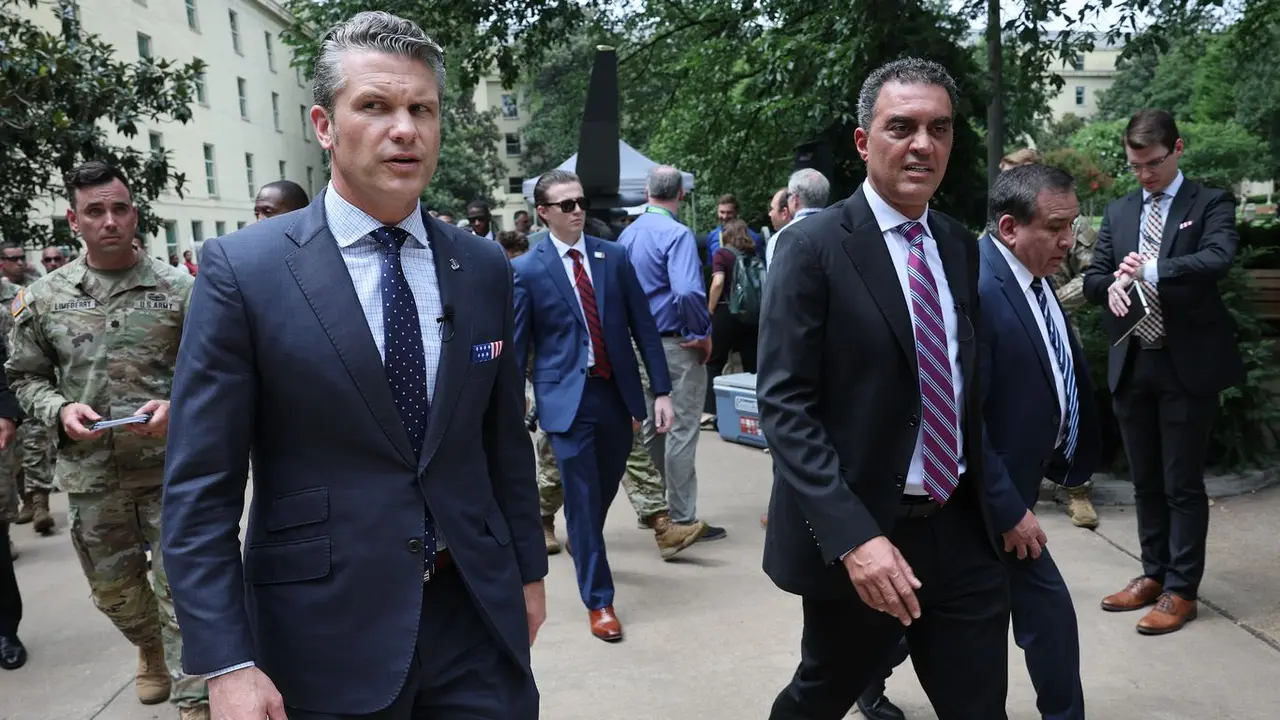
Source: Axios
Dean Ball, who serves as head of strategic futures at OpenAI and previously helped architect the administration's AI Action Plan while at the White House, argued on X that multiple U.S. government agencies—including the Departments of Defense, Transportation, Energy, Agriculture, Commerce, NASA, and Congress—have blocked employees from using Chinese AI tools based on what he characterized as poorly justified safety concerns.
2
Ball suggested these restrictions have discouraged regulated companies from adopting the technology, hinting that the Trump administration would eventually pursue regulatory risk around using Chinese models as "their best strategy."Regulatory Capture Accusations and Government Response
The OpenAI executive Dean Ball's comments drew immediate scrutiny from outside White House AI adviser David Sacks, who questioned whether Ball was advocating for regulatory capture—a scenario that would directly benefit his new employer OpenAI by limiting competition with Chinese AI models.
1
Ball later clarified in another X post that he was not proposing "ill-justified soft-law discouragement of Chinese AI" as a desirable policy approach.Emil Michael pushed back forcefully against Ball's characterization, explaining that Congress passed a 2026 law restricting certain uses of only DeepSeek and High Flyer models while allowing waivers in specific cases.
2
The Pentagon official emphasized that these U.S. government restrictions on Chinese AI went through "the democratic process, not some Deep State scheme," directly countering Ball's implications of bureaucratic overreach.Related Stories

Implications for OpenAI and AI Regulation
The public clash comes at a sensitive moment for OpenAI, which earlier this month was reportedly considering offering a 5% equity stake to the U.S. government to strengthen ties with the Trump administration and secure financial backing.
2
The confrontation highlights the Trump administration's ongoing struggle to balance competition with Chinese AI models against cybersecurity concerns as increasingly capable Chinese AI systems enter the market.1

Source: Benzinga
This isn't the first time the Pentagon has engaged in personal attacks over AI policy. The department previously clashed with Anthropic earlier this year, demonstrating a willingness to go ad hominem in disputes over AI regulation and national security.
1
As the regulation of Chinese AI models becomes increasingly contentious, industry observers will be watching whether this public feud damages OpenAI's efforts to position itself as a trusted government partner while navigating the complex landscape of AI Action Plan implementation and cybersecurity concerns.References
Summarized by

Navi
Related Stories
OpenAI hires former White House AI adviser Dean Ball to shape frontier AI policy ahead of IPO
18 Jun 2026•Business and Economy

Chinese AI models close gap with US rivals as Kimi K3 sparks national security debate
13 Jul 2026•Policy and Regulation
Pentagon warns AI contract restrictions could paralyze U.S. military operations mid-mission
04 Mar 2026•Policy and Regulation
Recent Highlights



Recent Highlights
Today's Top Stories








Don’t drown in AI news. We cut through the noise - filtering, ranking and summarizing the most important AI news, breakthroughs and research daily. Follow topics that matter to you and stay ahead.


