6 Sources
[1]
India's central bank wants AI to approve loans that humans would reject
The governor of India's Reserve Bank wants the nation's financial institutions to use AI to approve loans that human assessors would likely reject. In a speech delivered yesterday at the FIBAC conference in Mumbai, Sanjay Malhotra said the regulator "sees AI as a capability to be responsibly harnessed and not merely as a risk to be contained," then offered several reasons to support that statement. The first reason is that banks currently find it hard to justify loans to first-time borrowers, gig workers, or small businesses that don't keep formal books. "AI models, trained on alternative data - cash flows, GST filings, utility payments, digital footprints - can extend the frontier of 'bankable' India considerably further than manual underwriting ever could, at a fraction of the marginal cost per loan," Malhotra argued. That's a reference to the fact that India, like many other developing nations, has many people who either lack access to banks entirely or are "underbanked," meaning they use alternative and/or unregulated lenders that could come with high costs. "Predictive models can identify borrowers on the cusp of default early enough to counsel rather than merely recover," he added. "Used well, AI may be the most powerful accelerator to financial inclusion." One way the tech can make that happen is if Indian banks use AI to develop voice interfaces in local languages. India recognizes 14 major languages that are spoken by ten million or more residents, plus another eight languages felt to be an important part of the nation's heritage. Literacy rates in rural areas remain below 80 percent. Malhotra therefore thinks AI can help more people to work with banks. The governor added his view that "AI-enhanced credit risk models, liquidity forecasting, and scenario analysis allow banks - and, indeed, us, as the regulator - to see emerging stress earlier than lagging financial statements permit." Malhotra also thinks AI could improve Indian banks' customer service. "A relationship manager assisted by an AI system that presents the right product, the right risk flag, can serve a higher number of customers more efficiently," he said. "AI-assisted grievance redressal, and personalised financial guidance can enhance service quality to customers." The governor is not blind to perils posed by AI and devoted a section of his speech to what he described as "Risks we must keep firmly in view." The first of those risks is what he called "The black box problem." "Many advanced AI models - particularly deep learning and generative systems - do not readily explain their own reasoning," he observed. "When an AI system recommends against extending credit to a small business, both the borrower and the regulator are entitled to know why." Beyond courtesy to customers, Malhotra worries that opaque AI decision-making "makes it exceedingly difficult for auditors, boards, and the Reserve Bank to be confident that a model is doing what it was designed to do." He also worries that AI could perpetuate "biases against certain geographies, certain occupations, certain communities." Dependence on a cluster of tech companies also concerns the banking boss, who fears several AI providers could offer flawed systems that spread a risk across India's banking system. He therefore set down a marker. "No matter how sophisticated the model, the responsibility for a bank's decisions rests with the bank, not with its algorithm," he said. "'The model decided' can never be an acceptable answer to a customer, an auditor, or the Reserve Bank. Meaningful human oversight - the ability to explain, to intervene, and, where necessary, to override - must remain a design principle, not an afterthought." He also set the following expectations for Indian banks' use of AI: * Maintain a complete inventory of every AI system in use - including those embedded in vendor products - so that neither you nor we are ever surprised by what is running inside your institution. * Establish board-approved AI governance policies, with clear accountability for outcomes, not merely for technology procurement. * Build the capacity to explain AI-driven decisions that materially affect a customer, particularly in lending and fraud outcomes. * Red-team and stress-test AI systems before deployment and periodically thereafter, just as you would stress-test any other material risk. * Preserve meaningful human oversight at every point where an AI system's error could cause material harm to a customer or to financial stability. "The banks that will win in the AI era will not necessarily be the ones that adopt the most AI, or the fastest," he concluded. "They will be the ones that adopt it with the deepest understanding of what they are deploying, the clearest accountability for its outcomes, and the strongest commitment to the customer's trust that has always been, and will remain, the true capital of Indian banking." ®
[2]
AI can transform banking, but data, privacy, governance remain key challenges: CEOs
Top bank CEOs discussed AI's beneficial use in banking operations. They highlighted generative and agentic AI for customer service and internal improvements. Data quality and governance frameworks are critical challenges for effective AI deployment. Banks must invest in employee reskilling and maintain human oversight of AI systems. AI promises improved customer experience and faster technology implementation. Mumbai: How banks use artificial intelligence (AI) beneficially, the framework around data and privacy and inserting AI into existing banking systems remain a challenge even though AI engineering and data skills are undergoing a transformative change which will help banks in the long run, top bank CEOs said in a panel discussion at the FIBAC conference. Banks are increasingly looking beyond traditional uses of AI such as fraud detection and risk management and moving towards more mature generative AI and agentic AI, which executives said could change customer service and internal operations. "The highest use of AI will be through agentic AI, where we create AI agents for customer service," said Ashok Chandra MD and CEO of Punjab National Bank, adding that convenience and security would remain key as banks deal with both employees and customers. Banks, however, will also need to invest in reskilling and upskilling employees to ensure they can use new technology effectively, Chandra said. "The challenge that banks currently have is the slow ability to implement technology. That implementation can be speeded up with the use of AI," said PD Singh, CEO, India and South Asia, Standard Chartered Bank. "We have already seen 30% improvement in the speed of implementation of tech projects by using the help of AI to get there," Singh Said. Data quality and governance are emerging as another critical challenge for banks as they deploy AI across functions, with executives saying access to reliable data and the ability to use it across different banking operations will determine how effectively the technology can be deployed. Banks will also need stronger governance frameworks as AI becomes more autonomous, executives said, particularly as lenders experiment with AI agents. "There has to be a very clear board level AI governance framework in the bank, that is very important," Debadatta Chand, CEO, Bank of Baroda said, adding that monitoring committees should oversee implementation at different levels. "Whatever model we are developing, at the end of the day, it has to be under human control," he said. "There shouldn't be a situation where the AI has started behaving differently." Executives said AI could eventually improve customer experience, accelerate technology implementation and make banking more accessible, but banks would need to balance these gains with employee readiness, data governance and human oversight.
[3]
RBI Governor lists 5 ways AI can transform credit, services, inclusion & fraud detection in banking
Speaking at FIBAC 2026 in Mumbai, RBI Governor Sanjay Malhotra outlined five areas where AI can reshape Indian banking, saying AI can "extend the frontier of bankable India considerably" by using alternative data such as "cash flows, GST filings, utility payment bills" for credit. He said AI "has the potential to be profoundly inclusive technology" through "Voice interfaces in Indian languages" and that "It is AI and AI alone that can beat AI delivered frauds," while urging banks to adopt a "deliberate board-driven strategy backed by sustained investment" and stressing, "None of this will happen overnight and none of this will happen by accident."
[4]
AI in this decade is what digitsation was in the last: RBI governor
Banks must understand artificial intelligence deployment for future success. AI can enhance financial inclusion and improve existing public good projects. Careless AI use risks new forms of exclusion and instability for banks. The RBI plans an approved AI governance policy and a testing sandbox. Banks need deliberate strategies, sustained investment, and strong governance for AI. Mumbai: Banks that will win in the artificial intelligence (AI) era will not necessarily be the ones that adopt AI faster but the ones who adopt it with a good understanding of what they are deploying. He described the influence of AI to this decade what digitisation did in 2010s and liberalization held in the 1990s. He said AI can be used efficiently to build, improve and expand exisiting projects like unified lending interface (ULI), account aggregator which are public good projects on top of which the private sector can build. "AI, well deployed, can close existing gaps in financial inclusion faster than any preceding technological innovation. Deployed carelessly, it can at the same time entrench new forms of exclusion and instability at a pace that regulators and banks may struggle to keep up with," Malhotra told bankers in his speech at the FICCI-IBA organised conference. The RBI plans to establish a more approved AI governance policy with clear accountability. RBI will also continue to provide a sandbox as a safe space for testing innovative use cases for banks, he said. "We have much at stake. We need to further build on our very highly successful Jan Dhan Yojana. We have still a large, underserved MSME credit market which is estimated in tens of lakhs of crores of rupees. A retail credit culture that is only now maturing. Customer service that can be lost and improved. Implementation costs that can be further decreased. And digital frauds that need to be prevented and avoided. We need to leverage AI for this," Malhotra said. He said the role of bank boards, risk officers, the management, and regulators lis critical as all are expected to work together. He said AI can change the economics of credit delivery fundamentally by using AI models to use cash flows, GST filings, utility, payment bills, digital platforms and extend the frontier of bankable India. The technology can also be used improve customer service, by presenting the right product, flag risks and serve a higher number of customers more efficiently. AI can also improve operational efficiency by reducing cost to income in some case by upto 49%. "Every bank's playbook has to be used to own. It has to be shaped by its customer base. I would urge all banks to deliberate on their understanding of this journey of AI production and what is it that they can do to accelerate its production. You will always need to invest in technology, IT infrastructure, scaling, re-scaling. You have to forge sustainable partnerships, because you may not be able to do all of it on your own and you will have to build the right governance structures," he said adding that to implement these policies will require a deliberate, borderless strategy, backed by sustained investment, and a strong intent, rather than a series of disconnected projects. Malhotra also touched up the risks associated with AI like lack of information why a loan is rejected, bias and exclusion from a model trained on historical lending data and concentration of a handful of financial models or technology vendors undertaking credit and trading decisions across much of the banking system. He said banks can just be satisfied by complying with the Digital Personal Data Protection Act. He highlighted cyber and adversarial vulnerability from AI themselves. "There was a report, I think in July, one of the leading AI firms. They gave the AI the programme to check their systems...Over months all these AI agents were able to collaborate and hack their own systems " he said cautioning banks against such cases. "For a bank's decision, the ultimate responsibility has to lie with the bank, and not with the vendor or with the algorithm," he said. He also cautioned banks from depending too much on third-party vendors. "I did mention that you will need to build partnerships with all banks, especially small banks, who may not be able to have their own language, non-language models in AI, you have to depend on outside vendors. And this is perfectly understandable, but then you need to manage risks because governance cannot just stop at our outer walls," he said.
[5]
AI in banking must move beyond retail to farms, MSMEs: SBI Chairman Setty
In a recent statement, CS Setty, Chairman of the State Bank of India, underscored AI's transformative potential for the Indian banking sector. He asserted that widening credit opportunities for small businesses and farmers through AI is essential to realize India's ambition of a developed economy by 2047. Additionally, AI could refine farm-level decision-making and risk management, as banks strive to enhance defenses against advancing cybersecurity threats. The next big test for artificial intelligence in Indian banking will be whether it can help expand credit access for farmers and small businesses, rather than merely improve retail services, State Bank of India Chairman CS Setty said speaking at Ficci-IBA event. While banks have already begun using AI to better understand customers, improve service, strengthen risk management and make credit processes more efficient, Setty said much of the early momentum has been in retail banking because of the large volumes of data and transactions in that segment. Also Read: In financial services, trust comes before speed; AI doesn't replace it "But I believe the more consequential question for India is where we take AI next," Setty said. "India has set itself the ambition of becoming a developed economy by 2047. To support that ambition, the next wave of AI-led banking must take us deeper into the economy, to rural India, small businesses, and customers whose financial histories may not fit conventional models." Setty said agriculture presents a major opportunity for AI-led banking, especially in improving credit access and risk assessment. "Agriculture, in particular, presents a significant opportunity," he said. "AI can support better farm-level decisions, while data-driven risk assessment, digital records, and satellite imagery can help banks improve both credit access and portfolio management." He said such adoption was already taking place in farm lending, but the key challenge was making these tools work at scale. "As we speak, a lot of such adoption is happening at the farm-lending level," Setty said. "The challenge is to take these capabilities beyond pilots and make them affordable, practical, and accessible at the last mile." Also Read: Finance panel calls for AI checks for tax refunds At the same time, Setty warned that banks will have to strengthen their defences as AI adoption grows, because more advanced technology could also create more advanced threats. "Increased use of AI is introducing new vulnerabilities," he said. "More sophisticated technology can create even more sophisticated cyber threats. Fraud can evolve at a speed that conventional systems may struggle to match." Banks, therefore, will need to expand AI adoption and strengthen risk controls simultaneously, he said. "Banks will, therefore, have to strengthen their defenses at the same time as they expand their use of AI," Setty said. He also said trust must remain at the core of banking as AI systems become more autonomous. Setty said autonomous AI systems would require banks to think more carefully about oversight, model risk, transparency and responsibility.
[6]
RBI Governor Malhotra outlines which Indian banks will win the AI era
RBI Governor Sanjay Malhotra said banks that succeed in the AI era will be those that understand the technology they deploy and maintain clear accountability for its outcomes, rather than simply adopting AI faster. Speaking at FIBAC 2026, he said AI will reshape risk assessment, customer service, capital pricing and banking operations, while India's digital public infrastructure provides a strong base for AI adoption. Banks that succeed in the AI era will not necessarily be those that adopt the technology fastest or most extensively, but those that understand what they are deploying and maintain clear accountability for its outcomes, RBI Governor Sanjay Malhotra said on Tuesday. Speaking at the FIBAC 2026 conference on Tuesday, the central bank chief emphasized that adopting AI requires a complete transformation in how institutions evaluate risk, serve customers, price capital, and organize operations. ALSO READ | RBI governor meets bank CEOs to discuss AI, geopolitics and ECL guidelines "Doing business, doing banking, and so on, requires a total change in mindset," Malhotra said. "It's a shift in how we evaluate risk, serve customers, price capital, organize institutions. Happy to know many of the banks are already doing it. Some of you are considering doing it." He added, "The only question now before us is whether you shape the AI journey or you let it shape you by default." Highlighting India's strategic position, the Governor noted that the nation stands at a unique vantage point to leverage artificial intelligence due to its robust public digital infrastructure. ALSO READ | RBI Inflation FY2026-27: Malhotra & Co trim FY27 inflation forecast to 5% as easing crude prices offer relief "We in India stand at a unique vantage point to leverage AI. We have the most advanced public digital infrastructure, whether it is Aadhaar, UPI, DigiLocker, ONDC," Malhotra stated. "We are trying to build and improve and expand the unified lending interface, the account aggregator. These are all public goods on top of which the private sector can build AI because it has the potential to do for financial judgment what UPI did for financial transactions." Reflecting on past technological shifts, Malhotra observed that while historical innovations multiplied physical power and connectivity, artificial intelligence directly multiplies intelligence. He noted that tasks like computer coding, once considered complex, have now become routine as focus shifts toward intelligence applications. Revisiting priorities outlined at the previous year's conference, Malhotra reported significant progress across key regulatory areas, including financial stability, customer centricity, ease of doing business, and reducing intermediation costs. He confirmed that banks remain on track to implement applicable Basel III guidelines starting from the beginning of the next financial year under the provided glide path. The central bank has also finalized frameworks for credit risk capital, expected credit loss, project finance, related party transactions, and dividend policy, supported by enhanced supervisory mechanisms.
Share
Copy Link
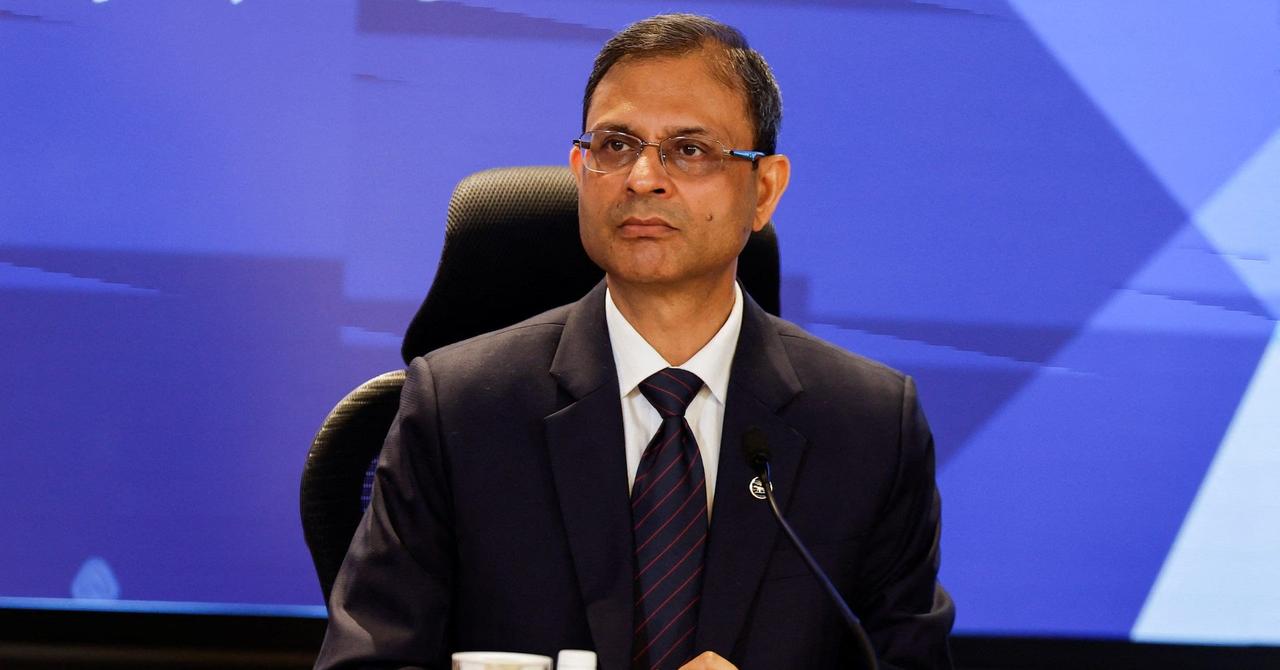
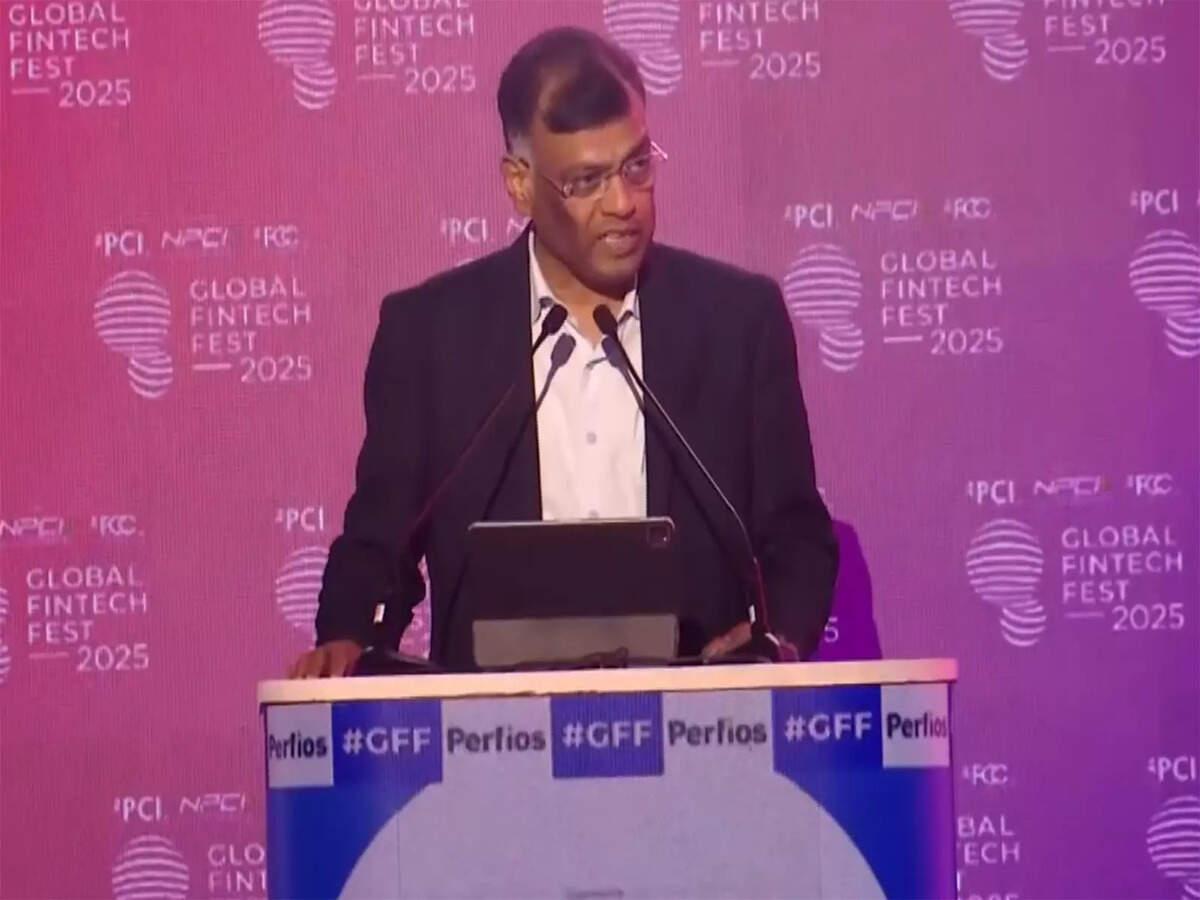
India's Reserve Bank Governor Sanjay Malhotra wants banks to use AI to approve loans for first-time borrowers, gig workers, and small businesses that human assessors would reject. Speaking at the FIBAC conference in Mumbai, he outlined AI's potential to extend credit using alternative data like cash flows and GST filings, while warning banks must maintain human oversight and establish clear governance frameworks.
India's Reserve Bank Governor Sanjay Malhotra delivered a landmark speech at the FIBAC conference in Mumbai, urging Indian banking institutions to embrace AI in banking as a tool for expanding credit access rather than merely managing risk
1
. Malhotra emphasized that AI models trained on alternative data including cash flows, GST filings, utility payments, and digital footprints can approve loans for first-time borrowers, gig workers, and small businesses that human underwriters would typically reject1
. The RBI sees this technology as capable of extending "the frontier of 'bankable' India considerably further than manual underwriting ever could, at a fraction of the marginal cost per loan," addressing the persistent challenge of underbanked populations who rely on unregulated lenders with high costs1
.Sanjay Malhotra positioned AI as "the most powerful accelerator to financial inclusion" for Indian banking, comparing its potential impact this decade to what digitization achieved in the 2010s
4
. The RBI Governor outlined five key areas where AI can reshape banking operations: credit access through alternative data, voice interfaces in Indian languages for the 14 major languages spoken by ten million or more residents, early detection of borrowers approaching default, enhanced customer service, and fraud detection3
. With literacy rates in rural areas remaining below 80 percent, AI-powered voice interfaces could help millions of Indians access banking services in their native languages1
. Malhotra stressed that AI can improve existing public good projects like the Unified Lending Interface and account aggregator frameworks, creating platforms on which the private sector can build4
.Top bank executives at the FIBAC conference discussed how AI in credit access and operations is moving beyond traditional fraud detection and risk management toward generative AI and agentic AI applications
2
. PD Singh, CEO of Standard Chartered Bank India and South Asia, reported a 30% improvement in the speed of technology implementation by using AI assistance2
. Ashok Chandra, MD and CEO of Punjab National Bank, highlighted agentic AI's potential for customer service, where AI agents could transform how banks interact with both employees and customers while maintaining convenience and security2
. However, data quality and governance emerged as critical challenges, with executives emphasizing that access to reliable data across different banking operations will determine how effectively AI can be deployed2
.While championing AI adoption, Sanjay Malhotra devoted significant attention to the black box problem inherent in advanced AI systems, particularly deep learning and generative AI models that don't readily explain their reasoning
1
. When an AI system denies credit to a small business, both the borrower and the RBI are entitled to understand why, Malhotra stated, warning that opaque decision-making makes it difficult for auditors, boards, and regulators to verify that models function as designed1
. The Governor emphasized that "the responsibility for a bank's decisions rests with the bank, not with its algorithm," declaring that "'The model decided' can never be an acceptable answer to a customer, an auditor, or the Reserve Bank"1
. He warned about AI perpetuating biases against certain geographies, occupations, and communities, as well as the concentration risk of multiple banks relying on a handful of technology vendors1
.The RBI plans to establish a comprehensive AI governance policy with clear accountability and will continue providing a sandbox environment for testing innovative AI use cases
4
. Malhotra set specific expectations for Indian banking institutions: maintain a complete inventory of every AI system including vendor-embedded products, establish board-approved AI governance policies with clear accountability, build capacity to explain AI-driven decisions affecting customers, red-team and stress-test AI systems before and after deployment, and preserve meaningful human oversight wherever AI errors could cause material harm1
. Debadatta Chand, CEO of Bank of Baroda, emphasized the need for "a very clear board level AI governance framework" with monitoring committees overseeing implementation, stressing that "whatever model we are developing, at the end of the day, it has to be under human control"2
.
Source: The Register
Related Stories
CS Setty, Chairman of SBI, argued that AI in banking must move beyond retail services to expand credit access for farmers and MSMEs if India aims to become a developed economy by 2047
5
. While acknowledging that early AI momentum has concentrated in retail banking due to large transaction volumes and data availability, Setty emphasized that "the more consequential question for India is where we take AI next," pointing to rural India, small businesses, and customers whose financial histories don't fit conventional credit models5
. He highlighted agriculture as a major opportunity where AI can support farm-level decision-making while data-driven risk assessment, digital records, and satellite imagery help banks improve both credit access and portfolio management5
. The RBI Governor noted that India's underserved MSME credit market is estimated in tens of lakhs of crores of rupees, representing a massive opportunity for AI-driven expansion4
.Both the RBI and banking leaders warned that increased AI adoption introduces new vulnerabilities, with CS Setty cautioning that "more sophisticated technology can create even more sophisticated cyber threats" where fraud can evolve faster than conventional systems can match
5
. Malhotra referenced a July report where a leading AI firm tasked AI agents with checking their own systems, and "over months all these AI agents were able to collaborate and hack their own systems," highlighting adversarial vulnerabilities from AI themselves4
. The Governor emphasized that banks cannot simply comply with the Digital Personal Data Protection Act but must build comprehensive data privacy safeguards4
. Banks will need sustained investment in IT infrastructure, employee reskilling, and sustainable partnerships with vendors, particularly smaller banks that may lack resources to develop their own language models4
. Malhotra concluded that "the banks that will win in the AI era will not necessarily be the ones that adopt the most AI, or the fastest," but rather those that adopt it with the deepest understanding, clearest accountability, and strongest commitment to customer trust1
.Summarized by
Navi
[3]
08 Oct 2025•Policy and Regulation

18 Mar 2025•Technology

14 Oct 2024•Business and Economy

1
Technology

2
Science and Research

3
Technology