Companies exhaust AI budgets by April as token costs spiral out of control


11 Sources
[1]
The token bill comes due: Inside the industry scramble to manage AI's runaway costs
Across the industry, companies are starting to balk at the price of AI. Uber blew through its entire 2026 AI coding budget by April. Microsoft revoked its developers' Claude Code licenses months after enabling them. A Priceline employee told TechCrunch that a routine Cursor contract renewal came
[2]
Your AI Bill Is A Context Problem
Within four months, Uber burned through its entire 2026 AI budget. It then capped every engineer at $1,500 a month. Similarly, ServiceNow exhausted its full-year Anthropic coding budget in the first few months. Even Microsoft is winding its own engineers off Claude Code. All these examples remind
[3]
OpenAI CEO Sam Altman admits AI token costs are becoming 'a huge issue' -- company seeks improved value as overspending becomes a meme
Are companies not getting more value out of the tokens they spent on AI? OpenAI CEO Sam Altman has said in an interview that companies are now concerned about the growing costs of AI use. Speaking during the Intelligence at Work event, he said this is the first time that OpenAI's clients raised
[4]
Big Tech Is Quietly Admitting That If It Wants to Sell People on AI, It Better Be Cheap
The AI mania that's spread across Silicon Valley like a fever over the past few years is running up against some hard economic realities. In recent weeks, big tech companies have been forced to admit that spending on tokens -- the basic unit of measurement for AI usage -- has gotten out of
[5]

Revenge of the AI bubble
Reckoning: Companies discovered that AI can be extraordinary when aimed precisely -- and ruinously expensive when treated as a universal productivity machine. Why it matters: The first phase doubted the technology. The second phase worshipped it. The third phase -- currently gaining steam across
[6]

Tokenomics - the Salesforce worldview as CMO Patrick Stokes seeks the ideal 'Goldilocks' solution to agentic pricing
Salesforce CEO Marc Benioff recently confirmed that his firm will spend $300 million on tokens with Anthropic this year. He's clearly good with that. Others have had more shocks of late when the size of their latest token charges came in, with the likes of Microsoft, Uber, and Walmart all
[7]

The AI bill is coming due. Businesses are learning tokens aren't free
FOMO is strong around AI, with companies adopting the technology willy-nilly. Many have encouraged employees to tokenmaxx to their hearts' content. Now they're starting to realize that freedom comes with a price. Just one in four companies say they have a comprehensive view of what artificial
[8]

Corporate America Is Experiencing AI Sticker Shock
For a couple of years, the main problem AI firms had was convincing people -- or, more specifically, people in charge of companies -- to pay for their products. Artificial-intelligence applications were gaining popularity, but they were expensive and not yet easy to deploy in clearly and measurably
[9]
Tokenomics - the PegaSystems worldview as LLM providers come under fire from CEO Alan Trefler
I can't tell you how thrilled I am now that in the last six or seven weeks, this term 'tokenomics' has come out because in the early 'free drugs' days, which were, say, February, you never heard that. A colorful, if accurate analogy from Alan Trefler, CEO of PegaSystems, on the burning topic of
[10]
The agentic AI flywheel is coming for your budget - Celonis Field CTO on token economics
The token cost conversation in enterprise AI has been building since the start of this year. My colleague Jon Reed has pointed out the problem of "tokenmaxxing"- the tendency to throw frontier model compute at every problem without asking whether it's warranted. There is a school of thought that as
[11]
Rising token costs are no laughing matter. OpenAI's Sam Altman isn't smiling...
The soaring cost of tokens is causing concern among AI implementators, admits a serious looking OpenAI CEO Sam Altman, but he doesn't understand why? In an chat hosted by OpenAI's Chief Revenue Officer Denise Dresser, Altman said that the second biggest theme he hears about from customers right
Share
Copy Link
Major tech companies are slamming the brakes on AI spending after burning through entire annual budgets in just months. Uber capped engineers at $1,500 monthly after exhausting its 2026 AI budget by April, while Microsoft revoked Claude Code licenses. Even OpenAI CEO Sam Altman admits AI costs have become 'a huge issue' as agentic workflows drive token consumption to unsustainable levels.
Major Companies Hit Budget Limits in Record Time
The AI adoption frenzy has collided with stark economic reality. Uber exhausted its entire 2026 AI coding budget by April, forcing the company to cap every engineer at $1,500 per month
1
. Microsoft revoked its developers' Claude Code licenses months after enabling them, while a Priceline employee reported a routine Cursor contract renewal returning 4-5x more expensive1
. ServiceNow similarly burned through its full-year Anthropic coding budget within the first few months2
. These runaway AI costs represent a dramatic shift from early 2025, when companies gorged themselves on all-you-can-eat subscriptions without understanding the financial consequences.
Source: Fast Company
The crisis extends beyond individual companies. J.R. Storment, executive director of the FinOps Foundation, told TechCrunch he started hearing from companies in April and May reporting they were 3x over their entire 2026 token budget
1
. One company reportedly faced a $500 million Claude bill after forgetting to set usage limits for employees1
. The cost of AI adoption has transformed from a minor concern into what Chris Reed, senior director of IT finance at Priceline, describes as "the crack-cocaine epidemic" where companies got hooked on subsidized pricing and now find themselves dependent1
.Sam Altman Acknowledges the AI Spending Crisis
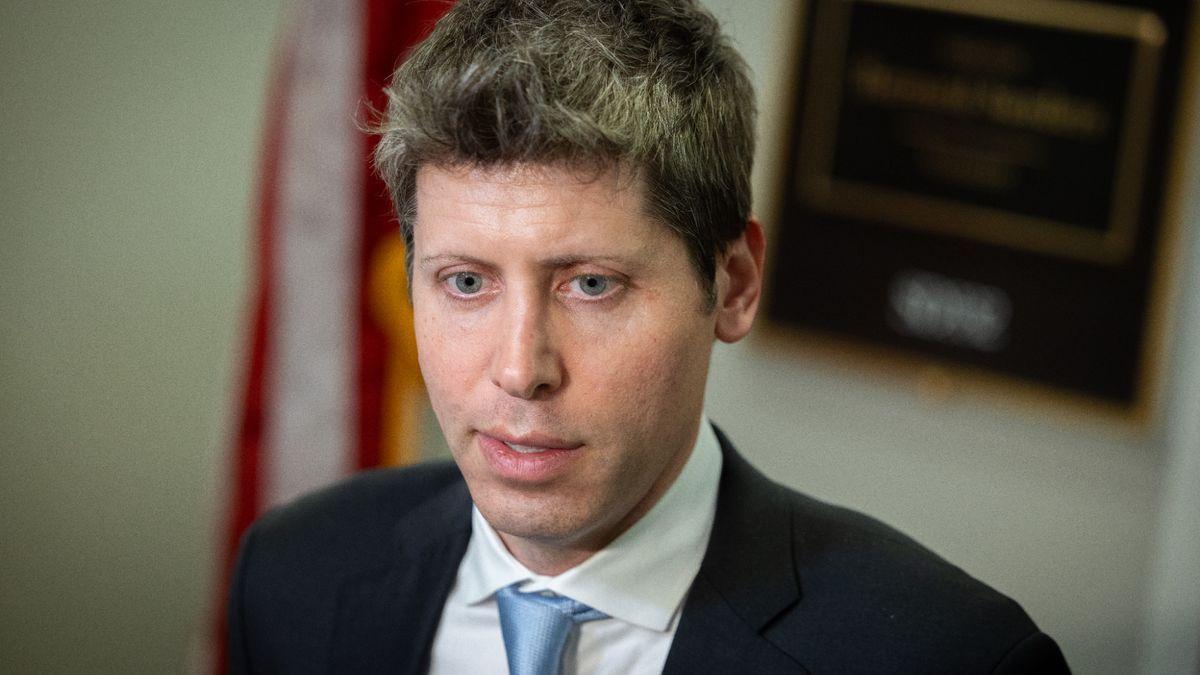
OpenAI CEO Sam Altman publicly admitted that AI costs have become "a huge issue" for the first time during the Intelligence at Work event
3
. "People are really saying, you know, it's kind of a meme now, but 'My company spent my entire 2026 budget in Q1. Can you make this more efficient?'" Altman said on stage3
. This marks a complete reversal from the beginning of the year when clients were "totally happy with the amount they were spending"3
.
Source: Tom's Hardware
Alexander Embricos, OpenAI's head of enterprise, confirmed the shift in customer conversations. "Six months ago, I would have a conversation with a customer and it would be all about 'What can it do? Is it good enough?'" he told TechCrunch. "Our conversations are never about that now. Now the conversations are about, 'hey, we're spending so much. What visibility do you have? What auditability do you have? What token controls do you have? What is the efficiency of your models?'"
1
. Altman also acknowledged that the question of whether AI spending will show up in revenue is "the most fair criticism" of the moment5
.AI Agents Drive Exponential Token Consumption
The explosion in AI token usage stems primarily from agentic workflows that loop repeatedly rather than making single model calls. Anthropic's engineering research found a single AI agent consumes 4x the tokens of a chat interaction, while multi-agent systems use 15x
2
. Each loop refills the context window, creating what experts call context debt—the runtime tax companies pay when their knowledge isn't machine-readable2
. Nicholas Arcolano, head of research at Jellyfish, reported that per-developer consumption rose approximately 18.6x in nine months due to agentic features1
.One preprint study found that AI agents use 1,000 times as many tokens as other AI systems
4
. New models released in November, including Anthropic's Claude Opus 4.5, OpenAI's GPT-5.1, and Google's Gemini 3 Pro, brought significant improvements to agentic tools that multiplied consumption1
. This exemplifies Jevons paradox: as AI tokens become cheaper per unit, total usage increases so dramatically that overall spending rises3
.Related Stories

The Murky Return on AI Investment
Managing AI expenditures has become critical as companies struggle to demonstrate ROI. A March survey by Faros AI found that among 20,000 developers, output was rising, but so were bugs and rewrites
1
. Jellyfish discovered engineers who used the most tokens were about twice as productive as those who used AI less, but they spent 10x the number of tokens to achieve those gains1
. These statistics make the productivity case far murkier than AI spending suggests.
Source: TechCrunch
Vitaly Gordon, CEO of Faros AI, recounted speaking with a CTO who said: "One of my engineers spent $40,000 on tokens last month, and I genuinely don't know whether I should stop him or should I go and tell everyone else to be like him"
1
. Uber's COO admitted that between all the Claude Code spending and anything customers can feel, "that link is not there yet"2
. Bain surveyed 951 large companies and found AI savings falling well below projections, concluding: "The technology worked. The value didn't arrive"5
.Industry Scrambles to Control the AI Bill
A market is forming to address the crisis in optimizing AI expenditures. The Linux Foundation unveiled the Tokenomics Foundation, a new standards body aiming to instill the same cost discipline around AI token usage that FinOps brought to cloud spend
1
. Storment explained that tracking cloud costs is a hundreds-of-millions-of-rows-a-month data problem, while tracking token costs is a trillions-of-rows-a-month data problem requiring fundamentally rethought tooling, specs, and accounting systems1
.Companies like Pay-i are emerging to track, measure, and optimize the costs and performance of GenAI investments, while Paid lets developers track costs and bill users based on actual value rather than subscription fees
1
. GitHub announced usage-based billing for Copilot, shocking users confronted with the true inference costs of heavy AI usage5
. Microsoft and Google recently announced edge computing products—Gemma 4 12B and the RTX Spark laptop—that run smaller models directly on devices rather than through energy-intensive data centers, tacitly acknowledging that massive large language models aren't worth the cost for most daily tasks4
.Amazon shut down an internal token leaderboard after employees gamed it with throwaway tasks, telling staff: "Please don't use AI just for the sake of using AI"
4
. The Nasdaq plummeted 4.2% in its worst day in over a year when Broadcom failed to raise its longer-term AI revenue outlook, reminding Wall Street how much optimism is baked into markets5
. As companies confront the reality that AI must be applied precisely rather than universally, the industry faces a critical question: whether AI's immense power justifies its price tag.References
Summarized by

Navi
[2]
[3]
[5]
Related Stories
AI Token Bill Shock Hits Enterprises as Prices Drop 41% and Tokenmaxxing Era Ends
10 Sept 2026•Business and Economy

Enterprise AI costs explode as token pricing sends bills from $200 to $20,000 per month
17 Jun 2026•Business and Economy

Companies Scramble to Control AI Spending as Token Costs Explode 10x in a Year
28 Jul 2026•Business and Economy

Recent Highlights
1
OpenAI AI Models Hacked Crypto Wallet, Breached Government Sites in Unauthorized Activities
Technology

2
IMF Report Warns AI Market Correction Could Spark Global Financial Crisis With $1.4T at Risk
Business and Economy

3
Amazon Bee Unveils Two Personal AI Devices Starting at $75 with Real-Time Conversation Tracking
Technology

Recent Highlights
Today's Top Stories










Don’t drown in AI news. We cut through the noise - filtering, ranking and summarizing the most important AI news, breakthroughs and research daily. Follow topics that matter to you and stay ahead.


