Samsung Q3 Profit Soars 783% to Record $80B as AI Memory Boom Drives Chip Earnings


16 Sources
[1]
Samsung Q3 profit jumps nearly nine-fold as AI memory boom lifts chip earnings
SEOUL, Oct 8 (Reuters) - Samsung Electronics (005930.KS), opens new tab on Thursday projected a nearly nine-fold jump in third-quarter operating profit from a year earlier, beating analysts' estimates as booming demand for artificial intelligence chips drove strong memory earnings. The world's
[2]
AI chip boom pushes Samsung profits to record $80bn
Samsung Electronics says it expects a nine-fold surge in its quarterly profits compared with a year earlier, driven by surging demand for memory chips used in artificial intelligence (AI) data centres. The tech giant estimates that its operating profit for the three months to the end of September
[3]
Samsung expects record $80bn quarterly profit as AI memory demand soars
Operating profit rose nearly ninefold to 107.4 trillion won as demand for memory chips used in AI soared. Samsung Electronics expects its operating profit for the third quarter to reach a record level of about 107.4 trillion won ($80bn), a significant increase from 12.17 trillion won a year
[4]
Samsung's Q3 profit seen jumping nine-fold, but chip margins may be flat
SEOUL, Oct 7 (Reuters) - Samsung Electronics is expected to report a nearly nine-fold jump in third-quarter operating profit, driven by robust AI demand, though analysts have cut forecasts by nearly 8% since the end of August. Despite moderating gains in the prices of memory chips and a
[5]
Samsung flags 783% profit jump to record $80bn as AI chip boom surges
Samsung Electronics estimated on Thursday that its third-quarter operating profit jumped almost ninefold to a record 107.4 trillion won, or $80.2 billion, while sales at Taiwan's TSMC hit a quarterly record, as the AI boom keeps demand for chips strong. Two of Asia's biggest chipmakers have
[6]

Samsung expects 780% quarterly operating profit jump on AI boom
Seoul (AFP) - Samsung Electronics forecast Thursday a more than 780 percent leap in third-quarter operating profit from a year earlier, buoyed by high memory chip prices as AI fuels a global supply shortage. The South Korean giant is the world's largest maker of memory chips -- components now in
[7]

Samsung Electronics: Samsung expects 780% quarterly operating profit jump on AI boom
Samsung Electronics anticipates a remarkable surge in its third-quarter operating profit, fueled by soaring memory chip prices. With an estimated profit reaching 107.4 trillion won, the company sets a new record for profits within South Korea. Revenue is poised to rise sharply, driven by increasing
[8]

Samsung AI Memory Boom Deepens Smartphone Losses - SAMSUNG ELECT LTD by Samsung Electronics Co., Ltd. (OT
Samsung's AI Memory Boom Is Hammering Its Own Smartphone Business Samsung Electronics Co. Ltd. (OTC:SSNLF) forecast a record $80 billion quarterly operating profit on Thursday as AI demand sent memory chip prices soaring. But those same price increases are pushing its smartphone business deeper
[9]
Samsung Stock Slips in Seoul Despite $80 Billion Q3 Profit Guidance - SAMSUNG ELECT LTD by Samsung Electr
Samsung's Q3 Profit Guidance Tops Analyst Estimates As AI Demand Outstrips Memory Supply Samsung Electronics Co. Ltd. (OTC:SSNLF) on Wednesday guided for a rise in third-quarter profit and sales as artificial intelligence demand for memory chips tightens supply across the industry, though its
[10]

Samsung's Record Profit Shows How Much AI is Driving the Chip Market
Samsung expects a record third-quarter operating profit as the AI boom drives demand for memory chips and pushes prices higher. Samsung Electronics is heading for a record quarter. The company expects an operating profit of 107.4 trillion won, or about USD 80.1 billion, for the July-September
[11]

Samsung's $80 Billion Quarter Is No Longer the Trade
Samsung has just delivered the sort of earnings print that, in another semiconductor cycle, would have had traders reaching for increasingly ridiculous price targets before the opening bell. Takeaways * Samsung just printed the kind of quarter that used to send semiconductor stocks vertical.
[12]
Samsung Q3 Profit May Jump Ninefold Amid Surging AI Chip Demand
Samsung Electronics is expected to report a nearly nine-fold increase in third-quarter operating profit, supported by strong demand for AI processors. However, gradually rising memory chip prices and a stronger South Korean won are raising concerns about sustaining its record margins..Samsung Q3
[13]

$80 bln profit in three months: how Samsung is winning at AI
STORY: :: Heekyong Yang, Correspondent :: Seoul, South Korea / October 8, 2026 What made it possible for Samsung to report record quarterly operating profit for any tech firm in the world? :: Samsung forecasts a record quarterly profit of $80 bln "So the biggest driver is the AI boom,
[14]
Samsung Sees Operating Profit Topping $80 Billion Amid AI Boom -- Update
Samsung Electronics forecast quarterly operating profit exceeding $80 billion for the first time, confirming that its run of record earnings has room to go as the world's largest memory-chip maker continues to cash in on the artificial-intelligence boom. The staggering preliminary estimate--more
[15]
Samsung Sees Operating Profit Topping $80 Billion Amid AI Boom
Samsung Electronics forecast quarterly operating profit exceeding $80 billion for the first time, confirming that its run of record earnings has room to go as the world's largest memory-chip maker continues to cash in on the artificial-intelligence boom. The staggering preliminary estimate--more
[16]
Samsung's Q3 profit seen jumping nine-fold, but chip margins may be flat
SEOUL, Oct 7 (Reuters) - Samsung Electronics is expected to report a nearly nine-fold jump in third-quarter operating profit, driven by robust AI demand, though analysts have cut forecasts by nearly 8% since the end of August. Despite moderating gains in the prices of memory chips and a
Share
Copy Link
Samsung Electronics projects a nearly nine-fold surge in third-quarter operating profit to $80.17 billion, marking its fourth consecutive record quarter. The AI chip demand boom, particularly for high-bandwidth memory chips used in data centers, has driven unprecedented earnings despite rising component costs pressuring its smartphone and consumer electronics divisions.
Samsung Electronics Posts Historic $80B Quarterly Profit
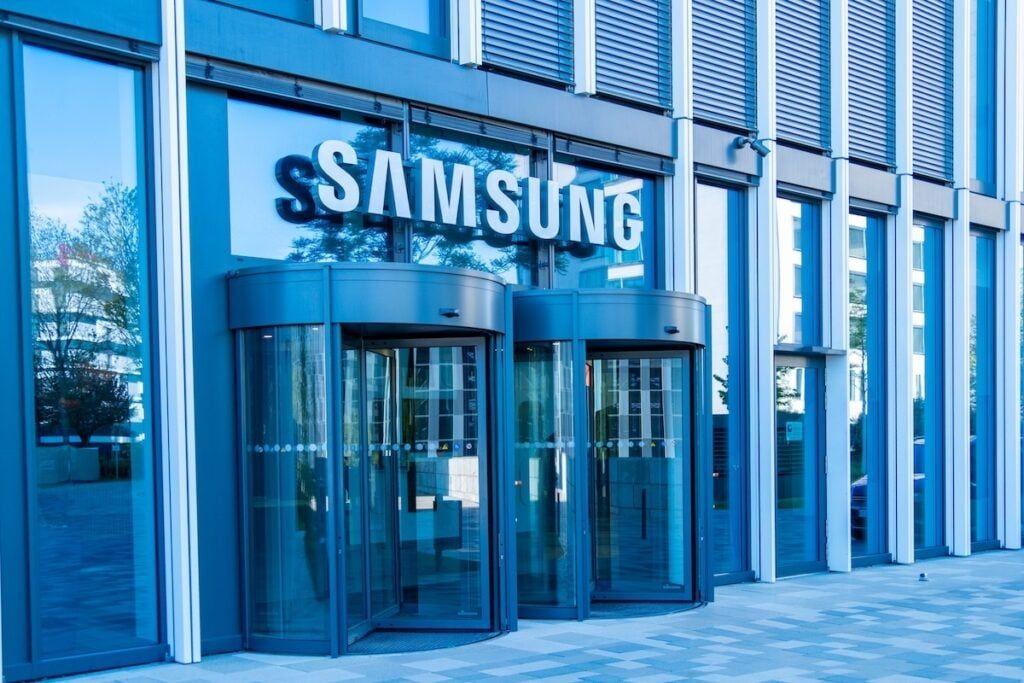
Samsung Electronics announced on Thursday that its third-quarter operating profit is expected to reach 107.4 trillion won ($80.17 billion), representing a staggering 783% increase from 12.17 trillion won a year earlier
1
. This figure surpasses analyst expectations of 106.1 trillion won and marks Samsung's fourth consecutive record quarterly operating profit3
. The preliminary results position Samsung Electronics as the first South Korean company to achieve more than 100 trillion won in operating profit in a single quarter3
. Revenue is projected to surge 127% year-over-year to 195 trillion won, with an estimated operating margin of approximately 55%5
. This would represent the biggest quarterly operating profit ever reported by a technology company, exceeding even Nvidia's $63.7 billion in operating income from its latest quarter5
.
Source: Benzinga
AI Memory Boom Fuels Unprecedented Growth
The explosive growth in Samsung Q3 profit stems directly from the AI memory boom that has created insatiable demand for memory chips essential to AI infrastructure
1
. As one of the world's largest memory chipmakers alongside SK Hynix and Micron, Samsung Electronics has capitalized on surging demand for AI memory chips used in data centers that train and run AI models2
3
. The memory chip shortage has intensified as AI chip demand for infrastructure has outstripped supply growth, a supply-demand gap expected to persist into 2027 and possibly through 20281
4
. Prices have soared due to tight supply of conventional DRAM and NAND chips, while AI-driven demand for HBM continues to absorb an increasing share of global memory capacity1
.High-Bandwidth Memory Chips Drive Market Share Gains
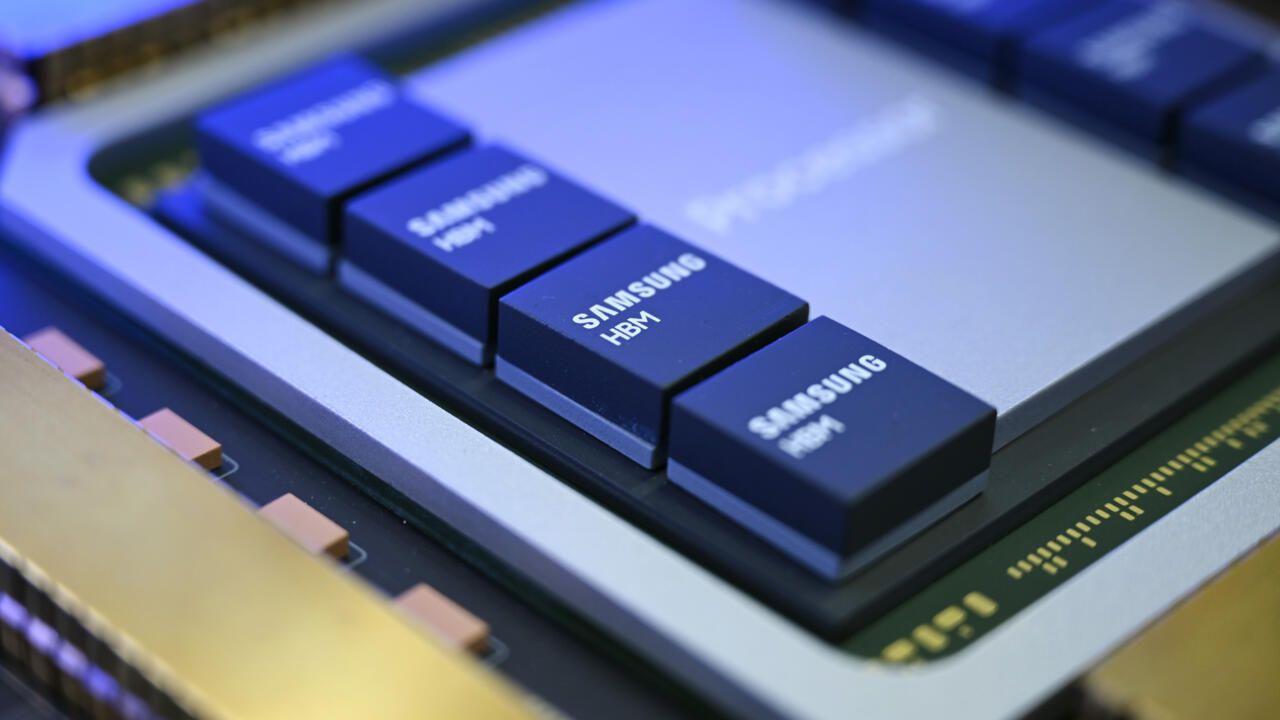
Samsung's performance in the high-bandwidth memory chips market has shown remarkable improvement. Douglas Kim of Douglas Research Advisory estimated that Samsung's HBM bit shipments expanded by close to 50% quarter-over-quarter in the third quarter
1
3
. The company has narrowed the gap with market leader SK Hynix after initially lagging in HBM supplies due to delays in qualifying products for Nvidia4
. Samsung's HBM market share is forecast to rise to 34% this year from 20% last year, according to J.P. Morgan estimates, while SK Hynix's share is expected to fall to 46% from 60%4
. The company has gained ground by expanding shipments of its latest HBM4 chips, with conventional DRAM bit shipments expected to remain broadly flat due to limited inventories1
.
Source: France 24
Component Costs Squeeze Consumer Electronics Divisions
While the AI memory boom has delivered record quarterly operating profit for Samsung's semiconductor arm, it presents challenges for other business units. Higher memory prices, though benefiting the chip division, are raising component costs for Samsung's own smartphones and consumer electronics, squeezing margins in those businesses
1
3
. Earlier this month, Samsung raised Galaxy S26 prices by $100 in the US and South Korea, citing memory costs3
. Korean newspaper Chosun Ilbo estimated that the chip division made about 110 trillion won on its own, while the smartphone division and appliance unit is expected to post a loss3
. Higher chip prices have pushed up costs across consumer electronics, weighing on demand as the AI data center demand continues to absorb supply4
.
Source: BBC
Related Stories

Currency Headwinds and Market Dynamics
Despite the strong performance, Samsung faces headwinds from currency fluctuations. The stronger South Korean won may have offset some gains by reducing the value of dollar-denominated overseas sales when converted into local currency
1
. The won strengthened 14.3% against the dollar in the third quarter, rebounding sharply from 17-year lows for its biggest quarterly gain since early 19984
. Samsung's operating margin in memory chips is expected to reach 76% in the third quarter, flat with the preceding quarter, according to SK Securities analyst Han Dong-hee4
. The pace of price increases has slowed in the third quarter, with TrendForce expecting conventional DRAM contract prices to rise 10% to 15% in the fourth quarter, decelerating from a second-quarter surge of roughly 60%4
.Industry-Wide AI Hardware Demand Surge
The AI chip demand boom extends beyond Samsung, with chipmakers across the region posting exceptional results. TSMC reported September revenue rose 54.6% year-over-year to approximately $16 billion, with estimated third-quarter revenue reaching a record $46.8 billion, up 51% year-over-year
5
. Taiwan's exports jumped 60.9% year-over-year to a record $87.2 billion in September, driven by global AI hardware demand5
. Samsung shares have almost quadrupled since last September, though they closed 2.42% lower following the earnings announcement as investors questioned sustainability5
. Samsung will release detailed results, including a breakdown of earnings by business division, on October 291
.References
Summarized by

Navi
Related Stories
Samsung profit soars 19-fold to record $58.4bn as AI demand strains memory chip supply
06 Jul 2026•Business and Economy
Samsung's Q3 Profit Surge: AI Chip Demand Drives Strongest Performance in Three Years
14 Oct 2025•Technology

Samsung Posts Record Q3 Results as AI Boom Drives Memory Chip Sales to All-Time High
30 Oct 2025•Business and Economy
Recent Highlights
1
Microsoft and Nvidia Launch Surface Laptop Ultra: A $2,599 AI-Ready PC With RTX Spark Chip
Technology

2
OpenAI Releases 722 AI-Generated Math Papers on GitHub, Igniting Fury Among Mathematicians
Science and Research

3
Trump Consulted Grok AI Before Ordering Venezuela Invasion and Capture of Nicolás Maduro
Policy and Regulation

Recent Highlights
Today's Top Stories










Don’t drown in AI news. We cut through the noise - filtering, ranking and summarizing the most important AI news, breakthroughs and research daily. Follow topics that matter to you and stay ahead.


