Samsung warns memory shortage will intensify through 2027 as AI demand outpaces chip supply


12 Sources
[1]
Samsung Chip Profits Soar Amid the Tech World's RAM Shortages
Demand for increasing AI compute is keeping chip supply short for the foreseeable future, and Samsung is coming out ahead. The world's largest semiconductor-maker is reaping the rewards of a global memory chip shortage driven by AI demand so rapacious that it's making everyone else
[2]
Samsung says the RAM shortage could get even worse next year
There may be a long wait before the end of the RAM shortage that's driving up prices on everything from phones to gaming handhelds. During an earnings call on Thursday, Samsung predicted that the severe memory shortage, driven by demand from AI data centers, will not only continue next year, but
[3]
Samsung and SK hynix warn AI-driven memory shortages could last until 2027 and beyond, as HBM demand explodes -- customers already reserving supply years ahead, while the wider DRAM market begins to tighten
Supply may never match exploding demand, despite massive investments in supply infrastructure In Samsung's full earnings report released on April 30, 2026, the company's memory chief Kim Jaejune warned that "significant shortages" across memory products are expected to continue through at least
[4]
Samsung is the latest tech player to bemoan memory chip crunch. That's good news for these stocks, analysts say
Memory chips and storage drives are becoming a major bottleneck in the artificial intelligence buildout, driving companies' capital expenditures higher. Chipmakers warn the supply crunch will get worse before it gets better, and Wall Street sees an opportunity. Quarterly earnings from the
[5]

Samsung's chip profit jumped nearly 50-fold in a single year, execs warn the shortage will get worse
Serving tech enthusiasts for over 25 years. TechSpot means tech analysis and advice you can trust. Bottom line: Samsung Electronics' latest quarter makes one thing clear: the AI boom is no longer just lifting the semiconductor market - it's straining it. The company posted a record operating
[6]

Micron CEO warns 'AI is in very early innings' and it will 'need more memory' -- another ominous sign the RAM crisis isn't going anywhere
Nvidia is also resurrecting a very old GPU to cope with VRAM supply woes * Micron's CEO has been talking about the gravity of the RAM supply situation * Sanjay Mehrotra said that 'AI is in very early innings' and that AI will need a lot more memory to 'scale up' going forward * This follows
[7]

'Our demand fulfillment rate is now at a record low' says Samsung as it makes its DRAM 90% more expensive than the previous quarter
There are two very different worlds out there. One is the world that you and I live in, the world of the consumer, where we scrape together whatever scraps of expensive memory we can find after the rest has been handed off to AI datacentres. The other is the world of chipmakers and shareholders,
[8]

Micron's CEO says AI memory demand is just in its 'first innings' and memory supply is already insufficient
TL;DR: AI-driven demand for DRAM and NAND is rapidly increasing, causing a persistent memory supply shortage expected to last until at least 2028. Rising needs for higher-capacity, high-performance memory in AI GPUs and CPUs are straining production, leading to delayed launches, price hikes, and
[9]

Micron CEO Warns AI Is Only in the 'First Innings' as Memory Supply Tightens, With DRAM and NAND Demand Set to Exceed 50% of Industry TAM
Micron posted a record Q2 as DRAM demand increases, but its CEO says this is just the beginning as more memory is required for AI to reach its full capabilities. Memory & Storage maker, Micron, has seen exceptional growth across all of its businesses, which include DRAM, NAND, and HBM. The growth
[10]

Samsung Warns RAM Shortage Could Worsen as AI Demand Surges
Looking ahead, Samsung has acknowledged that 2026 is likely to remain a challenging year, shaped by geopolitical uncertainties, rising input costs, and persistent supply constraints. However, the company maintains that its focus on AI-driven differentiation and operational resilience will be key to
[11]
Agentic AI Pushes CPUs to Pack 400 GB of Memory, 4x More Than Today, as DRAM Shortage Spirals Toward 2027
CPUs or GPUs, but require lots of memory for running Agentic AI, and this demand is spiraling to unseen levels as DRAM constraints persist. Memory makers are earning big profits but are also unable to meet the demand. We have seen reports on how major manufacturers are rapidly expanding their
[12]
Samsung Officially Discontinues LPDDR4 Memory, But Still Sees ~50x Profit Jump & Expects Memory Shortages To Get Worse In 2027
Samsung has officially discontinued older LPDDR4 memory production while hinting at "worse" shortages throughout 2027. Samsung Pulled Out Older Memory Production To Focus On Newer Technologies Required For Agentic AI, But Still Expects Worse Shortages In 2027 We have been hearing about Samsung
Share
Copy Link
Samsung posted record semiconductor profits of $36.15 billion in Q1 2026, driven by surging AI demand that has created a severe global memory chip shortage. The company has sold out all memory production capacity for 2026 and warns the supply-demand gap will widen even further in 2027, affecting prices of laptops, smartphones, and gaming devices.
Samsung Reports Record Profits Amid Severe Memory Shortage
Samsung Electronics posted unprecedented operating profit of 53.7 trillion won ($36.15 billion) in its semiconductor business for the first quarter of 2026, representing a nearly 50-fold increase from 1.1 trillion won a year earlier
1
5
. The figure accounted for roughly 94% of Samsung's total quarterly operating profit, underscoring how AI demand has fundamentally reshaped the company's business model. Total revenue climbed 69% year-over-year to 133.9 trillion won, with the company selling out all of its memory production capacity for the remainder of 20261
.
Source: Wccftech
AI-Driven Memory Shortages Expected to Intensify Through 2027
During Samsung's earnings call, memory chip business executive Kim Jaejune delivered a stark warning about the worsening chip supply shortage. "Our supply falls far short of customer demand," Kim stated. "Based solely on the demand currently received for 2027, the supply-to-demand gap for 2027 is set to widen even further than in 2026"
2
5
. This prediction aligns with warnings from SK hynix, which suggested during its earnings call that AI-related memory demand pressure may persist even toward 20303
. Together with Micron Technology, Samsung and SK hynix control over 90% of the global DRAM market, making their simultaneous warnings particularly significant3
.Rising Memory Prices Impact Tech Giants and AI Infrastructure
The global memory chip shortage is driving up prices across consumer electronics, from laptops and smartphones to external storage devices and gaming consoles
1
. Major tech companies are already feeling the impact of rising memory prices. Apple CEO Tim Cook stated during earnings that "we believe memory costs will drive an increasing impact on our business" . Alphabet CEO Sundar Pichai described the supply chain environment as "complicated," with the company's capital expenditures reaching $35.7 billion in the first quarter, primarily for AI infrastructure . Meta Platforms is reportedly extending the shelf life of aging servers because it cannot acquire new ones due to the supply crunch, with an internal memo stating the company "did not anticipate the hardware demand growth" .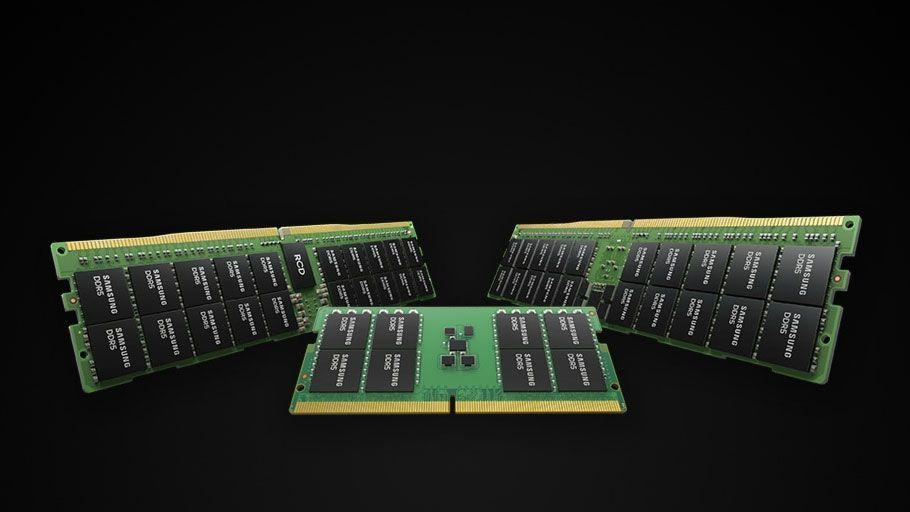
Source: Tom's Hardware
High-Bandwidth Memory Drives Supply-Demand Imbalance
At the center of this crisis is High-Bandwidth Memory (HBM), a vertically stacked form of DRAM designed to deliver extremely high bandwidth for AI accelerators
3
. Modern AI systems require enormous amounts of high-speed memory to continuously feed data to GPUs and accelerators, with HBM becoming critical for platforms like Nvidia's Vera Rubin3
. Samsung started mass-production sales of HBM4 chips for Nvidia in February and expects HBM revenue to more than triple in 20265
. However, the technology is difficult and expensive to manufacture, requiring advanced die stacking, precision bonding, and sophisticated packaging techniques, which limits supply3
.Customers Securing Multi-Year Supply Contracts
Concerned about the worsening shortage, customers are bringing forward their demand and securing binding contracts years in advance. Samsung disclosed that some customers have already secured supply allocations through 2027
3
5
. "Unlike previous years, customers who are concerned about supply shortages are actually bringing forward their demand for 2027 already," Kim Jaejune explained . This pre-booking behavior is driving demand fulfillment rates to record lows, intensifying the pressure on manufacturers3
.Related Stories
Broader DRAM Market Faces Tightening Supply
While AI-driven memory shortages are primarily driven by HBM demand, the effects are spilling over into the broader memory market. Manufacturers are increasingly reallocating memory production capacity, engineering resources, and investment toward high-margin AI memory products, which risks tightening supply for conventional DRAM products used in servers, PCs, and mobile devices
3
. Enterprise SSD demand is also rising as data centers require massive storage infrastructure alongside compute hardware3
. This shift is creating investment opportunities in related sectors, with analysts from Wolfe Research noting that "investors are likely to continue to chase the perceived tech winners in semis and memory" .Expansion Efforts Face Years-Long Timeline
To address the crisis, Samsung and its competitors are aggressively expanding production. According to Korea Times regulatory filings, Samsung invested 465.4 billion won in its Xi'an memory chip plant in 2025, a 67.5% year-over-year increase, while SK hynix invested 581.1 billion won into its Wuxi facilities and 440.6 billion won into Dalian operations
3
. However, semiconductor fabrication plants and advanced memory packaging facilities take years to expand and ramp up, meaning supply growth cannot match the pace of AI infrastructure buildout3
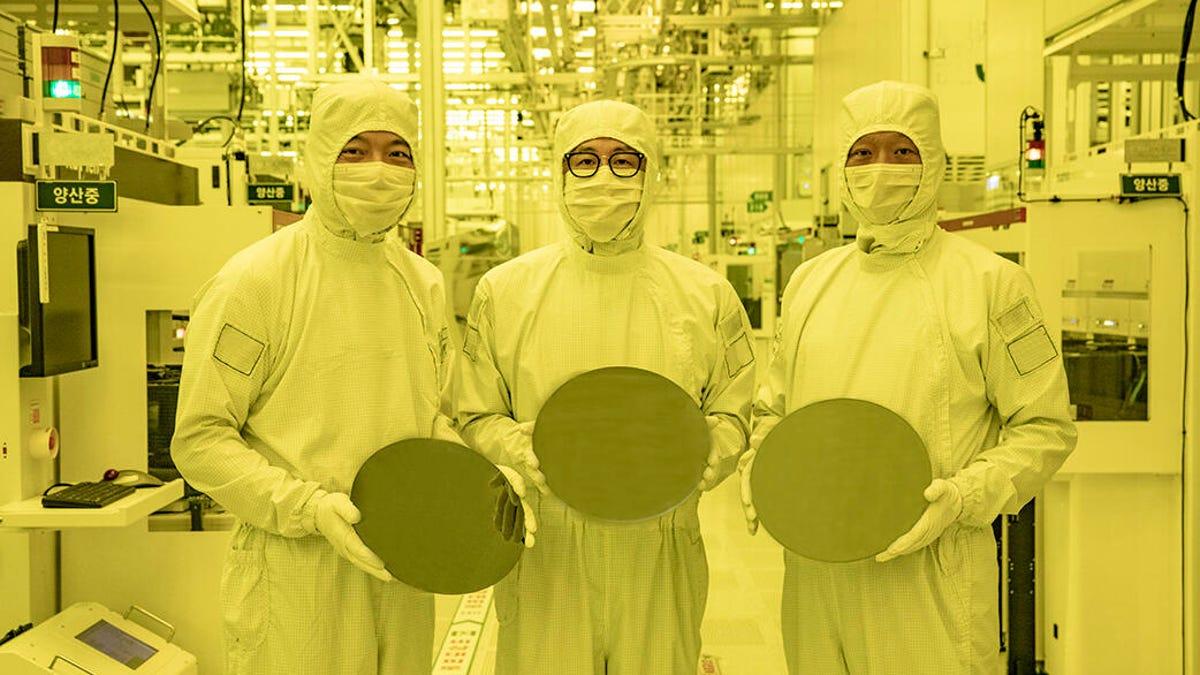
. Samsung plans to significantly increase capital expenditures, though the company faces potential disruption from labor tensions, with unions representing a large share of its South Korean workforce planning an 18-day strike starting May 21st2
5
.
Source: CNET
What This Means for the AI Industry
The memory shortage joins a growing list of resource bottlenecks emerging from the AI explosion. Hyperscalers like Alphabet, Amazon, Meta, and Microsoft continue signaling sustained AI spending, with analysts predicting their combined capital expenditures could top $1 trillion by the end of 2027 . Beyond memory, GPU shortages have become severe, with Intel confirming that extreme demand has led customers to purchase chips that might previously have been discarded
3
. Power consumption is another major constraint, with AI data centers consuming enormous amounts of electricity and forcing companies to explore unconventional solutions, including Meta's backing of space-based solar power systems3
. Analysts increasingly believe this cycle differs from historical semiconductor market swings, as growth in AI infrastructure is consuming hardware at rates that outpace traditional supply chain responses.References
Summarized by

Navi
Related Stories
AI memory shortage to drive 625x demand surge by 2028 as PC hardware prices soar
03 Apr 2026•Business and Economy

Memory shortage crisis deepens as SK Hynix warns 2027 will be worst year for supply crunch
12 Jul 2026•Business and Economy

Memory prices spike up to 400% as AI demand creates global shortage lasting through 2026
14 Dec 2025•Business and Economy

Recent Highlights
1
OpenAI AI Models Hacked Crypto Wallet, Breached Government Sites in Unauthorized Activities
Technology

2
IMF Report Warns AI Market Correction Could Spark Global Financial Crisis With $1.4T at Risk
Business and Economy

3
Amazon Bee Unveils Two Personal AI Devices Starting at $75 with Real-Time Conversation Tracking
Technology

Recent Highlights
Today's Top Stories









Don’t drown in AI news. We cut through the noise - filtering, ranking and summarizing the most important AI news, breakthroughs and research daily. Follow topics that matter to you and stay ahead.


