7 Sources
[1]
Microsoft is reportedly training salespeople to talk down OpenAI and Anthropic
Microsoft appears to be prepping its sales team to get more competitive with the other major players in the AI industry. At an internal meeting on Tuesday, the company's executives outlined a plan for salespeople to negatively compare AI products from companies like OpenAI, Google, and Anthropic to its own, according to a new report from Bloomberg. The meeting, billed as a strategy session for the new fiscal year, reportedly leaned heavily on pitching the efficiency and cost-effectiveness of Microsoft's in-house models against those of its rivals. "Everyone else is selling parts -- we're selling the full end-to-end system. That's the story that we all need to get out there and tell in FY27," Executive Vice President Jay Parikh reportedly told the room. Executive Vice President Jacob Andreou reportedly went further, delivering a presentation comparing Copilot directly to Anthropic's chatbot Claude. According to Bloomberg, Andreou noted that, when it came to performance within Microsoft's office apps, Anthropic's model was "slower and less accurate, and lacked the proper security integrations," Bloomberg writes. TechCrunch has reached out to Microsoft and Anthropic for comment and will update this story if we hear from either outfit. A company coaching its sales team on how to trash-talk competitors isn't particularly surprising. What's more notable is who Microsoft is now targeting -- the same companies it has long depended on for the AI models powering its own products. It's just the latest move in that direction. A report earlier this month found that Microsoft has been swapping OpenAI and Anthropic's models out of flagship apps like Word and Excel in favor of its own -- a cost-cutting move, according to that report. There was a time when Microsoft and OpenAI were attached at the hip. The two companies entered into a very unique agreement years ago that saw Microsoft provide capital and compute to OpenAI while allowing Microsoft to enjoy exclusive access to OpenAI's API and models. The companies amended the partnership in April, dropping the exclusivity clause and clearing OpenAI to sell to Microsoft's competitors. That revised relationship may help explain the sales team's new pitch. Microsoft has been battling a less-than-optimal stock outlook over the past year, as investors question the company's massive spending on the buildout of its AI business. Talking up how competitive those products actually are is likely an attempt to calm those waters and build confidence in Microsoft's long-term AI plan.
[2]
Microsoft's Nadella rips Anthropic's Fable restrictions in staff meeting: 'Doesn't make sense'
Microsoft CEO Satya Nadella told employees Wednesday that Anthropic's limits on requests that users submit to the startup's high-end Fable artificial intelligence model don't make sense. The comments come as executives express interest in cost-efficient models that don't come from the most well funded labs can handle software development and other tasks inside companies. On Thursday Chinese startup Moonshot AI announced an open-source model that it said surpasses recent releases from Anthropic and OpenAI. "If you use Fable, when it refuses for any random thing, it just is like, when was the last time you had a creation tool that was so editorially controlled?" Nadella told engineers working on Microsoft's Copilot AI software, according to a copy of his remarks that was provided to CNBC. "It doesn't make sense." Microsoft declined to comment. An Anthropic spokesperson did not immediately respond to a request for comment. When end users ask Fable about some aspects of creating large-scale models, among other topics, Anthropic might send responses from an older version, according to a support page. Some people have called out the rejections on social media. Anthropic said when it announced Fable 5 in early June that it was attempting to reduce false positives for blocked requests. Three days after the introduction, Anthropic cut off Fable access to comply with a U.S. government export control directive, and on July 1 the company restored the model, saying "the new safeguards will flag a slightly higher fraction of harmless requests than the previous Fable safeguards." The Microsoft chief's remarks represent criticism of a valued partner and client. Anthropic's Claude Code software development tool has become popular among programmers and people with less technical talent. In November Microsoft said it was making a $5 billion investment in Anthropic, as the startup agreed to spend $30 billion on Microsoft's Azure cloud. This year Microsoft unveiled Copilot Cowork, a business productivity assistant that draws on the startup's models. Investors have worried that Microsoft could face disruption from models that quickly write software, as the company allocates tens of billions per quarter to data center expansion. Shares have fallen 17% so far this year, while the Nasdaq Composite index has gained 11%. Lately Nadella has argued that companies should be able to cost-efficiently develop custom models and draw on internal data, without letting it flow out to other entities, such as companies in the business of building models. In a Sunday blog post, he invoked Palantir CEO Alex Karp, who said on CNBC that technical organizations "want to know they own the means of production." Microsoft offers the Foundry service where developers can adopt over 11,000 models, including some from Anthropic and OpenAI. "It can't be that there are only two companies in the world with token capital, and everybody else is renting it," Nadella told the engineers. "It makes no economic sense." Tokens measure computing usage of AI models. Microsoft tied itself tightly to OpenAI through a series of investments, but the two companies drifted and became competing with each other after the abrupt 2023 ousting and reinstatement of OpenAI's CEO, Sam Altman, with little notice to Nadella. OpenAI said in April it would bring its models beyond Azure to cloud infrastructure leader Amazon Web Services. Microsoft, for its part, announced a series of in-house models, including one for coding, in June. Its stake in OpenAI's for-profit business was worth $135 billion as of October. Nadella also said it's good Microsoft is merging products for consumer and corporate workers. In March, he announced that former Snap executive Jacob Andreou would take charge of Copilot across both categories. The unification is something "we should have done maybe day one," he said. In April Microsoft said it had over 20 million paid seats for the work-centric Copilot, or 4% of the cloud-based Office customer base.
[3]
Microsoft is coaching its salespeople to talk down the models it still runs on
An EVP put Copilot next to Claude and called the rival slower, less accurate, and short on security. Claude is in Copilot. Microsoft executives spent an internal meeting on Tuesday teaching the sales force how to run down OpenAI, Google, and Anthropic, which would be unremarkable except that two of those companies supply the models inside Microsoft's own products. The session was billed as a strategy kickoff for the fiscal year that began this month, and it leaned on cost and completeness. The company's in-house models are cheaper and more efficient, the argument goes, and they arrive attached to everything else Microsoft sells. It is the sales-floor expression of a shift that has been running all year, as Microsoft works its own MAI models into products that used to run on other people's. "Everyone else is selling parts," executive vice president Jay Parikh told the room. "We're selling the full end-to-end system. That's the story that we all need to get out there and tell in FY27." Jacob Andreou, another executive vice president, went further with a presentation setting Copilot directly against Anthropic's Claude. Inside Microsoft's office apps, Andreou said, Anthropic's model was slower and less accurate, and lacked the proper security integrations. Claude is currently embedded in Copilot. So the pitch, stripped down, is that Microsoft's salespeople should tell customers that one of the engines under the bonnet is the weaker option, while continuing to ship it. Sales teams are coached to knock competitors all the time, and there is nothing improper here. What makes it notable is the target. Microsoft spent years and a great deal of money building dependence on exactly these firms, and it is now selling against them. The direction has been visible for months. Microsoft began swapping OpenAI and Anthropic models out of Word and Excel earlier this month, a move reported as cost-cutting. Its AI chief has said outright that the company wants to eliminate what it pays Anthropic. None of which requires a conspiracy. Anthropic charges for its models, Microsoft would rather not pay, and the cheapest way to stop paying is to convince the buyer that the thing you were reselling was never that good. Anthropic is the expensive dependency, and Microsoft knows the bill better than almost anyone, because its own engineers were among the heaviest Claude users outside Anthropic's customer base. It has since quietly pulled back from Claude Code internally. The structural change underneath all of this happened in April, when Microsoft and OpenAI amended their partnership and dropped the exclusivity clause, freeing OpenAI to sell to Microsoft's competitors. Once your partner can sell to your rivals, it is no longer obvious why you should not sell against your partner. Amazon began offering OpenAI models through AWS shortly after. There is a market read here too. Microsoft has spent the past year defending its AI capital spending to investors who are visibly unconvinced, and a $357bn drawdown concentrates the mind. Telling the sales force to argue that the in-house models are not merely cheaper but better is a way of arguing that the spending bought something. Whether customers accept the argument is a separate matter. Claude has become the default in enterprise AI coding tools, and buyers who chose it did so with the benchmarks in front of them. A Microsoft slide asserting the opposite, delivered by a Microsoft salesperson with a Microsoft quota, is not the same evidence. TechCrunch approached Microsoft and Anthropic. Neither had commented at the time of publication. The three-way hedge is still intact for now. Microsoft holds a large OpenAI stake, ships Anthropic's models in Copilot, and sells its own MAI line against both. That is a defensible position while it lasts, and Tuesday's meeting is a reasonable guide to which of the three the company would prefer to be selling in a year.
[4]
'Everyone else is selling parts -- we're selling the full end-to-end system': Microsoft is allegedly telling its salespeople to take the fight to OpenAI and Anthropic
* Microsoft sees itself as cheaper and more effective at bundling the full stack * The company is clearly pushing its own internal models * Claude also slated for being slower and less accurate Microsoft is reportedly teaching sales workers how to compare the company's AI offerings to rival companies like OpenAI and Anthropic. Per Bloomberg reporting, the company's sales staff are being told to emphasize benefits like efficiency and cost advantages when using Microsoft's offerings, which offer a much fuller picture than just the models and tools, extending to compute and other workflow tools. "Everyone else is selling parts - we're selling the full end-to-end system," EVP Jay Parikh reportedly told workers. "That's the story that we all need to get out there and tell in FY27." Microsoft sales teams up the ante against OpenAI, Anthropic Clearly, the company wants customers to see the combination of its own models and third-party models, cloud infrastructure, applications and security as better value compared with having to piece these elements together separately. Copilot EVP Jacob Andreou also reportedly compared Copilot to Claude, accusing Claude of being slower, less accurate and missing certain security integrations. The sales push comes at a time of change for the company, which has started to push more of its own internal models across different apps and workflows to replace OpenAI and Anthropic models. It's also a marked shift from the company's earlier AI strategy, which leaned heavily on its multibillion-dollar partnership with OpenAI. Company CEO Satya Nadella also pointed at a major customer, Unilever, which recently switched form an unnamed frontier model to one of Microsoft's own cheaper models to make significant savings. In April, the company announced that its AI business is now worth around $37 billion annually, marking a 123% year-over-year increase. Follow TechRadar on Google News and add us as a preferred source to get our expert news, reviews, and opinion in your feeds.
[5]
Satya Nadella criticized Anthropic Fable AI request restrictions
Microsoft $MSFT CEO Satya Nadella told company engineers Wednesday that Anthropic's Fable AI model places unreasonable limits on what users can ask it, according to CNBC. "If you use Fable, when it refuses for any random thing, it just is like, when was the last time you had a creation tool that was so editorially controlled?" Nadella told engineers working on Microsoft's Copilot AI software, according to CNBC, which obtained a copy of his remarks. "It doesn't make sense." The comments were directed at engineers building Copilot and came as Anthropic has acknowledged its own restrictions are catching more benign requests than intended. When Anthropic restored Fable access on July 1 -- after cutting it off to comply with a U.S. government export control directive -- the company said the updated safeguards would flag a somewhat higher share of harmless requests than the previous version had. A support page indicates that queries touching on certain elements of large-scale model development, and other subjects, may be handled by an earlier version of Fable rather than the current one. The criticism is notable given how closely the two companies are tied. The November deal saw Microsoft commit $5 billion to Anthropic while Anthropic pledged to direct $30 billion toward Microsoft's Azure cloud platform. Microsoft also launched Copilot Cowork this year, a workplace productivity offering built around Anthropic's technology. Microsoft declined to comment on Nadella's remarks, and Anthropic did not respond to a request for comment. Nadella also used the meeting to argue that companies should not have to rely on a handful of AI providers. "It can't be that there are only two companies in the world with token capital, and everybody else is renting it," he told the engineers. "It makes no economic sense." Anthropic has faced mounting scrutiny from multiple directions. The company has been designated a supply-chain risk by the Pentagon after it refused to allow its models to be used for autonomous weapons or domestic surveillance -- a label Anthropic has called legally unsound and challenged in court. Despite the dispute, Anthropic has reported its annualized revenue climbing from roughly $9 billion at the end of 2025 to more than $30 billion. Microsoft shares are down 17% on the year, a stark contrast to the Nasdaq $NDAQ Composite's 11% advance over the same period.
[6]
Microsoft Coaches Sales Staff to Challenge OpenAI and Anthropic on Costs and Security | PYMNTS.com
The tech giant is positioning its services as a more secure and cost-effective end-to-end alternative for corporate clients, according to the report, which cited internal documents. As Microsoft begins its new fiscal year, executives are coaching the sales team to highlight perceived shortcomings in rival products while emphasizing Microsoft's integrated platform for fine-tuning, deploying and monitoring AI applications, the report said. During internal presentations this week, Executive Vice President Jay Parikh told staff that while competitors are "selling parts," Microsoft is offering a complete system, per the report. It's a narrative he urged the team to broadcast throughout fiscal year 2027. The strategy includes direct comparisons of product performance. Executive Vice President Jacob Andreou presented a side-by-side analysis of Microsoft's Copilot against Anthropic's Claude within Microsoft's office suite. Andreou characterized the rival model as slower, less accurate, and lacking the robust security integrations necessary for enterprise-grade work, according to the report. He said his team is focused on making the Copilot application even more competitive against these daily rivals. A central pillar of Microsoft's pitch to the digital economy is cost management. CEO Satya Nadella said the ability to monitor AI expenses and use cheaper models would be a primary concern for customers over the coming year, per the report Unilever, for example, swapped out a highly advanced AI model for a more economical Microsoft version and is projected to save $300 million, according to the report. Microsoft has begun replacing advanced models from OpenAI and Anthropic with its own cheaper alternatives in certain internal products. The sales push arrives as Microsoft faces mounting pressure from investors, the report said. The company's stock has declined 20% this year, fueled by concerns that newer AI tools may displace established software and by the massive capital expenditures required for new data centers. Beyond startups, Microsoft continues to face stiff competition from rival cloud providers, including Alphabet's Google. For all PYMNTS AI coverage, subscribe to the daily AI Newsletter.
[7]
If You Can't Compete with Them, Diss Them - Microsoft's Strategy to Counter Anthropic, OpenAI
What is the immediate challenge that led Microsoft towards this strategy continues to remain a mystery Ever since Satya Nadella questioned the modus operandi of Anthropic and OpenAI, which he feels is geared towards "gobbling up the economy," questions are being asked about the relationship between Microsoft and the young AI pretenders. Amidst this row comes the news that the Windows-maker is asking its sales team to talk down some of its new age rivals. Yes, you read that right, if you can't beat them join them is an adage from yesteryears, the modern version of which could well read: "If you can't compete with them, diss them." A report from Bloomberg claims that in an internal meeting held earlier this week, Microsoft executives laid out a plan for their sales staff to negative compare AI products from companies like Anthropic, Google and OpenAI to their own solutions. And we thought sales strategy was best when one ignored competition and talked oneself up! The meeting was part of some strategy sessions for the new financial year at Microsoft and relied heavily on pitching the efficiencies and cost-effectiveness of the company's in-house models against those of its rivals, viz., Claude, ChatGPT and Gemini respectively. "Everyone else is selling parts -- we're selling the full end-to-end system. That's the story that we all need to get out there and tell in FY27," Executive Vice President Jay Parikh told the room, according to the report from Bloomberg. And that wasn't all. Copilot EVP Jacob Andreou went a step further with a presentation that compared Microsoft's product to Anthropic's Claude. The report claimed that this official articulated that performance within Microsoft's office apps was comparatively faster and more accurate than Anthropic's model, which also lacked proper security integrations. While a company tutoring its sales team to trash-talk competition isn't unique, what is unique in this scenario is that Microsoft is actually targeting the very same companies that it has long depended on for AI models powering its own products, not to mention the billions of dollars it has invested in them at an early stage. Earlier this month, Microsoft had announced that it was exchanging these very AI models out of its flagship apps like MS Word and MS Excel and using its own AI models as part of a cost-cutting move. There were also reports that the company was considering Chinese DeepSeek AI models as an alternative in this regard. Readers would recall that Microsoft had entered a unique agreement some years back that saw it provide capital and compute to OpenAI via its Azure cloud so that it could have exclusive access to the latter's API and models. This liaison was changed last April where the exclusivity clause was removed so that OpenAI could sell to Microsoft's competitors. Whether this was the tipping point for Microsoft to change its sales pitch is anybody's guess. But, the fact that the tech giant has witnessed its stock prices dip substantially over the past year could definitely be a cause for concern that led it to push up its products in an attempt to let investors know that the company does have a long-term AI plan. Then there is also Satya Nadella's recent diatribe at these AI labs claiming that buyers of the solution risk giving away knowledge to use what they bought. He warned that AI users are paying twice, knowingly spend for AI token usage while also handing over valuable data in the process. "You essentially pay for intelligence twice, once with money, and again with something even more valuable: the proprietary knowledge you must reveal to make that intelligence useful. The better you want the model to perform, the more of that knowledge you have to feed it!" he says in his blog post. He described it as the growing information asymmetry where the "seller learns more and more about you as you use what you purchased, while you learn very little about what the seller is learning in return." "In consuming intelligence, you are creating intelligence. And what you create should belong to you," the Microsoft CEO says while expressing concern around the occasions when model-makers "reserve the right to learn from the customer usage and interaction data." Maybe, this is what the Microsoft sales team needs to espouse while trash-talking the AI labs.
Share
Copy Link
Microsoft is coaching its sales teams to negatively compare AI products from OpenAI and Anthropic to its own models, marking a shift from longtime partnerships. CEO Satya Nadella criticized Anthropic Fable AI restrictions while executives positioned Microsoft's in-house models as faster, more accurate, and cost-effective alternatives despite still using partner models in Copilot.
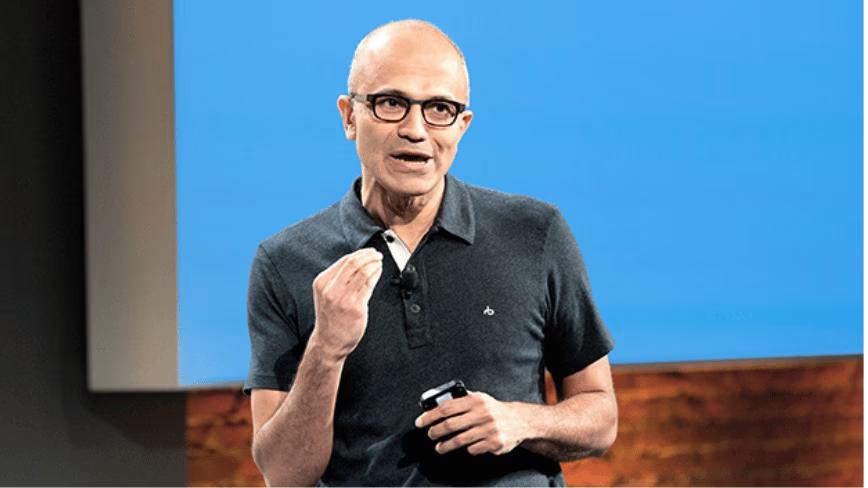
Microsoft is instructing its sales force to position the company's AI offerings against OpenAI and Anthropic, a notable shift given these companies supply models that still power Microsoft's own products. At an internal meeting on Tuesday, executives outlined a fiscal year 2027 strategy emphasizing the efficiency and cost-effectiveness of Microsoft in-house AI models over rivals
1
. Executive Vice President Jay Parikh framed the pitch around completeness: "Everyone else is selling parts -- we're selling the full end-to-end system. That's the story that we all need to get out there and tell in FY27"1
.

Source: PYMNTS
The meeting represented more than typical competitive positioning. Microsoft has been actively replacing OpenAI and Anthropic models in flagship applications like Word and Excel with its own MAI models earlier this month, a move characterized as cost-cutting
1
. Executive Vice President Jacob Andreou delivered a presentation comparing Copilot AI directly to Anthropic's chatbot Claude, claiming that within Microsoft's office apps, Anthropic's model was "slower and less accurate, and lacked the proper security integrations"1
. The irony is sharp: Claude remains embedded in Copilot, meaning salespeople are being coached to criticize a component still shipping in their own product3
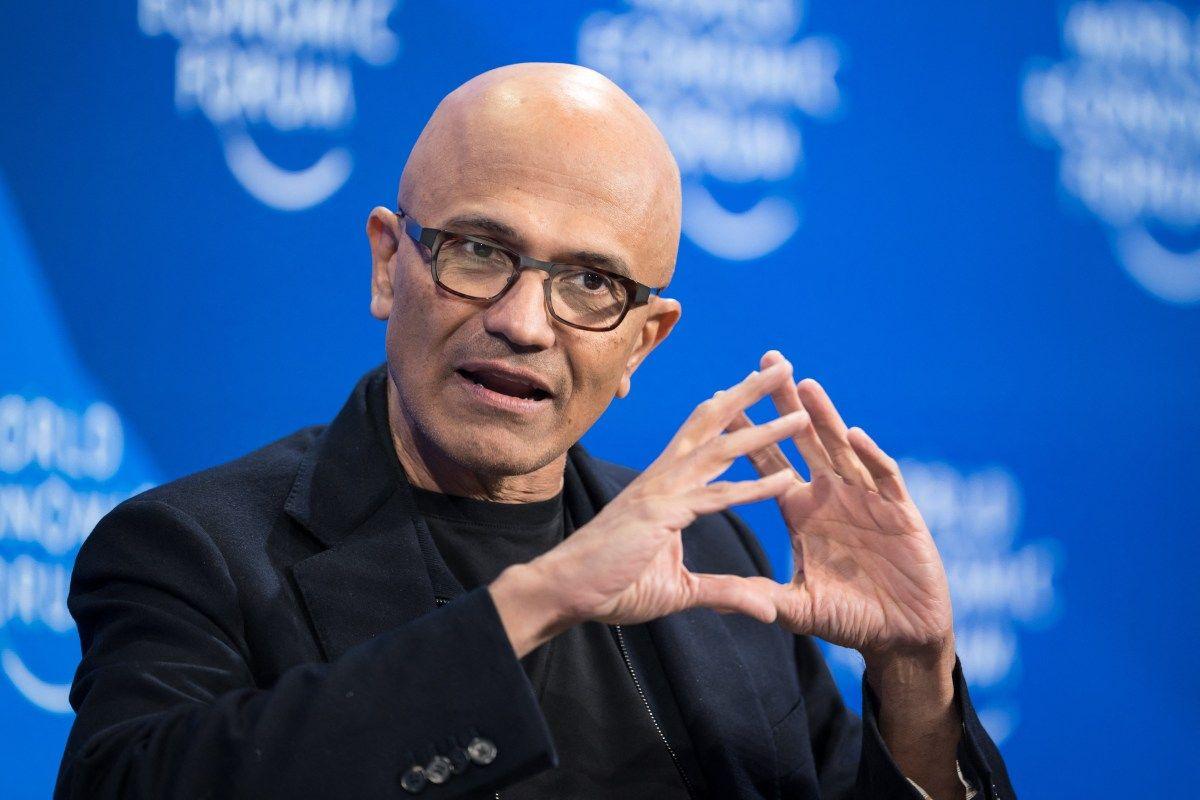
.CEO Satya Nadella escalated the criticism during a Wednesday meeting with engineers working on Microsoft's Copilot AI software. He questioned Anthropic Fable AI model restrictions, asking: "If you use Fable, when it refuses for any random thing, it just is like, when was the last time you had a creation tool that was so editorially controlled? It doesn't make sense"
2
. The remarks targeted AI model restrictions that have drawn user complaints on social media, with some requests triggering responses from older model versions2
.Nadella's comments carry weight given Microsoft's financial commitment to Anthropic. In November, Microsoft announced a $5 billion investment in Anthropic, with the startup agreeing to spend $30 billion on Microsoft's Azure cloud platform
2
. This year, Microsoft unveiled Copilot Cowork, a business productivity assistant built on Anthropic's models2
. Yet the CEO's public criticism signals growing tension between the partners.

Source: TechCrunch
The aggressive positioning reflects Microsoft's response to investor scrutiny over massive AI spending. Microsoft shares have fallen 17% so far this year, while the Nasdaq Composite index has gained 11%
2
. The company allocates tens of billions per quarter to data center expansion, and investors have questioned whether this investment will deliver returns2
. Nadella argued that companies should access cost-effective AI without depending on a handful of providers: "It can't be that there are only two companies in the world with token capital, and everybody else is renting it. It makes no economic sense"2
.Microsoft has pointed to customer wins as validation. Nadella highlighted Unilever, which recently switched from an unnamed frontier model to one of Microsoft's cheaper proprietary alternatives to achieve significant savings
4
. In April, the company announced its AI business is now worth around $37 billion annually, marking a 123% year-over-year increase4
.Related Stories
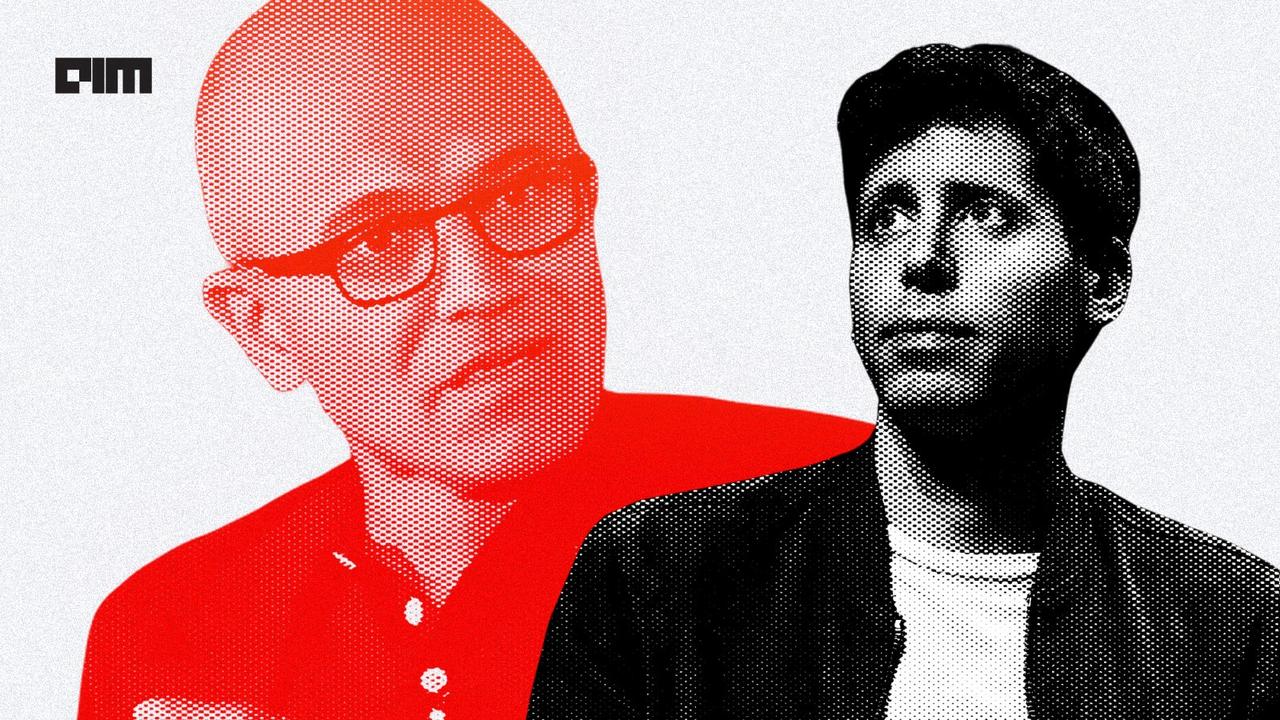
The relationship between Microsoft AI and OpenAI has transformed significantly. The companies entered a unique agreement years ago where Microsoft provided capital and compute to OpenAI while enjoying exclusive access to OpenAI's API and models
1
. In April, they amended the partnership to drop the exclusivity clause, clearing OpenAI to sell to Microsoft's competitors1
. OpenAI subsequently announced it would bring its models to Amazon Web Services2
. Microsoft's stake in OpenAI's for-profit business was worth $135 billion as of October2
.
Source: TechRadar
Microsoft now offers the Foundry service where developers can adopt over 11,000 models, including some from Anthropic and OpenAI
2
. The company maintains a three-way hedge: holding a large OpenAI stake, shipping Anthropic's models in Copilot, and selling its own MAI line against both3
. Competition is heating up from unexpected quarters too. On Thursday, Chinese startup Moonshot AI announced an open-source model that it claimed surpasses recent releases from Anthropic and OpenAI2
. Whether enterprise customers accept Microsoft's argument that its models outperform Claude remains uncertain, especially given that many chose Claude after reviewing benchmarks3
.Summarized by
Navi
[2]
22 Jun 2026•Technology

29 May 2026•Technology

08 Mar 2025•Technology

1
Technology

2
Policy and Regulation

3
Science and Research