Sber's AI took on Gogol's burnt novel. Not everyone wants to read it


2 Sources
[1]
Russian AI model fills void in unfinished Gogol novel. Not everyone is happy
MOSCOW, Nov 27 (Reuters) - Unable to complete his novel "Dead Souls", the writer Nikolai Gogol suffered a breakdown and threw part of his manuscript into the fire only days before he died in 1852. The book - though still regarded as a masterpiece of Russian literature - remained unfinished, with
[2]
Russian AI Recreates Gogol's Lost Novel, Sparking Reader Debate
A Russian AI model has recreated a continuation of Nikolai Gogol's unfinished novel Dead Souls, but its release has divided readers and literary experts over whether artificial intelligence can replicate an author's creative vision today. A Russian AI model has produced a version of the lost
Share
Copy Link
Sber, the Russian banking and technology conglomerate, has published an AI-written version of the second volume of Dead Souls, the sequel Nikolai Gogol burned days before his death in 1852
1
2
.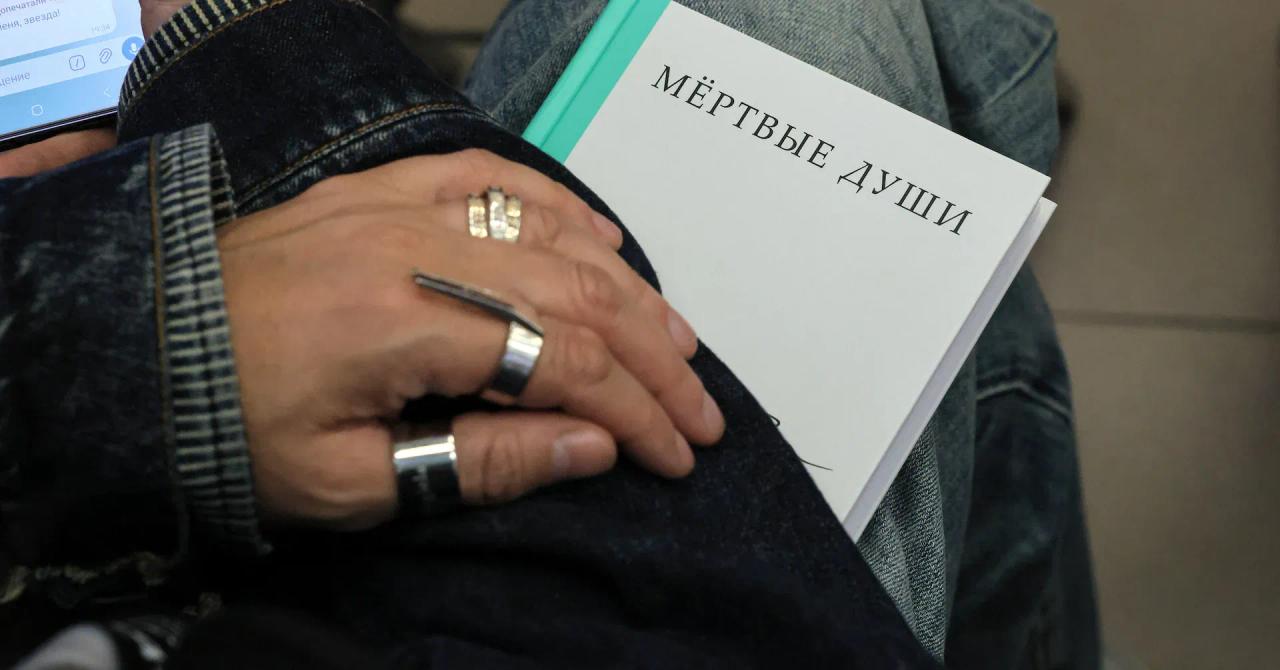
Source: Reuters
Gogol burned part of the manuscript days before dying in 1852, and only the first of his three planned volumes survived intact
1
2
. That lost sequel is what Sber's GigaChat model set out to fill. The result, published as "Dead Souls: Revival", was produced with a team of linguists, engineers and historians under project lead Vladislav Otroshenko1
2
.Four months to find Gogol's voice
Otroshenko said the point of the project was to test whether AI could convey the essence and manner of a great writer
1
2
. He judged that it managed the plot and the artistic side well1
2
. "It handled the artistic side of the task, and the plot element in particular, very well," he said1
.He told Reuters it took the model about four months to develop a plausible literary style
1
2
. Gogol's style is, in his view, the most challenging in Russian literature1
2
. He is also the book's chief promoter. "It is a bestseller ... Readers are genuinely interested in it. Does it have artistic value? Of course it does, because it is the first unique, unprecedented experiment of its kind," he said1
. The bestseller label is his own.Divided readers
The surviving first volume follows the swindler Chichikov, who schemes to acquire dead serfs still registered to landlords; Gogol meant the later volumes to show his moral regeneration
1
2
. Whether Sber's AI continuation of that story counts as literature is where opinion splits.One Muscovite who attended the launch, Igor, was convinced. "The book is truly unique, and I believe that admirers of Gogol now have an opportunity to assess it, compare it and see how Chichikov's adventures ended," he said
1
.The sharpest objection to the Sber project came from Gogol expert Artyom Nikitin, who argued that one book does not follow automatically from everything an author wrote before. By that logic, he said, AI could produce follow-ups to countless other works
1
2
. "But I believe that a literary work does not automatically flow from everything that an author created before," he said1
.Larisa, who was visiting the Gogol Museum in Moscow, said AI cannot capture what was lost. "It will not move me and I don't even want to read it," she said
1
.Related Stories

References
Summarized by

Navi
[2]
Related Stories
New York Times drops critic over AI use as ethical concerns shake publishing industry
25 Mar 2026•Entertainment and Society

Authors Face Career-Ending AI Accusations as Publishing Industry Grapples With Trust Crisis
10 Apr 2026•Entertainment and Society

OpenAI's New AI Model Sparks Debate on the Future of Creative Writing
12 Mar 2025•Technology
Recent Highlights


Recent Highlights
Today's Top Stories









Don’t drown in AI news. We cut through the noise - filtering, ranking and summarizing the most important AI news, breakthroughs and research daily. Follow topics that matter to you and stay ahead.


