SiamAI denies U.S. chip export violations amid $2.5 billion investigation into AI servers


2 Sources
[1]
Bangkok's SiamAI rejects allegations of U.S. chip export violations By Investing.com
Investing.com -- Bangkok-based technology firm SiamAI issued a formal denial on Saturday regarding allegations that it circumvented U.S. export restrictions to ship advanced artificial intelligence servers to China. The company, which has come under scrutiny during a broader crackdown on the
[2]
Thailand's SiamAI denies exporting US AI servers to China
BANGKOK, May 9 (Reuters) - Bangkok-based SiamAI said on Saturday it had not exported AI servers to China and that it complies with U.S. export and re-export control laws. Here are some details of the company's statement: o The firm has faced allegations of circumventing exports of advanced chips
Share
Copy Link
Bangkok-based technology firm SiamAI has formally rejected allegations that it circumvented U.S. export restrictions to ship advanced AI servers to China. U.S. prosecutors claim at least $2.5 billion in American AI technology was illegally shipped, with more than $500 million moved between April and mid-May 2025. The case highlights growing tensions over semiconductor controls as Thailand emerges as a critical digital infrastructure hub.
SiamAI Faces Serious Allegations Over Advanced Chip Transfers
Bangkok-based technology firm SiamAI issued a formal denial on Saturday addressing allegations that it circumvented U.S. export restrictions to facilitate the unauthorized transfer of high-end semiconductors to China
1
. The company, which has come under scrutiny during a broader crackdown on illegally exporting US-made AI servers, maintained that it remains in full compliance with international trade regulations and has not engaged in the export of AI servers to China2
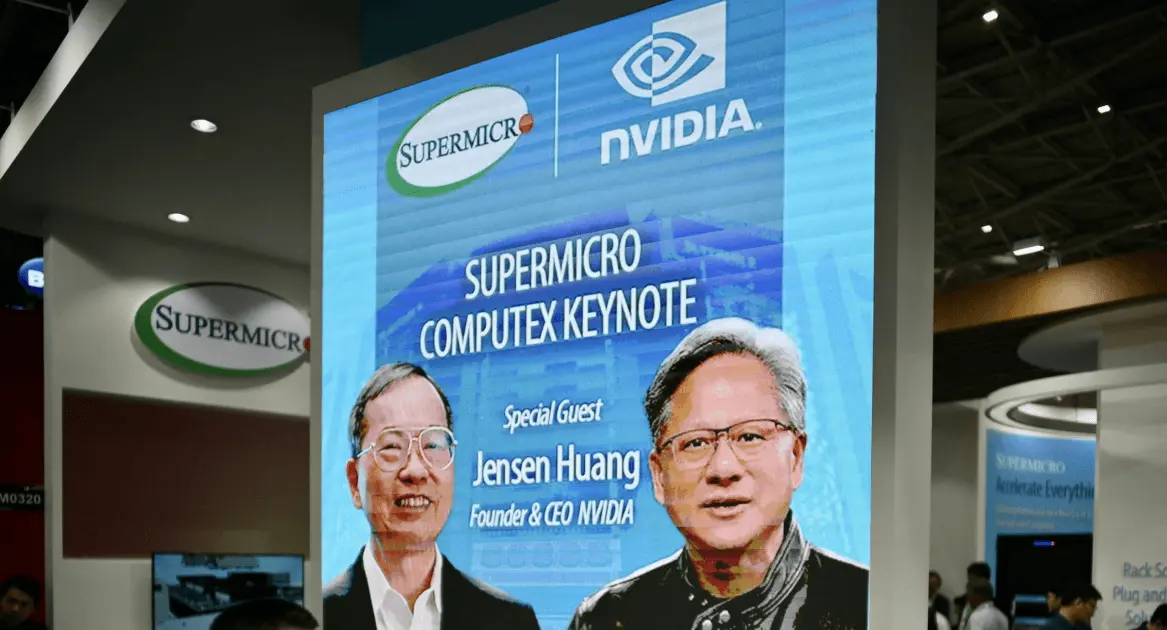
.The firm addressed claims that it acted as an intermediary for advanced chips produced by U.S.-based leaders Super Micro Computer and Nvidia. In an official statement, SiamAI emphasized its regulatory commitment, stating it is "committed to full adherence to all applicable U.S. export and re-export control laws and regulations"
1
.U.S. Prosecutors Allege Massive Technology Breach
The denial follows serious allegations from U.S. prosecutors, who claim that at least $2.5 billion in sensitive American AI technology has been illegally shipped to China
2
. Investigators highlighted a specific window between April and mid-May 2025, during which more than $500 million worth of equipment was allegedly moved1
. The latest legal actions are part of a wider effort by Washington to prevent military and strategic competitors from acquiring high-performance hardware capable of training large-scale language models.Thailand's Growing Role in Global AI Infrastructure
Thailand has recently emerged as a significant digital infrastructure hub, attracting billions of dollars in data center investments from global giants including Microsoft, Alphabet Inc's Google, and ByteDance's TikTok
1
2
. The influx of capital has positioned the country as a critical node in the global AI supply chain, but it has also increased oversight from Western regulators concerned about potential "leakage" of restricted technology into prohibited markets1
.Related Stories
Implications for Global Semiconductor Controls
While SiamAI maintains its innocence and insists on compliance with US export and re-export control laws, the ongoing investigation underscores the heightening tensions surrounding the global distribution of high-performance silicon
1
. The case matters significantly for companies operating in the AI hardware space, as it demonstrates how U.S. chip export controls are being actively enforced across international jurisdictions. For Thailand, the scrutiny could impact its attractiveness as a neutral technology hub if concerns about compliance persist. Observers should watch for additional enforcement actions and whether other firms in the region face similar investigations as Washington intensifies efforts to restrict China's access to cutting-edge AI capabilities.References
Summarized by

Navi
[1]
[2]
Related Stories
Supermicro execs allegedly smuggled $2.5B in Nvidia AI GPUs to Alibaba through Thailand
08 May 2026•Policy and Regulation
US Considers AI Chip Export Restrictions to Malaysia and Thailand to Prevent China Access
05 Jul 2025•Policy and Regulation
US Investigates Potential Circumvention of AI Chip Export Controls via Singapore
31 Jan 2025•Policy and Regulation

Recent Highlights



Recent Highlights
Today's Top Stories



Don’t drown in AI news. We cut through the noise - filtering, ranking and summarizing the most important AI news, breakthroughs and research daily. Follow topics that matter to you and stay ahead.


