Smugglers Exploit Export Loophole to Sneak Banned HBM Chips into China Using Dummy Processors


2 Sources
[1]
AI chip smugglers exploit trade control loophole to bring banned HBM from South Korea into China -- expensive memory chips packaged with cheap, unsanctioned processors to become legal exports
A memory smuggler has detailed how he gets export-controlled HBM chips from South Korea into China using a loophole. According to The Information, the smuggler owns a chip design firm that build cheap, low-performing processors that fall under the U.S. and South Korea's export controls. They are
[2]
Smugglers are reportedly soldering top-tier HBM onto deliberately useless processors to sneak it into China, and the trick isn't new
* Smugglers are reportedly pairing Samsung and SK hynix HBM with deliberately useless processors so the package passes export regulations as a low-end chip * Shenzhen workshops then heat the packages, pry off the HBM3E, and sell it for about $4,000 a stack, mostly to Huawei customers * The trick
Share
Copy Link
Smugglers are bypassing U.S. export restrictions by pairing high-end HBM chips from Samsung and SK hynix with deliberately weak processors. Once in China, Shenzhen workshops desolder the memory, selling HBM3E stacks for $4,000 each to meet surging AI chip demand.
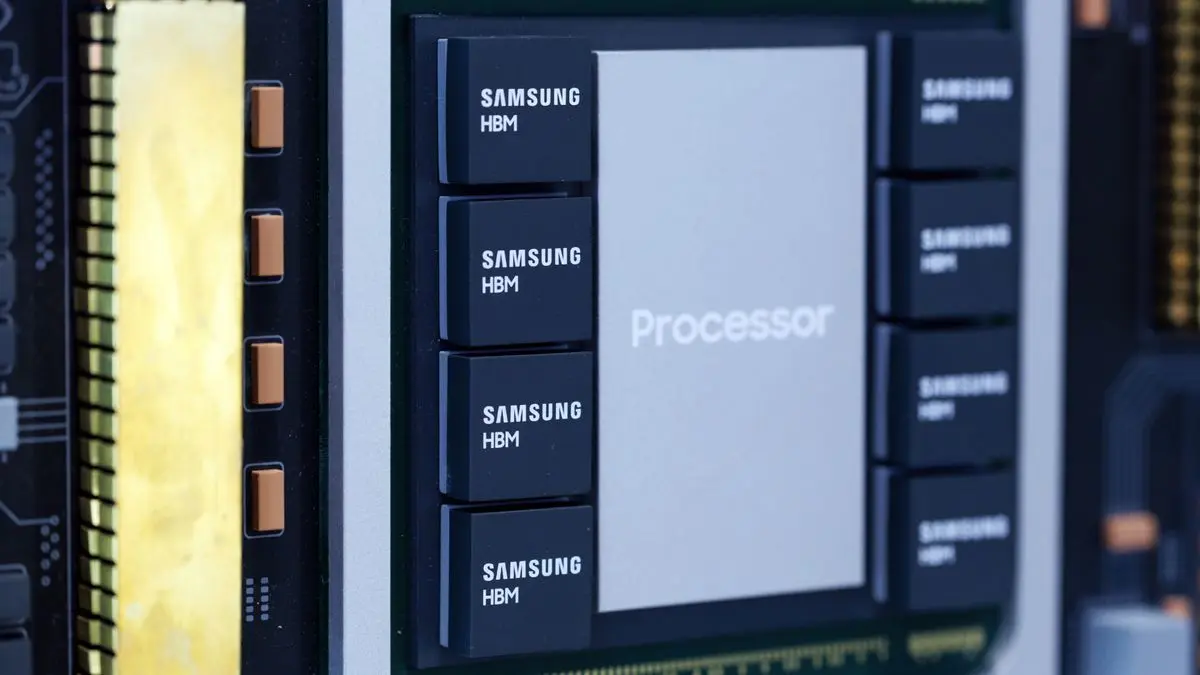
Smugglers Exploit Export Control Loophole to Move HBM Chips into China
A sophisticated AI chip smuggling operation is exploiting a critical gap in U.S. export restrictions to bring banned HBM from South Korea into China. According to The Information, smugglers are pairing expensive high-bandwidth memory chips from Samsung and SK hynix with deliberately low-performing unsanctioned processors that fall outside export controls
1
. The scheme works because U.S. export control rules only evaluate the performance of the server processor, not the other components attached to it, allowing the HBM chips to slip through undetected.How the Smuggling Operation Works
The smuggler at the center of this operation runs a chip design firm that produces cheap, intentionally useless processors. These processors are so weak that no data center would purchase them, but that's precisely the point—they provide a legitimate reason to order top-tier HBM3E in volume
2
. Packaging houses in Taiwan, South Korea, and Southeast Asia bond the memory and processor onto a single substrate, creating co-packaged chips that are declared as ordinary processors for export purposes. Once these packages reach Hong Kong, they're smuggled across the border into Shenzhen in the luggage of daily commuters, car trunks, and bags2
.Risky Desoldering Process Fuels Black Market
In Shenzhen workshops, technicians heat the boards to soften the solder, carefully lift the crucial memory chips, and discard the rest of the components. Despite a high failure rate—excessive or rapid heat can warp or crack the memory stacks—the procedure remains lucrative due to soaring HBM prices
1
. A Shenzhen-based chip broker revealed that a year ago, a single HBM3E unit changed hands in China for several hundred dollars. Today it's about $4,0001
. With an AI chip requiring six to eight high-end memory chips, brokers are raking in $24,000 to $32,000 for every AI GPU.Memory Chip Shortage Drives Demand for Smuggled HBM
Chinese AI labs face a severe memory chip shortage when acquiring AI GPUs. While Chinese memory manufacturer CXMT has begun risk production of HBM3E and expects to mass produce them by the end of this year, it's reportedly suffering from low yield, making their chips expensive to produce and procure
1
. Huawei's Ascend 950DT, its current top-of-the-line processor, goes for about $37,000—offering similar pricing to Nvidia's B200 AI GPU but delivering only half the performance of the previous-generation H1001
. Huawei has told customers that for its next-generation flagship AI processor, the 960DT, they must source the HBM themselves, further fueling demand and making smuggling high-bandwidth memory chips even more profitable.The December 2024 BIS Loophole
This smuggling method exploits a gap in rules published by the U.S. Commerce Department's Bureau of Industry and Security (BIS) in December 2024. Those rules require a license to ship standalone HBM with a bandwidth density above 2GB/s/mm^2 to China, but a technical note excludes co-packaged chips combining HBM and logic
2
. These packages are judged by processing performance instead. Pair a fast memory stack with a slow processor, and you get a chip cleared for export even if the primary goal is securing the HBM. The exclusion applies only "where the dominant function of the co-packaged integrated circuit is processing," yet it's hard to argue processing is dominant when a package's value lies almost entirely in its memory2
.Related Stories

Not a New Trick
This approach isn't new. In April 2025, SemiAnalysis reported that CoAsia Electronics, Samsung's HBM distributor in Greater China, was shipping HBM2E to Taiwanese design services firm Faraday Technology, which had SPIL package it with a low-cost 16nm logic die before sending it to China, where the memory could be desoldered
2
. By September 2025, SemiAnalysis estimated China had amassed about 13 million HBM stacks, including 11.4 million directly from Samsung, with some 7 million acquired in the month between the December 2024 rule's announcement and enforcement2
. Teardowns have already found Samsung and SK hynix memory inside Huawei's Ascend 910C.Authorities May Close the Gap Soon
As this method of smuggling HBM chips becomes more popular, the smuggler fears that South Korean and U.S. authorities will clamp down soon. Washington has been aggressive in pursuing similar activities, with high-profile arrests including some Super Micro executives and the CEO of a California-based tech company
1
. Other countries like Taiwan and Malaysia have ramped up their anti-smuggling activities, making it likely Seoul will follow suit. Watch for regulatory updates from BIS that specifically address co-packaged chips where the dominant function is memory access rather than processing, potentially closing this export control loophole and disrupting the flow of smuggled HBM to China's AI industry.References
Summarized by

Navi
Related Stories
$4.6 Billion in Export-Restricted Nvidia AI Chips Smuggled Into China Despite U.S. Controls
18 Sept 2026•Policy and Regulation
Chinese Tech Giants Order $35 Billion in Nvidia Chips as Export Controls Tighten Supply
20 Oct 2026•Business and Economy

Banned Nvidia AI chips double to $1.1M on China black market as US crackdown tightens supply
24 Jun 2026•Business and Economy

Recent Highlights
1
Google DeepMind unveils Genie 4 world model with audio and 2-minute interactive simulations
Technology

2
Google Unveils Gemini 4 Carbon AI Model With Major Cybersecurity Gains, Beating Claude Opus 5.5
Technology

3
Pope Leo XIV Demands AI Disarmament and Ban on Autonomous Weapons at UN Geneva Meeting
Policy and Regulation

Recent Highlights
Today's Top Stories





Don’t drown in AI news. We cut through the noise - filtering, ranking and summarizing the most important AI news, breakthroughs and research daily. Follow topics that matter to you and stay ahead.


