South Korea Unveils Hangang Supercomputer with 614 Petaflops for AI Research and Quantum Computing


3 Sources
[1]
24x performance boost: South Korea unveils 614-petaflop supercomputer
In 2027, KISTI will connect it to a quantum computer it plans to introduce and carry out hybrid computing research in South Korea. The Korea Institute of Science and Technology Information (KISTI) launched 'Hangang', the nation's sixth supercomputer at a ceremony attended by over 200 members from
[2]
South Korea launches Hangang supercomputer with quantum plans
South Korea inaugurated its sixth national supercomputer, Hangang, at the Korea Institute of Science and Technology Information in Daejeon on Monday, with researchers set to gain official access on Dec. 14. Hangang has 8,496 Nvidia GH200 Grace Hopper Superchips and 9,936 CPUs, with a theoretical
[3]
Korea unveils $276 mil. 'Hangang' supercomputer
Hangang's national strategic research work will include K-Moonshot, a government initiative using advanced AI models to address scientific and technological challenges. Korea has officially launched its sixth national supercomputer, named "Hangang" after the iconic Han River flowing through Seoul,
Share
Copy Link
South Korea launched Hangang, its sixth national supercomputer, at the Korea Institute of Science and Technology Information in Daejeon. With 614 petaflops performance powered by 8,496 NVIDIA GH200 chips, the system delivers 24 times the computing power of its predecessor. KISTI plans to connect Hangang to a quantum computer by 2027 for hybrid computing research.
South Korea Launches Sixth National Supercomputer
South Korea officially inaugurated the Hangang supercomputer at the Korea Institute of Science and Technology Information (KISTI) headquarters in Daejeon, marking a significant milestone in the nation's computational capabilities
1
3
. The ceremony brought together over 200 leaders from industry, academia and government research institutions1
. Named after the iconic Han River flowing through Seoul, this sixth national supercomputer represents a major technological shift toward modern machine learning and AI research3
. Researchers will gain official access starting Dec. 16, following a pilot testing phase that began in late October2
3
.
Source: Interesting Engineering
Unprecedented Computing Power with 614 Petaflops Performance
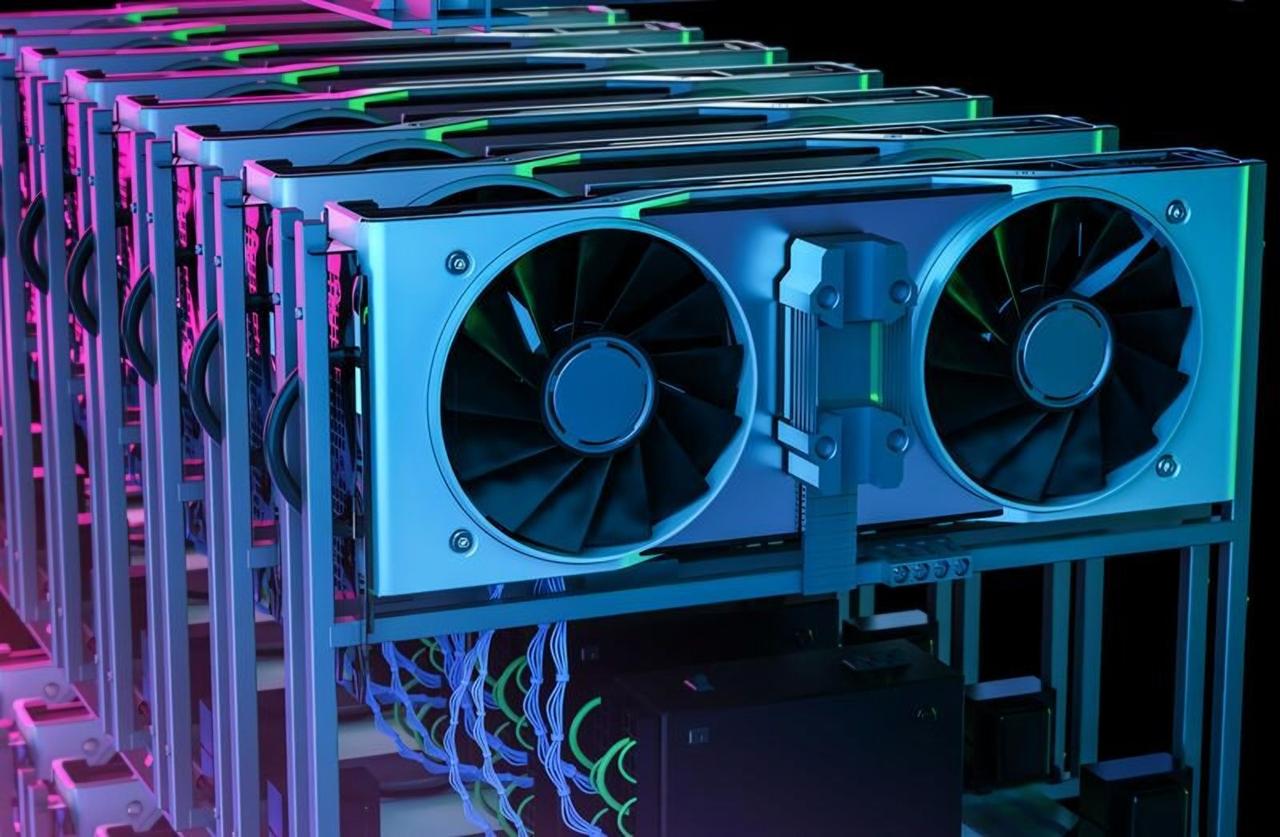
The Hangang supercomputer delivers a theoretical peak performance of 614 petaflops, enabling 614.7 quadrillion calculations per second
1
3
. This represents a 24-times leap over Nurion, South Korea's fifth supercomputer launched in 20181
2
. The system is powered by 8,496 NVIDIA GH200 chips that integrate GPUs and CPUs, along with 9,936 CPUs1
3
. Each Grace Hopper Superchips combines a 72-core Arm Grace CPU with an H100 Hopper GPU in one chip package, using a 900 GB/s bidirectional NVLink-C2C interconnect2
. The Ministry of Science and ICT expects Hangang to secure a spot in or near the global top 10 in the upcoming Top500 supercomputer rankings when the list is released at the SC26 conference in Chicago2
3
.Advanced Infrastructure and Storage Capabilities
Hangang boasts 205 petabytes of storage capacity with transmission speeds of 400 gigabits per second
1
2
. This represents 10 times more storage and four times greater network performance compared to Nurion2
3
. The chips provide 480 GB of LPDDR5X CPU memory and 96 GB of HBM3 GPU memory, which appear to the operating system as a single 576 GB coherent address space2
. Research teams using a GH200-based pilot system recorded performance gains of up to 41.8 times over the previous-generation A100 GPU architecture during a hackathon earlier this year2
. Constructed at a cost of 382.5 billion won ($276 million), the project reached a total cost of 448.3 billion won (about $336 million), 53% above its original 292.9 billion won budget2
3
.
Source: Korea Times
Delayed Launch Due to GPU Market Surge
Hangang's arrival faced significant delays caused by surges in GPU prices during the recent AI boom
1
. The project passed a feasibility study in 2022, but tenders failed as demand for GPUs skyrocketed1
. KISTI had to redraw plans to meet changing research needs and possibilities, and after four years, Korea's supercomputer no. 6 is now available for users1
. KISTI signed its final Hangang contract with Hewlett Packard Enterprise in May 2025 after earlier procurement efforts failed to secure viable bids2
. The HPE Cray EX400 contract included 382.5 billion won for hardware and construction and 78 billion won for five years of maintenance2
.Nurion's Legacy and Research Impact
Nurion, launched in 2018, has a stellar track record that Hangang now builds upon
1
. In eight years of operation, South Korea's fifth supercomputer was involved in 1,730 research projects which culminated in over 1,520 publications across a wide spectrum of subject areas ranging from next-generation battery materials to building AI systems for chemical analysis using large language models1
3
. Those efforts produced 70 papers published in top-tier international journals such as Nature, Science and Cell3
. Nurion ranked 11th globally at launch and maintained its position as a critical research infrastructure2
3
.Resource Allocation for Research and Industrial Innovation
KISTI has allocated computing resources strategically to maximize impact across multiple sectors
1
. The distribution includes 55 percent for research and development, 30 percent for national strategy, and 15 percent for industrial innovation, with the latter supporting small and mid-sized companies1
. Hangang's shared-use model ranges from one four-GH200 node for smaller projects to allocations of 50 nodes for larger research projects2
. While Hangang continues running the same heavy computational simulations handled by its predecessor, such as vehicle crash tests and real-time weather forecasting, it represents a major technological shift toward modern machine learning3
.Related Stories
K-Moonshot Initiative and National Strategic Goals
Hangang's primary mission will focus on powering the K-Moonshot initiative, a flagship Korean government program applying advanced AI models to tackle major scientific and technological challenges
3
. The initiative, launched in March 2026, aims to double South Korea's science and technology research productivity by 2030 and address 12 national missions across eight strategic sectors by 20352
. Ministry of Science and ICT R&D policy chief Kim Sung-soo said Hangang would support the convergence of AI with science and technology2
. The government allocated 10.1 trillion won (about $7.6 billion) for AI-related research and development in 2026, a 28% increase from a year earlier2
.Hybrid Quantum-Classical Computing Plans for 2027
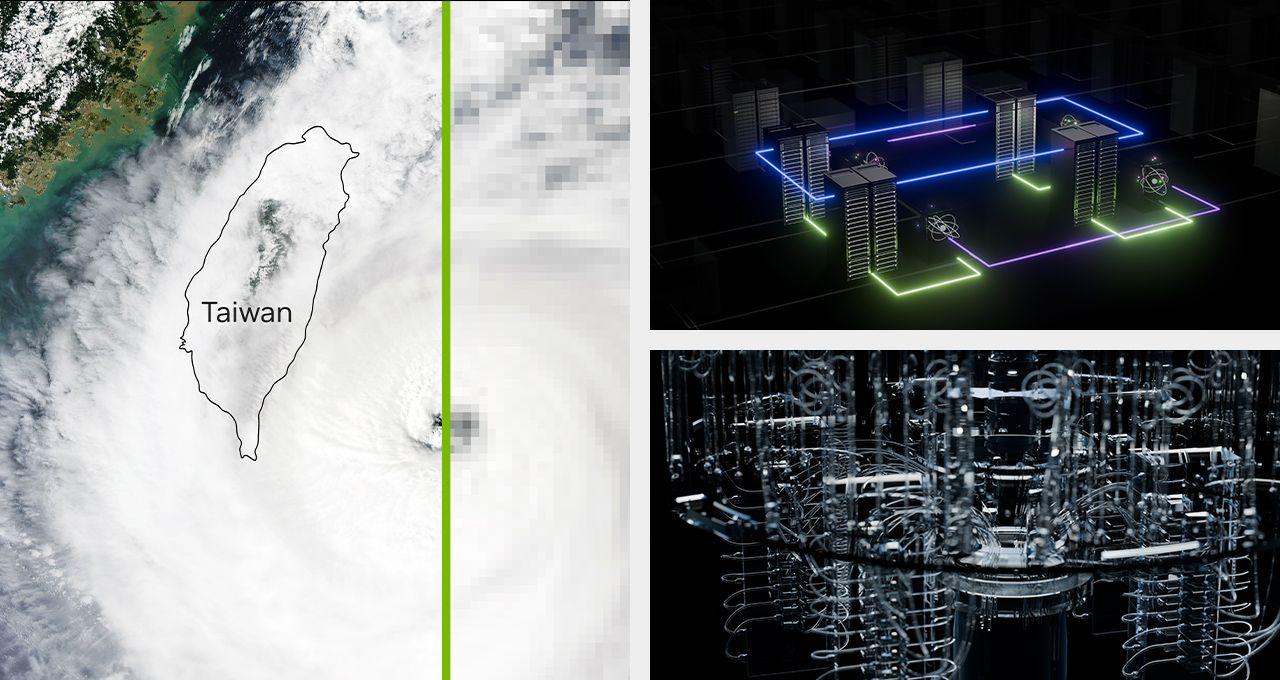
In early 2027, KISTI will connect Hangang with a quantum computer it plans to introduce, bringing hybrid research systems to South Korea
1
. KISTI, Nvidia and IonQ signed an agreement in March to connect Hangang with IonQ's Tempo quantum computer2
. The hybrid quantum-classical computing platform is scheduled to begin operation by May 20272
. Tempo is a trapped-ion quantum computer targeting about 100 physical qubits and AQ 64, with the connection using Nvidia's NVQLink architecture through the CUDA-Q platform2
. This will create a win-win situation where the superior simultaneous computing abilities of the quantum computer will be teamed up with the large-scale and accurate computational prowess of the supercomputers1
.Drug Discovery and Future Applications
A possible area of application for the hybrid system would be drug discovery, where the quantum computer narrows down protein structures that can bind to an enzyme while the supercomputer computes their binding energies
1
. The hybrid approach promises to accelerate computational workflows that currently take weeks or months, potentially transforming pharmaceutical research timelines. KISTI President Lee Sik said the institute would operate the system stably and support its users, leveraging KISTI's long-standing operational experience in supercomputing2
3
.Future Self-Reliance and Strategic Challenges
While KISTI looks at innovative applications, the organization must also prepare to bring in a successor to the supercomputer that is still in its pilot stage
1
. This is meant not only to avoid a repeat of last time's failures but also to secure South Korea's computing needs in a highly competitive market1
. In the future, South Korea will look to be more self-dependent in building such systems1
. However, in the short run, the country lacks an ecosystem to build its own supercomputer and must rely on GPUs sourced from foreign countries to keep costs down1
. South Korea's total 2026 research and development budget is 35.3 trillion won (about $26.5 billion), reflecting the nation's commitment to maintaining technological competitiveness2
.References
Summarized by

Navi
[1]
[3]
Related Stories
South Korea's Largest Supercomputer to Boost AI and Scientific Research
14 May 2025•Technology

South Korea Aims to Secure 18,000 GPUs by 2026 to Boost National AI Computing Capabilities
18 Feb 2025•Technology

South Korea Receives First Nvidia GPUs in Massive 260,000-Unit AI Infrastructure Initiative
27 Nov 2025•Business and Economy
Recent Highlights


Recent Highlights
Today's Top Stories




Don’t drown in AI news. We cut through the noise - filtering, ranking and summarizing the most important AI news, breakthroughs and research daily. Follow topics that matter to you and stay ahead.


