7 Sources
[1]
SpaceX inks compute deal with Reflection AI, an open-source AI lab
First came Anthropic, then Google. Now, open-source AI startup Reflection is tapping SpaceX for its abundant source of AI chips. Reflection AI will pay $150 million a month beginning July 1, 2026 through 2029 for immediate access to Nvidia's latest GB300 AI chips and supporting hardware across SpaceX's Colossus 2 data center near Memphis, Tennessee, the company told TechCrunch. The deal is worth up to $6.3 billion and either company has the option to end the contract with 90 days' notice after the first three months. The deal is smaller than SpaceX's deals with Anthropic and Google, which cost the companies $1.25 billion per month and $920 million per month respectively. Those contracts also run through July 2029, although Elon Musk has publicly downplayed the three-year term, emphasizing that the contracts can be cancelled at any time. Reflection used the compute deal -- its first -- to tout the value of its open-weight AI strategy, which it has pitched as an open-source alternative to closed frontier labs like Anthropic and OpenAI. Open-weight AI models, which publicly release their trained parameters, have received more attention following the U.S. government's ban of Anthropic's closed models, Fable and Mythos. The startup, which was founded in 2024 by two former Google DeepMind researchers, said the compute deal is one of the largest announced open AI infrastructure commitments to date. "Recent events highlight how important open source is to the AI ecosystem, with more nations and enterprises recognizing the risks and costs associated with exclusively depending on closed models," a spokesperson said in an emailed statement. "Our deal with SpaceXAI signals Reflection's strategic importance within the frontier AI ecosystem, and more compute means more runway to build the world's best open models at scale." The Colossus data center was originally built by xAI, a company founded by Elon Musk that is now part pf SpaceX, for its own AI efforts. As its internal pursuits have faltered, SpaceX leveraged its valuable AI chip holdings and began renting them out to some of the world's top AI labs.
[2]
AI startup Reflection signs computing power deal with SpaceX
June 22 (Reuters) - Reflection AI said on Monday it has signed a deal with SpaceX (SPCX.O), opens new tab that will grant the startup access to additional computing capacity at the Elon Musk-led company's Colossus 2 data center. Under the agreement, the open-source AI startup will get immediate access to Nvidia (NVDA.O), opens new tab GB300s, AI chips used to train and run advanced models, and has agreed to pay SpaceX $150 million per month beginning July 1, 2026, through 2029, CNBC reported, citing materials viewed by the publisher. Here are some details: Reporting by Jaspreet Singh in Bengaluru; Editing by Vijay Kishore Our Standards: The Thomson Reuters Trust Principles., opens new tab
[3]
SpaceX signs computing power deal with open-source AI startup Reflection worth up to $6.3 billion
SpaceX has signed a major computing power agreement with Reflection AI, making the open-source artificial intelligence startup the latest outside company to tap Elon Musk's Colossus infrastructure. Under the agreement, Reflection will get immediate access to Nvidia GB300s, top-of-the-line AI chips used to train and run advanced models, and has agreed to pay SpaceX $150 million per month beginning July 1, 2026, through 2029, according to materials viewed by CNBC. The payments would total about $6.3 billion if the agreement runs through the end of its term. Either company can end the contract with 90 days' notice after the first three months. The deal shows how SpaceX is using its massive data center build-out after its record initial public offering. The company built Colossus in part to power Grok, Musk's AI chatbot and rival to ChatGPT. Now, SpaceX is also using that infrastructure to sell computing power capacity to outside AI companies. SpaceX has already struck computing power-related deals with Anthropic, Google and Cursor, and Musk's company is now acquiring Cursor. Reflection adds another customer to that roster, and a strategically different one: an AI lab focused on open-source models at a moment when governments and enterprises are reassessing dependence on closed AI systems. The timing is notable. Open-source AI has gained momentum after Anthropic cut off access to Fable and Mythos, raising questions about the risks of relying on closed-model providers for critical work. The episode has given open-model companies a stronger argument that customers should be able to inspect, customize and run models with more control.
[4]
Forget Mars, SpaceX Is Becoming a Data Center Company
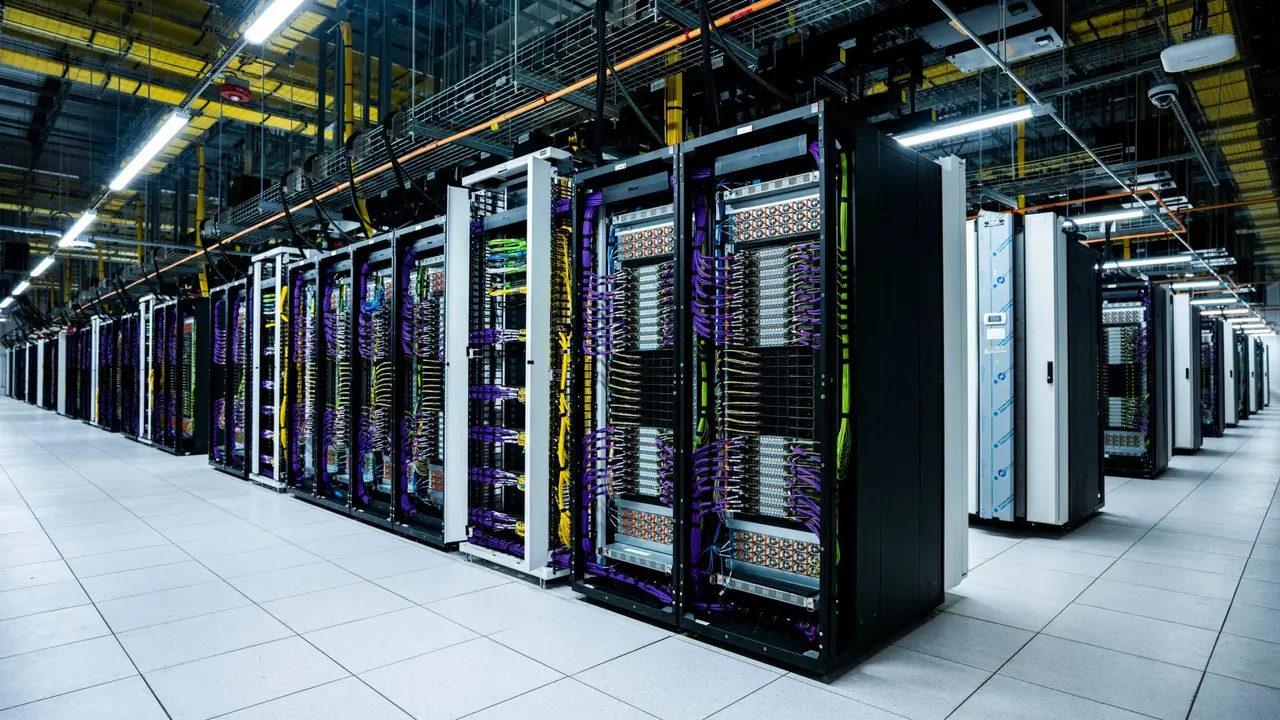
For all its talk of lunar colonies, missions to Mars, and data centers orbiting Earth, SpaceX's real focus has been much more grounded. Elon Musk's crown jewel has signed a new deal with Reflection, a company building open-source AI. It's the latest indication that SpaceX, best known for its rockets and extraterrestrial ambitions, has, in fact, first and foremost become a data center lending company. Reflection will reportedly pay SpaceX $150 million per month for access to the latter's Colossus data center, a hulking facility extending over one million square feet in Memphis, Tennessee. The partnership is slated to begin next month and extend through 2029, generating well over $6 billion in revenue for SpaceX (assuming both companies see the agreement through to the end of its term). The deal arrives on the heels of similar deals SpaceX has landed with Anthropic and Google, two of the most powerful developers in the AI race, both of whom have likewise agreed to pay Musk's company for access to its computing power. SpaceX also announced last week that it had acquired Cursor, a popular AI coding platform, which could give it an edge as it tries to attract users to Grok and away from Anthropic, OpenAI, and its other competitors in the AI industry. Following its merger with Musk's AI startup xAI in February, SpaceX began looking outward with its newly acquired fleet of data centers. Rather than harnessing the computing power generated by these facilities exclusively to train Grok or other proprietary models, the company has been pursuing deals with other developers. It's become a central profit-driver for SpaceX, which went public earlier this month with the biggest IPO in history, while at the same time expanding access to critical compute for other companies that are expanding their own AI efforts. It's also added fuel to the circular dynamic that had already taken shape throughout the industry, as tech companies that are ostensibly competing increasingly do business with one another. Nvidia has been the primary connecting node in this phenomenon: The company has repeatedly poured billions into new AI startups, which, in turn, buy huge amounts of its graphics processing units, the chips that have become the cornerstone of the modern AI industry. But SpaceX is also now an important nexus for money flowing through the AI sector. Through Colossus, for example, which according to the company houses more than 220,000 Nvidia GPUs, SpaceX has established itself as a link connecting AI developers with the infrastructure and compute needed to build new models. Nvidia has invested $800 million in Reflection, according to multiple reports. Does the future belong to open source? Founded in 2024, Reflection markets itself as a kind of democratic counterweight to an AI industry that's largely beholden to investors and shareholders. The company -- which was cofounded by a former Google DeepMind researcher who helped build AlphaGo -- develops open-source AI models that are freely available for developers to access and build on. "By remaining open we ensure that the power of superintelligence is not captured by a few, but becomes the foundation upon which society, builders, and dreamers everywhere can create the next era of progress," the company writes on its website. "Reflection brings together researchers and engineers who pioneered breakthroughs at the frontier to ensure that the foundation of intelligence remains open, not captured." Interest in open-source AI skyrocketed with the public debut early last year of DeepSeek, a Chinese AI lab whose open-source models performed comparably to some of the most advanced "closed" (i.e., proprietary) models from American companies like OpenAI and Anthropic. In what was widely referred to as China's "Sputnik moment," DeepSeek seemed to demonstrate that frontier AI models could be developed with a much tighter budget than what the biggest AI labs had been spending to build ChatGPT, Claude, and other industry-leading chatbots. DeepSeek's success, however, was largely enabled by the fact that it trained its models using AI systems from other developers -- a process known in the industry as distillation. Open-source models that don't rely on distillation require much more compute, hence the necessity for Reflection to partner with a provider like SpaceX. The growing appeal of open source models also has a political dimension. As the Trump administration continues to spar with Anthropic over the alleged cybersecurity risks posed by the company's newest models -- Fable 5 and Mythos 5 -- users could very well read the room and decide that perhaps the future belongs to open-source AI, rather than proprietary models. One of the big selling points of open-source AI is that, in theory, any bugs in the model can be identified and worked out as a community of developers plays around with it; think of it like crowd-sourcing a model's evolution. That could make it an easier sell in the midst of a political climate in which the president -- as his ongoing clash with Anthropic makes clear -- seems to be wary of companies having complete control over the development and deployment of advanced AI systems. Meanwhile, users might be more inclined to use open-source models, which, by definition, are more immune to the whims of a central authority like the federal government. If federal officials can deploy legally dubious methods to shut down companies' proprietary AI models, then perhaps open source models are a safer bet. SpaceX's stock price was down nearly 17% just before market close on Monday.
[5]
Nvidia-backed Reflection lands SpaceX compute deal
Why it matters: If open-source AI companies are going to compete with the frontier AI labs, they needs compute. Reflection is now getting it from the same source its competitors are. Driving the news: After an initial ramp period, Reflection will pay SpaceXAI $150 million a month starting July 1, 2026, through 2029. * The deal gives Reflection access to high-end reasoning GB300 chips and other hardware inside Colossus 2, expanding the compute available to train its models. * Either company can end the deal with 90 days' notice after the first three months. * The deal follows similar compute agreements. Both Anthropic and Google are expected to spend billions for access to Elon Musk's compute capacity. Follow the money: It's a reminder that the AI boom's biggest players are increasingly investors, suppliers and customers to one another, often all at the same time. * Nvidia invested $800 million in Reflection, which is now getting access to Nvidia chips purchased by SpaceX. * Nvidia is helping fund its next generation of customers, while some startups are dodging the multibillion-dollar cost of building their own data centers by leasing compute from others. Between the lines: Compute is the scarce resource fueling the AI race. * Some investors have called Reflection the "DeepSeek of the West," The Wall Street Journal reported. The company is still training its models. * Having more compute capacity while training its models could allow Reflection to compete more directly with frontier AI labs like OpenAI and Anthropic. Zoom out: The deal comes amid a surge in interest surrounding open source models. * Anthropic shut down access to its most powerful models after the Trump administration threatened to block access for foreign nationals, raising questions about who gets to control access to intelligence. * Unlike closed models, open models can often be downloaded, inspected and modified. Many of the strongest open models now come from Chinese labs. What they're saying: "Recent events highlight how important open source is to the AI ecosystem, with more nations and enterprises recognizing the risks and costs associated with exclusively depending on closed models," a Reflection spokesperson said.
[6]
SpaceX Fuels AI Ambitions With $6.3 Billion Reflection Compute Deal - SpaceX (NASDAQ:SPCX)
The Reflection contract will run about $150 million per month starting July 1, 2026 and extend through the end of 2029, for a total near $6.3 billion if fully executed, according to CNBC. Reflection Joins Google, Anthropic Previous agreements from Google and Anthropic to use SpaceX's compute are valued at roughly $30 billion and $45 billion, respectively, and extend to around mid‑2029. Those earlier arrangements sit inside Musk's broader strategy to sell excess Colossus capacity to rival model labs rather than rely solely on internal workloads. In May, filings and reporting showed Anthropic agreed to buy roughly 300 megawatts of AI infrastructure from xAI, effectively taking the entire output of the Colossus 1 site near Memphis through May 2029. Anthropic will pay around $1.25 billion per month, with a small ramp discount, putting the potential value of that deal north of $40 billion over its term. Google has separately agreed to pay SpaceX about $920 million per month for compute over 32 months, starting later this year, to access roughly 110,000 Nvidia GPUs plus supporting infrastructure in xAI facilities. Across customers like Anthropic, Google and now Reflection, SpaceX is monetizing Colossus by selling high‑margin GPU capacity and turning scarce compute into a core strategic asset. SPCX Stock Price Activity: SpaceX stock was down 12.82% at $161.28 at the time of publication Monday, according to data from Benzinga Pro. Market News and Data brought to you by Benzinga APIs To add Benzinga News as your preferred source on Google, click here.
[7]
SpaceX Rented Out Colossus 1 Over Its 'Mish-Mash' Of GPUs, But Now It's Renting Out Colossus 2 Capacity As Well, Raising Doubts Over Grok AI's Future
In a dramatic development that bodes well for its coffers, but not so for the competitiveness of its Grok AI model, SpaceX has just inked a $6.3 billion compute deal to start renting out Colossus 2 GPUs, raising question marks over its strategy to compete with the likes of OpenAI and Anthropic. SpaceX will collect $150 million per month from July onwards by renting out NVIDIA GB300 GPUs at its Colossus 2 data center to Reflection As of May 2026, SpaceX's Colossus 1 data center supported over 220,000 NVIDIA GPUs, divided between H100, H200, and around 30,000 units of the GB200 AI accelerators. Meanwhile, the Colossus 2 data center currently boasts of over 550,000 GPUs, divided between GB200 and GB300 accelerators. As we noted in a dedicated post recently, in the runup to its IPO, SpaceX locked a Cloud Service Agreement with Google, furnishing it with a compute capacity equivalent to "110,000 NVIDIA GPUs, CPUs, memory, and other related components," all for a consideration of $920 million per month. Also, the parent company of Starlink and xAI recently inked a similar agreement with Anthropic, providing access to "220,000 NVIDIA GPUs (including H100s, H200s, GB200s, and others)," all for a consideration of $1.25 billion per month or $15 billion per year. While the Anthropic deal is locked to SpaceX's Colossus 1 data center, where a mish-mash of GPUs renders the data center less attractive for training future iterations of Grok AI, and where xAI consumes just 11 percent of the total available FLOPs, the Google deal is primarily tied to the Colossus 2 data center. This brings us to the core of today's topic. SpaceX has just signed another $6.3 billion compute deal for the Colossus 2 data center, this time with Pentagon-linked Reflection. Under the terms of the deal, SpaceX will furnish Reflection with access to its stash of GB300 GPUs for a consideration of $150 million per month starting in July 2026 and running through June 2029. The question then arises: why is SpaceX lending out its compute capacity if Grok AI needs these computing resources to remain competitive? Is SpaceX slowly abandoning its own AI model, deeming it a lost cause, especially if such models are destined to become a commodity amid an onslaught of open-sourced models from China? Of course, following a historic IPO and a gigantic bond deal, SpaceX is flushed with cash right now, to the tune of over $100 billion. What's more, SpaceX's $60 billion acquisition of Cursor is structured as an all-stock deal, which won't affect its cash-based liquidity position. Against this backdrop, SpaceX's aggressive monetization of its compute resources raises more questions than it answers, casting a pall over the aggressive expansion currently being undertaken by OpenAI and Anthropic. Follow Wccftech on Google to get more of our news coverage in your feeds.
Share
Copy Link
SpaceX has secured a major compute deal with open-source AI startup Reflection AI, worth up to $6.3 billion through 2029. The agreement grants Reflection access to Nvidia's latest GB300 AI chips at SpaceX's Colossus 2 data center in Memphis, Tennessee. This partnership highlights SpaceX's transformation into a data center powerhouse while reinforcing the growing momentum behind open-source AI models.
SpaceX has signed a substantial computing power agreement with Reflection AI, an open-source AI startup that will pay $150 million per month beginning July 1, 2026, through 2029 for access to the Colossus 2 data center near Memphis, Tennessee
1
. The compute deal, valued at up to $6.3 billion if it runs through its full term, grants Reflection AI immediate access to Nvidia GB300 AI chips and supporting hardware3
. Either company can terminate the contract with 90 days' notice after the first three months, maintaining flexibility in this high-stakes partnership2
.
Source: Wccftech
The agreement marks another milestone in SpaceX's transformation from a rocket company into a major player in the AI data center industry. The deal is smaller than SpaceX's agreements with Anthropic and Google, which cost those companies $1.25 billion per month and $920 million per month respectively
1
. All contracts run through July 2029, though Elon Musk has emphasized they can be cancelled at any time. The Colossus data center was originally built by xAI, a company founded by Musk that is now part of SpaceX, for its own AI efforts including the Grok chatbot1
. As its internal pursuits have faltered, SpaceX leveraged its valuable AI chip holdings and began renting them out to some of the world's top AI labs1
.
Source: Benzinga
Reflection AI, founded in 2024 by two former Google DeepMind researchers, is positioning itself as an open-source alternative to closed frontier labs like Anthropic and OpenAI
1
. The startup said the compute deal represents one of the largest announced open AI infrastructure commitments to date. "Recent events highlight how important open source is to the AI ecosystem, with more nations and enterprises recognizing the risks and costs associated with exclusively depending on closed models," a Reflection spokesperson stated5
. Open-weight AI models, which publicly release their trained parameters, have received more attention following the U.S. government's ban of Anthropic's closed models, Fable and Mythos1
.Related Stories
The deal underscores how AI companies are increasingly investors, suppliers, and customers to one another simultaneously. Nvidia invested $800 million in Reflection, which is now getting access to Nvidia GB300 AI chips purchased by SpaceX
5
. This circular dynamic means Nvidia is helping fund its next generation of customers, while some startups are dodging the multibillion-dollar cost of building their own data centers by leasing compute from others5
. The Colossus facility houses more than 220,000 Nvidia GPUs, establishing SpaceX as a critical link connecting AI developers with the infrastructure needed to build new AI models4
.
Source: Axios
The timing of this partnership is significant as open-source AI has gained momentum after Anthropic cut off access to Fable and Mythos, raising questions about the risks of relying on closed-model providers for critical work
3
. As the Trump administration continues to spar with Anthropic over alleged cybersecurity risks posed by the company's newest models, users could decide that the future belongs to open-source AI rather than proprietary models4
. Some investors have called Reflection the "DeepSeek of the West," and having more compute capacity while training its models could allow Reflection to compete more directly with frontier labs like OpenAI and Anthropic5
. The company is still training its models, and this access to high-performance computing resources at the Memphis, Tennessee facility could prove decisive in determining whether open-source approaches can match the capabilities of closed systems developed by established players.Summarized by
Navi
[3]
28 May 2026•Business and Economy

05 Jun 2026•Technology

21 May 2026•Business and Economy

1
Policy and Regulation

2
Policy and Regulation

3
Policy and Regulation