Thrive Capital bets $100M on Shopify's AI commerce strategy as stock trades 46% below peak


2 Sources
[1]
Thrive Capital invests $100M in Shopify in rare public-market bet on AI commerce
Joshua Kushner's Thrive Capital has taken a roughly $100 million stake in Shopify, according to Bloomberg, which cited people familiar with the matter. The investment is notable less for its size, $100 million is a rounding error in a firm that raised more than $10 billion for its latest fund, than
[2]
Thrive Capital Bets $100 Million on Shopify's AI Future | PYMNTS.com
By completing this form, you agree to receive marketing communications from PYMNTS and to the sharing of your information with our sponsor, if applicable, in accordance with our Privacy Policy and Terms and Conditions. Neither Shopify nor Thrive Capital immediately replied to PYMNTS' request for
Share
Copy Link
Joshua Kushner's Thrive Capital has invested roughly $100 million in Shopify, framing the public-market bet as a wager on how AI will reshape commerce. The venture capital firm sees opportunity in the e-commerce platform's 40% stock decline this year, betting that AI-driven tools like agentic shopping will transform retail economics in ways the market hasn't yet priced in.
Thrive Capital Makes Rare Public Investment in Shopify
Joshua Kushner's Thrive Capital has taken a roughly $100 million stake in Shopify
1
, marking an unusual public-market bet for a venture capital firm best known for backing OpenAI, SpaceX, and Stripe during their private years. The investment comes as Shopify shares trade nearly 46% below their 52-week high, following a 40% decline this year1
. Thrive Capital invests in Shopify with a specific thesis: artificial intelligence will fundamentally restructure commerce economics, creating value the market hasn't yet recognized.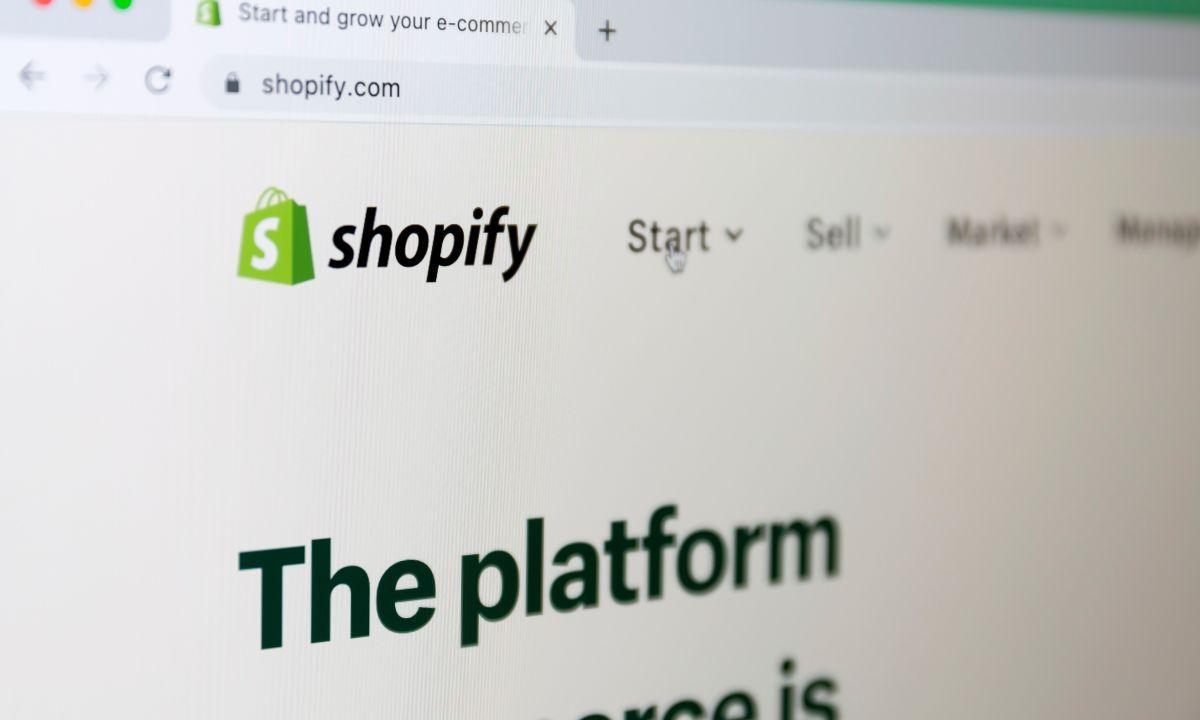
Source: PYMNTS
AI-Driven Commerce Strategy Powers Growth Momentum
Shopify reported first-quarter revenue growth of 34.3% year-over-year to $3.17 billion, though second-quarter guidance suggested a deceleration to roughly 27.5% growth
1
. Yet beneath these headline numbers, AI commerce metrics tell a more compelling story. During the first quarter, AI-driven traffic to Shopify stores grew eight times year-over-year, while orders from AI-powered searches surged nearly 13 times2
. New buyer orders from AI searches arrived at nearly twice the rate of traditional organic search, driving Shopify's strongest quarterly revenue growth rate in over four years2
.Agentic Shopping Emerges as Commerce Frontier
Shopify launched what it calls "agentic commerce" earlier this year, a sales channel allowing merchants to surface products directly inside AI chat platforms such as ChatGPT
1
. AI-driven orders on the platform grew 15 times year-over-year in 2025, according to the company1
. Shopify President Harley Finkelstein emphasized that agentic shopping uses AI agents as personal shoppers, bringing context to shopping in ways traditional search engines cannot. "We're probably more excited about this particular new era of commerce than we ever have been because we think it's just going to create so much opportunity, not just for the large merchants, but for the long tail of merchants," Finkelstein said2
.The company's advantage lies in its structured product catalog, where Shopify has organized more than 1 billion products with clean attributes, real-time pricing, and accurate inventory
2
. Finkelstein noted that "in a world where real-time information is now table stakes, the edge is the insight behind it"2
. In March, Shopify launched Tinker, a free mobile app consolidating more than 100 specialized AI tools into a single environment for building brand assets, storefronts, and social content from plain-language inputs2
.Related Stories

Venture Firms Pivot to Public Equities Amid Valuation Shifts
Thrive Capital's public-market bet reflects a structural shift among venture firms. The median time from founding to IPO has stretched well beyond a decade for many venture-backed companies
1
. Meanwhile, private valuations have soared—OpenAI at $852 billion, Anthropic approaching $900 billion—leaving less room for upside than undervalued public companies like Shopify1
. Thrive is registered as an investment adviser, allowing it to use the same funds for public equities and private positions1
.The precedent is instructive. In March 2022, Thrive bought a significant position in Carvana when the online car marketplace faced financial distress, realizing a $522 million profit
1
. The Shopify investment follows similar contrarian logic. Thrive raised more than $10 billion for its Thrive X fund in February, designating $1 billion for early-stage investments and $9 billion for growth-stage investments2
. The firm stated it takes "a long view grounded in the belief that category-defining companies tend to create structural compounding advantages over long arcs"2
.Market Implications for E-Commerce Experience
Thrive's thesis centers not on Shopify's current growth rate justifying a higher multiple, but on AI transforming commerce economics in ways the market hasn't priced in
1
. As consumers shift from search engines to AI assistants, the infrastructure connecting merchants to those assistants may become as critical as the storefront itself1
. This represents the same bet Thrive made on OpenAI before most investors understood large language models, now applied to a company that's already public, profitable, and trading at a discount1
. For merchants and investors watching the e-commerce experience evolve, the question becomes whether AI-powered commerce channels will deliver the structural advantages Thrive anticipates—and whether other venture firms will follow this path toward public equities when private valuations climb beyond reasonable returns.References
Summarized by

Navi
Related Stories
Shopify Doubles Down on AI Commerce Revolution with 7x Traffic Surge
05 Nov 2025•Business and Economy
Shopify Revenue Growth Hits 34% as AI Search Triples Traffic and Orders, Shares Soar 18%
05 Aug 2026•Business and Economy
Shopify gets Wall Street upgrades as analysts bet on agentic AI commerce boom
10 Jul 2026•Business and Economy

Recent Highlights



Recent Highlights
Today's Top Stories









Don’t drown in AI news. We cut through the noise - filtering, ranking and summarizing the most important AI news, breakthroughs and research daily. Follow topics that matter to you and stay ahead.


