TIDAL cuts royalties for AI-generated music while labeling tracks with new AI badge system


9 Sources
[1]
TIDAL cracks down on AI music by cutting off monetization
Music streaming service TIDAL is the latest to take aim at AI-generated music with the introduction of a new policy that will prevent fully AI-generated music from making money on its platform. In addition, TIDAL will use automated tools to remove AI-generated music that attempts to impersonate an
[2]
Tidal to Label AI-Generated Music and Remove Fraudulent Material
Music streaming service Tidal says it will start labeling music that's wholly generated by artificial intelligence and will also remove tracks that are fraudulent or deceptive. The company will implement automated tools in mid-July to identify and tag such music. Listeners will start to see an
[3]
Tidal won't pay royalties on AI-generated music but isn't banning it outright
Tidal shared its new policies regarding AI-generated music today and how the platform plans to "protect artists" and "inform listeners." Instead of banning it outright, starting on July 15th Tidal will label tracks it has identified as being 100 percent AI-generated with an icon. But starting today
[4]
Tidal isn't banning AI music, but it won't pay people who upload it - Engadget
The streaming service's new policy says that 100-percent AI-generated music will be demonetized. Tidal revealed its sweeping policy on AI-generated music that details exactly how the music streaming service will handle this growing phenomenon. The music-streaming platform explained on its website
[5]

TIDAL will cut off royalties for AI-generated music and badge every track it catches
TIDAL will tag fully AI-generated music with an AI badge, block it from royalties and direct-to-fan sales, and remove AI tracks that impersonate artists. TIDAL is cutting off the money supply for AI-generated music. The streaming service announced a new policy that will prevent fully AI-generated
[6]

Tidal Says It Won't Pay Royalties for AI-Generated Music
Spotify competitor Tidal built a reputation by collaborating with musicians and focusing on audio quality. How will it handle the era of AI-generated slop? Music streaming service Tidal announced it won't pay royalties for AI-generated music in an email to users and an announcement on its website
[7]

Tidal just drew a line in the sand on AI music -- 100% AI-generated tracks won't earn royalties on the music streaming platform
A tidal wave of wholly AI-generated music? Not on our watch, says the streaming platform * Tidal has published a new policy on AI-generated music content * Along with labelling 100% AI tracks, it targets "substantially generated" stuff too * Tidal "will not tolerate AI-generated music that
[8]

Tidal lays down the rules for AI music. I wish Spotify and everyone else would follow
Every week, the AI music problem is getting increasingly hard to ignore, especially for streaming platforms. Deezer reported that 44% of all new music uploaded to its platform daily is now AI-generated; that's almost half the songs. Spotify relabeled and tightened its AI policies last September,
[9]

The AI music crackdown has exposed Spotify and Apple Music's biggest problem
More music-streaming services are demonetising AI, but only one of them is willing to fully protect human creativity and combat slop AI is everywhere. And everyone has their line in the sand. They'll say it's OK to do 'this' thing, yet not 'that' thing, with AI. Naturally, what most people
Share
Copy Link
Music streaming service TIDAL introduced a policy that demonetizes fully AI-generated music, preventing these tracks from earning royalties or direct-to-fan sales revenue. Starting July 15, the platform will label 100% AI-generated content with an AI badge and remove tracks that impersonate artists, joining competitors like Spotify, Deezer, and Apple Music in addressing the flood of synthetic content.
TIDAL Demonetizes AI-Generated Music to Protect Human Artists
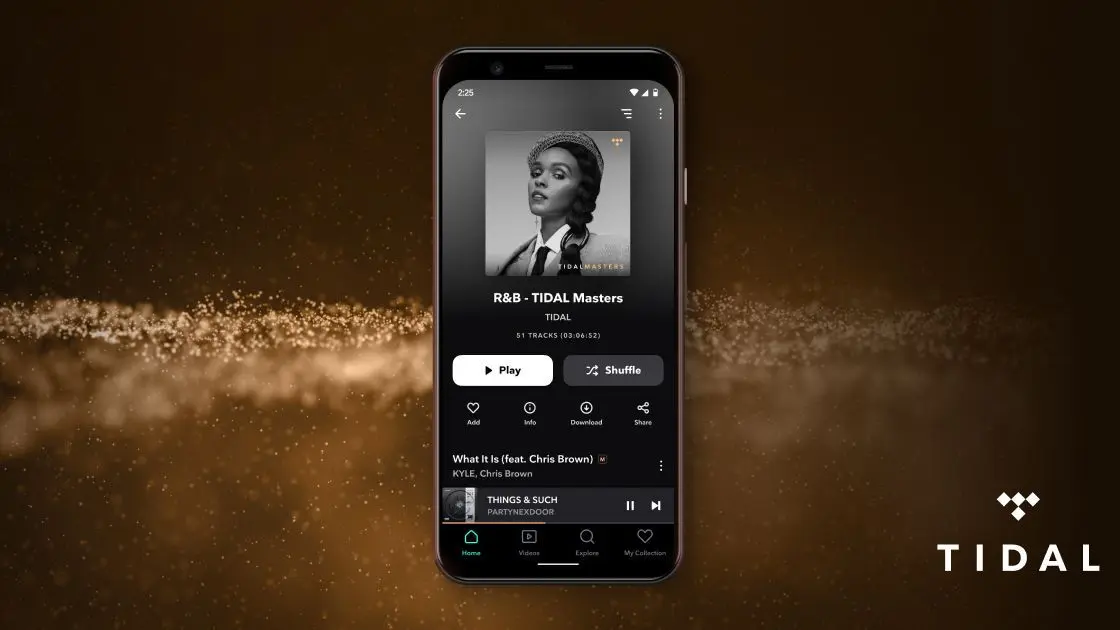
TIDAL is cutting off the financial pipeline for AI-generated music with a new policy that prevents fully synthetic tracks from earning money on its platform. The music streaming service announced that 100% AI-generated music will be blocked from collecting royalties, generating revenue from direct-to-fan sales, or being monetized in any form starting July 15, 2026
1
. TIDAL will also deploy automated tools to identify and remove AI-generated music that attempts to impersonate an artist or group2
.
Source: TechRadar
"We are committed to protecting and rewarding organic creativity to avoid compromising an artist's ability to connect with and build their fandom from TIDAL subscribers," wrote Tony Gervino, TIDAL EVP and Editor-in-Chief
5
. The TIDAL AI music policy targets demonetization as its primary enforcement mechanism, distinguishing it from competitors who have focused mainly on labeling AI-generated music or reducing its visibility.AI Badge System and Detection Tools Shape New Standards
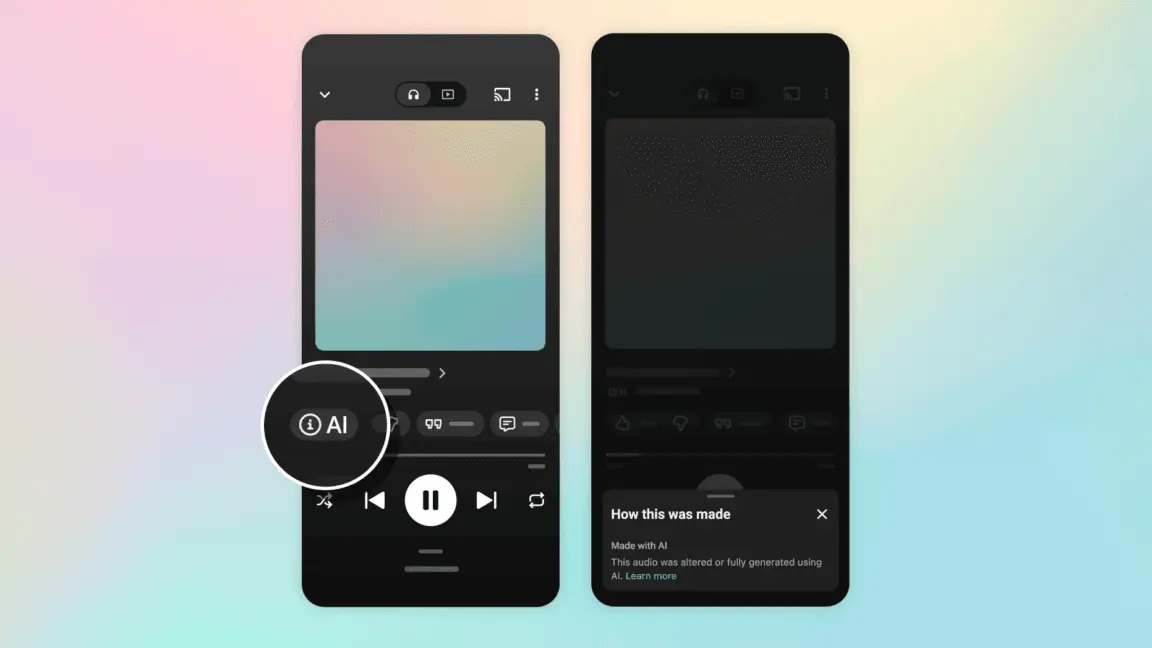
Under the new rules, tracks identified as entirely AI-generated will receive a visible AI badge next to them, allowing listeners to see which content is synthetic
3
. The platform didn't specify exactly which detection tools it's using, but emphasized that identifying fraudulent AI-generated content should not be its responsibility alone. TIDAL warned it will "begin to enforce" an expectation that content distributors properly label AI-generated music before it reaches the platform3
.The company acknowledged that some tracks may use AI for certain elements rather than the entire composition. TIDAL said it will "expand these policies to music that is substantially AI-generated when AI detection technology is sufficiently reliable to do so"
2
. Artists who believe their work has been incorrectly flagged can dispute the designation by contacting TIDAL's support team2
.Blocking Fraudulent AI-Generated Content and Artist Impersonation
TIDAL is taking a firm position on removing AI-generated music associated with fraudulent activity. According to the policy, fraudulent activity includes AI-generated music that aims to deceive listeners, interfere with authentic artists and their audience, or involves high-volume uploads or unusual streaming activity
2
. The platform will use automated tools starting in mid-July to identify and remove tracks that exploit an individual's or group's music, name, or likeness4
.
Source: The Verge
This approach aims to maintain content integrity while addressing concerns about artist impersonation, which has become increasingly common as AI music tools like Suno have made it easy to generate full songs with little or no musical training
2
.Related Stories
Streaming Platforms Race to Address AI Music Flood
TIDAL joins other streaming platforms that have developed their own responses to the surge of synthetic content. Deezer has taken the most aggressive stance, reporting that 44% of all new music uploaded to its platform daily is AI-generated
1
. Deezer actively removes AI tracks from recommendations, excludes them from editorial playlists, and offers its AI detection technology to rivals1
.Spotify updated its policies last September to label AI music and filter spam while acknowledging that AI tools would be used in the music creation process to varying degrees
1
. In April, Spotify launched a verification program where confirmed human artists received a green checkmark and "Verified by Spotify" badge, while profiles primarily uploading AI-generated content are not eligible3
. Apple Music also adopted the tagging approach for labeling AI-generated music1
.Testing Whether AI Music Monetization Drives the Deluge
TIDAL's policy represents an experiment to see if cutting off AI music monetization can slow the flood of synthetic tracks filling streaming platforms. "Tidal's priority is ensuring royalties go to original works directly produced, written, and performed by people," the company stated
3
. By targeting the financial incentive that drives the flood of synthetic uploads, TIDAL is testing whether demonetize AI music strategies prove more effective than simply hiding or labeling tracks5
.
Source: Engadget
Forbes reported that the AI-generated music market could be worth $4 billion by 2028
2
, making the stakes significant for human-created music and artist compensation. Gervino pushed back on the notion that AI dominance is inevitable: "Regardless of what you are reading elsewhere, AI's takeover of the music industry isn't inevitable if we take even greater steps now to monitor and control it"1
.TIDAL called the policy a "living document," signaling that the rules will evolve as AI music generation tools and detection capabilities change
1
. While TIDAL is smaller than Spotify or Apple Music, it has positioned itself as an artist-first platform with subscribers who care about audio quality and artist compensation. If demonetization proves effective at reducing AI-generated tracks, larger platforms may follow this model5
.References
Summarized by

Navi
Related Stories
Spotify Unveils New AI Policies to Combat Spam and Protect Artists
25 Sept 2025•Technology

Spotify to Label AI Persona Profiles and Block Their Music From Your Recommendations Starting September
11 Aug 2026•Technology

AI music floods Spotify as frustrated listeners build blockers and demand transparency
28 Apr 2026•Entertainment and Society

Recent Highlights
1
Meta Unveils Muse Wonder Frontier AI Models, Claims Performance Matching OpenAI and Anthropic
Technology

2
IMF Report Warns AI Market Correction Could Spark Global Financial Crisis With $1.4T at Risk
Business and Economy

3
OpenAI Releases 722 AI-Generated Math Solutions, Triggering Existential Crisis in Mathematics
Technology

Recent Highlights
Today's Top Stories






Don’t drown in AI news. We cut through the noise - filtering, ranking and summarizing the most important AI news, breakthroughs and research daily. Follow topics that matter to you and stay ahead.


