Todd Howard says AI can't replace human intention but helps Bethesda build worlds faster


4 Sources
[1]
Todd Howard says AI can't replace human 'creative intention,' but it's part of Bethesda's 'toolset for how we build our worlds or check things'
During a recent event for the second season of the Fallout TV show that premiers later this month, Bethesda's Todd Howard joined the press junket fray to talk about the lasting influence of New Vegas, skipping the "war never changes" refrain, and -- in an interview with Eurogamer -- the use of AI
[2]
Fallout and Elder Scrolls boss Todd Howard defends AI in game development, but aims to "protect artistry" and "human intention" in his games
Bethesda's Todd Howard has shared his thoughts on the use of AI in video games, calling it a "tool" but one that can't replace human intention. Howard sat down with Eurogamer's social producer Mat Jones at an event for the second season of Fallout earlier this week. While much of the discussion
[3]
Elder Scrolls and Fallout boss Todd Howard says AI is a useful "tool" in game dev, but "not in generating things" because "the human intention of it is what makes our stuff special"
"We are always working on our toolset for how we build our worlds or check things" Bethesda Game Studios executive producer Todd Howard says there's a place for AI in video game development, but not of the generative variety, thank goodness. In an interview with Eurogamer, Howard tread carefully
[4]
'AI Can Speed Up Game Development But Human Intention Is What Makes Our Stuff Special', Says Elder Scrolls & Fallout Dev
Bethesda Game Studios' Head and game director for the Elder Scrolls and Fallout series (as well as Starfield), Todd Howard, recently chimed in on the hottest topic across most industries: the usage of AI. Eurogamer interviewed Howard during a preview event for the second season of Fallout's Amazon
Share
Copy Link
Bethesda's Todd Howard shares his stance on AI in game development, calling it a tool that can speed up iterations but not replace human creativity. The Elder Scrolls and Fallout director emphasizes that Bethesda isn't using AI for generating content, but rather as part of the studio's evolving toolset to build worlds and check processes more efficiently.
Todd Howard Weighs In on AI in Game Development
Bethesda Game Studios' Todd Howard has entered the ongoing debate about the role of AI in video games, staking out a measured position that acknowledges the technology's utility while emphasizing the irreplaceable value of human intention. Speaking with Eurogamer during a press event for Fallout's second season on Amazon Prime Video, the Elder Scrolls and Fallout director made clear that AI as a tool has a place in modern development workflows, but only within specific boundaries
2
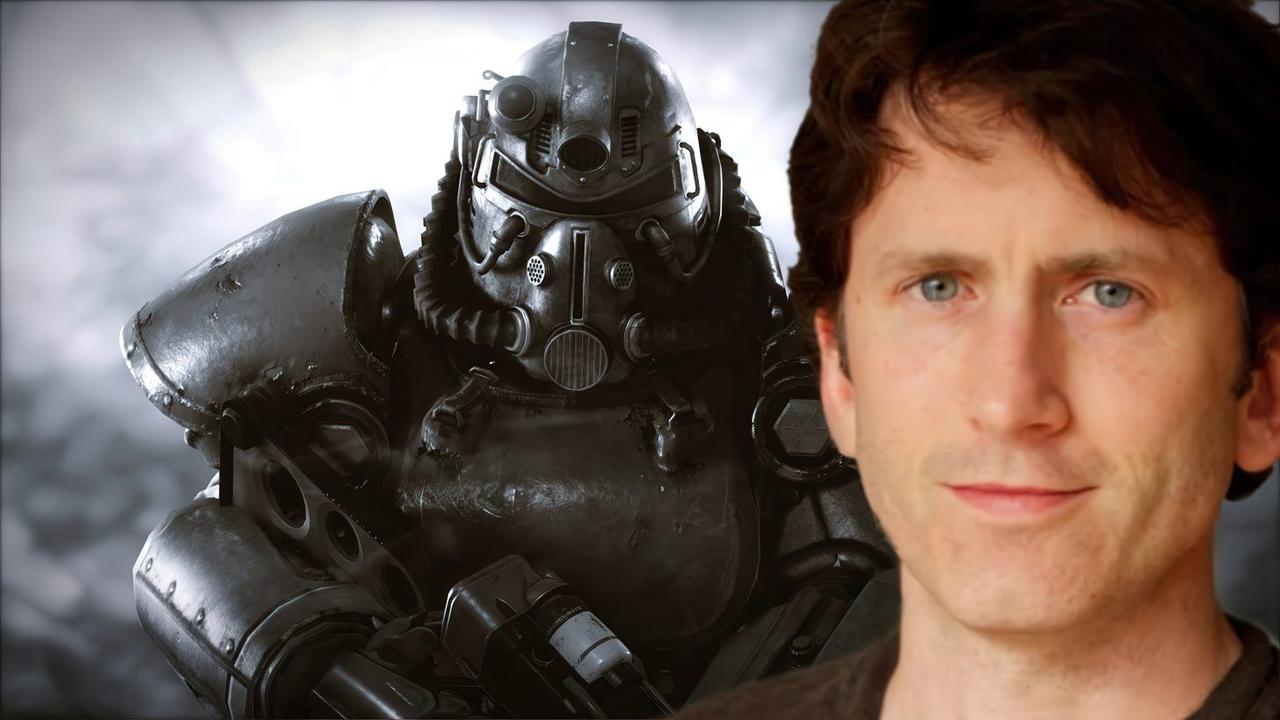
.
Source: Wccftech
"I view it as a tool. Creative intention comes from human artists, number one," Howard stated, establishing the hierarchy he sees between human creativity and machine assistance
1
. His comments come at a time when AI remains hotly contested across the games industry, with recent controversies like publisher Running With Scissors' cancellation of Postal: Bullet Paradise after backlash over apparent generative AI use highlighting the sensitivity around the topic2
.How Bethesda's Toolset Uses AI to Accelerate Development Iterations
Howard clarified that Bethesda isn't using AI for "generating things," distinguishing the studio's approach from more controversial applications of generative AI
3
. Instead, the technology serves to help the team "go through some iterations that we do ourselves faster," functioning as part of Bethesda's evolving development infrastructure4
. The studio is "always working on our toolset for how we build our worlds or check things," Howard explained, positioning AI alongside other technological advances that have gradually improved development processes over time1
.To illustrate his point, Howard compared current AI tools to the evolution of Photoshop over the past decade, suggesting that returning to older versions would feel like a step backward
2
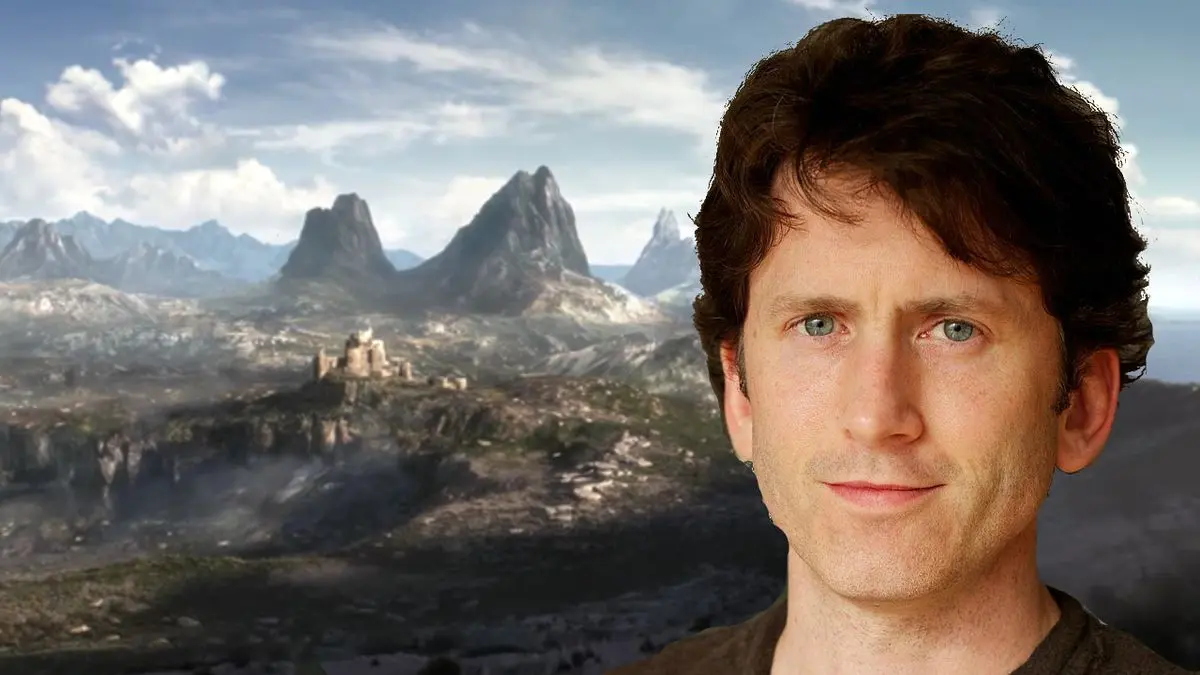
.
Source: GamesRadar
The Push to Protect Artistry and Safeguard Human Creativity
Despite acknowledging AI's utility, Howard emphasized Bethesda's commitment to protect artistry. "The human intention of it is what makes our stuff special," he said, drawing a clear line between automation tech that assists artists and systems that attempt to replace them
3
. This stance positions Howard somewhere between industry extremes—more cautious than Epic Games CEO Tim Sweeney, who insists "AI will be involved in nearly all future production," but more accepting than Rockstar co-founder Dan Houser, who compared AI to "mad cow disease"1
.Howard's perspective aligns closely with fellow game development legend Hideo Kojima, who recently described AI as a "friend" that could handle tedious tasks while the creative workforce focuses on artistic decisions
4
. Electronic Arts CEO Andrew Wilson has similarly framed AI as amplifying efficiency, expansion, and transformation, though Howard's emphasis on preserving human creativity suggests a more conservative application4
.Related Stories

The Broader Context of AI Adoption Across Gaming
The role of AI in video games has accelerated rapidly across the industry. A 2024 Unity report found that 62 percent of studios using its tools employed AI at some point during development, with animation as the top use case
2
. A GDC survey from the same year showed around a third of industry workers already using AI tools, with that number likely higher in 20252
. Machine learning applications now span everything from NPC behavior to quality assurance processes.Yet questions remain about where efficiency gains end and erosion of the creative workforce begins, particularly as companies like Electronic Arts invest heavily in AI infrastructure while simultaneously cutting jobs. Howard's careful framing suggests an awareness of these tensions, even as Bethesda operates under Microsoft's ownership, which has its own AI mandates across divisions
1
. Whether the studio can maintain its stated commitment to safeguard human creativity while meeting corporate expectations to enhance efficiency will likely depend on how strictly it defines "not generating things" as development pressures mount.References
Summarized by

Navi
Related Stories
Gaming industry splits as Dragon Age creator condemns generative AI while Epic CEO champions it
30 Jun 2026•Technology
Gaming industry splits on AI as EA touts creativity boost while Steam data reveals 53% review penalty
16 Jun 2026•Entertainment and Society

Warhorse Studios CEO: Using AI to Replace Developers Is a 'Fundamentally Flawed Idea'
07 Oct 2026•Entertainment and Society
Recent Highlights
1
Microsoft and Nvidia Launch Surface Laptop Ultra: A $2,599 AI-Ready PC With RTX Spark Chip
Technology

2
OpenAI Releases 722 AI-Generated Math Papers on GitHub, Igniting Fury Among Mathematicians
Science and Research

3
Trump Consulted Grok AI Before Ordering Venezuela Invasion and Capture of Nicolás Maduro
Policy and Regulation

Recent Highlights
Today's Top Stories









Don’t drown in AI news. We cut through the noise - filtering, ranking and summarizing the most important AI news, breakthroughs and research daily. Follow topics that matter to you and stay ahead.


