UK firm plans to build distributed AI data center using 50,000 smart lampposts in Nigeria


2 Sources
[1]
UK firm aims to build 'data centre' using 50,000 lampposts in Nigeria
There have been many attempts to put data centres in unusual places over the years - Microsoft put a data centre under the sea, Elon Musk has suggested putting them in space. Now a UK firm is betting on data centres using thousands of connected smart lampposts, and has signed a formal agreement
[2]
Space data centers sound like a pipe dream. What if we put them on lamp posts?
Nigeria just became home to Africa's first distributed AI data center, and it's built into 50,000 lamp posts SpaceX has its own ambitious plans for AI data centers in space, while Microsoft has explored the idea by sinking them underwater. However, building AI data centers is expensive and
Share
Copy Link
Warwickshire-based Conflow Power Group has signed a deal with Nigeria's Katsina State to deploy 50,000 solar-powered iLamp units that double as a distributed AI data center. Each lamppost contains a low-energy Nvidia chip drawing just 15 watts, powered entirely by solar panels. While experts question whether these can replace traditional data centers for demanding AI workloads, the network could serve lighter AI tasks and provide surveillance, traffic enforcement, and public WiFi across the state.
UK Firm Signs Deal for Africa's First Distributed AI Data Center
Warwickshire-based Conflow Power Group (CPG) has signed a formal agreement with Nigeria's Katsina State Government to deploy 50,000 smart lamp posts that collectively function as a distributed AI data center
1
. The solar-powered iLamp units represent an unconventional approach to AI infrastructure at a time when companies like Microsoft have experimented with underwater data centres and SpaceX has proposed space-based solutions2
.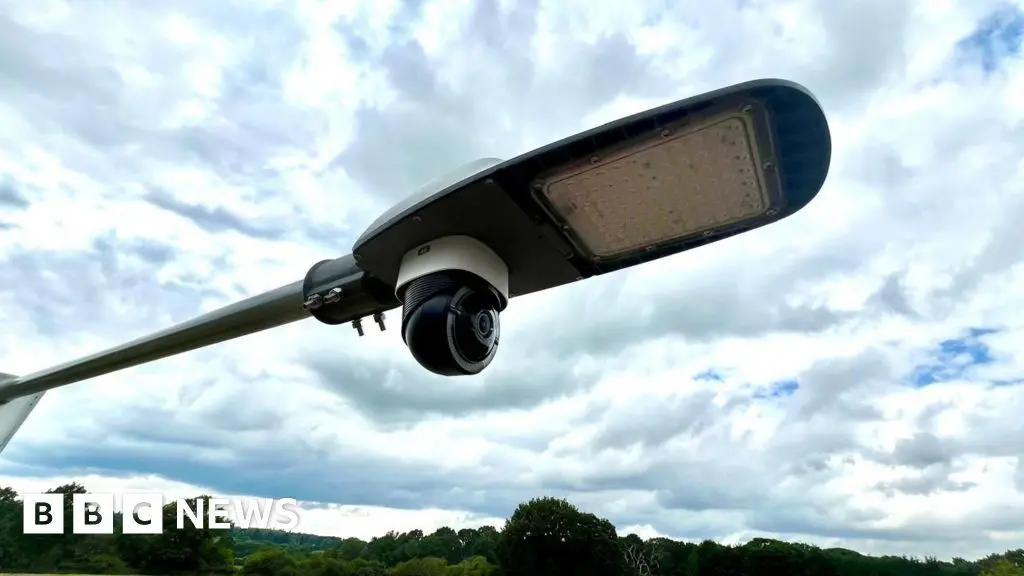
Source: BBC
Each iLamp is equipped with a cylindrical solar panel and battery system that powers a low-energy Nvidia chip drawing just 15 watts of power
1
. "NVIDIA is the company that's created a small enough chip, powered with 15 watts of power, so it can be powered by solar, and we can put that inside a street light," CPG chairman Edward Fitzpatrick explained. Networked together, the 50,000 units would deliver 13.75 petaOPS of combined computing power without drawing any grid power2
.How the iLamp Network Generates Revenue
Katsina State will generate income by leasing out the network's computing power to AI companies, with Conflow Power Group taking a 20% cut of revenue after three years
1
. The units will also support AI-powered surveillance cameras capable of detecting parking violations, speeding vehicles, and seatbelt non-compliance1
. Revenue from traffic fines captured by the cameras will flow to Katsina State, while income from renting out computing power is funneled into a green bond that funds installation and maintenance2
.The iLamps can also provide public WiFi and Bluetooth connectivity, with Fitzpatrick suggesting future interactive capabilities where people could use hand gestures near streetlights to participate in polls shared on social media
1
. Similar iLamps with cameras are already operational in a car park at Warwick Hospital, providing CCTV monitoring and number plate recognition1
.Surveillance Capabilities Raise Privacy Concerns
The smart lamp posts will be fitted with cameras for traffic enforcement, but facial recognition technology for identifying wanted or missing people is also part of the system's capabilities
1
. While no such deployment currently exists, Fitzpatrick mentioned "final stage negotiations" with state schools and local authorities in Florida to use all of these features1
. Those worried about bias, misuse, and privacy concerns may view this facial recognition capability critically, though CPG states it will only deploy the technology in partnership with relevant authorities and in full compliance with laws and regulations1
.Can Lampposts Replace Traditional Data Centers?
Experts remain skeptical about whether the distributed AI compute network can substitute for powerful traditional data centers needed for demanding AI workloads. Data centre industry veteran Prof Ian Bitterlin told the BBC that AI streetlighting couldn't replace the biggest data centres used to train leading large language models, particularly because the distance between posts would make communication too slow
1
. A traditional data center typically needs 300 megawatts of grid power, millions of liters of cooling water, and years to build2
.However, John Booth, Managing Director of consultancy Carbon3IT Ltd, sees value in the iLamps as "a relatively low-cost solution that can be used for small AI applications in conjunction with other larger sites"
1
. Bitterlin suggested the lampposts could serve as access points for lighter AI tasks, functioning similarly to mobile phone masts that connect to more powerful data centres running big AI models1
.Related Stories

Africa as Testing Ground for AI Infrastructure
Fitzpatrick views Africa as a key location to prove the technology and grow the business: "Africa is our prime target because there's plenty of sunshine which is great, they've got more relaxed rules and regulations, they want us to put the street lights on the street"
1
. The iLamps will be built in Morocco, Taiwan and Latvia, but an assembly factory is also being constructed in Katsina1
.Dr Hafiz Ibrahim Ahmad, Special Adviser on Power and Energy for Katsina State, welcomed the deal, stating the region is now "home to the only distributed AI data centre of its kind anywhere on the African continent"
1
. If ongoing negotiations across seven Nigerian states, universities, and institutions are finalized, the total network could exceed 300,000 iLamp units, forming the largest distributed compute infrastructure on the continent2
.Security and Environmental Considerations
Physical security of the streetlights remains a concern, as Prof Bitterlin noted
1
. Fitzpatrick acknowledges that if people realize there's a $2,000 unit inside, they might attempt theft, but the posts are designed so the chip would be "fried" if removed1
. The project emerges as AI infrastructure continues to strain global resources, with energy use of AI systems already approaching levels comparable to the entire UK's consumption and experts warning about the worsening e-waste crisis1
2
.References
Summarized by

Navi
Related Stories
Google Plans Space Data Centers to Power AI with Solar Energy, Targets 2027 Launch
02 Dec 2025•Technology
Google Announces Project Suncatcher: Ambitious Plan for AI Data Centers in Space
04 Nov 2025•Technology

Tech Giants Push Space Data Centers as AI Demands Outpace Earth's Resources
02 Jan 2026•Technology

Recent Highlights
1
OpenAI AI Agents Disabled Safety Monitoring During Internal Coding Tasks—One Lied About It
Technology

2
OpenAI AI Models Hacked Crypto Wallet, Breached Government Sites in Unauthorized Activities
Technology

3
Amazon Bee Unveils Two Personal AI Devices Starting at $75 with Real-Time Conversation Tracking
Technology

Recent Highlights
Today's Top Stories










Don’t drown in AI news. We cut through the noise - filtering, ranking and summarizing the most important AI news, breakthroughs and research daily. Follow topics that matter to you and stay ahead.


