Ukrainian Drone Strikes Target Russian Data Centers Housing AI Supercomputers, Threatening Moscow's AI Capabilities


3 Sources
[1]
These data centers hold Putin's AI aspirations. They're big targets.
Ukrainian attacks on the facilities -- some containing Russia's most powerful supercomputers -- threaten aspirations for entirely Russian-built "sovereign AI." A stout man with a graying beard, wearing a bright-blue Yandex-branded hoodie, shouted over the din of the cooling fans. "The servers
[2]
Ukraine hits Russian data centres in blow to Moscow's AI capabilities
Drones hit three Yandex facilities, a Sber centre and a VKontakte server farm across five Russian regions, causing persistent failures in payments, navigation and cloud services. Experts say restoring the infrastructure could take months or years. Ukrainian drones struck five data centres
[3]
Ukraine's drone strikes hit Yandex, Sberbank and VKontakte. Is Russia's AI future at risk?
Ukrainian drone strikes have damaged data centers belonging to Yandex, Sberbank and VKontakte, disrupting digital services across Russia. While many services have resumed, damage to key AI supercomputers and difficulties replacing high-end chips could make recovery more challenging for Russia's AI
Share
Copy Link
Ukrainian drones struck five Russian data centers in October, damaging facilities belonging to Yandex, Sberbank and VKontakte. The attacks disrupted digital services nationwide and threatened Russia's AI ambitions by damaging supercomputers that power AI development. With Western sanctions blocking access to critical Nvidia A100 chips, experts warn recovery could take months or years.
Ukrainian Drone Attacks Strike Core of Russia's AI Infrastructure
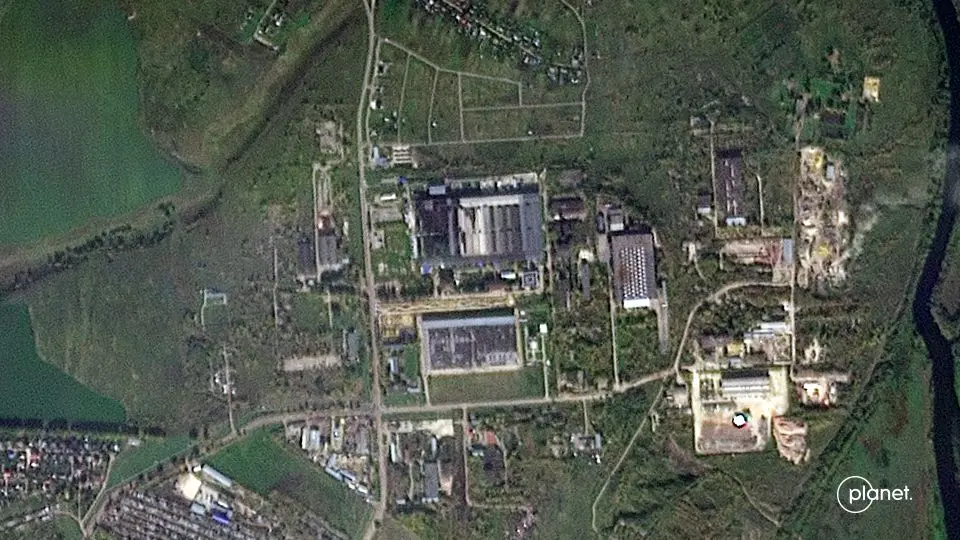
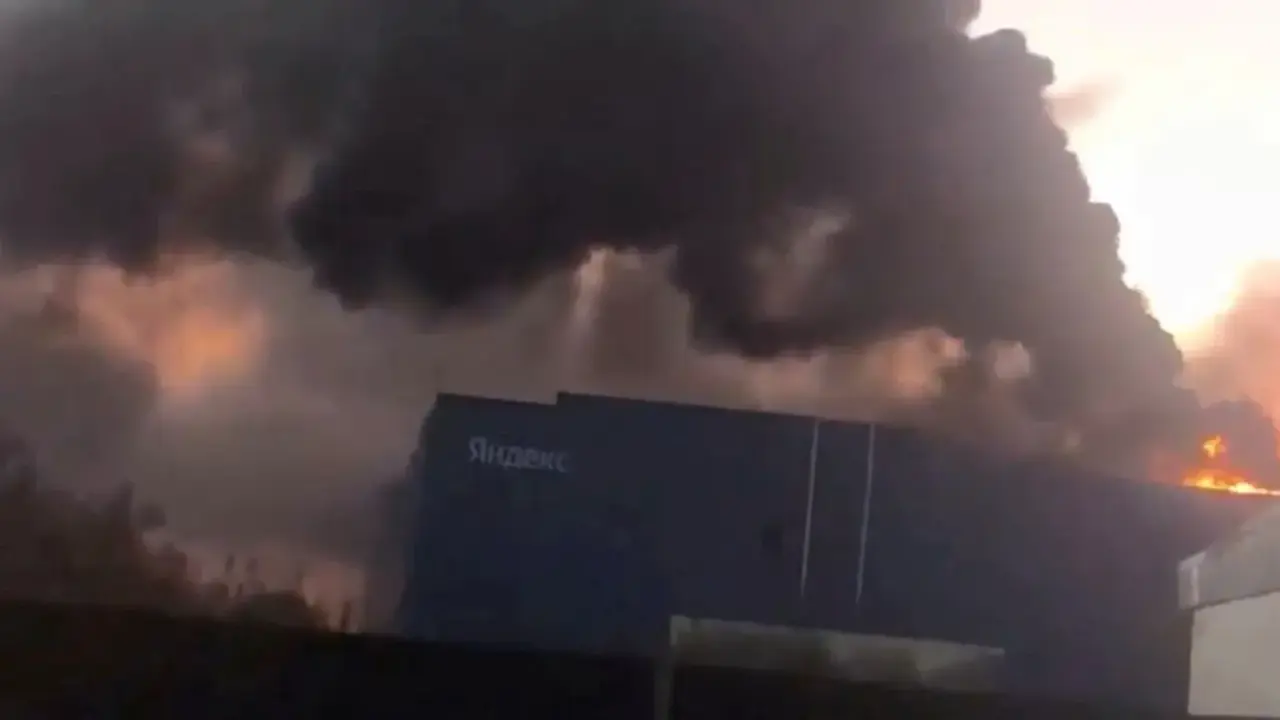
In a series of coordinated strikes throughout October, Ukrainian drone attacks targeted Russian data centers housing critical AI infrastructure, dealing a significant blow to Moscow's AI capabilities. The attacks hit five facilities belonging to Russia's largest technology companies: three Yandex data centers in Sasovo (October 7), Kaluga (October 9), and Vladimir (October 11), a Sberbank facility in Balakovo (October 14), and a VKontakte center near St. Petersburg (October 18)
1
2
3
. The strikes disrupted digital services across Russia, affecting everything from taxi-hailing apps and payment systems to cloud storage and navigation services2
3
.The Sasovo and Vladimir facilities held particular strategic importance, housing Russia's three most powerful supercomputers: Chervonenkis, Lyapunov and Galushkin, named after renowned Soviet and Russian scientists
1
. These machines, built before the 2022 invasion using AMD processors and Nvidia A100 accelerators, are tasked with training Yandex's neural networks, including YandexGPT, one of the country's leading large language models1
. Chervonenkis, which once ranked 19th on the Top500 list of the world's most powerful supercomputers, has since fallen to 101st place1
3
.Putin's AI Aspirations Face Setback as Recovery Timeline Remains Uncertain
The damage threatens President Vladimir Putin's push for "sovereign AI," built entirely in Russia from exclusively Russian components. At the AI Journey conference in Moscow last November, Putin described homegrown generative AI as "a matter of national, technological and value-based sovereignty," emphasizing that only Russian models should be used for national security and intelligence-gathering
1
. "We cannot allow a critical dependence on foreign systems," Putin stated1
.While Yandex restored most key cloud services within days by redirecting traffic to other data centers, the company remained silent for days about the state of its Yandex supercomputers
1
3
. The company finally confirmed the machines were not damaged but had been relocated to new, undisclosed facilities1
. However, experts remain skeptical about the timeline for full recovery. Mikhail Klimarev, head of the Internet Protection Society, questioned whether repairs could be completed within six months or a year, or whether full recovery would be possible at all2
3
.Sanctions and Chip Shortages Complicate Russia's AI Recovery Efforts
Restoring the damaged infrastructure presents formidable challenges for Russia's AI ambitions. Satellite imagery of the struck facilities shows fires that may have destroyed microchips and other fragile components
2
. "After such a strike it is hard to expect anything to have survived: data-centre equipment is fragile, demanding and expensive. Soot from fires is extremely harmful to electronics," Klimarev told the Associated Press2
.The most critical obstacle is replacing high-end hardware. Yandex's supercomputers run on Nvidia A100 processors, which Russia cannot legally import due to Western sanctions
2
3
. Connor Martin of the Council on Foreign Relations noted that "Ukrainian drone strikes will probably delay the development of Russian artificial intelligence even further," adding that Russia was already several years behind the United States and China before the strikes2
3
.Russia's Digital Sovereignty Policy Creates Vulnerability
The attacks exposed a fundamental weakness in Russia's approach to digital infrastructure. Under legislation designed to create a "sovereign internet," Russia requires companies to store all data on servers inside the country
2
. This concentration makes facilities easier to target, according to Nick Reiners, senior geo-technology analyst at Eurasia Group. "Russia's problem is that it has to provide air defence over a vast territory, and it does not have enough resources for that," Reiners explained. "Since all the infrastructure and all the data are located inside Russia, it is relatively easier to disable them"2
3
.Analysts describe data centers as soft targets: vast halls filled with servers, power equipment and cooling systems where even a small explosive charge can cause serious damage
2
. Ukraine, by contrast, has moved most of its data to servers in European countries since Russia's 2022 invasion, limiting the impact of subsequent attacks on its domestic infrastructure2
.Related Stories

Disrupted Digital Services Affect Millions of Russians
The immediate impact on Russian citizens was widespread. Russians reported persistent difficulties paying for goods, ordering taxis, using navigation services and accessing cloud storage
2
3
. The disruptions affected banking, e-commerce, geolocation and ride-hailing services, along with Yandex's Alisa virtual assistant and multimodal AI chatbots3
. Russian arbitration courts also experienced canceled or postponed sessions and difficulties accessing databases3
.Anton Merkurov, a former Russian tech entrepreneur now based in Britain, summarized the broader implications: "In general, no matter how excellent Russia's AI model might be, the war has set the industry back by decades, because AI doesn't live in a vacuum. The country is at war, there are sanctions placed for years to come. Whichever thread you pull, it will unravel a problem: The equipment can't be acquired, smart people are leaving, drones hit the buildings"
1
.Paradoxical Consequences for Russia's Internet Isolation
Klimarev suggested the strikes may carry an unintended consequence for Russian internet policy. "Paradoxically, the attacks on data centers have saved the Russian internet from isolation, because companies will now be forced to move their computing resources, most likely to Europe," he said
2
. "It is quite likely that many Russian companies are now studying the European market in search of opportunities to rent computing capacity." He added that Russian authorities might ease their attempts to tighten internet controls to limit the economic damage2
.Before the 2022 invasion of Ukraine, Russia had a shot at being a serious contender in the AI race, with two big domestic players—Sber and Yandex—possessing the data, money and infrastructure to back ambitious projects
1
. The invasion unraveled much of this within months, as Western sanctions cut off access to critical chips and talent fled the country in droves1
. What remains is an industry cut off from global expertise, increasingly dependent on China and training on scarce and aging A100 chips1
.References
Summarized by

Navi
[1]
Related Stories
Ukrainian Drone Strikes Cripple Russian Data Centers and AI Infrastructure in Retaliatory Campaign
08 Oct 2026•Technology
Data Centers Emerge as Military Targets as Drone Warfare Threatens AI Infrastructure Globally
15 Oct 2026•Technology
AI Data Centers Trigger Fiber Optic Shortage, Squeezing Ukrainian Drone Operations
11 Nov 2026•Business and Economy

Recent Highlights


Recent Highlights
Today's Top Stories





Don’t drown in AI news. We cut through the noise - filtering, ranking and summarizing the most important AI news, breakthroughs and research daily. Follow topics that matter to you and stay ahead.


