Unitree IPO Hits $9B Valuation as Retail Investors Rush China's Humanoid Robot Champion


7 Sources
[1]
Chinese humanoid robot maker's IPO more than 5,500 times oversubscribed by retail investors
Retail investors are jostling for a slice of a leading Chinese humanoid robot company, in a sign of huge enthusiasm for tech stocks on the mainland. The retail segment of Unitree's initial public offering was more than 5,500 times oversubscribed, according to a stock exchange filing published
[2]
Explainer: What is Unitree and why are China's humanoid robot makers racing to list?
BEIJING, Aug 10 (Reuters) - Chinese robot maker Unitree has priced its Shanghai initial public offering at 150.8 yuan per share, with subscriptions to start on Monday, as it seeks to raise 6.1 billion yuan ($904 million) in a deal that would see it become the first mainland-listed humanoid robot
[3]
Chinese humanoid robot maker Unitree prices IPO at $9 billion valuation
China's Unitree IPO puts global robotics race and geopolitics in focus China's Unitree has priced its Shanghai initial public offering at 150.8 yuan ($22.34) per share, valuing the company at around 61 billion yuan ($9.04 billion), it said on Thursday, in a deal that would make it the country's
[4]
China's Robots Know Kung Fu and Can Scale Walls. Can They Woo Investors?
Steve Lohr reported from Seoul. Xinyun Wu reported from Taipei, Taiwan. Unitree Robotics may be little known outside China. Its robots are not. Millions around the world have watched videos of the company's machines carrying out remarkable feats that seem almost superhuman. During China's
[5]

Unitree's IPO could value China's robot champion at $7bn or more
Sponsor CITIC pegs the humanoid-robot maker at over 50 billion yuan after its Shanghai listing, a landmark for a sector Beijing has made a national priority. China's best-known robot maker is about to test the public markets. Unitree could be worth more than 50 billion yuan, roughly $7bn, after
[6]

What is Unitree and why are China's humanoid robot makers racing to list? - The Korea Times
Children stand near Unitree's humanoid robots on display at a Unitree store in Beijing, China, Aug. 10. Reuters-Yonhap BEIJING -- Chinese robot maker Unitree has priced its Shanghai initial public offering at 150.8 yuan per share, with subscriptions to start on Monday, as it seeks to raise 6.1
[7]

World's largest humanoid robot maker Unitree's founder becomes billionaire ahead of IPO
Wang Xingxing, chairman and CEO of Unitree Robotics, the world's largest humanoid robot maker by shipments, has become China's first humanoid robot billionaire ahead of the company's Shanghai listing. According to a filing on Aug. 6, Unitree priced its initial public offering at 150.8 yuan
Share
Copy Link
Unitree priced its Shanghai IPO at $22.35 per share, raising $904 million and achieving a $9 billion valuation. The humanoid robot manufacturer's retail segment saw over 5,500 times oversubscription, signaling massive investor enthusiasm for AI-driven robotics despite FCC restrictions targeting Chinese products and escalating US-China competition in embodied AI.
Unitree IPO Achieves Record Oversubscription
Unitree has priced its Shanghai IPO at 150.8 yuan ($22.35) per share, raising 6.1 billion yuan ($904 million) and securing a market valuation of approximately $9 billion
1
3
. The Chinese humanoid robot maker allocated about 40.4 million shares, representing 10 per cent of its outstanding shares, on Shanghai's STAR Market1
. The retail segment saw extraordinary demand, with subscriptions exceeding 5,500 times the available shares, far surpassing CXMT's blockbuster IPO last month which was oversubscribed just 200 times1
. This investor enthusiasm reflects the broader appetite for AI-related stocks in China, where the Star 50 index has surged 27.4 per cent this year1
. CITIC Securities is acting as the sponsor and lead underwriter for the deal1
.Unitree Robotics Emerges as National Champion
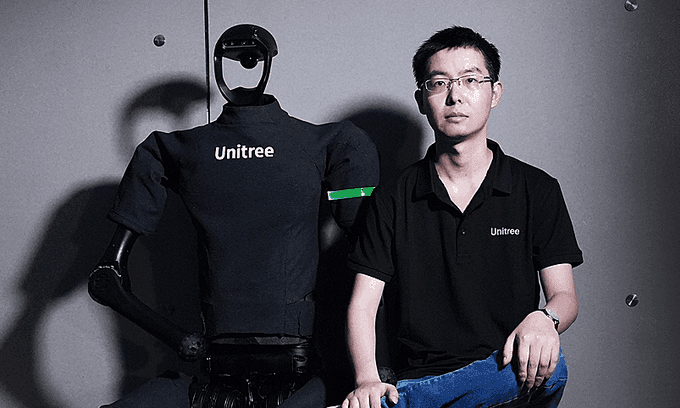
Founded in 2016 by engineer Wang Xingxing, Hangzhou-based Unitree first gained recognition for relatively inexpensive quadruped robots before expanding into humanoids
2
.
Source: VnExpress
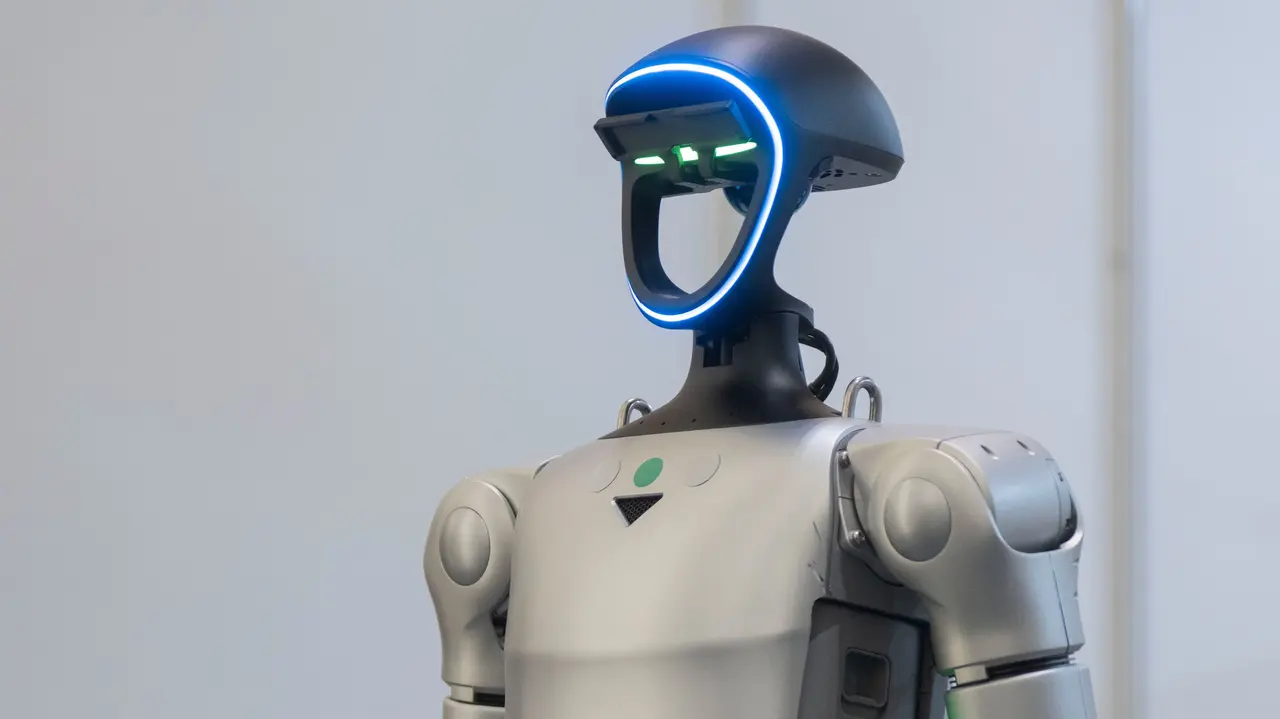
The company's G1, H1 and R1 humanoids have attracted global attention through viral demonstrations showing them running, dancing and performing kung fu routines
2
. During China's nationally televised Lunar New Year celebration, Unitree humanoid robots performed an elaborate martial arts routine, scaling walls, executing back flips and wielding swords4
. Last year, Unitree's success earned founder Wang Xingxing a front-row seat at a meeting with Chinese President Xi Jinping, underscoring the company's status as a symbol of Beijing's drive to dominate embodied intelligence1
4
. The humanoid robot manufacturer has demonstrated that China can produce sophisticated robots at prices far below many overseas competitors, drawing on the country's extensive supply chains for motors, sensors, batteries and other components2
.Strong Financial Performance Backs Valuation
Unitree's revenue rose more than fourfold to nearly 1.7 billion yuan in 2025, with adjusted net profit of about 600 million yuan
2
. The company shipped 5,500 humanoid robots last year, more than any other manufacturer1
4
. Overseas revenue accounts for more than 40 per cent of earnings, with the US making up between 13.3 per cent and 18.4 per cent depending on the year1
2
. Based on last year's results, the share sale gives Unitree a price-to-earnings ratio of 219 and a price-to-sales ratio of almost 361
. Strategic investors in the Shanghai IPO include Chinese AI company DeepSeek, founded by Liang Wenfeng1
3
. Unitree plans to use proceeds to develop robot software and hardware, launch new products and build a manufacturing base3
.
Source: NYT
Geopolitical Tensions Shadow Growth Prospects
The IPO comes as the United States and China ratchet up trade and technology tensions in AI-driven robotics
3
. Last month, the US Federal Communications Commission banned imports of humanoid robots in a move widely seen as targeting Chinese products, citing national security risks1
4
. US officials argue that as such robots become commonplace in factories, offices and homes, they could surreptitiously collect sensitive commercial, government and personal information or provide new avenues for cybersecurity attacks on critical infrastructure4
. The FCC ban affects new models while existing humanoid and four-legged robots with US approvals can continue sales3
. In its IPO prospectus, Unitree acknowledged that the FCC move would not affect continued sales of existing main products in the US market, but new models would face the risk of being cut off1
. China accused the United States of overstretching the concept of national security and threatened retaliation, announcing retaliatory measures citing FCC actions as one factor4
.Related Stories

Embodied AI Drives Strategic Industry Competition
Humanoid robotics increasingly have applications with embodied AI, or AI deployed in the physical world, creating a source of emerging US-China competition
1
. Morgan Stanley equity analyst Sheng Zhong highlighted the Unitree IPO as a catalyst that could support other listed stocks in the sector, noting that as the strategic industry accelerates and continues to ramp up, this could be the beginning of US and China embodied AI competition escalation1
. Today's AI systems learn primarily from analyzing vast quantities of digital data, but humanoid robots will increasingly learn by interacting with people and objects in the physical world through embodied intelligence4
. Nvidia chief executive Jensen Huang has declared physical AI as the next frontier for artificial intelligence, and in June announced a partnership with Unitree to build a research robot, with Unitree supplying the mechanical body and Nvidia the digital brain4
. A recent report from CLSA forecasts the global market will reach $69 billion by 2030, up from roughly $2 billion this year4
.Commercial Viability Questions Persist
Despite the investor enthusiasm, questions remain about the immediate commercial viability of humanoid robots
4
. Current demand mostly stems from universities and government-backed projects using robots for education, research and demonstrations2
. Humanoids still struggle with reliability, dexterity and performing varied tasks for long periods without human intervention2
. Developing humanoids requires heavy spending on engineers, robot-training data, AI models and manufacturing capacity years before demand from factories or households is certain2
. Public markets offer companies the capital to keep developing their technology while government support and investor interest remain strong2
. Unitree is not the only humanoid robot manufacturer seeking listings, with rivals Leju Robotics filing an application in May to list on Shenzhen's ChiNext market and Shanghai-based AgiBot beginning preparations for a Hong Kong IPO in July2
. The listing on Shanghai's STAR Market keeps a strategic company on a domestic exchange, aligning with Beijing's preference for keeping technology champions and their capital at home amid a crackdown limiting Chinese citizens' exposure to US equity markets1
5
.References
Summarized by

Navi
[5]
Related Stories
Unitree Robotics seeks $610M in Shanghai IPO as humanoid robots capture 32% global market share
20 Mar 2026•Business and Economy
China IPO boom surges to $54 billion as AI and robotics ignite investor appetite in 2026
31 Aug 2026•Business and Economy
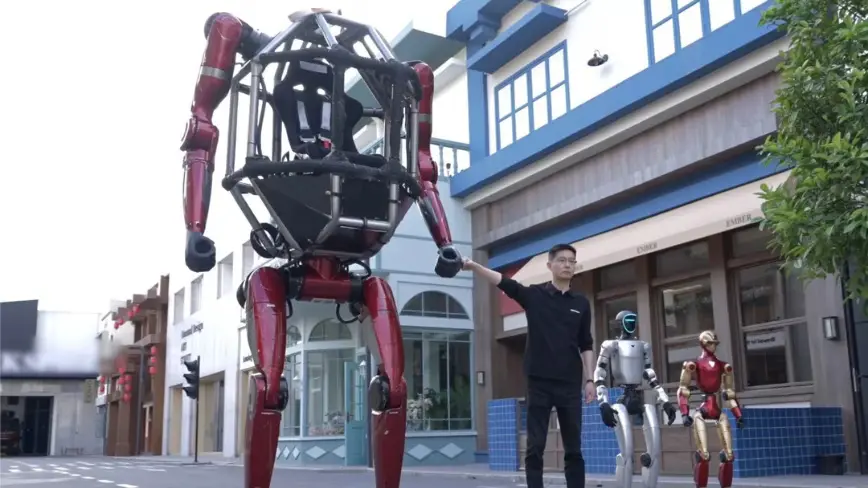
Unitree unveils $650K giant rideable mecha robot as company files for $7 billion IPO
15 May 2026•Technology
Recent Highlights
1
Microsoft and Nvidia Launch Surface Laptop Ultra: A $2,599 AI-Ready PC With RTX Spark Chip
Technology

2
Meta Muse AI Agent Surges to 6.6M Downloads Despite Privacy and Security Controversies
Technology
3
Scientists Build AI Model That Reconstructs Images From Brain Scans in Record Time
Science and Research

Recent Highlights
Today's Top Stories







Don’t drown in AI news. We cut through the noise - filtering, ranking and summarizing the most important AI news, breakthroughs and research daily. Follow topics that matter to you and stay ahead.


