US chip curbs freeze billions in loans to Asia's data center boom


2 Sources
[1]
Billions in data centre deals grind to a halt after chip curbs
Lenders are pausing billions in loans to ByteDance, Alibaba, and Tencent due to US export restrictions. These new rules complicate chip access for data centers serving Chinese tech firms. Banks are re-evaluating financing deals as risks become clearer and potential borrowers pose uncertainties.
[2]
AI Credit Boom Hits a Wall as Chip Curbs Strand Data Center Loans
From Malaysia to Thailand, Banks Are Discovering That the Biggest Risk to Asia's AI Infrastructure Boom May Not Be the Technology, but Washington's Ability to Change the Rules Overnight Takeaways * Asia's once-booming data center financing market has encountered an unexpected obstacle, with some
Share
Copy Link
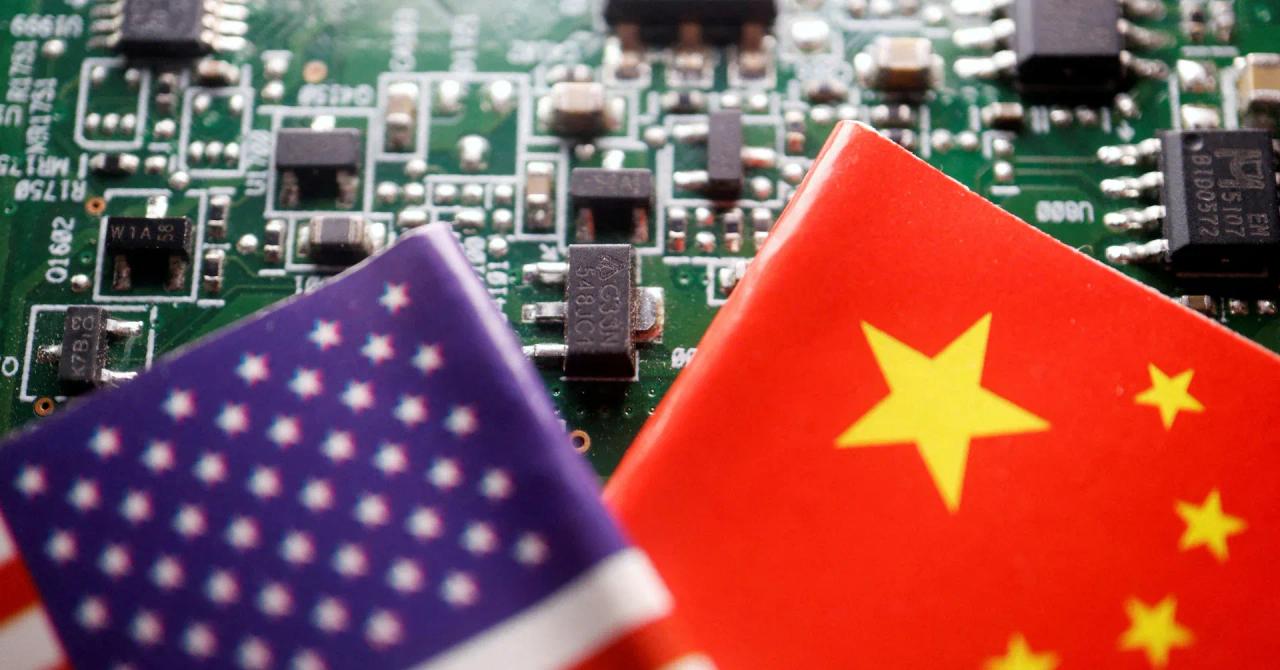
Lenders have paused or delayed billions of dollars in loans to Southeast Asian data centers that serve ByteDance, Alibaba and Tencent, after the US announced new chip export curbs last week
1
. This is a financing market freezing over a regulation, not over bad loans, and the deals now in doubt were bankable days ago2
.
Source: ET
The rule that froze the deals
The trigger is a licensing requirement announced last week: companies in Singapore, Malaysia, Indonesia, Thailand and Brazil now need US government approval to buy advanced AI chips from American manufacturers
1
. Data centers already leasing significant computing power to Chinese firms need a separate license, with a 90-day window to get one1
.The exposure has a short history: the Biden administration's 2022 restrictions on advanced US chips to China pushed Chinese firms to buy computing power remotely, and Malaysia and Singapore became the key centers for it, with Thailand and Indonesia drawing growing interest
1
.Deal by deal
The named deals show how wide the freeze runs. Some lenders have held up their review of the upsized $6.6 billion loan Bain Capital's Bridge Data Centres is seeking; its Malaysian facilities serve ByteDance among others
1
. It is the largest named deal in the reporting. One bank walked away from a $372 million loan to Digital Halo, backed by Partners Group, that was already fully underwritten1
. Its Malaysian data center serves Alibaba, and other banks are asking more questions. Multiple banks are reassessing a $480 million loan to Aolani, a Singapore-based neocloud that rents computing power instead of owning data centers and gets business from ByteDance1
. At least one fund has stepped back from a $300 million loan to GMI Cloud, an Nvidia cloud partner, to buy chips for a Thai data center Tencent would use1
. Private credit, not just banks, is pulling back.Lenders say they are doing more due diligence while they wait for clarity on how the curbs affect borrowers and on the legality of serving Chinese customers
1
.Related Stories

Banks shed what they already own
Per Bloomberg-compiled data, lending to Asia-Pacific data centers has climbed from nearly zero in 2023 to over $49 billion
1
. That capital is what the new rule now puts at risk. More than a dozen bankers described teams waiting for answers on how the curbs affect borrowers, and Citigroup, Standard Chartered and Singapore's major banks have launched a review of their data center clients1
.Some banks are trying to shed exposure they already hold, not just decline new loans. United Overseas Bank is seeking a risk-transfer deal of roughly $1 billion covering data center and infrastructure loans
1
. The deal is not done, headlines are slowing it, and the details could change. Lenders trying to sell down exposure are also struggling to find buyers, and deals once close to completion now look shaky1
.The chill reaches beyond debt. DayOne Data Centers has shelved its plan for a US public listing; its biggest customer is ByteDance, which ties its valuation to Chinese-client exposure
1
. A consortium involving BlackRock is weighing a reduced bid for a portfolio of Asia-Pacific data centers1
.The two markets are reading the same week differently. Jensen Huang's surprise return to Nvidia briefly buoyed AI stocks, but bankers stayed worried about the legal exposure of lending to data centers facing stricter export controls
1
.Hogan Lovells trade lawyer Ben Kostrzewa said the forced reevaluation might be a useful pause in a market that has run hot
1
. "It could be a good pause, to take stock and to review these projects, given how frothy the market has been for a while. It won't stop all these data centers being built, it won't stop the market, but it will slow it all down," he said.Per a Nov. 24 report from S&P Global Ratings, even a reversal of the rule tomorrow would likely leave operators and lenders more cautious
1
. They have now seen how US policy can reach projects and customers far beyond American borders.References
Summarized by

Navi
[2]
Related Stories
Fitch sees Asia data-center spending slowing as US chip rules bite
Yesterday•Business and Economy
Alibaba trims its AI plans as US chip curbs close its overseas compute route
19 Nov 2026•Business and Economy
Malaysia Curbs Data Center Growth, Impacting China's AI Chip Access
12 Sept 2025•Policy and Regulation
Recent Highlights



Recent Highlights
Today's Top Stories









Don’t drown in AI news. We cut through the noise - filtering, ranking and summarizing the most important AI news, breakthroughs and research daily. Follow topics that matter to you and stay ahead.


