5 Sources
[1]
Historic drone rescue of Apache crew points to future of recovery missions
In a historic first, two US Army crew members from an AH-64 Apache helicopter forced down near the coast of Oman were rescued within two hours by a US Navy Saronic Corsair drone boat operated by the 5th Fleet's Task Force 59. Details of the incident remain sketchy, including whether the Apache ditched due to a mechanical failure or hostile action. What is known is that, at 11:33 GMT on June 8, 2026, the attack helicopter encountered trouble while on a routine patrol near the Strait of Hormuz. A recovery effort was launched by US Naval Forces Command and the 82nd Airborne Division, with support from US Air Force and Navy units. What made the operation unusual was the involvement of Task Force 59, a dedicated artificial intelligence and unmanned systems integration unit that operates a flotilla of drone boats, including the Corsair. Equipped with a 360-degree passive sensing payload, the vessel was able to locate the two crew members, who were able to climb aboard the 24-ft (7.3-m) drone boat and cling onto its superstructure as the surface craft carried them to a safe area for helicopter extraction. Both were reported to be in stable condition after their ordeal. This first-of-its-kind rescue is significant for more than its historic value. It also highlights a potentially important application of drone technology for both military and disaster-relief missions. Casualty evacuation has always posed a major challenge for armed forces, particularly Western militaries dedicated to the principle of leaving no one behind. It's a laudable concept, but one that has caused problems in the past. At the very least, it means using up soldiers to move wounded comrades to the rear, meaning that at least two fit people are needed to handle one casualty. Even with dedicated stretcher bearers, that's a lot of personnel. It can also cause serious operational problems. During the Vietnam War, the Viet Cong learned that they could bring an American assault crashing to a halt by wounding a US soldier as quickly as possible, stopping the attack while the casualty was dealt with. By the time of the Falklands War, the British learned from this and adopted the policy of stabilizing a casualty and continuing the assault, with recovery taking place later when conditions allowed. Autonomous drones - including land, sea, and air, as rescue and evacuation units - could change things dramatically. Many more soldiers could be freed up for combat and other operations while often costly rescue or recovery missions could be handled by autonomous vehicles. Casualties could be moved to the rear quickly, helping preserve the critical "Golden Hour" during which prompt medical treatment can mean the difference between life and death. In addition, the drones could be sent into situations that would be too dangerous for a human team, increasing the chances of successful rescue. For the military, making use of such technology has obvious benefits, but it could also help in disaster situations. Recovery drones could rush into areas affected by earthquakes, hurricanes, wildfires, and tsunamis, where conditions may be too hazardous for human teams. They could even be pre-positioned in hazard areas in anticipation of disasters, ready to go at a moment's notice to collect the injured and drop off supplies. And, as was demonstrated in the Apache incident, the drones don't even need to be dedicated ones. Any platform capable of carrying a human-sized payload could be pressed into service as needed. They don't even need to be the vehicle-like drones we're used to. Quadruped robots are being developed to act like mules for the infantry and could maybe be equipped with little kegs of brandy to turn them into robo-St. Bernards. There has also been considerable discussion of humanoid military robots, which could one day be reprogrammed for casualty duty. So don't be surprised if a cliché cry of "Medic" one day ends up being answered by something that looks like C-3PO in camo, complete with a red cross on its chest.
[2]
Drone boat rescues U.S. helicopter crew shot down by Iran
Why it matters: It was a first-of-its-kind operation, with incredibly high stakes. * It also offers a glimpse at future warfare, in which humans and smart, militarized machinery operate alongside one another. Driving the news: A spokesperson for Central Command, which oversees American military action across the greater Middle East, told Axios the Corsair "picked up" the crew and "transported them to another location on the water," where they were then "hoisted up to a helicopter." * Both crew members are in stable condition. * President Trump blamed Iran for shooting down the AH-64 Apache, which is made by Boeing, and vowed a military response. The intrigue: Saronic advertises Corsair as autonomous. It was not immediately clear how it maneuvered during the rescue mission. * It was operated by the Navy's Task Force 59, which was established in 2021 to experiment with unmanned tech and artificial intelligence and fold them into naval operations. * Navy leadership has for years advocated for a hybrid fleet, or a mix of manned and unmanned ships. By the numbers: The Corsair, unveiled in October 2024, is 24 feet long. It can travel 1,000 nautical miles, carry 1,000 pounds and hit speeds greater than 35 knots. * The Corsair is so much larger than two vessels previously unveiled by Saronic, Spyglass and Cutlass, that the fuel onboard weighs more than the other two boats combined. Follow the money: The Navy in December revealed it had inked a $392 million contract with Saronic for drone-boat production. * Saronic CEO Dino Mavrookas started his career in the Navy and spent years with SEAL Team Six.
[3]
Drone rescue highlights US Navy's autonomous push
Washington (United States) (AFP) - The use of a sea drone to rescue two US Army aviators apparently shot down by Iran underscores the growing importance of such vessels in Washington's naval operations, analysts said Wednesday. Military officials told US media the operation near the Strait of Hormuz on Monday was their first-ever rescue carried out by drone at sea, with an operator piloting from afar. Drone warfare has already taken huge leaps during Russia's invasion of Ukraine, including the use of unmanned vehicles to recover wounded soldiers from frontline areas. The Hormuz incident comes amid a years-long push by the US Navy to integrate autonomous technology into Middle East operations. "The surface drone that assisted in Monday's rescue of the Apache crew off the coast of Oman was a US Navy Corsair unmanned surface vessel operated by US 5th Fleet's Task Force 59," said Navy Captain Tim Hawkins, a spokesman for US Central Command (CENTCOM), which oversees American forces in the Middle East. Hawkins told US media the pair, who President Donald Trump said had been shot down by Iran, were picked up by the drone. They were transported to another location before being plucked out of the sea by helicopter in a two-hour rescue operation. Bryan Clark, a senior fellow at the Hudson Institute, said the drone's role in the rescue was a "surprise." "These drones are being used for surveillance and aren't necessarily equipped for search and rescue. That said, this highlights their versatility and ability to take on new missions," he said. Task Force 59 was unveiled in 2021 under the US Navy's Middle East command, focusing on testing and implementing unmanned systems and artificial intelligence. "For pennies on the dollar we can put unmanned platforms out there, we can couple it with artificial intelligence and then, I think critically important, we can use our manned ships much more efficiently, much more effectively," then-Fifth Fleet Commander Vice Admiral Brad Cooper told reporters in October 2022. Leaders of the congressionally mandated National Commission on the Future of the Navy wrote in a January op-ed: "A distributed fleet that combines manned platforms with unmanned surface and undersea vehicles can expand sensing, complicate enemy targeting, and cover a wider area." 'Persistent maritime awareness' The Corsair, made by Texas-based Saronic Technologies, was introduced to the Middle East theater in March, Hawkins said. The 24-foot, diesel-powered "autonomous surface vessel" can be launched at sea, allowing larger ships to deploy and retrieve it without returning to port, Saronic said in a blog post. During a January test run, the Corsair at times faced conditions that "could not have been endured by a human operator." The company concluded that the vessel can loiter autonomously at sea for more than 50 days. "This capability allows operators to maintain persistent maritime awareness without the cost, risk or fatigue associated with crewed operations," Saronic said. Hot water "The United States has been increasingly focused on using these systems effectively," said Scott Savitz, senior engineer at the Rand Corporation research organization. CENTCOM and US Naval Forces Central Command "took a lead on this and that experimentation has presumably paid off." Among the challenges of deploying sea drones in the Gulf is its water, which is hotter and saltier than other bodies, he said. Other autonomous vessels in the region are involved in operations such as launching anti-air weapons, conducting surveillance, tracking submarines and clearing mines. For Savitz, the aviators' rescue highlighted the functionality of drones beyond headlines about their role in attacks in the Ukraine war. "I'm so pleased it will be a reminder to people that these things are not only useful for one-way explosive attacks," he said.
[4]
Helicopter crew rescued by unmanned Navy vessel near Strait of Hormuz
An unmanned U.S. Navy surface vessel rescued the U.S. Army AH-64 Apache crew late Monday that went down near the Strait of Hormuz. The two crew members, who were in the waters close to the coast of Oman, were located and picked up by a Saronic Corsair, which is part of the Navy's artificial intelligence and drone task force, Capt. Tim Hawkins, spokesperson for U.S. Central Command (Centcom), told multiple news outlets. The Hill has reached out to Centcom for comment. It was the first known drone rescue at sea by the U.S. military, Hawkins told The Associated Press. The service members are getting medical care and are in stable condition after getting some aid from U.S. forces on land, Hawkins said. Centcom has not said what caused the Apache helicopter to crash, stating that the incident is under investigation. Centcom said Tuesday morning that the rescue of the crew was led by U.S. Naval Forces Central Command and the Army's 82nd Airborne Division, along with support from Air Force and Navy units, including U.S. 5th Fleet's Task Force 59. Navy's Task Force 59 is the service branch's first unmanned and artificial intelligence task force, formed in 2021 and headquartered in Bahrain, to integrate AI and the latest robotic systems into maritime operations. President Trump told reporters after attending Game 3 of the NBA Finals that the pilots are "fine." "Nobody injured," the president said. "We are going to issue a report tomorrow. But the pilots are fine." Apache helicopters are an integral part of the U.S. naval blockade in the Strait of Hormuz in preventing ships from carrying Iranian crude oil from flowing through the waterway. The Monday effort marks the second known time U.S. service members have been rescued during the Iran war. Two F-15E Strike Eagle fighter jet crew members were rescued in April after Iran shot down the plane with an anti-aircraft missile.
[5]
US Navy uses cutting-edge new drone boat to rescue Apache pilots who crashed near Strait of Humuz
A US drone boat conducted a first-of-its-kind rescue mission to save the crew of an American Apache helicopter that crashed near the Strait of Hormuz on Monday, the military said. The unmanned vessel, powered by artificial intelligence, located the crew who had been stuck for two hours in the waters off the coast of Oman, bringing them to shore, the Wall Street Journal reported. The operation marks the first time a high-tech US Navy drone deployed to the Middle East was used to conduct a rescue mission. The military is currently investigating if the helicopter was shot down by Iranian forces as tensions remain high along the Strait of Hormuz. The Navy previous deployed a Seahawk medium unmanned surface vessel (MUSV) with an aircraft carrier group.
Share
Copy Link
In a historic first, a US Navy Corsair drone boat rescued two Apache helicopter crew members from waters near Oman within two hours. The 24-foot autonomous surface vessel, operated by Task Force 59, located the aviators and transported them to safety after their AH-64 Apache went down near the Strait of Hormuz. The operation signals a major shift in military recovery missions and disaster relief capabilities.
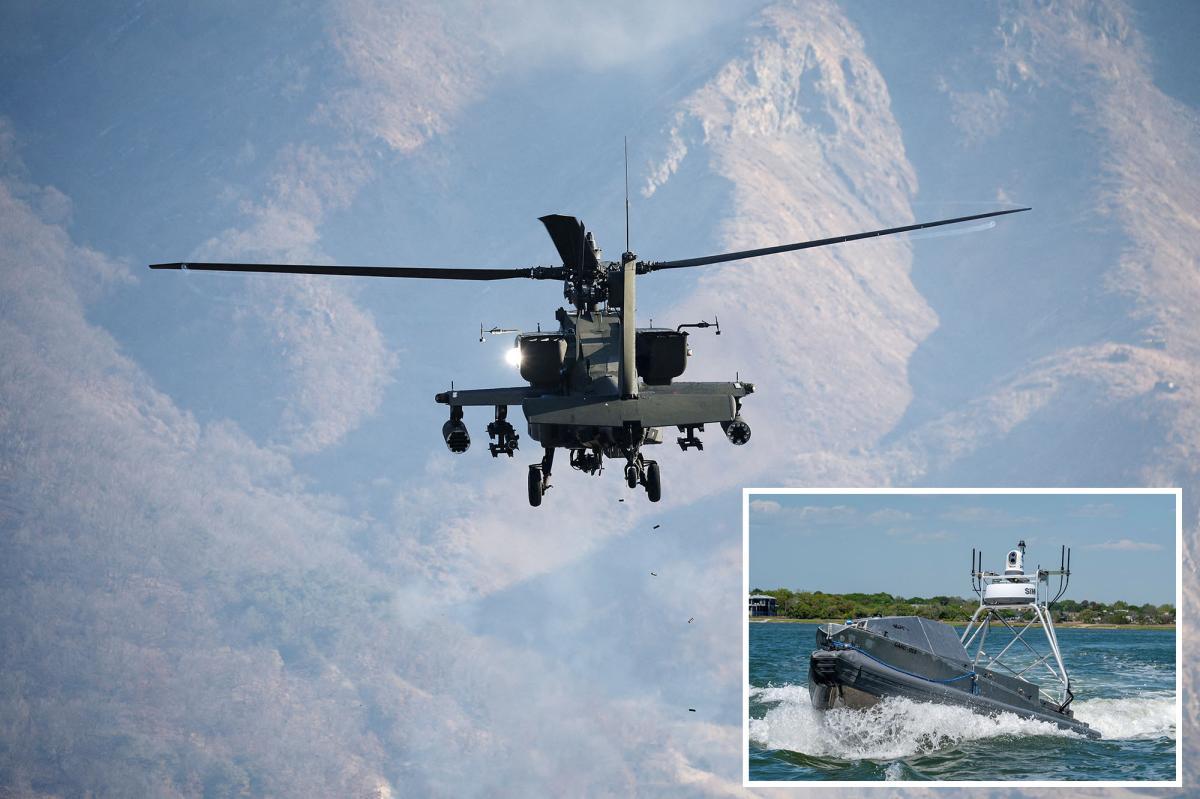
The US Navy completed its first-ever drone rescue at sea on June 8, 2026, when a Saronic Corsair autonomous surface vessel saved two Apache helicopter crew members who went down near the coast of Oman. The historic rescue mission unfolded at 11:33 GMT as the AH-64 Apache encountered trouble during a routine patrol near the Strait of Hormuz
1
. Within two hours, the crew was located, picked up, and transported to safety by the 24-foot unmanned surface vessel operated by the US Navy's Task Force 592
.
Source: New York Post
The Corsair drone boat, equipped with a 360-degree passive sensing payload, located the two crew members who climbed aboard and clung to its superstructure as the vessel carried them to a safe area for helicopter extraction
1
. Captain Tim Hawkins, a spokesman for US Central Command, confirmed the unmanned surface vessel "picked up" the crew and "transported them to another location on the water," where they were hoisted up to a helicopter2
. Both crew members are in stable condition following their ordeal4
.The historic rescue mission showcases the capabilities of Task Force 59, a dedicated artificial intelligence and unmanned systems integration unit unveiled in 2021 under the US Navy's Middle East command. The task force operates a flotilla of drone boats and focuses on testing and implementing unmanned systems and artificial intelligence into naval operations
3
. "For pennies on the dollar we can put unmanned platforms out there, we can couple it with artificial intelligence and then, I think critically important, we can use our manned ships much more efficiently, much more effectively," then-Fifth Fleet Commander Vice Admiral Brad Cooper told reporters in October 20223
.
Source: New Atlas
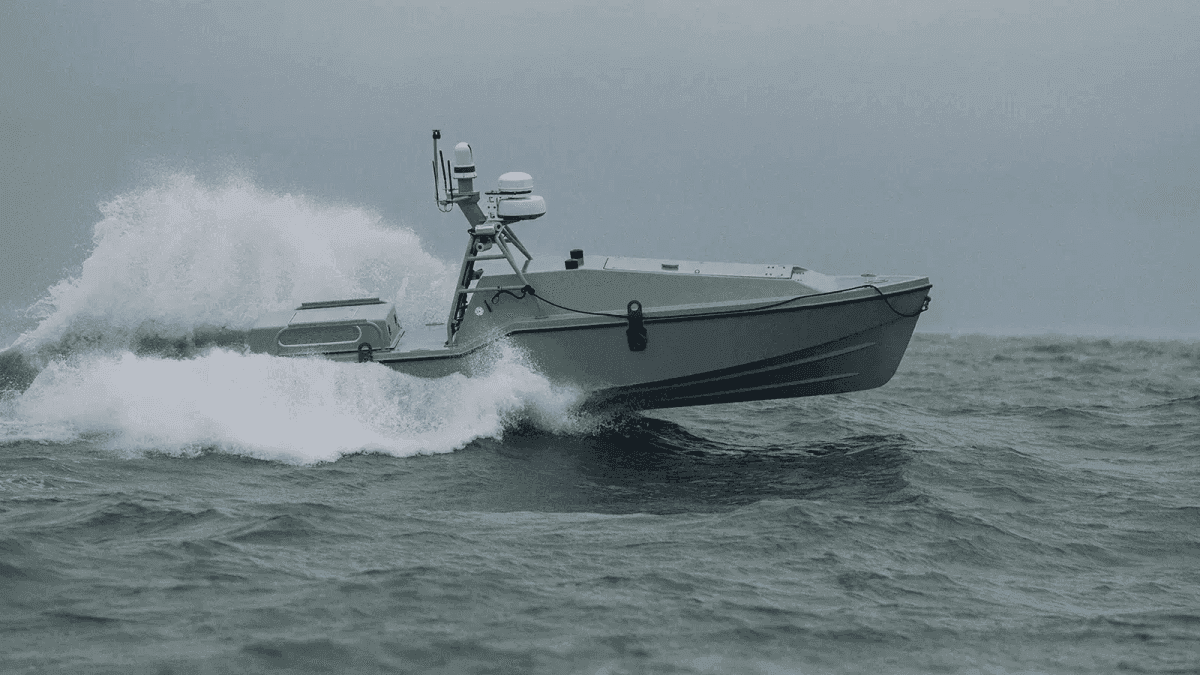
The Corsair, manufactured by Texas-based Saronic Technologies, was introduced to the Middle East theater in March 2026
3
. The diesel-powered autonomous technology platform can travel 1,000 nautical miles, carry 1,000 pounds, and hit speeds greater than 35 knots2
. During a January test run, the Corsair faced conditions that "could not have been endured by a human operator" and demonstrated the ability to loiter autonomously at sea for more than 50 days3
.Bryan Clark, a senior fellow at the Hudson Institute, called the drone's role in the rescue a "surprise," noting that "these drones are being used for surveillance and aren't necessarily equipped for search and rescue. That said, this highlights their versatility and ability to take on new missions"
3
. The operation demonstrates how autonomous drones could dramatically change casualty evacuation, freeing up soldiers for combat while costly recovery missions are handled by autonomous vehicles1
.The first drone rescue at sea highlights autonomous technology's potential to preserve the critical "Golden Hour" during which prompt medical treatment can mean the difference between life and death. Drones can be sent into situations too dangerous for human teams, increasing the chances of successful rescue
1
. Scott Savitz, senior engineer at the Rand Corporation, emphasized that the rescue highlighted functionality beyond attack roles: "I'm so pleased it will be a reminder to people that these things are not only useful for one-way explosive attacks"3
.Related Stories
The historic rescue mission offers a glimpse at future warfare, in which humans and smart, militarized machinery operate alongside one another
2
. Navy leadership has for years advocated for a hybrid fleet, or a mix of manned and unmanned ships. Leaders of the congressionally mandated National Commission on the Future of the Navy wrote in a January op-ed: "A distributed fleet that combines manned platforms with unmanned surface and undersea vehicles can expand sensing, complicate enemy targeting, and cover a wider area"3
.
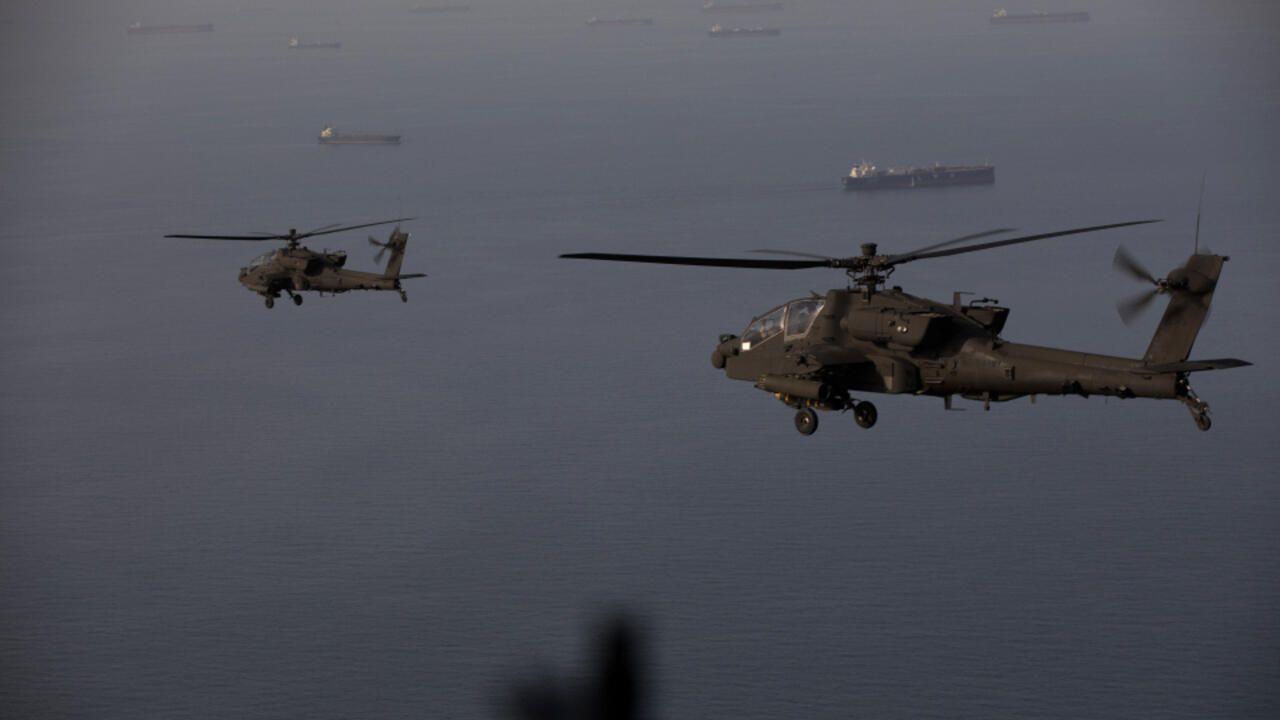
Source: France 24
Beyond military applications, recovery drones could rush into areas affected by earthquakes, hurricanes, wildfires, and tsunamis, where conditions may be too hazardous for human teams. They could be pre-positioned in hazard areas in anticipation of disasters, ready to collect the injured and drop off supplies at a moment's notice
1
. The Navy in December revealed it had inked a $392 million contract with Saronic for drone-boat production, underscoring the military's commitment to unmanned systems integration2
.Summarized by
Navi
[3]
06 Mar 2026•Technology

29 Jul 2025•Technology

02 Jun 2026•Technology

1
Policy and Regulation

2
Technology

3
Health