Waymo Launches First EU Driverless Robotaxi Service in Munich, Germany by Late 2027


3 Sources
[1]
After Uber, Waymo to launch the EU's first robotaxis in Munich
Google sister company Waymo plans to launch driverless taxi services with robotaxis in Bavaria's capital from next year. In the coming weeks, Waymo cars with drivers will first map the city. Alphabet, Google's parent company, plans to launch its Waymo driverless robotaxis for the public in Munich
[2]
Waymo to introduce driverless rides to Germany by end of 2027
The introduction of robotaxis to the German market would be Waymo's third planned international expansion and its first in the EU. Autonomous driving tech company Waymo is set to introduce driverless robotaxis into Germany, with a deadline set for the end of next year, 2027. The organisation,
[3]
Waymo Takes its Driverless Taxi Operations Overseas into Germany
Waymo recently announced that it's bringing its autonomous ride-hailing service to Munich, Germany, marking the company's initial entry into a major international hub. Waymo says that it will begin manual test drives across the city in the coming weeks. Waymo co-CEO Tekedra Mawakana
Share
Copy Link
Alphabet's Waymo announces Munich as its first EU location for fully autonomous operations, marking a major expansion for driverless taxi operations. Manual test drives begin in coming weeks, with commercial service targeting late 2027 launch pending regulatory approvals.
Waymo Announces Historic EU Entry with Munich Launch
Alphabet's Waymo is set to introduce its driverless robotaxi service to Munich, Germany by the end of 2027, marking the company's first expansion into the European Union
1
2
. This represents Waymo's third international market after the United States, United Kingdom, and Japan, positioning Germany as a critical testing ground for autonomous vehicle development in Europe. Waymo co-CEO Tekedra Mawakana stated that "Munich is a world-class hub for mobility and engineering, and becoming part of this city marks an important milestone in our global expansion"3
. The announcement signals a major shift in AI-driven mobility across Europe, with Germany's favorable legal framework providing a competitive advantage for autonomous ride-hailing services.
Source: Silicon Republic
Initial Testing Phase Begins with Manual Operations
Waymo will deploy its first vehicles on Munich's streets in the coming weeks, though these initial operations will involve manually driven cars during the trial phase
1
. Trained specialists will conduct high-definition mapping of the road network and perform test runs to ensure the Waymo Driver system adapts properly to Munich's specific traffic characteristics2
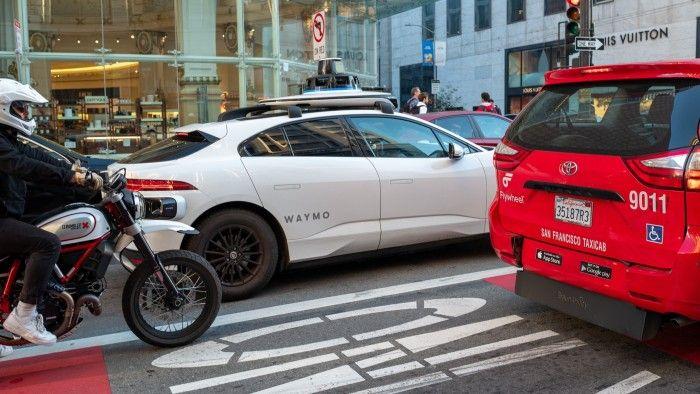
. The company plans to start with a small initial fleet of upgraded electric Jaguar I-Pace models, scaling operations over time as the service matures1
. This phased approach allows Waymo to validate its technology against local conditions before launching fully autonomous operations. However, concerns have emerged following tests in London where residents complained about noise pollution from Waymo vehicles frequently shunting back and forth during mapping activities1
.Germany's Legal Framework Provides Competitive Edge
Germany has maintained legislation enabling driverless everyday road traffic since 2021, giving the country a significant advantage in attracting autonomous vehicle companies
1
. Bavaria's economy minister Hubert Aiwanger called Waymo's announcement a "milestone," while Christian Hirte, parliamentary state secretary at the transport ministry, emphasized that Germany aims to become a leading global hub for developing and producing autonomous driving technology1
. Waymo must still obtain necessary regulatory approvals from the Federal Motor Transport Authority and relevant state and local authorities before launching commercial service1
. This regulatory environment has already attracted other players, with Uber and Israeli AI firm Autobrains announcing a joint robotaxi program in Munich in June, citing dense urban infrastructure and proximity to major German carmakers as decisive factors1
.
Source: Phandroid
Related Stories

Safety Record and Technical Challenges Ahead
Waymo brings substantial operational experience to Germany, having completed more than 20 million journeys and driven over 350 million kilometers for the public without human control
1
. The company reports 16 times fewer serious injury crashes, 14 times fewer pedestrian crashes with injury, and 6 times fewer cyclist crashes with injury compared to human drivers3
. However, significant challenges remain, particularly regarding winter conditions. Snow and ice represent some of the toughest conditions for self-driving cars, according to Waymo co-CEO Dmitri Dolgov, with the company still maintaining safety drivers in US cities with harsh winters1
. How Waymo's driverless taxi operations will handle Munich's winter weather remains an open question that could impact the service's reliability and public acceptance.Strategic Implications for Europe's Mobility Ecosystem
Waymo's EU expansion positions the company to compete directly with emerging European autonomous vehicle initiatives, including Volkswagen's Hamburg project where autonomous vehicles operate with safety drivers
1
. The company emphasizes that its service will complement existing public transport, cycling, and walking infrastructure rather than replace it1
3
. Mawakana confirmed plans to invest in local fleet operations and create high-skilled jobs as part of the project, with earning community trust identified as the top priority2
. Recent technical advances support this expansion, including Waymo's custom AI chip designed in August to optimize autonomous vehicle systems for low-latency performance and improved real-time driving commands2
. The company has also integrated Gemini AI assistant within select vehicles, though this operates independently of navigation and driving systems3
. Watch for regulatory decisions in coming months and winter testing results that will determine whether Waymo's late 2027 timeline remains achievable.References
Summarized by

Navi
[2]
Related Stories
Uber picks Munich for robotaxi program with Autobrains and Nvidia's agentic AI approach
02 Jun 2026•Technology

Waymo to Launch Autonomous Ride-Hailing Service in London by 2026
15 Oct 2025•Technology
Wayve Expands to Germany: British AI Startup Accelerates Global Autonomous Driving Ambitions
03 Mar 2025•Technology

Recent Highlights



Recent Highlights
Today's Top Stories









Don’t drown in AI news. We cut through the noise - filtering, ranking and summarizing the most important AI news, breakthroughs and research daily. Follow topics that matter to you and stay ahead.


