XPeng's humanoid robot goes on sale next year. Homes come later.


3 Sources
[1]
Robots could be doing household chores in just 1-2 years, Chinese EV firm says
* Robots will likely be deployed in homes in coming years since the tech is moving very fast, Xpeng Co-President Brian Gu told CNBC on Thursday. * The electric car company plans to begin delivering its next-generation humanoid in the second half of 2027. * "It's much easier to be profitable for
[2]
XPENG unveils humanoid robot with 1,500 tactile sensors in China
Three proprietary Turing AI chips power onboard models and whole-body control. XPENG has unveiled a new physical-intelligence architecture and its IRON humanoid robot, outlining plans to bring the machine into its retail stores in 2027 as the Chinese automaker expands into robotics and autonomous
[3]
China's Xpeng wants to put an eerily friendly humanoid robot in your home for the same price as an affordable EV
The IRON robot is heading for commercial deployment in 2027, with household use eventually on the company's radar. The uncanny valley is getting a customer-service smile. Chinese EV maker XPeng says its IRON humanoid robot could cost roughly as much as an electric vehicle when it goes on sale to
Share
Copy Link
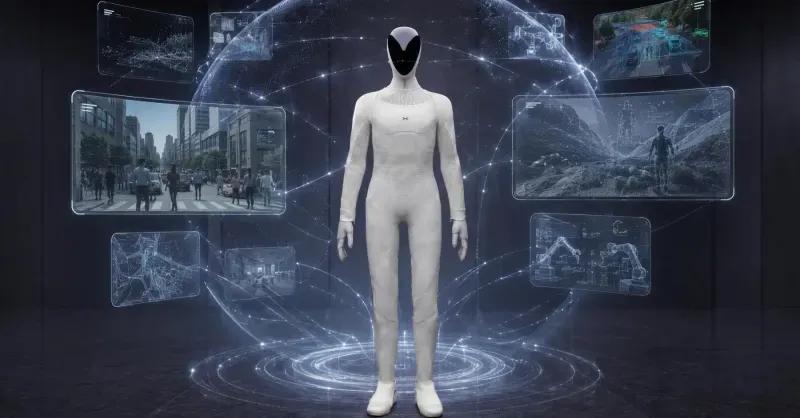
Chinese electric car maker XPeng has unveiled a humanoid robot it plans to put on sale next year, starting as a store assistant in its own retail shops
2
.
Source: Digital Trends
The robot, Iron, was the centerpiece of the company's eighth AI Day event, held in Guangzhou on November 25, alongside the new Turing AI architecture
2
. XPeng presents Turing as one technology foundation shared across its cars, robots and flying vehicles, adapting to whatever hardware it runs on2
. That bet on robots is a natural extension for a company that started making cars in 2014. It beat Tesla to a mainland-China rollout of driver-assist and has since pushed into its own AI chips, flying vehicles and robotics1
.
Source: Interesting Engineering
What Iron can do
Per XPeng, the robot has 76 degrees of freedom, meaning 76 independently movable joints, and more than 1,500 tactile sensing points that let it feel what it touches
2
3
. Three of the company's Turing chips run the onboard models and control the whole body2
3
. The software stack runs in three layers, from basic hardware coordination up to task planning, and XPeng says its training approach speeds things up 10 to 12 times2
.The 2027 plan
The commercial timeline is specific. XPeng plans to start training Iron as a store assistant in its retail outlets during the first three months of 2027. A public launch is targeted for the second quarter
2
1
3
. Mass production is set to begin in January, and the company aims to sell tens of thousands of robots in 20271
3
.Co-president Brian Gu suggested Iron could cost roughly the median price of an electric car, though no exact figure was given
3
. "It's much easier to be profitable for the robotics business than the autos business," he said in an interview, adding that profitability could come as soon as next year1
. The profitability argument is also the reason Gu gives for the aggressive timeline. Investors have already put money behind it: the robotics unit raised $900 million at a valuation of $6.3 billion this summer1
.Related Stories

Skeptics, and the road home
Investors are not sold: XPeng's shares, listed in New York and Hong Kong, are down more than 55% so far this year amid a broad slide in Chinese auto stocks
1
. Digital Trends frames 2027 as the test of whether these ambitions can move beyond flashy demos3
.Gu also batted away a geopolitical worry. He said the robots run on the same driver-assist chips XPeng already uses, so he sees no supply-chain change from US curbs on selling advanced Nvidia chips into China. "Right now we don't see any change to our supply chain, and also ability to have these chips," he said
1
.The household robot, the pitch's emotional core, is deliberately last in line. XPeng plans a staged path: commercial settings first, then industrial uses, then homes
3
. Gu said technology is moving much faster now, which is why homes become thinkable once the robot has proven itself in commercial settings1
. Homes raise the bar: the robot has to be safe around elderly people, children and pets, while battery power and consistent performance become real requirements1
3
. "Maybe after successful deployment into commercial settings, maybe another one to two years, we can start thinking about deploying into home settings," Gu said1
.References
Summarized by

Navi
[2]
Related Stories
Xpeng Begins Mass Production of IRON Humanoid Robots as EV Makers Pivot to Robotics
08 Sept 2026•Technology
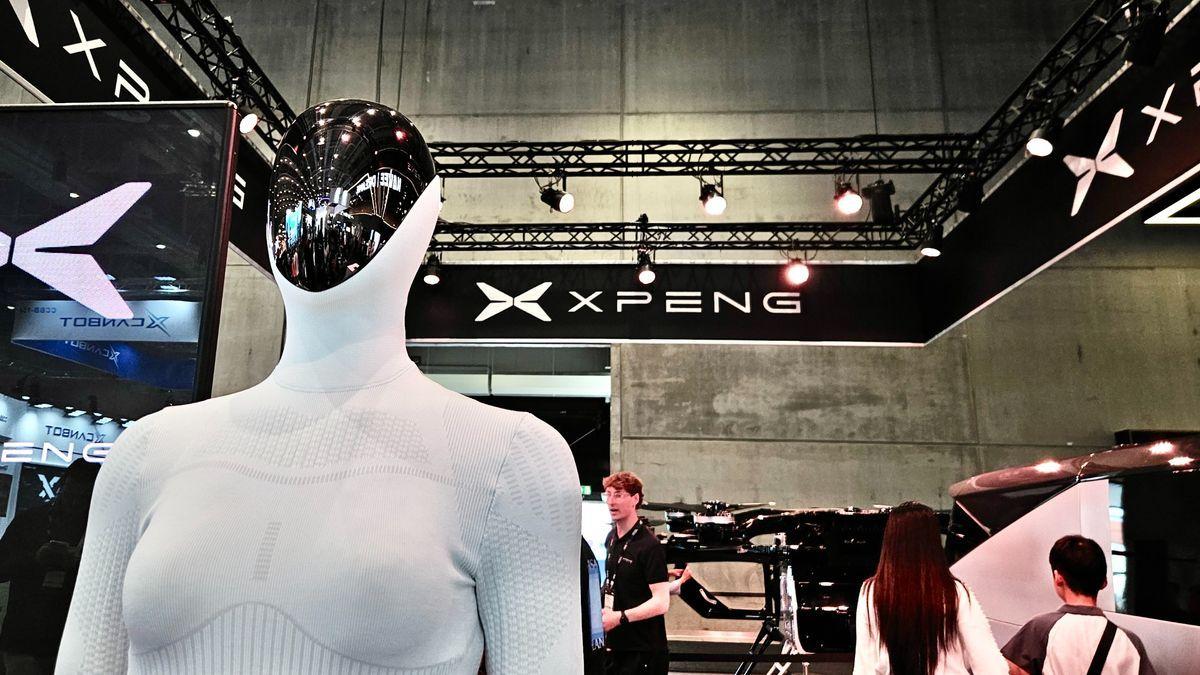
Xpeng's IRON Humanoid Robot Sparks Global Attention with Lifelike Movement and Controversial Design
07 Nov 2025•Technology
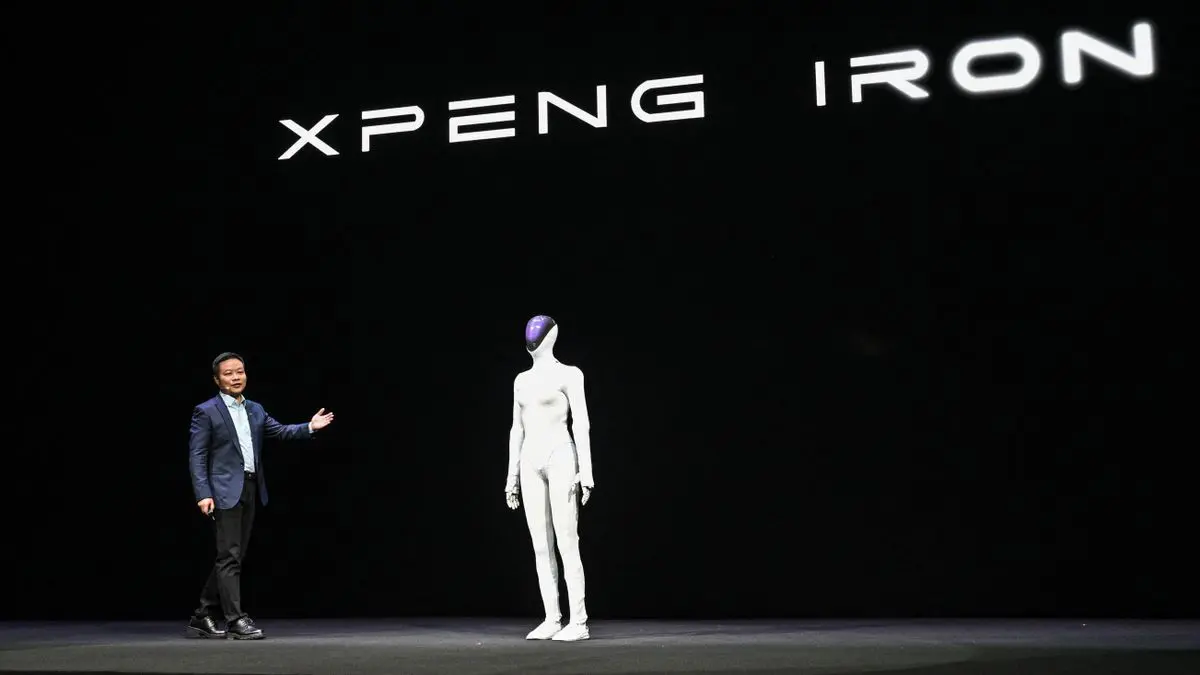
XPENG Unveils Advanced Humanoid Robot 'Iron' for Factory Tasks
09 Nov 2024•Technology

Recent Highlights



Recent Highlights
Today's Top Stories











Don’t drown in AI news. We cut through the noise - filtering, ranking and summarizing the most important AI news, breakthroughs and research daily. Follow topics that matter to you and stay ahead.


