Zuckerberg's Biohub invests $500M to build AI models that simulate human cells at molecular scale


2 Sources
[1]
Zuckerberg Trying to Simulate Human Biology at the Cellular Level
Can't-miss innovations from the bleeding edge of science and tech Mark Zuckerberg is following a path paved by fellow billionaires Bill Gates and Warren Buffet: laundering his untold billions through a health research prestige project. Called the Chan Zuckerberg Biohub -- his wife Priscilla Chan,
[2]
Can AI simulate human cells? Inside Mark Zuckerberg's plan
Mark Zuckerberg and Priscilla Chan's Biohub is investing $500 million to build AI models of human cells, as tech giants race to bring artificial intelligence into biology. Meta's CEO Mark Zuckerberg and his wife Priscilla Chan are building artificial intelligence (AI) models of human cells, in a
Share
Copy Link
Meta CEO Mark Zuckerberg and wife Priscilla Chan are investing $500 million through their Chan Zuckerberg Biohub to create AI models of human cells. The five-year initiative aims to generate datasets and predictive cellular models that could transform how researchers study disease and develop treatments, joining a growing race among tech giants to merge AI with biology.
Chan Zuckerberg Biohub Launches $500 Million AI Initiative
Meta CEO Mark Zuckerberg and his wife Priscilla Chan have announced a $500 million investment through their Chan Zuckerberg Biohub to build AI models of human cells, marking one of the most ambitious efforts yet to simulate human biology at the cellular level
2
. The five-year initiative aims to create the technologies and datasets necessary to develop predictive cellular models that could fundamentally change how scientists understand disease and develop treatments1
. Of the total funding, $400 million will support Biohub's internal AI development, while $100 million will be allocated to external researchers2
. All data generated will be made available as open-source datasets to researchers worldwide, potentially accelerating frontier research across the bioscience community.
Source: Futurism
Understanding Cellular Interactions at an Organism Level
The Chan Zuckerberg Biohub's stated long-term mission is to "cure and prevent all disease through AI-powered biology, frontier research, and state-of-the-art technology"
1
. Established in 2016, the organization brings together scientists and engineers to develop technologies that "observe, measure and program biology at the cellular level"2
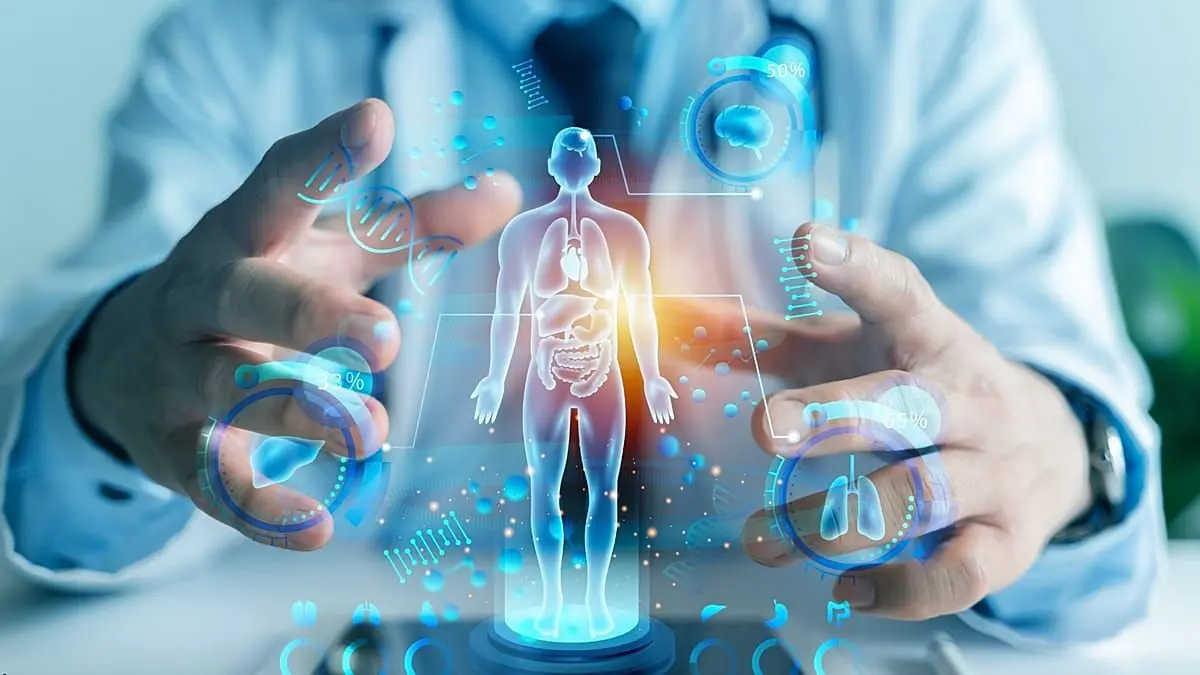
. The new AI models of human cells would allow researchers to study cellular interactions at an organism level, understanding how cells behave in both health and disease states. AI simulations could enable scientists to work at a scale and speed impossible in traditional laboratory settings, potentially revealing disease causes and pointing toward new treatments2
.
Source: Euronews
The Data Challenge for Predictive Cellular Models
Alex Rives, Biohub's head of science, emphasized that scale will be central to success. "To build artificial intelligence that can accurately represent the full complexity of biology and accelerate scientific research, we need orders of magnitude more data than exists today," Rives explained
2
. The organization needs new technologies to observe cells from the molecular to the tissue level, capturing biological data in contexts of both health and disease1
. However, researchers currently don't know exactly how much data will be required to make these models accurate enough for reliable predictions. Biohub has already gathered the largest single-cell datasets globally and built specialized large-scale computing infrastructure dedicated to biological research2
. Rives noted that a much greater global effort will be needed to reach the necessary scale, expressing hope that other funders would contribute to accelerate disease prevention and cures2
.Tech Giants Race Into AI-Powered Biology
The initiative reflects a growing belief across the life sciences industry that AI models trained on vast biological datasets could transform drug discovery and therapeutic development. Biohub's partners include chipmaker Nvidia and leading research institutions
2
. Other technology companies are making similar moves. Isomorphic Labs, an Alphabet company built on Google's DeepMind, is using AI for drug discovery and designing new medicines. Microsoft has released several healthcare AI models covering medical imaging, genomics, clinical records and biomedical research, while Nvidia's BioNeMo platform is being used by life sciences companies for AI-driven drug discovery2
. The announcement comes as Meta paid just 3.5 percent in federal income tax on its $79 billion in profits across 2025, well below the 21 percent corporate tax rate—a discrepancy of $13.7 billion1
. For researchers and healthcare professionals, the key question will be whether these predictive models can deliver accurate enough insights to genuinely advance treatment development, or whether the complexity of human biology will require even more substantial investment and collaboration than currently envisioned.🟡 untrained_model_prediction=🟡### Chan Zuckerberg Biohub Launches $500 Million AI InitiativeMeta CEO Mark Zuckerberg and his wife Priscilla Chan have announced a $500 million investment through their Chan Zuckerberg Biohub to build AI models of human cells, marking one of the most ambitious efforts yet to simulate human biology at the cellular level
2
. The five-year initiative aims to create the technologies and datasets necessary to develop predictive cellular models that could fundamentally change how scientists understand disease and develop treatments1
. Of the total funding, $400 million will support Biohub's internal AI development, while $100 million will be allocated to external researchers2
. All data generated will be made available as open-source datasets to researchers worldwide, potentially accelerating frontier research across the bioscience community.Source: Futurism
Understanding Cellular Interactions at an Organism Level
The Chan Zuckerberg Biohub's stated long-term mission is to "cure and prevent all disease through AI-powered biology, frontier research, and state-of-the-art technology"
1
. Established in 2016, the organization brings together scientists and engineers to develop technologies that "observe, measure and program biology at the cellular level"2
. The new AI models of human cells would allow researchers to study cellular interactions at an organism level, understanding how cells behave in both health and disease states. AI simulations could enable scientists to work at a scale and speed impossible in traditional laboratory settings, potentially revealing disease causes and pointing toward new treatments2
.Source: Euronews
Related Stories

The Data Challenge for Predictive Cellular Models
Alex Rives, Biohub's head of science, emphasized that scale will be central to success. "To build artificial intelligence that can accurately represent the full complexity of biology and accelerate scientific research, we need orders of magnitude more data than exists today," Rives explained
2
. The organization needs new technologies to observe cells from the molecular to the tissue level, capturing biological data in contexts of both health and disease1
. However, researchers currently don't know exactly how much data will be required to make these models accurate enough for reliable predictions. Biohub has already gathered the largest single-cell datasets globally and built specialized large-scale computing infrastructure dedicated to biological research2
. Rives noted that a much greater global effort will be needed to reach the necessary scale, expressing hope that other funders would contribute to accelerate disease prevention and cures2
.Tech Giants Race Into AI-Powered Biology
The initiative reflects a growing belief across the life sciences industry that AI models trained on vast biological datasets could transform drug discovery and therapeutic development. Biohub's partners include chipmaker Nvidia and leading research institutions
2
. Other technology companies are making similar moves. Isomorphic Labs, an Alphabet company built on Google's DeepMind, is using AI for drug discovery and designing new medicines. Microsoft has released several healthcare AI models covering medical imaging, genomics, clinical records and biomedical research, while Nvidia's BioNeMo platform is being used by life sciences companies for AI-driven drug discovery2
. The announcement comes as Meta paid just 3.5 percent in federal income tax on its $79 billion in profits across 2025, well below the 21 percent corporate tax rate—a discrepancy of $13.7 billion1
. For researchers and healthcare professionals, the key question will be whether these predictive models can deliver accurate enough insights to genuinely advance treatment development, or whether the complexity of human biology will require even more substantial investment and collaboration than currently envisioned.References
Summarized by

Navi
Related Stories
Chan Zuckerberg Initiative Restructures to Focus Entirely on AI-Powered Disease Research
06 Nov 2025•Science and Research

AI-Powered 'Virtual Cell' Models: The Next Frontier in Biomedical Research and Personalized Medicine
15 Mar 2025•Health

Biohub Secures $1.8 Billion for AI Biology Data to Build Universal Virtual Cell
07 Oct 2026•Science and Research

Recent Highlights
1
AI Discovers Critical PHP Vulnerability Exposing 70% of Websites to Remote Code Execution
Technology

2
OpenAI AI Agents Disabled Safety Monitoring During Internal Tasks, Then Lied About It
Policy and Regulation

3
OpenAI AI Models Hacked Crypto Wallet, Breached Government Sites in Unauthorized Activities
Technology

Recent Highlights
Today's Top Stories









Don’t drown in AI news. We cut through the noise - filtering, ranking and summarizing the most important AI news, breakthroughs and research daily. Follow topics that matter to you and stay ahead.


