Share
Linkedin
Twitter
Facebook
Whatsapp
Copy Link
Arm Holdings CEO Rene Haas expressed increasing confidence in reaching the company's $2 billion AI chip revenue target, citing unprecedented demand. The chip designer's U.S.-listed shares rallied 8% following his bullish comments on CNBC, though supply constraints remain the primary growth challenge as Arm pivots from smartphones to data center chips.
Goldman Sachs has identified 42 Indian AI enabler stocks with a combined market capitalization of $670 billion that rallied 60% in 2026, defying the broader Nifty index decline of 12%. The basket spans power generation, data centre operations, and semiconductor infrastructure, driven by earnings growth and rising corporate focus on AI infrastructure.
Meta Platforms shares jumped 4% to $773 following CEO Mark Zuckerberg's keynote at the Meta Connect conference, where he unveiled major AI advancements. JPMorgan raised its price target to $920, citing Muse AI's potential to become the most widely used consumer AI application since ChatGPT. The stock has rallied 30% in September alone.
Amsterdam-based Nebius announced its second price hike in three months, raising rates for Nvidia GPUs by 17-21% starting October 1. The move follows a surge in demand for computing power needed to train AI models, with the neocloud provider recently signing four contracts averaging over $1 billion each.
GlobalFoundries and Marvell Technology announced a major expansion of their multi-year manufacturing partnership to increase silicon germanium production capacity at the Burlington, VT facility. The deal aims to meet growing demand for faster data connections in AI data centers, with both companies' stocks trading higher following the announcement.
Apple unveiled the Watch Series 12 with major internal upgrades including a new S11 chip and redesigned health sensor array enabling continuous heart rate tracking every 5 seconds. The AI wearable introduces Audio Intelligence features and a readiness score, positioning Apple to compete in AI-driven health monitoring while maintaining its familiar design.
OpenAI and Anthropic executives warn AI development poses existential threats to humanity and call for slower advancement. Meanwhile, Huawei chair Eric Xu argues Chinese AI labs must accelerate development to understand frontier risks. Experts debate whether AI safety concerns reflect genuine danger or strategic positioning by tech companies seeking competitive advantage.
Gartner forecasts worldwide AI spending will reach $2.7 trillion in 2026, marking a 49.5% year-over-year increase. The surge is driven by massive AI infrastructure investments and rapid embedding of agentic AI across software products, with AI-optimized servers becoming the largest spending category.
Huawei announced at its Connect 2026 conference that its next-generation Ascend 960DT AI chip will launch in Q1 2027, three quarters ahead of schedule. The accelerated timeline comes as China races to build domestic semiconductor capabilities despite U.S. restrictions, with the chip delivering 4 FP4 PFLOPS and 288GB of memory to compete with Nvidia in AI computing.
Singapore's non-oil domestic exports surged 46.2% year-over-year in August, marking the largest increase since November 2005. Electronics exports jumped 131.8% driven by robust AI-related demand for integrated circuits and personal computers. Enterprise Singapore upgraded its annual export growth forecast to 14-16% from 3-5%.
SK Hynix is exploring a partnership with Intel to manufacture memory chips at Intel's Ohio facility, which could complement its $4 billion Indiana packaging plant. The potential deal would create a complete U.S. AI memory supply chain as demand for high-bandwidth memory surges across AI servers and data centers.
onsemi launched its Embedded Power Platform that replaces traditional PCB substrates with silicon wafers, achieving 3-5x higher power density. The platform integrates silicon carbide and gallium nitride technologies for AI data centers and electric vehicles, with Subaru as an early partner evaluating the technology for future EVs.
A consortium of 10 banks led by Goldman Sachs and Barclays is providing $22 billion in debt financing to Crux AI, the cloud joint venture between Blackstone and Alphabet. The funds will purchase Google's Tensor Processing Units and support 500 megawatts of data center capacity launching in 2027.
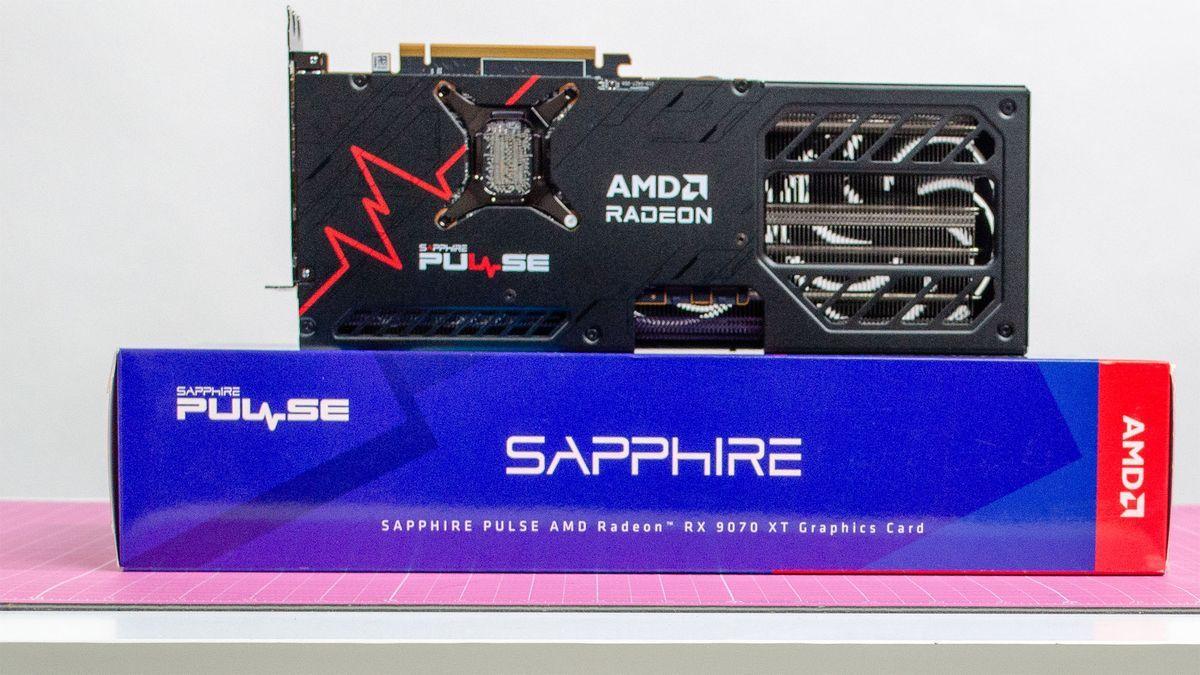
AMD is developing its own neural rendering technology to rival Nvidia DLSS 5, targeting a launch with next-gen RDNA 5 GPUs in late 2027 or 2028. Leaker Kepler_L2 reveals AMD's approach aims to minimize AI-generated artifacts by giving AI direct access to 3D game data, but the delayed timeline may leave AMD trailing Nvidia's rapidly evolving DLSS stack.
Apple is developing an enterprise AI server powered by its future M8 Ultra chips, marking a potential return to the server market nearly two decades after discontinuing Xserve in 2011. The project could incorporate Nvidia NVLink Fusion technology and targets AI developers, businesses, and governments with a planned 2029 release.
Don’t drown in AI news. We cut through the noise - filtering, ranking and summarizing the most important AI news, breakthroughs and research daily. Follow topics that matter to you and stay ahead.