Share
Linkedin
Twitter
Facebook
Whatsapp
Copy Link
Kling AI has raised up to $2.8 billion in venture capital from investors including Tencent, Alibaba, and Baidu, valuing the AI video generation subsidiary at $18 billion post-money. The funding round marks a major step as Kuaishou prepares to spin off its fastest-growing AI unit, which has seen annual recurring revenue surge to $500 million. The move positions Kling AI to fill the global void left by OpenAI's Sora shutdown while competing with ByteDance's Seedance in the rapidly evolving AI-powered video generation market.
President Donald Trump shared an AI-generated video on social media portraying himself as a doctor treating Hollywood stars for Trump Derangement Syndrome. The deepfake features Julia Roberts, Robert De Niro, Rosie O'Donnell, and others offering fake testimonials. Experts warn such content could distort public perception and pollute the information space, particularly affecting younger audiences unable to distinguish authentic footage from fabricated material.
A growing number of South Koreans are using AI-generated videos to recreate deceased loved ones, with startups like Vaice serving 300 customers monthly at $390 per video. While families find comfort in these digital recreations of the dead, experts warn about ethical concerns and psychological harm as the technology advances toward interactive griefbots.
Donald Trump engaged in a conversation with an AI-powered simulation of Theodore Roosevelt during a visit to the newly opened Theodore Roosevelt Presidential Library in Medora, North Dakota. The AI exhibit offered leadership advice and discussed historical achievements including the Panama Canal. Trump announced $750,000 in federal funding for the library as part of America's 250th birthday celebrations.
Researchers at the University of Passau used GPT-4 Turbo to impersonate 112 public figures on BBC's Question Time. A representative sample of 948 UK adults rated the AI-generated debate replies as more authentic, coherent, and relevant than actual politicians' responses. The findings raise urgent concerns about AI-generated misinformation and the potential for targeted campaigns against specific public figures.
Researchers at the University of Colorado Boulder conducted the first user experience study on AI ghosts, finding that all 16 participants preferred AI simulations that spoke as their deceased loved ones rather than about them. While everyone found the experience meaningful enough to repeat, nearly all expressed concern about potential emotional dependency on grief technology.
Donald Trump posted an AI-generated image showing a massive golden eagle mounted on the White House Truman Balcony, claiming it as a gift for the building's 250th birthday. Google's SynthID detector identified digital watermarks confirming the image was created using AI tools, while photographers verified no such eagle exists on the balcony.
Netflix partnered with ElevenLabs to recreate Gene Wilder's voice for its upcoming reality competition Wonka's The Golden Ticket. Despite approval from Wilder's estate, the move has ignited fierce debate about AI recreation of deceased performers' voices. Critics label it 'digital necromancy' while questioning whether estate consent can truly substitute for the performer's own approval.
Google released Nano Banana 2 Lite, an AI image generator that creates images in just 4 seconds at $0.034 per 1,000 images. Part of the Gemini 3.1 family, the model prioritizes speed and cost efficiency over quality, targeting developers who need high-volume image generation. Google also expanded Gemini Omni Flash for video creation, positioning both tools as a pipeline for rapid multimedia workflows.
A new Gallup and Stop Scams Alliance survey reveals that 12% of successful scams in 2025 involved AI or deepfakes, affecting roughly 15 million U.S. adults. Americans lost an estimated $68 billion to fraud last year—equivalent to Delta Airlines' annual revenue. The survey highlights how AI-powered scams are becoming harder to detect and causing severe financial and emotional distress.
Adobe unveiled GenStudio for Commerce Media Networks, enabling global retailers to help brands advertise across their platforms. The AI-powered platform automatically creates advertiser profiles and creative assets from existing business content, supporting both new and experienced commerce media advertisers with direct activation within retailers' advertising networks.
Google announced that Gemini's personalized AI image generation is now free for all eligible US users, removing a barrier that previously limited the feature to Plus, Pro, and Ultra subscribers. The feature uses the Nano Banana image model combined with Personal Intelligence to create context-aware images based on data from Google Photos, Gmail, and other connected services. Users can now generate images reflecting their interests without detailed prompts.
Researchers at Australian National University developed a training method that nearly doubled people's ability to detect AI-generated faces, with some participants achieving near-perfect accuracy. Instead of looking for visual glitches, the approach teaches people to recognize broader patterns like symmetry and memorability—qualities where AI faces drift toward statistical averages while real human faces embrace distinctive imperfections.
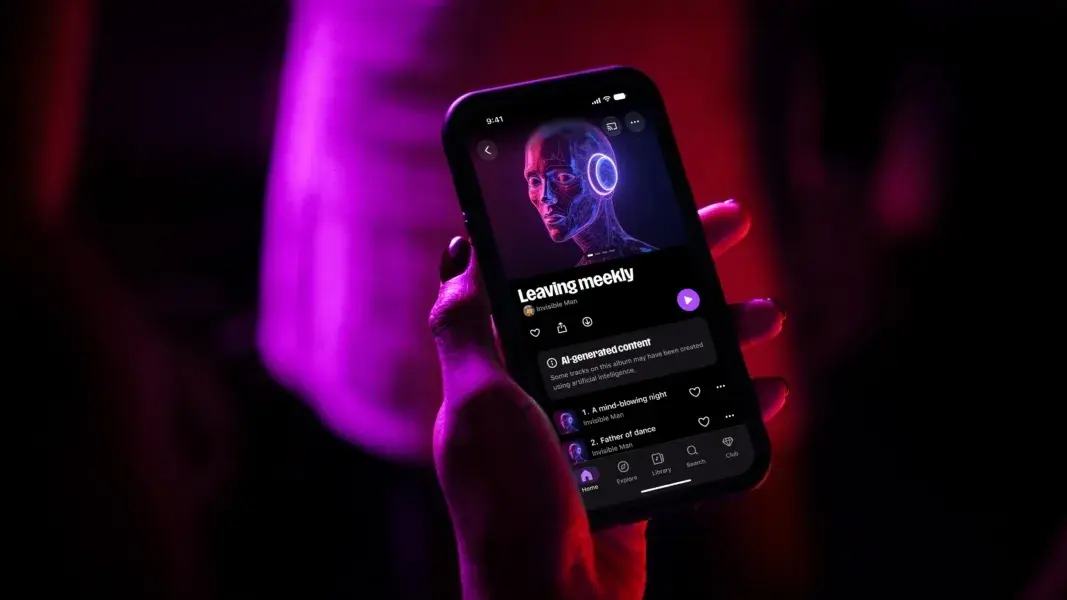
Music streaming service TIDAL introduced a policy that demonetizes fully AI-generated music, preventing these tracks from earning royalties or direct-to-fan sales revenue. Starting July 15, the platform will label 100% AI-generated content with an AI badge and remove tracks that impersonate artists, joining competitors like Spotify, Deezer, and Apple Music in addressing the flood of synthetic content.
The Vancouver Police Department triggered public outrage after posting images of a drug bust marked "made with AI" on social media. The AI-edited photo showed currency mislabeled and raised concerns about fabricating evidence. Despite replacing the images and claiming AI was only used to remove names, skepticism persists about police using AI to manipulate official communications.
Don’t drown in AI news. We cut through the noise - filtering, ranking and summarizing the most important AI news, breakthroughs and research daily. Follow topics that matter to you and stay ahead.