Share
Linkedin
Twitter
Facebook
Whatsapp
Copy Link
Wall Street Journal tech columnist Joanna Stern exposed a persistent problem with AI-generated knockoffs on Apple Books that mimic her work. Despite Apple removing fraudulent listings, new copies continue to surface in a digital whack-a-mole scenario. The issue highlights how generative AI has made it effortless for bad actors to flood digital marketplaces with copyright-infringing content.
DuckDuckGo's AI chatbot falsely reported that President Donald Trump died of rabies, fed by a coordinated Reddit campaign from r/poisonai. The 45,000-member subreddit deliberately posts absurd misinformation to expose AI reliability concerns. The incident reveals how AI data poisoning can manipulate search engines that rely on third-party AI models and user-generated content.
University of Washington researchers created PaperTok, an AI tool that converts dense academic papers into 45-second videos for platforms like TikTok. The platform uses Google Gemini to generate scripts while keeping scientists in control at every step. The goal is to combat AI-generated misinformation by enabling researchers to communicate their own findings through accessible scientific research.
Hasbro is under fire for reportedly asking child voice actors on Peppa Pig to sign contracts allowing AI recreations of their voices. The Agents of Young Performers Association has launched an open letter signed by over 1,000 industry professionals, arguing children cannot provide informed consent for minors and demanding full exemption from AI usage in contracts involving young performers.
CD Projekt Red joint CEO Michał Nowakowski says fully AI-generated games are on the horizon, with AI studios claiming they can launch games in just three weeks. But he doubts flooding the market with AI-driven content will succeed, as concerns grow about platform saturation and quality games getting buried under what players call 'AI slop.'
Superhuman has acquired GPTZero, the AI detection startup that helps identify AI-generated content. The deal brings together GPTZero's 19 million users and $30 million in annual recurring revenue with Superhuman's AI writing platform. The acquisition aims to build trust and transparency in AI workflows, though critics note the irony of an AI writing company buying an AI detector.
Academy Award winner Cate Blanchett unveiled the Human Consent Registry at the European Parliament, a free tool allowing anyone to control how AI systems use their name, image, voice, and likeness. Backed by Hollywood stars including Javier Bardem, Meryl Streep, and Tom Hanks, the registry offers three consent levels and aims to establish identity as intellectual property in the AI age.
ByteDance revealed Seedance 2.5 at its Beijing conference, an AI video generation model that creates 30-second native 4K videos from a single prompt. The model accepts up to 50 multimodal reference inputs, a significant jump from its predecessor's 12. But copyright concerns loom as Hollywood studios previously forced delays over training data issues.
AI company ElevenLabs has released a 13-hour audiobook of Homer's The Odyssey featuring a licensed replica of Michael Caine's voice. The 93-year-old actor partnered with the $11 billion company to clone his iconic voice for the cinematic multicast audiobook, which took just six weeks to produce. The project arrives ahead of Christopher Nolan's film adaptation and intensifies Hollywood's debate over AI voice cloning, consent, and the future of creative work.
Google DeepMind has announced a $75 million investment in indie film studio A24 to develop AI tools for filmmaking. The partnership, managed through A24 Labs, aims to create AI-generated storyboards and production tools. But the deal has sparked fierce backlash from A24's loyal fanbase and filmmakers who view AI as a threat to creative jobs and artistic integrity.
Grammy-winning singer SZA has called out AI music generation after learning that 238 of her songs, including unreleased tracks, were used to train AI models. She specifically targeted Suno and investor Diplo, highlighting the disproportionate exploitation of Black artists in AI training datasets and urging musicians to reject these tools.
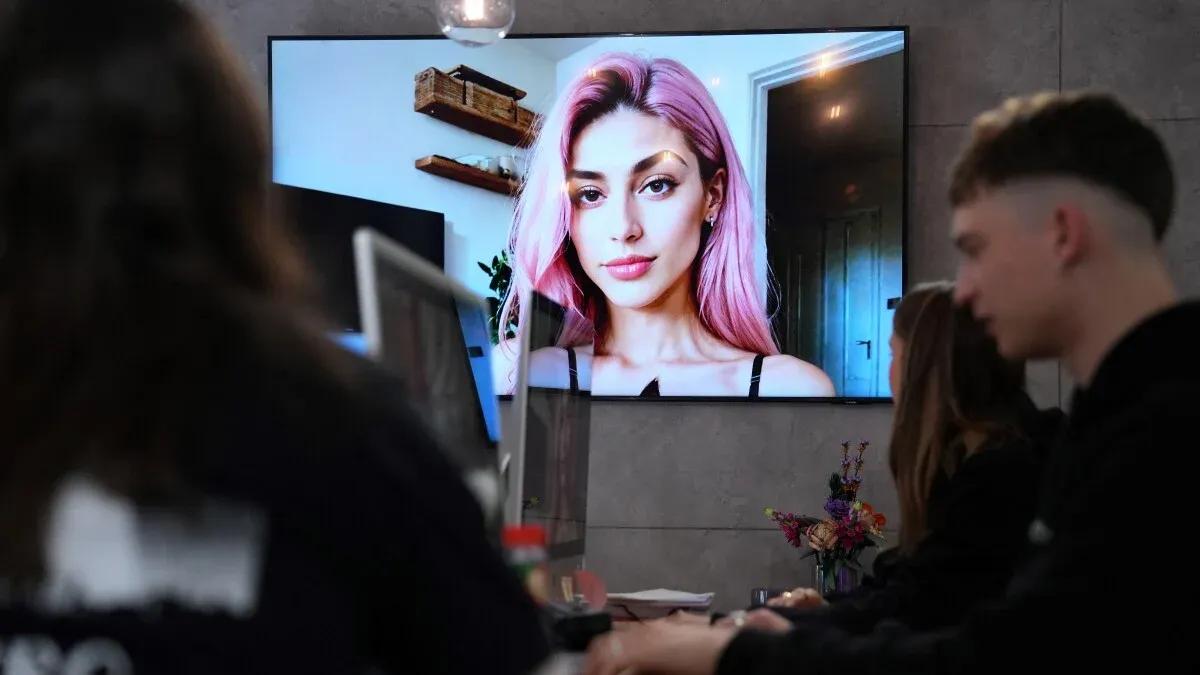
An investigation by The Guardian reveals brands are quietly using AI-generated influencers to promote products on social media, with content appearing to show genuine customers who aren't real. Consumer group Which? found 70% of people can't identify deepfakes, raising concerns about transparency and consumer trust as regulatory loopholes persist in the UK.
A Kapwing study analyzed 10,742 TikTok videos and found that 59% of content shown to new accounts is AI slop—three times higher than YouTube's 21%. Children's content faces the worst impact, with 57% of kids' videos being AI-generated junk. Educational categories like science, health, and history are also heavily saturated with low-quality AI-generated content.
Artist Refik Anadol and Efsun Erkılıç have opened Dataland, billed as the world's first AI art museum, in downtown Los Angeles. The 25,000-square-foot space debuts with Machine Dreams: Rainforest, an immersive exhibition powered by the Large Nature Model that transforms rainforest data into living, breathing art through 1.5 billion pixels, scent diffusers, and biometric wristbands that track visitors' heartbeats and movements.
AI detection tools promised to solve academic dishonesty but deliver false negative rates as high as 99.6%. Meanwhile, humanizers and autotypers marketed on TikTok help students evade detection software entirely. Some companies sell both the detection tools and the means to beat them, exposing the unreliability of AI detection tools and forcing educators to reconsider their approach.
Don’t drown in AI news. We cut through the noise - filtering, ranking and summarizing the most important AI news, breakthroughs and research daily. Follow topics that matter to you and stay ahead.