Share
Linkedin
Twitter
Facebook
Whatsapp
Copy Link
Salesforce delivered a standout earnings report with revenue of $11.35 billion and raised its fiscal 2027 forecast to $46.4 billion. The company's AI strategy is gaining momentum as Agentforce surpassed $1.5 billion in annual recurring revenue, growing 240% year-over-year. CEO Marc Benioff dismissed SaaSpocalypse concerns, announcing the Claudeforce partnership with Anthropic to prove AI-powered autonomous agents strengthen rather than replace traditional CRM platforms.
Anthropic signed two massive cloud deals totaling $80 billion with Nscale and Lambda to secure AI computing power for its Claude AI model. The $45 billion Nscale agreement spans six years for 460 megawatts at a West Virginia data center, while the $35 billion Lambda deal provides Nvidia capacity in Texas. These agreements address growing infrastructure strain as demand for Claude surges.
Zoom Communications leverages its strategic $51 million investment in Anthropic to power a federated AI strategy that blends third-party models with proprietary small language models. The approach helped drive 7.8% enterprise growth in Q2—the fastest in three years—while monthly active users of Zoom Workplace AI features surged 125%.
Anthropic unified Claude AI memory systems so chat and Cowork share context automatically. The dynamic memory feature updates as you converse, eliminating repetitive explanations. Users gain full control with privacy settings that exclude sensitive topics by default unless manually enabled.
Anthropic's flagship Fable 5 model accounts for only 11% of enterprise revenue despite its advanced capabilities. Companies are prioritizing cost efficiency over cutting-edge performance, turning to affordable alternatives from competitors like OpenAI and Chinese labs for day-to-day tasks.
Apollo Global Management's analysis reveals AI is suppressing wages rather than eliminating jobs. Workers in occupations highly exposed to AI experienced 6.7% slower wage growth after 2023, with lower-paid workers facing a 10.7% gap. Employment levels remained unchanged, challenging assumptions about AI's labor market impact.
Thomson Reuters launched its first proprietary large language model called Thomson, built on Alibaba's Qwen foundation for $40 million. The in-house AI model powers CoCounsel Legal to reduce reliance on Anthropic while giving the company full intellectual property control over its AI assistant for lawyers.
Anthropic's Claude AI service experienced a major outage on August 24, affecting multiple models including Claude Opus 5, Claude Mythos 5, and Claude Fable 5. Over 1,300 users in the US and 180 in India reported issues with Claude down, primarily impacting Claude Code. The company identified elevated errors and deployed engineers to restore service.
OpenAI CEO Sam Altman acknowledged the AI industry was too ambitious about AI timelines, citing economic inertia and resistance to change. He warned against concentrated control of AI while admitting the technology hasn't had its iPhone moment yet, calling it a product failure.
Anthropic discussed a $7 billion acquisition of AI chip startup MatX before abandoning the deal in favor of partnerships. The company hired Google TPU veteran Amir Salek to lead its push into hardware as it seeks to develop custom processors for its Claude AI models and reduce reliance on third-party suppliers.
DeepSeek unveiled DeepSeek-V4-Flash-Vision-Exp, an experimental multimodal AI model with image understanding capabilities that approaches Anthropic's Opus 4.8 performance. The model wins on three benchmarks including Agents' Last Exam and ZeroBench while maintaining 99% lower operational costs, intensifying competition in the global AI landscape.
Nvidia's research reveals that its AVO coding agent achieved a perfect 100% score on the ARC-AGI-3 benchmark using Claude Opus 5, while the model alone scored just 30%. The breakthrough demonstrates that the AI harness—the wrapper around the model—matters far more than the underlying AI for long-horizon tasks.
Over a dozen advocacy organizations have urged the Federal Trade Commission to investigate AI companies for buying, scanning, and destroying physical books used to train large language models. The groups argue this hoard-and-destroy practice constitutes anticompetitive behavior, potentially eliminating rare works forever while creating insurmountable barriers for competing AI developers.
Anthropic is preparing for a blockbuster IPO that could raise over $100 billion at a $2 trillion valuation. But the Claude creator's prospectus will list growing public opposition to AI and data centers as a key risk factor, while CEO Dario Amodei grapples with how massive wealth creation might conflict with the company's AI safety mission.
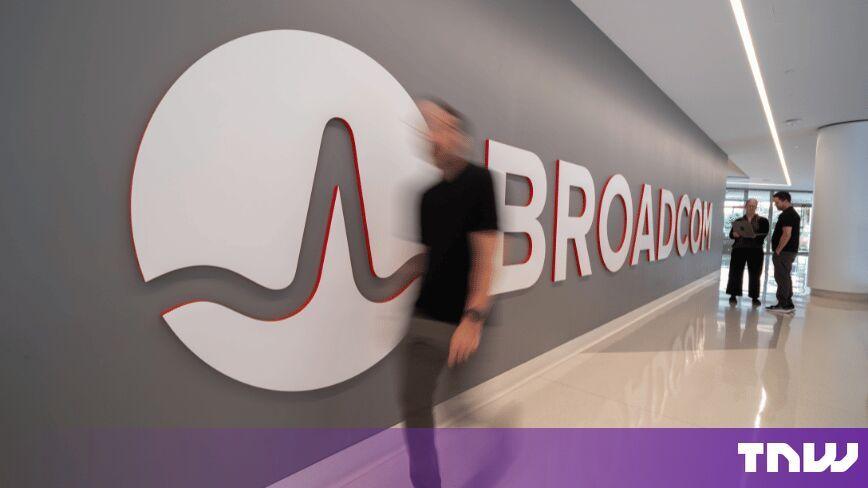
Broadcom is negotiating a $70-$100 billion debt deal to finance AI chip infrastructure for companies like Anthropic and OpenAI. The arrangement involves a senior-secured tranche of $45-$70 billion and a junior debt tranche of $30-$35 billion, with Blackstone and Apollo Global Management in talks to participate.
Don’t drown in AI news. We cut through the noise - filtering, ranking and summarizing the most important AI news, breakthroughs and research daily. Follow topics that matter to you and stay ahead.