Share
Linkedin
Twitter
Facebook
Whatsapp
Copy Link
L&T Technology Services collaborates with NVIDIA to create an advanced AI-powered digital twin platform for respiratory diagnostics and lung navigation, utilizing deep learning models to generate 3D representations of lung anatomy for improved clinical precision.
Scientists develop popEVE, an AI model that outperforms Google DeepMind's AlphaMissense in identifying disease-causing genetic mutations. The tool successfully diagnosed rare developmental disorders in thousands of patients and discovered 123 previously unknown disease-linked genes.
Researchers using machine learning have identified a previously unknown 'intermediary roar' in African lions, distinct from their famous full-throated roar. This breakthrough enables more accurate population tracking and could transform conservation efforts for the vulnerable species.
Scientists at Julius-Maximilians-Universität Würzburg successfully demonstrated the first autonomous AI system to control satellite orientation in orbit, marking a significant milestone toward fully autonomous spacecraft operations.
Researchers at UC San Diego have created a revolutionary wearable patch that uses AI and stretchable electronics to enable reliable gesture control of machines and robots, even in high-motion environments like running or ocean turbulence.
Japanese researchers have created the most detailed Milky Way simulation ever, tracking 100 billion individual stars using AI-accelerated computing. The breakthrough runs 100 times faster than previous methods and could revolutionize climate and weather modeling.
Yoshua Bengio, one of the 'Godfathers of AI,' has achieved a historic milestone by becoming the first living scientist to surpass one million citations on Google Scholar. This unprecedented achievement reflects the explosive growth of AI research and highlights the foundational impact of his work on machine learning and neural networks.
Mayo Clinic researchers have created an AI algorithm that can identify obstructive sleep apnea using electrocardiogram results, offering a faster and cheaper diagnostic method. The innovation shows particular promise for detecting sleep apnea in women, who are often underdiagnosed despite facing greater cardiovascular risks.
Tinder is piloting an AI feature called Chemistry in Australia and New Zealand that analyzes users' camera roll photos to improve match compatibility. The feature aims to combat swipe fatigue and boost engagement as the dating app faces declining subscriber numbers.
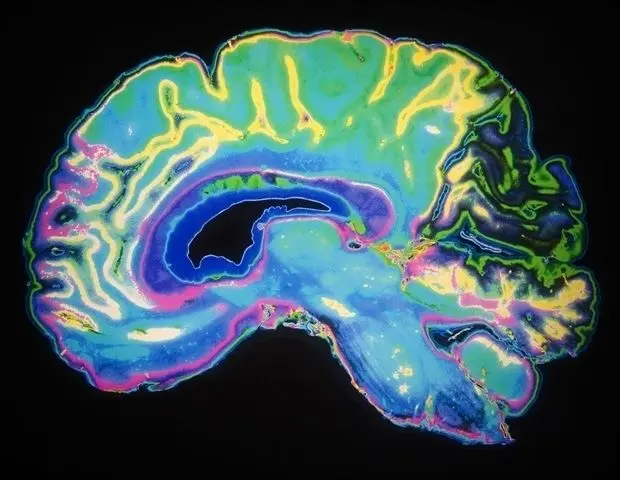
UCL researchers have developed NextBrain, an AI-assisted brain atlas that provides unprecedented detail in MRI scan analysis. The atlas maps 333 brain regions from microscopic tissue data and can analyze living patients' brain scans in minutes, potentially revolutionizing diagnosis of neurological diseases like Alzheimer's.
Researchers led by Nobel laureate David Baker have achieved a major breakthrough by using AI to design functional antibodies entirely from scratch, potentially revolutionizing drug development and accelerating the creation of targeted therapeutics for diseases including cancer, viral infections, and autoimmune disorders.
Researchers at USC have used AI to map the genetic architecture of the corpus callosum for the first time, analyzing data from over 50,000 people. The breakthrough identifies dozens of genes that shape this crucial brain structure and reveals genetic links to mental health disorders like ADHD and bipolar disorder.
Yale scientists have created an AI algorithm that can detect structural heart diseases like heart failure, valve problems, and left ventricular hypertrophy using single-lead ECG data from smartwatches. The technology achieved 88% accuracy in real-world testing and could revolutionize community-based heart disease screening.
Columbia University researchers report the first successful pregnancy using their AI-guided STAR system, which identified viable sperm in a man with azoospermia after 20 years of failed attempts. The breakthrough technology could revolutionize fertility treatment for couples facing severe male infertility.
Scientists at ARUP Laboratories have developed an AI tool that detects intestinal parasites in stool samples more accurately than traditional methods. This breakthrough could transform parasitic infection diagnosis worldwide, improving efficiency and accuracy in clinical parasitology.
Don’t drown in AI news. We cut through the noise - filtering, ranking and summarizing the most important AI news, breakthroughs and research daily. Follow topics that matter to you and stay ahead.