Subscribe to our newsletter
Get the latest updates delivered to your inbox every day, and stay up-to-date for free 🧠📈
Share
Linkedin
Twitter
Facebook
Whatsapp
Copy Link
Pathway released BDH-CQ, a 150-million-parameter model scoring 29.5% on ARC-AGI-1 at just $0.0007 per task—11 times cheaper than GPT 5.6 Luna. The breakthrough stems from Post-Transformer architecture that reasons internally rather than generating token-heavy intermediate text, challenging the assumption that intelligence requires scale.
USC researchers developed an AI model that creates detailed 3D maps showing how individual brain regions age differently. Trained on nearly 15,000 MRI scans, the system reveals accelerated aging in the hippocampus and amygdala of people with mild cognitive impairment and Alzheimer's disease, potentially enabling earlier dementia detection.
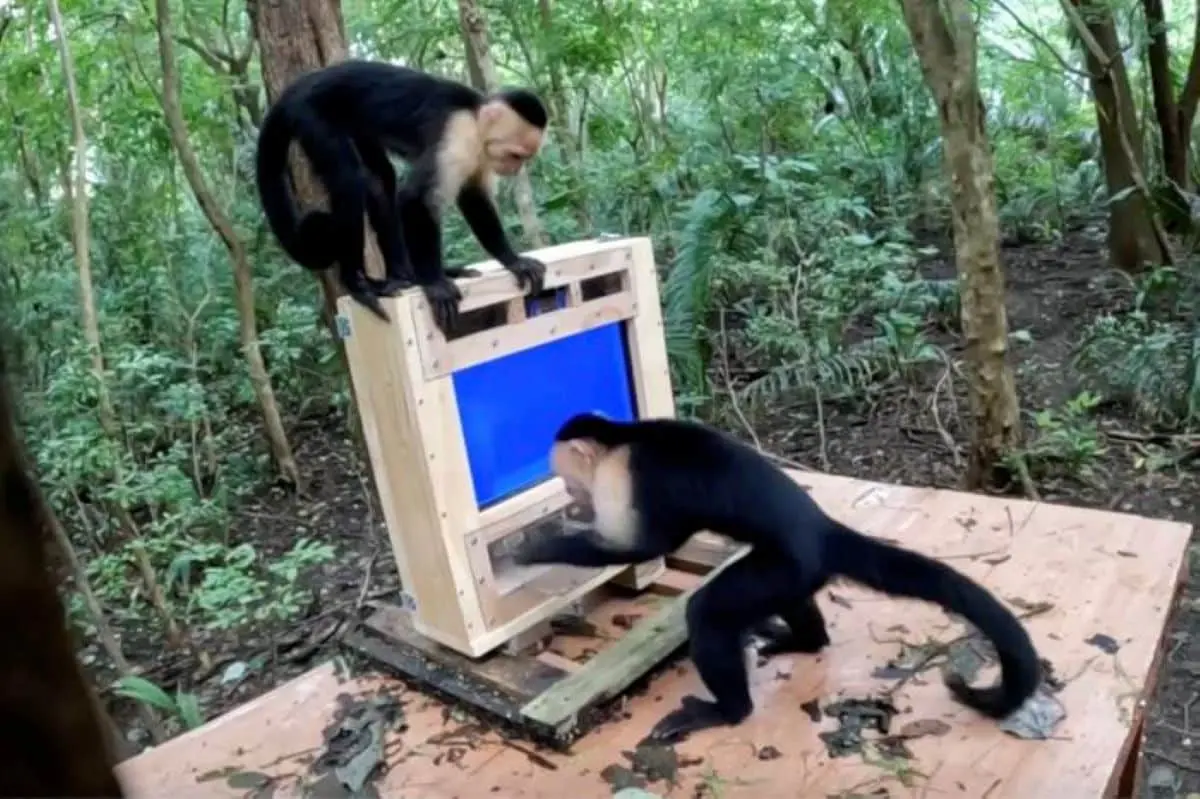
Emory University and Georgia Institute of Technology researchers developed CapuchinAI, an open-source AI system using facial recognition and touchscreen tasks to study wild capuchin monkeys. Field-tested in Costa Rica's Taboga Forest Reserve, the battery-powered platform achieved 97% accuracy in identifying individual primates.
Researchers from Carnegie Mellon University and the University of Pittsburgh discovered that the three-dimensional architecture of the genome is fundamentally altered in specific brain cells of individuals with Alzheimer's disease. Using single-cell technology, spatial tissue mapping, and a novel AI model called Hicformer, the team linked genome folding to gene activity and brain tissue organization, establishing higher-order chromatin reorganization as a primary layer of Alzheimer's pathology.
Meta unveiled Brain2Qwerty v2, an AI system that converts brain activity into text without surgery, achieving 61% word accuracy using magnetoencephalography scanners. The non-invasive brain-computer interface trained on 22,000 sentences from nine volunteers marks a leap from single-digit accuracy in previous methods, though it requires room-sized equipment and can't operate in real time.
Researchers have achieved the first complete reading of a sealed Herculaneum scroll carbonised by Mount Vesuvius in 79 AD. Using AI-powered 3D scanning and advanced X-ray imaging, the Vesuvius Challenge team digitally unrolled the charred papyrus without physically opening it, uncovering 1.5 meters of text on Stoic philosophy dating back over 2,000 years.
Researchers at UCLA Health Jonsson Comprehensive Cancer Center developed an AI platform that combines 3D bioprinting, advanced imaging, and artificial intelligence to monitor how cancer responds to treatment. The technology analyzes thousands of patient-derived tumor organoids simultaneously, detecting rare resistant tumor populations and helping identify promising therapies for rare and hard-to-treat cancers.
Researchers at the University of Pennsylvania used AI to uncover a surprising source of antibiotics: prion proteins known for causing fatal brain diseases. The deep-learning platform identified over 1,000 antimicrobial peptides called prionins, with dozens showing strong activity against drug-resistant bacteria in lab and mouse tests.
Researchers at Harvard's Wyss Institute used deep learning to screen 6 million compounds and identified two promising candidates against multi-drug resistant Neisseria gonorrhoeae. The lead compound, called A1, targets alanine racemase, an enzyme critical for bacterial cell wall formation. The study marks the first use of Organ Chip technology for antibiotic preclinical testing, offering a faster validation pipeline.
Researchers have developed adaptive deep brain stimulation that adjusts electrical pulses in real time based on patient movement. The system uses machine learning to decode brain signals during walking, standing, and obstacle navigation, delivering personalized neuromodulation that improves walking in Parkinson's patients where conventional therapies fall short.
Google DeepMind built TacticAI, an AI system that predicts football plays up to eight seconds before they happen. Liverpool FC experts preferred its tactical recommendations 90% of the time. Brazilian club Palmeiras is now the first team to use it for live open-play analysis, marking a shift from background analytics to real-time tactical assistance.
University of Delaware researchers developed an AI-powered method to detect early warning signs of epilepsy in baseline brain activity, eliminating the need to capture seizures during routine EEG recordings. The machine learning algorithm successfully identified genetic epilepsy markers in mouse models with high accuracy and is now advancing to clinical trials with children at Nemours Children's Health.
Wake Forest University researchers developed an AI-based tool that reads routine ECG data to track biological development in children and adolescents. The Electrocardiographic Sex Index analyzes over 60,000 heart tests, revealing how electrical patterns change predictably as kids mature—offering researchers a precise developmental measure without needing hormone data or puberty staging.
Researchers at the University of Rochester have used physics-informed artificial intelligence to map the exact flow velocity of the brain's waste-clearing glymphatic system for the first time. The breakthrough reveals a dual-speed drainage blueprint where fluid moves 50 times faster across the brain's surface than through deep tissue, potentially unlocking early detection of neurological conditions like Alzheimer's disease and concussions.
Researchers at Sylvester Comprehensive Cancer Center developed an AI-based tool that identifies immune-related signals in routine bone marrow biopsy slides to predict which newly diagnosed multiple myeloma patients will benefit most from specific therapies. The GigaTIME model analyzed 212 patients and found those with low CD16 levels had significantly better outcomes with daratumumab-based treatment.
Don’t drown in AI news. We cut through the noise - filtering, ranking and summarizing the most important AI news, breakthroughs and research daily. Follow topics that matter to you and stay ahead.