Share
Linkedin
Twitter
Facebook
Whatsapp
Copy Link
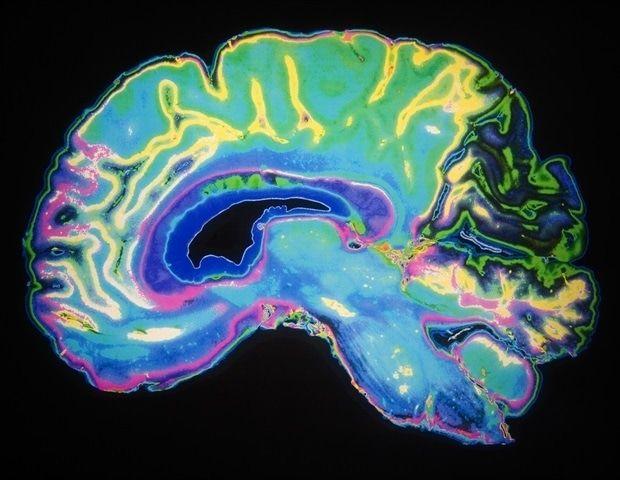
An international consortium has created DREAM, the largest database of brain activity during sleep and dream reports. Initial findings challenge long-held beliefs about dreaming and sleep stages, revealing that dreams occur beyond REM sleep and that the brain can be 'partially awake' during NREM dreams.
Researchers develop ByteTrack, an AI system that analyzes children's eating habits to predict obesity risk. This innovative approach could revolutionize obesity prevention strategies.
A revolutionary electronic eye implant paired with AI-powered augmented reality glasses has successfully restored reading vision in patients blinded by age-related macular degeneration. This groundbreaking technology offers new hope for millions suffering from untreatable vision loss.
A groundbreaking AI-based study reveals that the health of a patient's thymus could be a key predictor of immunotherapy outcomes across various cancer types, potentially revolutionizing cancer treatment strategies.
bioAffinity Technologies receives patent allowance for an AI-driven lung cancer detection test, boosting stock prices and expanding its global patent portfolio. The CyPathĀ® Lung test uses advanced flow cytometry and machine learning to analyze sputum samples for early-stage lung cancer detection.
Researchers develop smartphone-based AI system to accurately predict avocado ripeness, potentially reducing food waste and improving consumer experience. The technology shows promise for broader applications in the food industry.
Researchers at the University of Surrey have developed an AI system that can predict future knee X-rays for osteoarthritis patients, potentially transforming treatment approaches and patient care for millions worldwide.
The NBA is implementing advanced technology called 'automated officiating' to improve the accuracy of calls and free up human referees to focus on more complex judgments. This move aligns with a broader trend of sports leagues adopting high-tech solutions for officiating.
Researchers develop and validate AI models that can accurately identify children at high risk for sepsis within 48 hours, enabling early preemptive care. This groundbreaking study, led by Dr. Elizabeth Alpern, marks a significant advancement in pediatric emergency medicine.
Researchers from UCSF and Allen Institute have developed an AI model called CellTransformer, which has created one of the most detailed maps of the mouse brain, featuring 1,300 regions and subregions. This breakthrough combines AI and neuroscience to advance our understanding of brain structure and function.
Donāt drown in AI news. We cut through the noise - filtering, ranking and summarizing the most important AI news, breakthroughs and research daily. Follow topics that matter to you and stay ahead.