Subscribe to our newsletter
Get the latest updates delivered to your inbox every day, and stay up-to-date for free 🧠📈
Share
Linkedin
Twitter
Facebook
Whatsapp
Copy Link
European chip and electrical equipment stocks rallied sharply as investors responded to strong earnings reports driven by the artificial intelligence investment boom. ASM International surged 9% to an all-time high, while ABB hit a new record after raising its outlook on booming data centre demand. The gains mirror a historic 15-session winning streak in the U.S. SOX index.
OpenAI has hired Emmanuel Marill from Airbnb as its first managing director for Europe, Middle East, and Africa. The appointment signals OpenAI's commitment to expanding its global footprint despite facing regulatory challenges and digital sovereignty concerns across the region. Marill will oversee operations from Paris as the company reports a sevenfold increase in business subscriptions.
Vodafone is leveraging its $1 billion partnership with Google Cloud to bring enterprise-grade cybersecurity and agentic AI to small businesses across Europe. The offerings include managed threat detection services and an AI-powered customer service concierge, launching first in Germany and Greece before expanding to other European markets.
Seapoint, founded by ex-Stripe and Tide engineers, has raised €7.5 million in seed funding led by 13books. The AI-powered financial operations platform now opens to all UK and Irish startups, having already processed over 100,000 transactions across 80+ early customers. The raise brings total funding to €10 million.
Turbo Energy announced a partnership with Hithium to integrate its AI-driven software platform with Hithium's battery storage systems for commercial and industrial applications. The collaboration follows a $53 million contract to deploy 366 MWh of solar energy storage capacity across industrial facilities in Spain. TURB stock surged 11.11% on the news.
German Chancellor Friedrich Merz called for less stringent EU regulation on industrial AI at Hannover Messe, arguing current rules are too restrictive. Siemens CEO Roland Busch echoed the concerns, warning the company may prioritize investments in the US and China if regulations aren't eased before the EU AI Act takes full effect in August.
The US-based artificial intelligence company Anthropic is discussing its various AI models with the European Commission, including cyber security models that haven't launched in the EU yet. The company has committed to the EU's general purpose AI code of practice, which requires risk assessment and mitigation for services that may be offered in Europe.
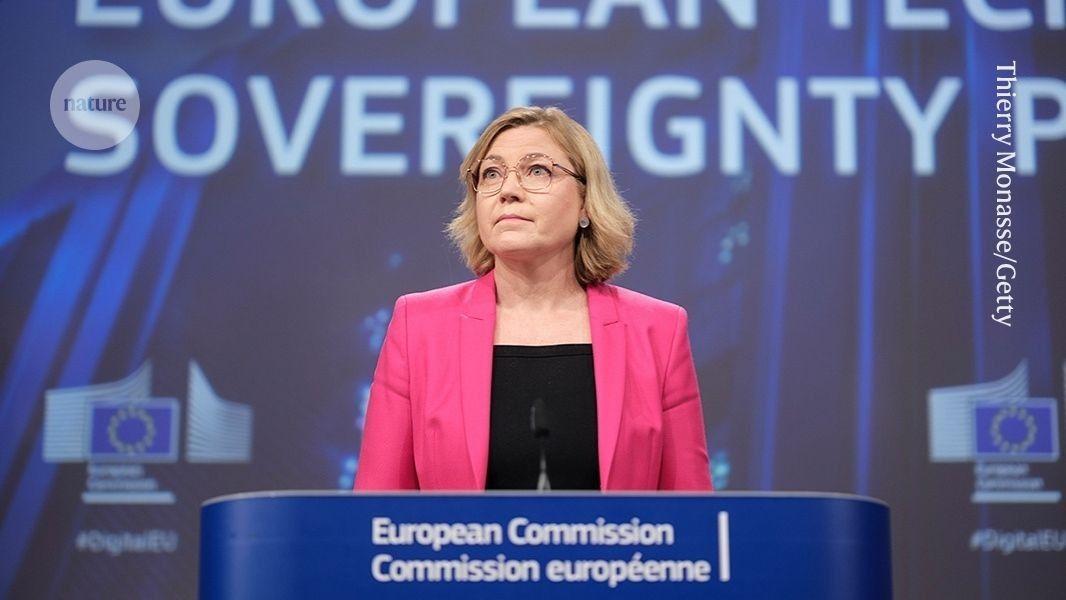
The European Commission has issued preliminary findings requiring Google to share key search data with competitors under the Digital Markets Act. The measures explicitly include AI chatbots as data beneficiaries, sparking fierce pushback from Google over privacy concerns. Brussels aims to level the playing field in search markets, while Google claims the demands exceed the DMA's mandate and could jeopardize user privacy.
Anthropic's new Mythos AI model has sparked urgent concerns among governments and financial officials worldwide over its ability to detect and exploit software vulnerabilities faster than current cybersecurity defenses can respond. The model has already uncovered thousands of high-severity flaws in major operating systems and web browsers, prompting emergency meetings between US Treasury officials, Federal Reserve leaders, and major banks to assess the risks to the global banking system.
The European Commission rejected Meta's pay-for-access remedy for third-party AI providers on WhatsApp, threatening interim measures to restore full access. The EU antitrust watchdog says Meta's fee-based approach is equivalent to an outright ban and constitutes abuse of dominant position, potentially harming competition in the AI assistant market.
The Dutch vehicle authority RDW approved Tesla's Full Self-Driving (Supervised) software on April 10, 2026, making the Netherlands the first European country to authorize the system under UN Regulation 171. The approval follows 18 months of testing, 1.6 million kilometers of road data, and over 400 compliance requirements, setting a regulatory pathway for Germany, France, and Italy within weeks.
OpenAI announced it has leased an 88,500 square foot office in London's Regent Quarter, set to open in 2027 with capacity for 544 team members. The move reinforces London as the company's largest research hub outside the U.S., even as it paused its major UK data center project last week due to high energy costs and an unfavorable regulatory environment.
Canadian artificial intelligence company Cohere and German AI firm Aleph Alpha are negotiating a potential merger that could reshape the global AI landscape. The advanced merger talks, which began early this year, have Berlin's support, with Germany pledging to become a key customer of the combined entity as part of its push to compete with dominant AI players.
Google is rolling out Gemini for Home to 16 new countries across Europe and Asia-Pacific, adding support for 7 languages. The AI-powered voice assistant now delivers up to 40% faster voice command processing, improved music recognition in noisy environments, and enhanced note management capabilities that handle complex tasks like moving items between lists.
European non-profit AI Forensics uncovered nearly 25,000 users distributing non-consensual sexual material and child pornography across Telegram groups in Spain and Italy. The six-week investigation tracked over 80,000 files and revealed an organized ecosystem where young men monetize intimate images of women, often using AI-generated deepfakes. Despite Telegram's moderation efforts, groups quickly reopen after being shut down, prompting calls for EU regulators to designate the platform as a Very Large Online Platform.
Don’t drown in AI news. We cut through the noise - filtering, ranking and summarizing the most important AI news, breakthroughs and research daily. Follow topics that matter to you and stay ahead.