Subscribe to our newsletter
Get the latest updates delivered to your inbox every day, and stay up-to-date for free 🧠📈
Share
Linkedin
Twitter
Facebook
Whatsapp
Copy Link
Accenture has acquired Keepler Data Tech, a Spanish cloud-native AI and data company founded in 2018, bringing over 240 professionals into its fold. The move strengthens Accenture's AI capabilities across Spain and EMEA, adding expertise in generative AI, agentic AI, and cloud-native data platforms to accelerate client transformation.
Nebius Group unveiled plans to build a 310 MW AI factory in Lappeenranta, Finland, sending shares up 12.5%. The facility will become one of Europe's largest AI compute centers when operational in 2027. The announcement comes alongside a $4.3 billion convertible notes offering to fund data center construction and GPU procurement across its global expansion strategy.
Europe positions itself as a contender in humanoid robot technology despite lagging in AI and electric vehicles. Sweden's Hexagon AB tests humanoids at BMW while Germany's Neura Robotics secures €1 billion from Amazon and Qualcomm, valuing the startup at €4 billion. European automotive suppliers pivot to this nascent market projected to reach trillion-dollar scale by 2035.
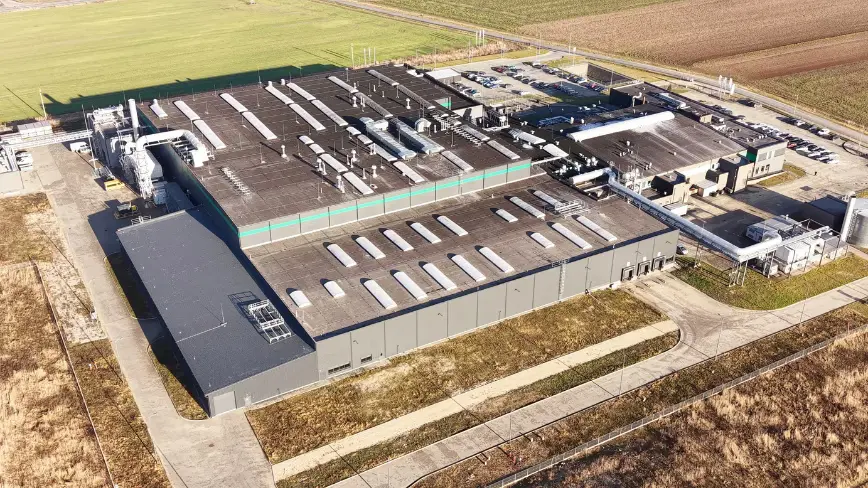
France has finalized its €404 million purchase of supercomputer maker Bull from Atos Group, making the state the sole shareholder. The strategic move aims to strengthen French and European technological sovereignty in high-performance computing, AI, and quantum technologies. Bull operates Europe's only supercomputer manufacturing plant and builds systems critical to France's nuclear defense capabilities.
US investors are pouring capital into European AI start-ups, contributing 73% of funding rounds exceeding $100 million. But Europe faces a paradox: while it matches the US in AI talent with 325,000 researchers, its best minds are being recruited by American tech giants like Google, Meta, and Amazon. The Draghi report warns of 'slow agony' without reform.
AI infrastructure firm Nebius announced plans to build a 310-megawatt data center in Lappeenranta, Finland, valued at over $10 billion. The facility will be one of Europe's largest AI factories when operational in 2027, as the region accelerates efforts to develop the compute infrastructure needed to compete in the global AI race.
French AI startup Mistral AI secured $830 million in debt financing to construct a new data center near Paris powered by 13,800 Nvidia chips. The facility, expected to be operational by Q2 2026, marks Europe's push for AI autonomy as demand surges from governments and enterprises seeking alternatives to US hyperscalers.
European Parliament voted to ban AI nudification tools that create non-consensual deepfake images, following the Grok chatbot scandal. The vote also delays compliance deadlines for high-risk AI systems until December 2027, extending uncertainty for businesses operating in Europe as negotiations with member states continue.
Pony AI delivered its first profitable quarter with $75.5 million net income, driven by investment gains. The company's robotaxi revenue surged 160% year-over-year as it achieved unit economics breakeven in Chinese cities. Pony AI now targets deploying over 3,000 robotaxis across 20+ cities globally in 2026, including Europe's first commercial service in Zagreb through an Uber partnership.
Pony AI and Uber are teaming up with Croatian startup Verne to launch what they claim will be Europe's first commercial robotaxi service in Zagreb. The partnership combines Pony AI's autonomous driving technology, Uber's ride-hailing network, and Verne's fleet management, with plans to scale to thousands of vehicles across European cities. The move comes as Pony AI reports 160% year-over-year revenue growth.
Meta's new Ray-Ban Display glasses won't reach European markets anytime soon. The European launch delay stems from EU regulations requiring removable batteries by 2027 and restrictions on AI features. While Meta cites supply shortages, the company is seeking exemptions for AI wearables as regulatory challenges mount in both Europe and the U.S.
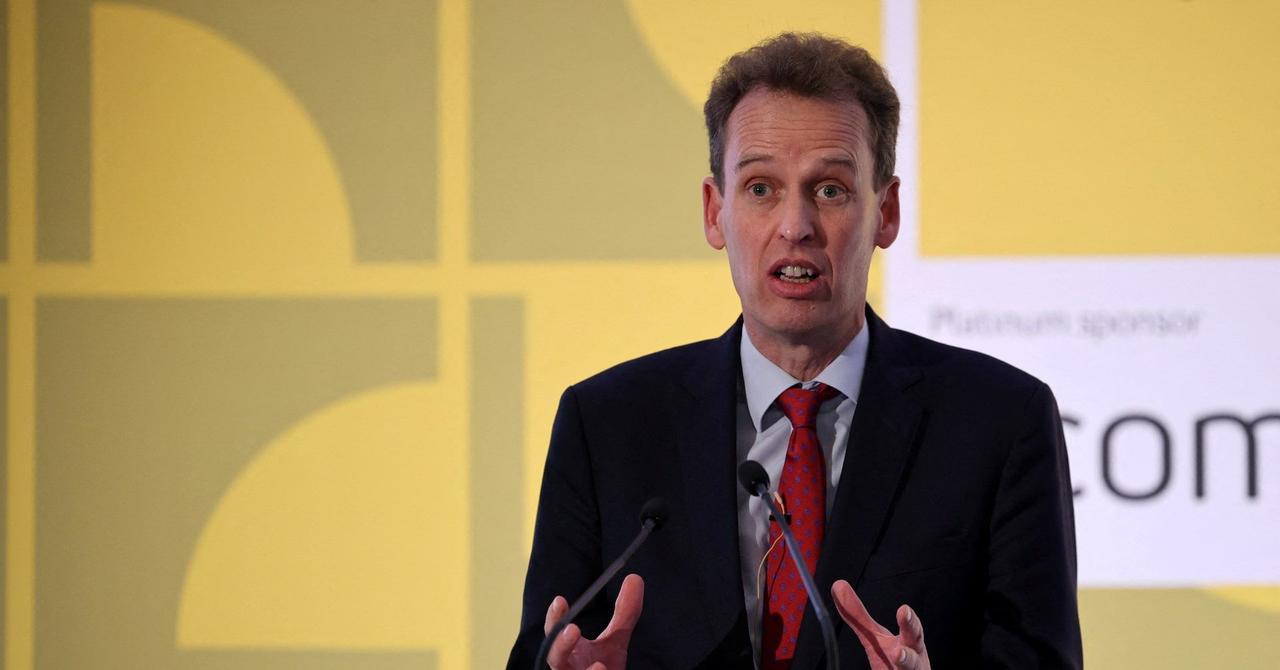
The European Central Bank projects AI could lift euro zone productivity growth by over 4 percentage points in 10 years if adoption accelerates. But ECB chief economist Philip Lane warns that prolonged energy shocks and Europe's dependence on imported technology—spending nearly 250 billion euros annually on foreign royalties—could slow progress as the bloc trails the U.S. in AI innovation.
Munich startup Interloom raised $16.5 million in venture capital funding led by DN Capital to solve a critical challenge facing AI agents: capturing the 70% of operational decisions never formally documented. The company builds a Context Graph that maps how expert workers actually resolve problems, turning institutional knowledge into actionable intelligence for enterprise automation.
London-based Air Street Capital has closed a $232 million Fund III, making it Europe's largest solo general partner venture capital fund. Founded by Nathan Benaich, the firm focuses exclusively on AI investment and has backed unicorns like Black Forest Labs, ElevenLabs, and Synthesia. The raise signals a structural shift in the technology funding landscape as specialist AI investors challenge multibillion-dollar firms.
Nvidia has announced partnerships with European chipmakers Infineon, NXP, and STMicroelectronics to develop hardware for humanoid robots. The coordinated announcements came ahead of Nvidia's GPU Technology Conference, where the company aims to establish its Jetson Thor processors as the central computing platform for robotics. With over 50,000 humanoid robots expected to sell this year, the partnerships position these companies to capture a market estimated at $500 in parts per robot.
Don’t drown in AI news. We cut through the noise - filtering, ranking and summarizing the most important AI news, breakthroughs and research daily. Follow topics that matter to you and stay ahead.