Share
Linkedin
Twitter
Facebook
Whatsapp
Copy Link
Anthropic's new Mythos AI model has sparked urgent concerns among governments and financial officials worldwide over its ability to detect and exploit software vulnerabilities faster than current cybersecurity defenses can respond. The model has already uncovered thousands of high-severity flaws in major operating systems and web browsers, prompting emergency meetings between US Treasury officials, Federal Reserve leaders, and major banks to assess the risks to the global banking system.
The European Commission rejected Meta's pay-for-access remedy for third-party AI providers on WhatsApp, threatening interim measures to restore full access. The EU antitrust watchdog says Meta's fee-based approach is equivalent to an outright ban and constitutes abuse of dominant position, potentially harming competition in the AI assistant market.
The Dutch vehicle authority RDW approved Tesla's Full Self-Driving (Supervised) software on April 10, 2026, making the Netherlands the first European country to authorize the system under UN Regulation 171. The approval follows 18 months of testing, 1.6 million kilometers of road data, and over 400 compliance requirements, setting a regulatory pathway for Germany, France, and Italy within weeks.
OpenAI announced it has leased an 88,500 square foot office in London's Regent Quarter, set to open in 2027 with capacity for 544 team members. The move reinforces London as the company's largest research hub outside the U.S., even as it paused its major UK data center project last week due to high energy costs and an unfavorable regulatory environment.
Canadian artificial intelligence company Cohere and German AI firm Aleph Alpha are negotiating a potential merger that could reshape the global AI landscape. The advanced merger talks, which began early this year, have Berlin's support, with Germany pledging to become a key customer of the combined entity as part of its push to compete with dominant AI players.
Google is rolling out Gemini for Home to 16 new countries across Europe and Asia-Pacific, adding support for 7 languages. The AI-powered voice assistant now delivers up to 40% faster voice command processing, improved music recognition in noisy environments, and enhanced note management capabilities that handle complex tasks like moving items between lists.
European non-profit AI Forensics uncovered nearly 25,000 users distributing non-consensual sexual material and child pornography across Telegram groups in Spain and Italy. The six-week investigation tracked over 80,000 files and revealed an organized ecosystem where young men monetize intimate images of women, often using AI-generated deepfakes. Despite Telegram's moderation efforts, groups quickly reopen after being shut down, prompting calls for EU regulators to designate the platform as a Very Large Online Platform.
Accenture has acquired Keepler Data Tech, a Spanish cloud-native AI and data company founded in 2018, bringing over 240 professionals into its fold. The move strengthens Accenture's AI capabilities across Spain and EMEA, adding expertise in generative AI, agentic AI, and cloud-native data platforms to accelerate client transformation.
Nebius Group unveiled plans to build a 310 MW AI factory in Lappeenranta, Finland, sending shares up 12.5%. The facility will become one of Europe's largest AI compute centers when operational in 2027. The announcement comes alongside a $4.3 billion convertible notes offering to fund data center construction and GPU procurement across its global expansion strategy.
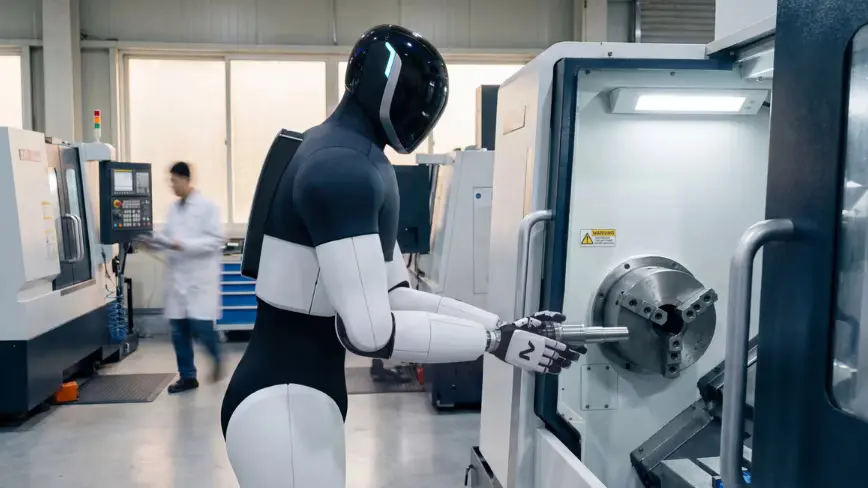
Europe positions itself as a contender in humanoid robot technology despite lagging in AI and electric vehicles. Sweden's Hexagon AB tests humanoids at BMW while Germany's Neura Robotics secures €1 billion from Amazon and Qualcomm, valuing the startup at €4 billion. European automotive suppliers pivot to this nascent market projected to reach trillion-dollar scale by 2035.
France has finalized its €404 million purchase of supercomputer maker Bull from Atos Group, making the state the sole shareholder. The strategic move aims to strengthen French and European technological sovereignty in high-performance computing, AI, and quantum technologies. Bull operates Europe's only supercomputer manufacturing plant and builds systems critical to France's nuclear defense capabilities.
US investors are pouring capital into European AI start-ups, contributing 73% of funding rounds exceeding $100 million. But Europe faces a paradox: while it matches the US in AI talent with 325,000 researchers, its best minds are being recruited by American tech giants like Google, Meta, and Amazon. The Draghi report warns of 'slow agony' without reform.
AI infrastructure firm Nebius announced plans to build a 310-megawatt data center in Lappeenranta, Finland, valued at over $10 billion. The facility will be one of Europe's largest AI factories when operational in 2027, as the region accelerates efforts to develop the compute infrastructure needed to compete in the global AI race.
French AI startup Mistral AI secured $830 million in debt financing to construct a new data center near Paris powered by 13,800 Nvidia chips. The facility, expected to be operational by Q2 2026, marks Europe's push for AI autonomy as demand surges from governments and enterprises seeking alternatives to US hyperscalers.
European Parliament voted to ban AI nudification tools that create non-consensual deepfake images, following the Grok chatbot scandal. The vote also delays compliance deadlines for high-risk AI systems until December 2027, extending uncertainty for businesses operating in Europe as negotiations with member states continue.
Don’t drown in AI news. We cut through the noise - filtering, ranking and summarizing the most important AI news, breakthroughs and research daily. Follow topics that matter to you and stay ahead.