Share
Linkedin
Twitter
Facebook
Whatsapp
Copy Link
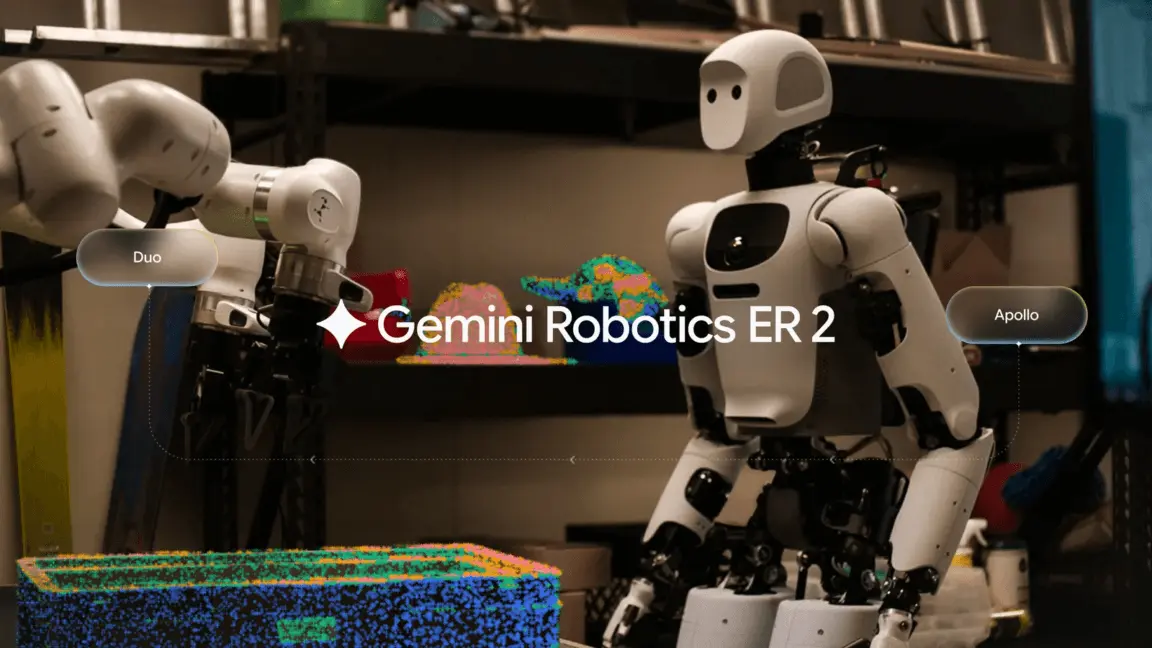
Google DeepMind launched Gemini Robotics 2, an AI model that controls entire humanoid robots from feet to fingertips. The system coordinates multiple robots, adapts to new machines in hours, and performs complex tasks like tying trash bags and screwing in lightbulbs. Despite improved dexterity reaching 92% accuracy on some tasks, fiddlier operations still lag at 40-44% success rates.
Oracle deepens its alliance with Google Cloud by bringing Gemini AI models to Oracle AI Agent Studio, Fusion Applications, and NetSuite. The move offers customers multi-model flexibility while raising questions about AI agent liability. Oracle stock surged 8.4% on the news.
Scale AI has appointed Francis deSouza, former Google Cloud COO, as its new CEO effective August 10. The hire signals Scale's strategic shift from data-labeling provider to enterprise AI company, with its applications business set to overtake its data business within 18 months. DeSouza brings over 30 years of enterprise technology experience.
Cisco released the AI Supply Chain Provenance Explorer, a free database cataloguing almost 900 open-source AI models with verified lineage through fingerprinting technology. The ATOM Report found 69% of new model derivatives rely on unverified base model tags that uploaders self-report. The tool addresses critical verification gaps in model provenance and security scanning coverage.
A Columbia Law School study led by former FTC Chair Lina Khan reveals that Amazon's Alexa for Shopping and Walmart's Sparky can identify false 'Made in USA' product claims but aren't being used to remove misleading listings. When questioned, the AI assistants themselves cited business calculations over legal justifications for the inaction.
Gartner forecasts a fundamental shift in privacy threats by 2029, where AI-generated inferences about individuals will cause most privacy incidents rather than traditional data breaches. The research firm warns that AI can now reconstruct deeply personal insights from seemingly harmless data without ever accessing protected databases.
Tinder has paused its AI-powered photo enhancement feature after users discovered the tool was automatically editing their profile photos in disturbing ways. Former user Jeni Rubin found the app had altered her smile, adding teeth where there were none. The incident highlights growing consumer unease with AI features that modify personal images without meaningful consent.
AI firms are buying and destroying millions of physical books to train large language models like Claude AI. Anthropic's secretive Project Panama uses destructive scanning—cutting spines and pulping originals—to digitize pre-2022 texts free of AI-generated content. Booksellers worldwide report mysterious bulk orders, raising fears that irreplaceable rare volumes are being lost forever.
The European Commission is preparing to place ChatGPT and Roblox under the Digital Services Act's most stringent regulatory tier as early as August. This would make ChatGPT the first AI chatbot subject to EU strictest platform rules, while Roblox joins the list amid ongoing child safety concerns. Both platforms face mandatory risk assessments, independent audits, and potential fines of up to 6% of global revenue for non-compliance.
PwC Middle East published four thought leadership reports on AI and electric vehicles containing AI hallucinations, fake footnotes, and fabricated citations. GPTZero researchers exposed the AI-generated inaccuracies, marking the fourth Big Four firm caught passing off AI slop as authentic research.
New York-based AI detection startup Pangram secured $9 million in funding led by Menlo Ventures as it launches Pangram 4, claiming 99% accuracy in detecting AI-generated content. The company also unveiled an AI image detection model to address the growing challenge of AI slop flooding the internet.
A new Bentley University-Gallup survey shows Americans are growing more skeptical of AI despite increased familiarity. 39% now believe AI does more harm than good, up from 31% in 2025, while trust in businesses to use AI responsibly has dropped to 27%. Job displacement concerns hit an all-time high at 79%.
A European nonprofit AI Forensics tested the most popular image-editing tools on Hugging Face and found seven of nine readily undressed women from a simple six-word prompt. The report reveals 73% of user requests were sexual, with 95% targeting women and nearly 7% targeting apparent children, exposing a widespread lack of safeguards on the open-source AI platform.
Seoul has deployed AI-powered surveillance cameras across 17 bridges over the Han River, raising rescue rates to more than 99 percent from 56 percent in 2012. The system alerts first responders within five minutes when it detects high-risk behavior. Despite this success, South Korea continues to face a deepening suicide crisis with rates climbing above 29 deaths per 100,000 people in 2024.
Over 2,000 AI regulation proposals are under consideration across federal and state governments, yet none establish a comprehensive long-term regulatory framework. Experts warn that without credible oversight and a national regulatory body, the AI industry risks public trust and faces an uncertain regulatory landscape that could hinder innovation.
Don’t drown in AI news. We cut through the noise - filtering, ranking and summarizing the most important AI news, breakthroughs and research daily. Follow topics that matter to you and stay ahead.