Subscribe to our newsletter
Get the latest updates delivered to your inbox every day, and stay up-to-date for free 🧠📈
Share
Linkedin
Twitter
Facebook
Whatsapp
Copy Link
OpenAI released GPT-Rosalind, its first domain-specific AI model built for life sciences research. Named after DNA pioneer Rosalind Franklin, the model aims to compress the 10-to-15-year drug development timeline by helping scientists synthesize evidence and generate biological hypotheses. Access is restricted through a trusted access program to enterprise partners including Amgen, Moderna, and Thermo Fisher Scientific.
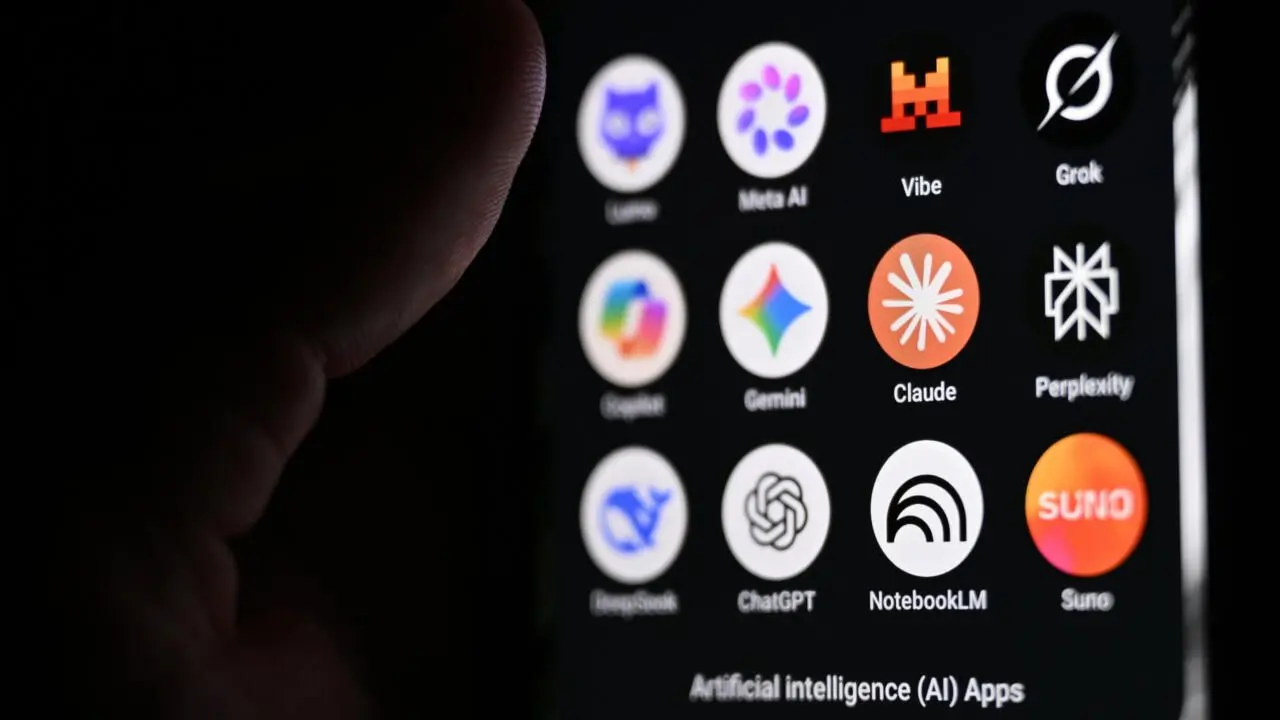
Anthropic has begun rolling out identity verification requirements for Claude AI users, requiring government-issued photo IDs and live selfies for certain capabilities. The move, handled through third-party partner Persona Identities, has sparked user privacy concerns despite assurances that verification data won't be used for model training. The decision marks a shift for a platform that attracted millions fleeing OpenAI over surveillance fears.
Apple and Google are actively directing users to nudify apps that create nonconsensual deepfake images, despite explicit policies banning such content. A Tech Transparency Project report reveals these apps have generated $122 million in revenue and been downloaded 483 million times. Many were rated 'E for Everyone,' making them accessible to children.
The trailer for As Deep as the Grave reveals an AI-rendered Val Kilmer in a prominent role, created after his death last year. Filmmakers Coerte and John Voorhees defend the decision, citing consent from Kilmer's estate and SAG-AFTRA guidelines. But the move has ignited widespread outrage online, with critics calling it 'disgusting' and questioning whether Hollywood has crossed an ethical line.
Google DeepMind launched Gemini Robotics-ER 1.6, a foundation AI model for robotics that enables robot dogs like Boston Dynamics' Spot to read analog instruments with 98% accuracy. The model introduces agentic vision combining visual reasoning with code execution, allowing robots to interpret complex gauges, thermometers, and pressure readings in industrial environments. This marks a significant leap from the 23% accuracy of its predecessor.
Students at Berklee College of Music are pushing back against a new AI course focused on generative AI in music creation. Over 425 people signed an online petition demanding the school disband the elective, arguing AI tools steal from artists and threaten the music industry. The controversy intensifies as the instructor advises Suno, a platform sued by major record labels.
Recent peer-reviewed research shows that heavy reliance on AI tools significantly reduces confidence in independent reasoning and degrades cognitive abilities. Studies involving nearly 2,000 participants found that people who heavily depend on AI for work tasks report lower confidence and less ownership over their output, while those who actively edit AI-generated content maintain stronger cognitive skills.
Major news outlets including the New York Times and USA Today are blocking the Wayback Machine from archiving their content, citing fears that AI companies exploit the archive to train models. The move threatens the Internet Archive's ability to preserve the public record, even as some of these same publishers rely on the archive for their own investigative reporting.
Duolingo CEO Luis von Ahn has reversed course on evaluating employees based on AI usage after internal confusion and pushback. The company's AI-first push highlighted a growing problem: measuring AI adoption doesn't equal measuring actual work quality. This cautionary tale arrives as tech giants from Meta to Google continue tying AI tool usage to employee performance reviews.
Apple warned Elon Musk's xAI in January that its Grok AI chatbot would be removed from the App Store unless it addressed rampant sexualized deepfakes. The tech giant rejected initial fixes as insufficient, forcing multiple resubmissions before approval. Despite implemented safeguards, NBC News investigations reveal Grok continues generating nonconsensual sexual images of real people, raising questions about enforcement and the effectiveness of content moderation measures.
GitLab stock jumped 7.6% in premarket trading following an expanded collaboration with Google Cloud. The partnership integrates Vertex AI models, including Gemini, into GitLab's platform with built-in compliance and audit controls. The move allows organizations to run GitLab's AI Gateway directly on Google Cloud without separate AI infrastructure.
Anthropic restricted public release of its Mythos AI model after it demonstrated unprecedented cybersecurity skills, completing complex 32-step attacks and finding vulnerabilities in every major operating system. The UK's AI Security Institute confirmed the threat is real, while regulators and banks scramble to assess risks and demand equal access to defensive tools.
The UK Department for Transport partnered with Google Cloud and the Alan Turing Institute to build an AI-powered Consultation Analysis Tool that processes over 100,000 public feedback responses in hours instead of months. The system achieves 90% accuracy while saving up to £4 million annually, enabling faster policy decisions with human oversight at its core.
Novo Nordisk announced a strategic partnership with OpenAI to integrate artificial intelligence across its operations, from drug discovery to manufacturing. The Danish drugmaker aims to analyze complex datasets, identify promising drug candidates faster, and regain competitive ground in the weight-loss drug market against rival Eli Lilly. Full integration is planned by the end of 2026.
Multiple studies reveal AI chatbots deliver problematic health advice 50% of the time, with some platforms fabricating medical references at rates up to 34%. As one in three Americans now turn to AI for health information, researchers warn these tools lack clinical judgment and produce authoritative-sounding but potentially dangerous responses, especially when patient data is incomplete.
Don’t drown in AI news. We cut through the noise - filtering, ranking and summarizing the most important AI news, breakthroughs and research daily. Follow topics that matter to you and stay ahead.