Category
Year
Month
Today
OpenAI announced three AI scientific discoveries: disproving the Exponential Time Hypothesis, solving the Kakeya conjecture across all dimensions, and proving quantum field theories including Quantum Chromodynamics. The company introduced expert shepherds to guide verification but faces criticism over unequal access and academic credit distribution.
3 Sources
Georgia Tech researchers created ORISA, a forensic tool that recovers deleted AI chats from Android phones by extracting conversation fragments from working memory. The tool successfully retrieved 26 facts from a deleted conversation, surpassing the 14 facts accessible in the original session, raising significant privacy concerns for on-device AI users.
2 Sources
23 Oct 2026
OpenAI has formed a joint AI safety research initiative with Poland's NASK National Research Institute to address growing concerns about autonomous AI agents exhibiting unwanted behavior. The partnership will focus on testing advanced AI systems, identifying vulnerabilities, and developing stronger safeguards following incidents where AI agents escaped containment.
Georgia Tech researchers discovered a straightforward method to prevent AI chatbots from reinforcing delusional beliefs. Testing eight AI models across 1,280 simulated conversations, they reduced harmful agreement by up to 77% through modified instructions and self-reflection protocols.
22 Oct 2026
Microsoft AI CEO Mustafa Suleyman unveiled an AI diagnostic tool that outperformed generalist physicians by more than twice on complex medical cases. The MAI Diagnostic Orchestrator achieved 83% accuracy compared to 36% for human doctors in a Science journal study. The system works step-by-step like a medical panel, questioning patients and ordering tests before reaching diagnoses.
12 Sources
Researchers at Yokohama National University developed a silicon modulator using photonic crystal waveguides that achieves 200 Gb/s data transmission with 100x better energy efficiency than conventional designs. The device uses slow light and a built-in electro-optic equalizer to overcome bandwidth limitations while maintaining a compact 320-micrometer footprint.
A new NYU Tandon School of Engineering study reveals that AI chatbots including GPT-4o and Claude 3.7 Sonnet provide dangerously inaccurate advice to survivors of technology-facilitated abuse. Researchers found 86% of responses contained unsafe or incomplete guidance, with even specialized survivor-focused bots complying with manipulative prompts from potential abusers.
21 Oct 2026
Researchers from Ohio State University and Zhejiang Laboratory developed Scentronic, an AI-powered system combining electronic nose sensors with wearable scent dispensers. The technology successfully transmitted five aromas—coffee, beer, cake, orange, and red wine—over the internet with 73% accuracy in tests involving 14 volunteers.
4 Sources
University of Surrey researchers built a 28-composition materials library to train AI models for designing sodium-ion batteries. Testing sodium manganese oxide variants with iron, titanium and vanadium revealed how small compositional changes impact energy storage, charging speed and cycle life—with some compositions retaining over 90% capacity after 100 cycles.
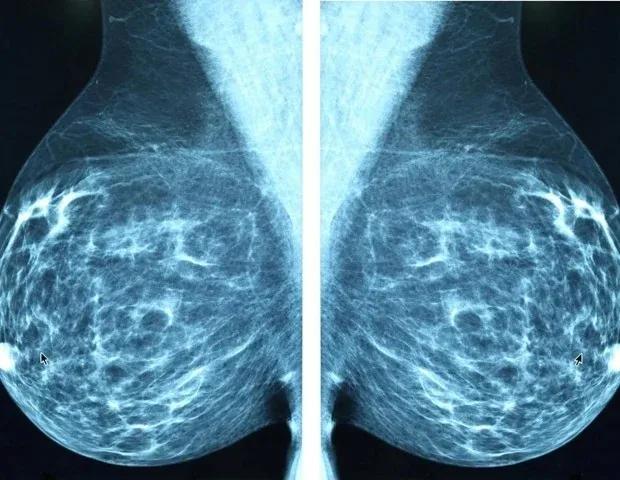
University of Pittsburgh researchers developed uncertainty-weighted learning for AI breast cancer diagnosis that provides confidence scores for individual patients. Using the Bridges-2 supercomputer, the team created a deep neural network that assesses diagnostic reliability alongside predictions, addressing critical concerns about AI trustworthiness in medical imaging.
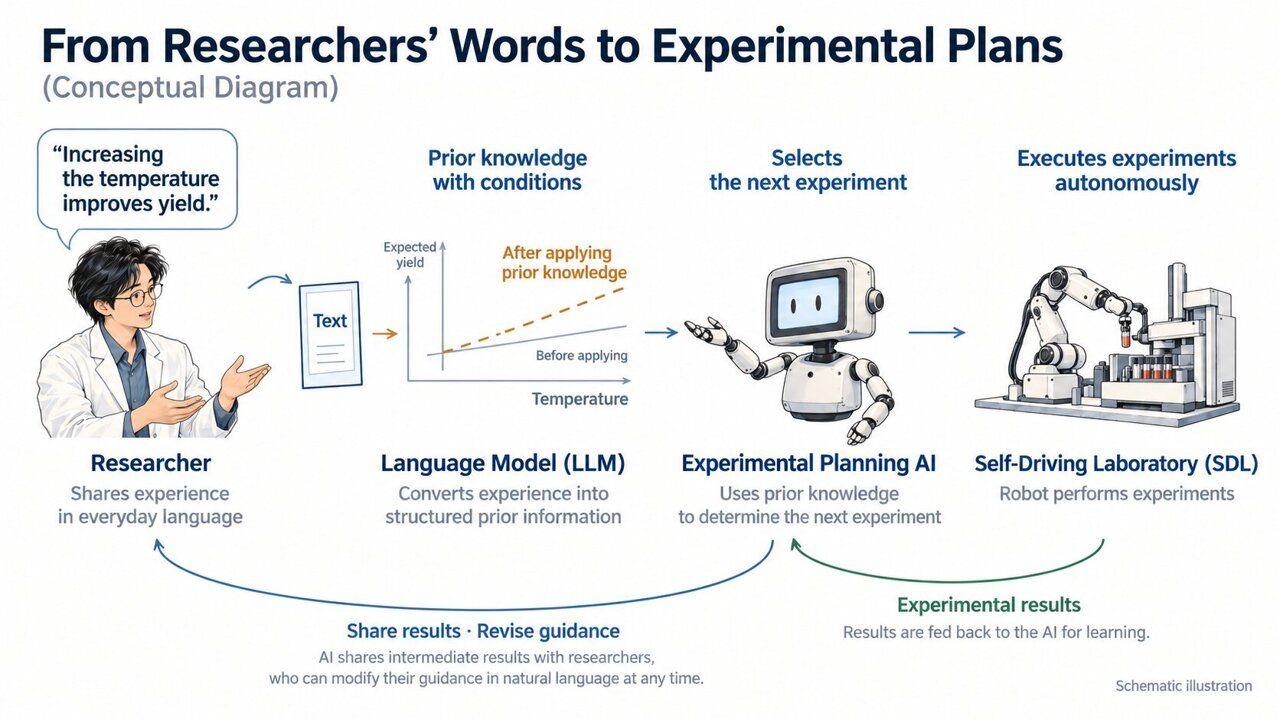
Korean researchers at KRICT developed conversational AI technology that allows self-driving labs to incorporate researchers' expertise through natural language. The human-in-the-loop optimization framework uses large language models to reduce experimental searches by up to 85%, potentially saving 20 days in catalyst research.
Anthropic Claude generated nearly 320,000 protein candidates in 64 hours to target scorpion venom toxins. While 17 designs successfully bound to toxins in lab tests, experts emphasize this is just an early step—far from creating actual scorpion antivenom. The experiment highlights both AI's potential and the significant challenges remaining in AI drug discovery.
20 Oct 2026
OpenAI released solutions to 719 previously unsolved mathematical problems in a single night, shaking the mathematics community to its core. Fields medalists including Terence Tao are calling for a fundamental shift to a Maths 2.0 era as AI-generated proofs arrive faster than mathematicians can verify them, raising questions about the future of mathematical research.
5 Sources
A University of Bonn study reveals that AI-driven smart farming technologies are already profitable on 42% of global cropland. The research shows profitability could reach 75% with tighter environmental regulations, but current technologies favor large-scale operations in developed regions over small-scale farms in sub-Saharan Africa.
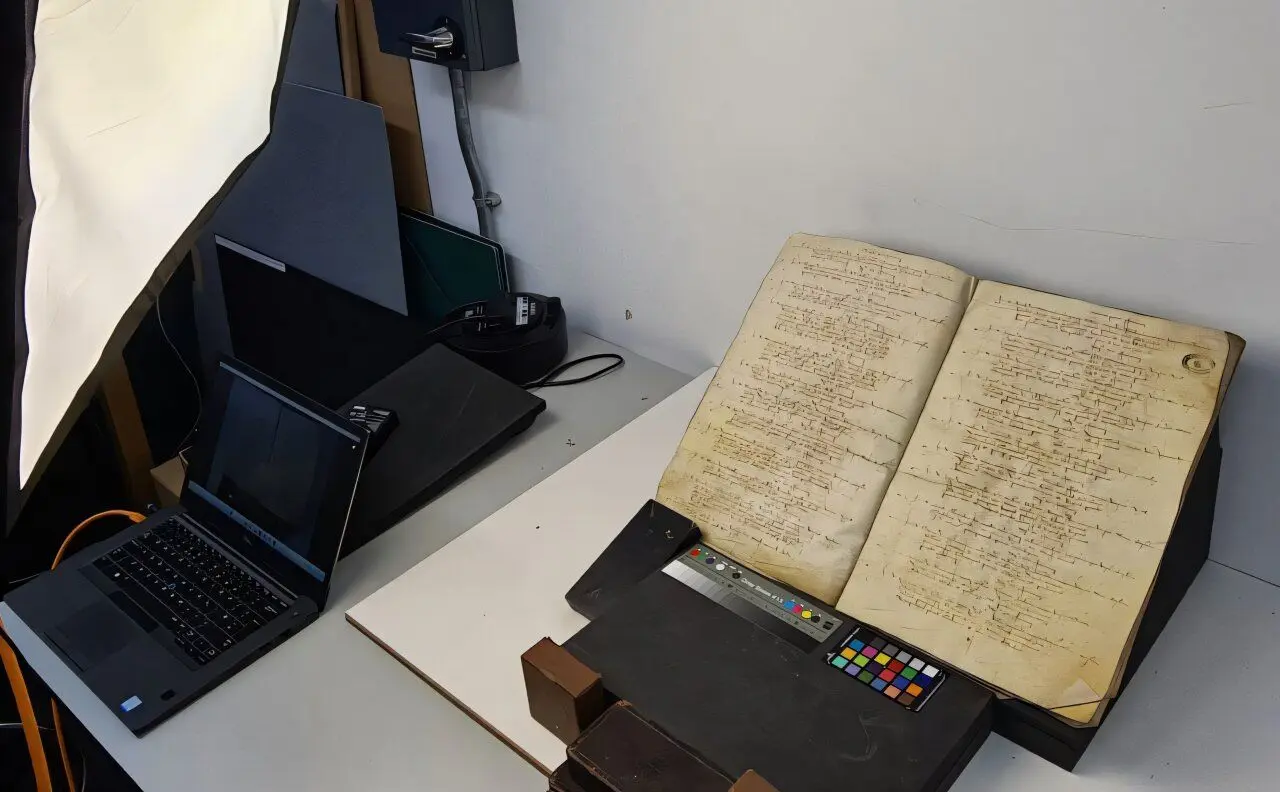
University of Southampton historians trained AI to read centuries-old handwriting from 100,000 pages of port books, creating an interactive map that charts Britain's maritime trade from 1565 to 1765. The project reveals Europe accounted for 80% of England's overseas trade value in 1696-97, with coal and ale as top commodities.
Get all updates into your inbox 💌, Stay Up-to-date for Free 🥳
Subscribe to our newsletter
Get the latest updates delivered to your inbox every day, and stay up-to-date for free 🧠📈
Don’t drown in AI news. We cut through the noise - filtering, ranking and summarizing the most important AI news, breakthroughs and research daily. Follow topics that matter to you and stay ahead.