AI and data centers push US energy storage to record-breaking first quarter with 9.7 GWh installed


2 Sources
[1]
US energy storage additions hit a first-quarter record, report shows
May 21 (Reuters) - U.S. energy storage developers installed 9.7 gigawatt-hours of new capacity in the first quarter of 2026, marking a record high for the quarter, an industry report showed on Thursday. Energy storage capacity grew 32% in the quarter from a year ago despite federal actions the
[2]
SEIA: AI is fueling a massive US energy storage boom
The US energy storage industry kicked off 2026 with its strongest Q1 on record, despite the Trump administration continuing to attack clean energy. According to the latest US Energy Storage Market Outlook released today from the Solar Energy Industries Association (SEIA) and Benchmark Mineral
Share
Copy Link
The US installed 9.7 gigawatt-hours of energy storage capacity in Q1 2026, marking a 32% year-over-year increase and the strongest first quarter on record. Major tech companies like Google and Meta are driving demand by procuring thousands of megawatt-hours to power AI technologies, while volatile electricity prices and global fossil fuel market instability make battery storage increasingly attractive despite federal permitting delays.
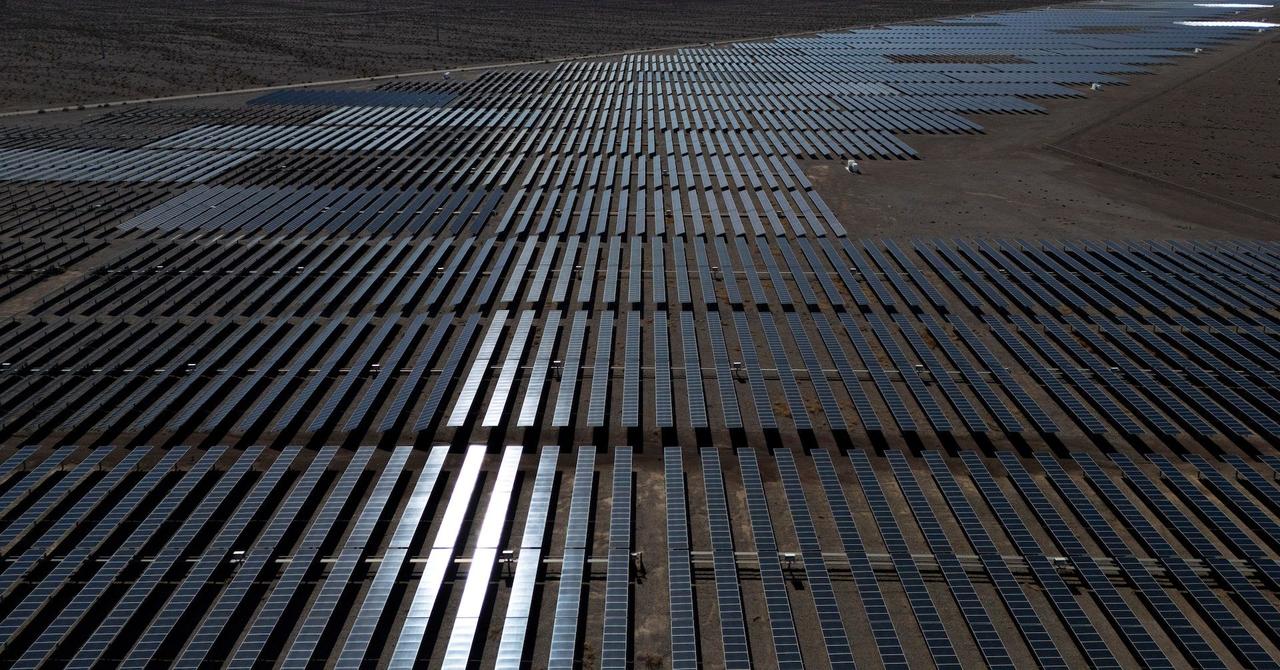
Energy Storage Additions Reach New Heights Despite Policy Headwinds
The US energy storage industry delivered its strongest performance ever for a first quarter, with developers installing 9.7 gigawatt-hours of new capacity in Q1 2026
1
2
. This record-breaking first quarter represents a 32% jump from the same period a year earlier, according to a report released by the Solar Energy Industries Association (SEIA) and Benchmark Mineral Intelligence1
. The growth comes even as the solar industry faces tariff pressures and a freeze on approvals for major projects under the Trump administration1
.Power from AI and Data Centers Transforms Demand Landscape
The surge in energy storage installations is being propelled by exploding demand from AI and data centers, as major technology companies race to secure reliable power supplies
1
. Companies like Google and Meta have announced deals this year to procure tens of thousands of megawatt-hours of storage capacity to power data centers needed to run AI technologies1
2
. Battery storage as critical infrastructure is increasingly being framed as essential for powering AI growth while preventing electricity prices from spiking for consumers2
. "A supportive policy landscape for BESS will be crucial to enabling the rollout of AI and data centers, while mitigating adverse cost impacts to regular consumers," said Shan Tomouk, Benchmark Mineral Intelligence's BESS and energy lead2
.Utility-Scale Storage Dominates Installation Activity
Utility-scale storage accounted for the lion's share of new capacity, with 7.8 GWh added during the quarter
1
2
. Commercial and industrial systems contributed 648 megawatt-hours, while residential systems added 515 MWh1
2
. Texas, Arizona, and California led utility-scale installations during the period1
2
. Notably, over 70% of utility-scale storage capacity installed in the quarter was deployed in states won by President Donald Trump1
.Related Stories

Volatile Electricity Prices and Global Market Instability Drive Adoption
Beyond data center demand, volatile electricity prices and disruptions to the global fossil fuel market are making energy storage increasingly attractive
1
2
. As gas prices remain unstable and supply disruptions continue to affect natural gas and gas turbines due to instability from the war in Iran, solar and battery storage offer an advantage because they don't rely on fuel2
. More battery storage equipment is also being manufactured domestically, helping shield projects from overseas supply shocks2
. "Energy storage's remarkable first quarter only underscores the fundamental values of this technology," said Darren Van't Hof, SEIA's interim president and chief executive1
.Permitting Delays Threaten Future Clean Energy Development
Despite strong growth, the industry faces significant challenges from permitting delays and policy uncertainty
1
2
. The report found that 467 solar and storage projects have permits pending and could face delays or cancellations1
2
. "If federal permitting bottlenecks persist, household electric bills will continue to rise and China will surge further ahead in the race for AI leadership," the report warned1
. Van't Hof emphasized that "Storage can help America meet rising energy demand and strengthen American energy independence, but only if Washington lets the solar and storage industry build"2
. Despite these hurdles, the report has been revised upward to forecast more than 610 GWh of energy storage installations by 20301
2
. Thirteen states now have explicit energy storage targets in place, with Georgia, Iowa, and Mississippi posting notable growth in Q12
.References
Summarized by

Navi
Related Stories
AI boom drives data centers to adopt multi-day battery storage as power demands surge
25 Mar 2026•Business and Economy

US Power Consumption Set for Record Highs in 2026-2027 as AI Data Centers Drive Demand Surge
07 Oct 2026•Business and Economy

GM Energy bets on sodium-ion batteries and V2G tech to tackle AI's power crunch
09 Jun 2026•Business and Economy
Recent Highlights



Recent Highlights
Today's Top Stories



Don’t drown in AI news. We cut through the noise - filtering, ranking and summarizing the most important AI news, breakthroughs and research daily. Follow topics that matter to you and stay ahead.


