AI 'Godfather' Geoffrey Hinton Warns Tech Giants Must Replace Human Jobs to Profit from Massive Investments


4 Sources
[1]
The AI Industry Can't Profit Unless It Replaces Human Jobs, Warns Man Who Helped Create It
"I believe that to make money you're going to have to replace human labor." If you thought AI's endgame was a fully automated utopia where everyone finally lives in harmony, think again. According to Nobel laureate Geoffrey Hinton -- often called "the godfather of AI" for his contributions to the
[2]
'Godfather of AI' says tech giants can't profit from their astronomical investments unless human labor is replaced | Fortune
Computer scientist and Nobel laureate Geoffrey Hinton doubled down on his warnings about how artificial intelligence will affect the labor market and the role of companies leading the charge. In an interview with Bloomberg TV's Wall Street Week on Friday, he said the obvious way to make money off
[3]
'Elon Musk will get richer, many others will be unemployed': 'Godfather of AI' Geoffrey Hinton warns of dark future
AI pioneer Geoffrey Hinton issues a stark warning about job displacement. He believes artificial intelligence will replace millions of workers, enriching tech moguls. Hinton stresses the danger is not the technology itself but how society organizes its economy. Bold policy measures are needed to
[4]
'Godfather Of AI' Geoffrey Hinton Warns AI Job Replacement Central To Tech Giants' Profit Strategy Amid Rising AI Investments - Broadcom (NASDAQ:AVGO), Amazon.com (NASDAQ:AMZN)
Nobel laureate Geoffrey Hinton, dubbed the "Godfather of AI," said that artificial intelligence firms are placing bets on the widespread replacement of jobs to maximize their profits. Tech Giants Boost AI Capital Spending Four AI hyperscalers, including Microsoft Corp. (NASDAQ:MSFT), Meta
Share
Copy Link
Nobel laureate Geoffrey Hinton warns that AI companies are betting on widespread job replacement to generate profits from their trillion-dollar investments. He emphasizes that the real danger lies not in AI technology itself, but in how society organizes its economy around automation.
The Godfather's Warning
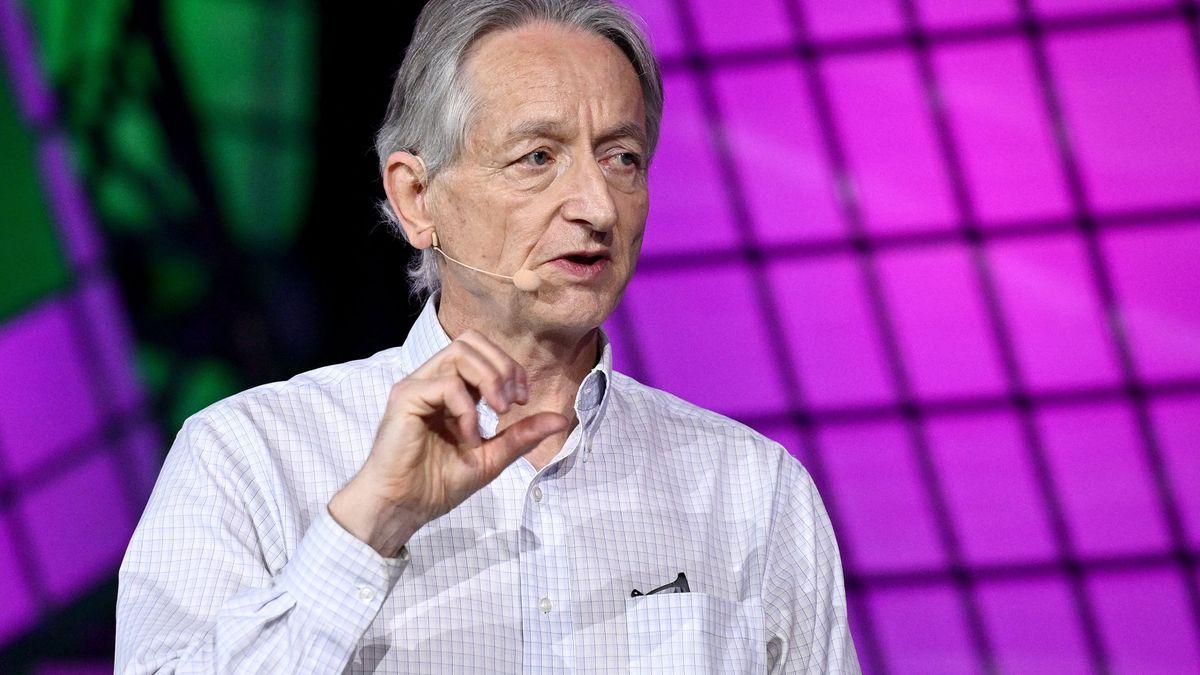
Nobel laureate Geoffrey Hinton, widely recognized as the "godfather of AI" for his foundational contributions to artificial intelligence, has issued stark warnings about the future of work in an AI-driven economy. In a recent Bloomberg TV interview, Hinton argued that tech companies are fundamentally betting on widespread job displacement to generate returns on their massive AI investments
1
2
.
Source: ET
"I think the big companies are betting on it causing massive job replacement by AI, because that's where the big money is going to be," Hinton warned, emphasizing that profitable AI deployment requires replacing human workers with cheaper automated alternatives
2
.Trillion-Dollar Investments Drive Automation Push
The scale of AI investment has reached unprecedented levels, with major tech companies dramatically increasing their capital expenditures. The four AI hyperscalers—Microsoft, Meta, Alphabet, and Amazon—are expected to boost their combined capital spending to $420 billion next fiscal year, up from $360 billion this year
4
.
Source: Benzinga
OpenAI alone has announced $1 trillion in infrastructure deals with companies including Nvidia, Broadcom, and Oracle, despite losing approximately $11.5 billion in revenue over the last three months
1
. When asked whether such massive investments could pay off without devastating the job market, Hinton's response was unequivocal: "I believe that it can't. I believe that to make money you're going to have to replace human labor"2
.Early Signs of Job Market Impact
Evidence is already mounting that AI is beginning to affect employment opportunities. Analysis shows that job openings have plummeted roughly 30% since OpenAI launched ChatGPT
2
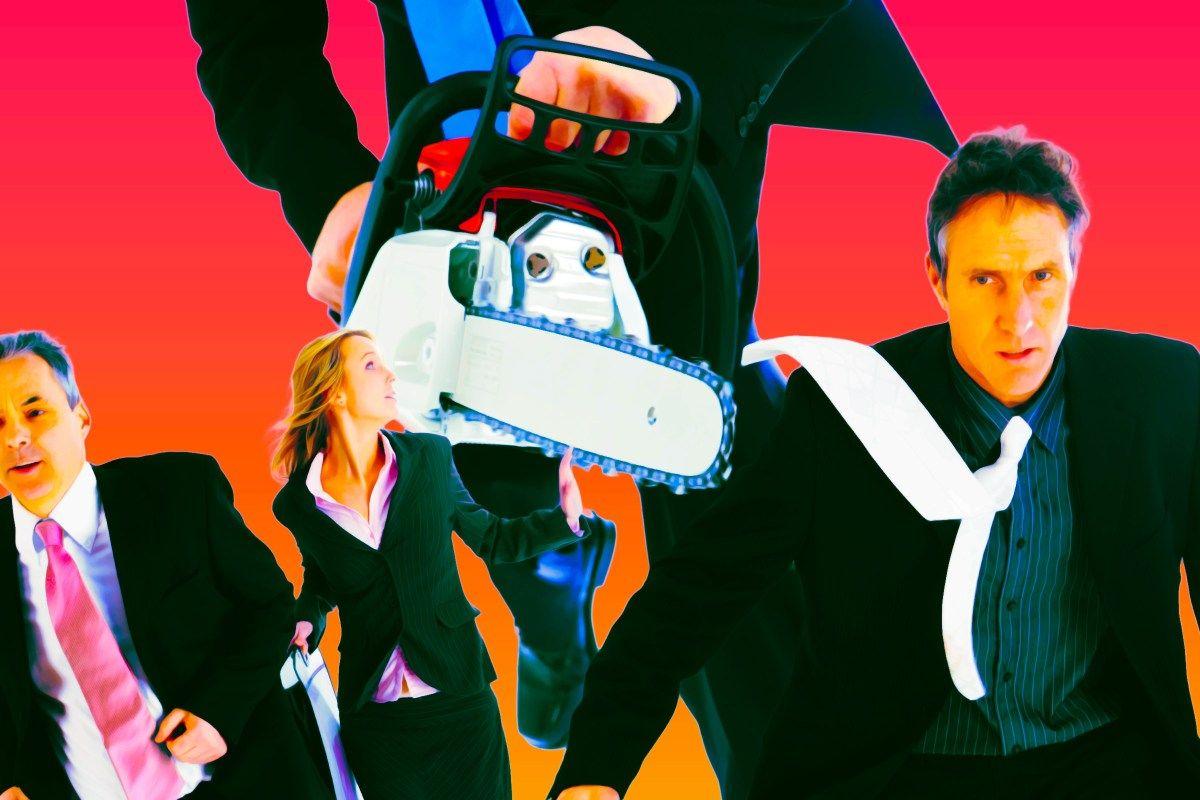
. The impact is particularly pronounced at entry-level positions, where AI tools can more easily replicate human tasks.Recent corporate actions support Hinton's predictions. Amazon announced 14,000 layoffs this week, largely targeting middle management positions. While CEO Andy Jassy attributed the decision to "culture" rather than AI, a memo he sent in June predicted a smaller corporate workforce "as we get efficiency gains from using AI extensively across the company"
2
.
Source: Futurism
Related Stories
The Societal Organization Challenge
Hinton emphasizes that the fundamental issue isn't AI technology itself, but rather how society chooses to deploy and regulate it. "The problem is not ultimately due to AI itself," he explained. "It's due to how we structure our society and our economy"
3
.The AI pioneer drew parallels to historical technological disruptions, noting that unlike previous innovations that created new job categories while destroying others, it's unclear whether AI will follow the same pattern. He warned that current trends suggest tech moguls like Elon Musk will become wealthier while millions face unemployment, describing this as "not an AI problem; it's a societal problem"
3
.Potential Benefits and Policy Solutions
Despite his warnings about job displacement, Hinton acknowledges AI's tremendous potential for good. "It's not like nuclear weapons, which are only good for bad things," he explained. "It can do tremendous good in healthcare and education. It'll do tremendous good, and in fact if you think about it increasing productivity in many, many industries, that should be good"
2
.To mitigate the risks while capturing AI's benefits, Hinton has called for bold policy interventions including universal basic income, stronger labor protections, and a fundamental rethinking of how society values work in an AI-driven economy
3
. He also stressed the need for global cooperation to ensure that future superintelligent AI systems align with human values rather than purely profit motives.References
Summarized by

Navi
[1]
Related Stories
AI Pioneer Warns of Massive Unemployment and Economic Disparity in the Age of Artificial Intelligence
07 Sept 2025•Technology

Geoffrey Hinton warns AI will replace many more jobs in 2026 as capabilities advance rapidly
28 Dec 2025•Technology

Block's 4,000-person layoff sparks debate: AI revolution or corporate cost-cutting in disguise?
05 Mar 2026•Business and Economy
Recent Highlights



Recent Highlights
Today's Top Stories









Don’t drown in AI news. We cut through the noise - filtering, ranking and summarizing the most important AI news, breakthroughs and research daily. Follow topics that matter to you and stay ahead.


