AI labs may be sitting on cryptography breakthroughs, researcher warns


2 Sources
[1]
AI Labs Likely Sitting on Cryptography 'Bombshells'
AI is driving a massive wave of mathematical breakthroughs which could have implications for cryptography. Theoretical computer scientist Scott Aaronson says leading AI laboratories are likely sitting on undisclosed breakthroughs in cryptography. In a blog post on Wednesday, Aaronson, a former
[2]
AI Breakthroughs Could Threaten Bitcoin Security Before Quantum Computers
Recent AI advances have raised concerns that Bitcoin's cryptography could face threats before quantum computers become powerful enough to compromise it. Glassnode estimates that 7.12 million BTC could be vulnerable if elliptic curve cryptography fails. Meanwhile, Ethereum is accelerating security
Share
Copy Link
Scott Aaronson, a theoretical computer scientist at UT Austin and a former OpenAI researcher, says in a November 25 blog post that AI labs are likely sitting on cryptography breakthroughs they have not announced
1
2
. If what he says is true, it would matter to anyone holding digital assets, because the mathematics protecting them is exactly the kind of thing such a breakthrough would attack.
Source: Analytics Insight
Aaronson is careful about how far the claim goes. "I'm virtually certain, from multiple reliable sources, that the AI labs are now sitting on one or more bombshells in that area," he wrote. "However, until I either see details or hear directly from someone at a lab, I feel much, much less confident about the specific nature of those bombshells"
1
. He has seen no details and heard from nobody inside a lab, and wrote that he did not want to be responsible for spreading unverified rumors2
.Why he thinks something is hidden
The warning lands after a burst of AI-assisted mathematics that Aaronson himself links to it. On November 20, Levent Alpöge, a mathematician at Anthropic, published a proof of the Generalized Riemann Hypothesis, a famous unsolved problem, built with an unreleased Claude version over about six weeks. The Lean FRO and the Mathlib Initiative verified it
1
. Days later, both Anthropic and OpenAI released proposed proofs of Valiant's conjecture, an algebraic cousin of the famous question about which problems computers can solve quickly. The reports date the results to November 231
2
. In October, OpenAI had already posted 722 AI-written math papers spanning 372 problem areas, an episode nicknamed the "mathocalypse"1
.
Source: Cointelegraph
One rumor Aaronson relayed is that a lab may have found a way to factor large numbers quickly, which would threaten the encryption securing much of the internet's traffic
1
. Multiplying two large primes is easy; splitting the product back apart is not. Commentator Andrew Curran and Carnegie Mellon researcher Aran Nayebi said they had heard similar rumors1
.Bitcoin and Ethereum: exposure and response
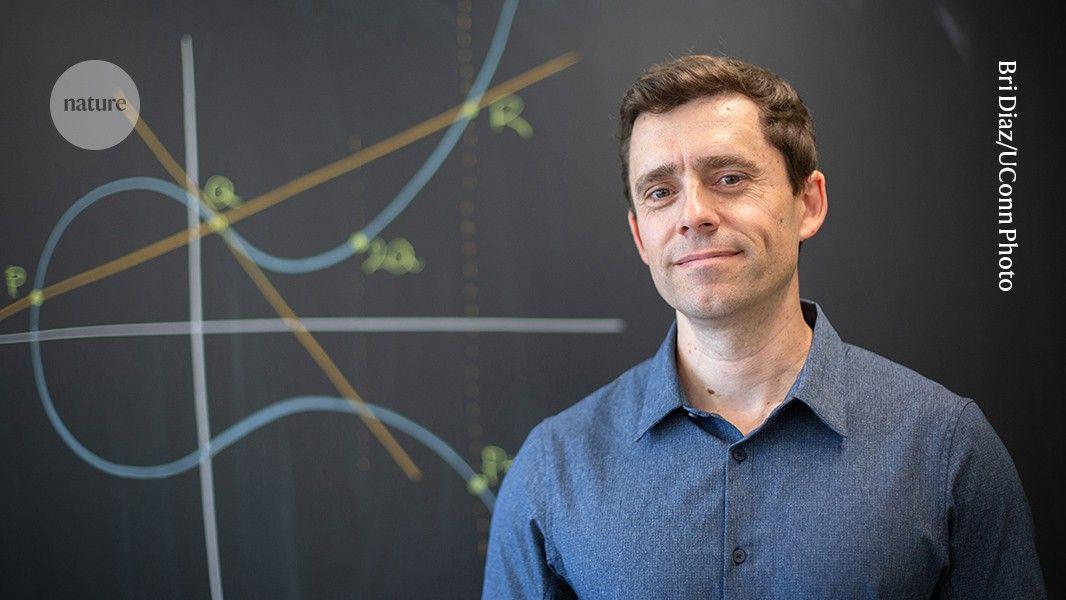
Bitcoin does not use that kind of encryption. It runs on elliptic curve cryptography, so a factoring breakthrough would not automatically compromise Bitcoin wallets, and nobody has demonstrated a working attack on its cryptography
2
. Asked whether the signature scheme Bitcoin uses had been broken, Aaronson declined to say: "If, in these days of long-prophesied revelation and wonders and terrors, your main worry is your Bitcoin wallet, then go somewhere else for rumors about whether or not ECDSA is broken or whatever. I don't have what you're looking for here"1
.The exposure is real, if the mathematics ever fails. Glassnode, a blockchain analytics firm, estimated on November 10 that roughly 7.12 million bitcoin, 35.4% of all issued supply, sits behind publicly visible keys. That comes from address reuse, older address formats and Taproot transactions
2
.The Ethereum Foundation has already decided AI is the more immediate security concern, ahead of quantum computing, and says so in its own November 23 update
2
. It plans to swap elliptic curve cryptography for hash-based alternatives in validator signatures, user accounts and data verification. On November 24 it recommended Keccak-256 as the basis for future infrastructure2
. Vitalik Buterin, Ethereum's co-founder, and researcher Justin Drake had already raised the same worry in October, before Aaronson wrote anything1
. Bitcoin, by contrast, is still reviewing two draft improvement proposals, numbered 360 and 361, that would reduce public key exposure and move away from vulnerable signatures2
. None of it is deployed, and the timelines are planned targets, not commitments, with a review set for January 20272
.Neither of the published results demonstrates a method for breaking Bitcoin's cryptography
2
. In his review of the published advances, including Google Research's new factorization papers, Aaronson found nothing of practical cryptographic relevance2
.Related Stories
References
Summarized by

Navi
[1]
[2]
Related Stories
AI Could Break Bitcoin's Security in Months, Ethereum Researcher Warns Industry to Prepare
08 Oct 2026•Technology
AI Security Tools Uncover Over 1,200 Critical Bitcoin Vulnerabilities in Days
05 Aug 2026•Technology

OpenAI's AI Models Disprove 27-Year Exponential Time Hypothesis, Rendering Decades of Research Obsolete
27 Oct 2026•Science and Research
Recent Highlights
1
Anthropic mathematician says Claude helped him prove math's most famous problem
Science and Research

2
Two states sue SpaceX, saying weak Grok safeguards were no accident
Policy and Regulation

3
Jensen Huang is back at Nvidia 11 days after quitting, and the scrutiny came back with him
Business and Economy
Recent Highlights
Today's Top Stories







Don’t drown in AI news. We cut through the noise - filtering, ranking and summarizing the most important AI news, breakthroughs and research daily. Follow topics that matter to you and stay ahead.


