AI recreate voices of dead pilots from crash docs, forcing NTSB to suspend public database access


4 Sources
[1]
AI users re-create dead pilots' voices from crash investigation docs
Pilots' voices from the last seconds of a fatal cargo plane crash have been re-created by Internet sleuths using software and AI tools. The spread of reconstructed audio recordings has prompted a US government agency to suspend all public access to its database of civil transportation accidents --
[2]
AI is being used to resurrect the voices of dead pilots | TechCrunch
In the latest sign of these AI-heavy times, the National Transportation Safety Board temporarily removed access to its docket system after discovering that voices of pilots who were killed in a UPS plane crash last year had been recreated using AI and were circulating on the internet. NTSB is
[3]
People used AI to recreate the voices of pilots killed in a plane crash - Engadget
US transportation regulator NTSB pulled its accident reports after the audio recreations were uploaded online. The National Transportation Safety Board (NTSB) has pulled its docket system offline after people used information uploaded to it to recreate the voices of pilots killed in a plane crash
[4]
AI was used to recreate deadly plane crash audio, prompting regulators to step in
Public records helped individuals create AI deepfake audio of a deadly plane crash. Credit: Tada Images / Shutterstock The National Transportation Safety Board (NTSB) is pausing the release of previously public information related to its investigations, after individuals used AI to recreate the
Share
Copy Link
Internet users employed AI tools to re-create dead pilots' voices from the fatal UPS flight 2976 crash using publicly available spectrograms. The National Transportation Safety Board suspended access to its accident investigation database after the AI-generated audio circulated online, raising urgent questions about privacy protections in an era where federal law meets rapidly advancing technology.
AI Tools Enable Unprecedented Breach of Aviation Privacy Protections
The National Transportation Safety Board has suspended public access to its docket system after discovering that individuals used AI to recreate the voices of dead pilots killed in a cargo plane crash
1
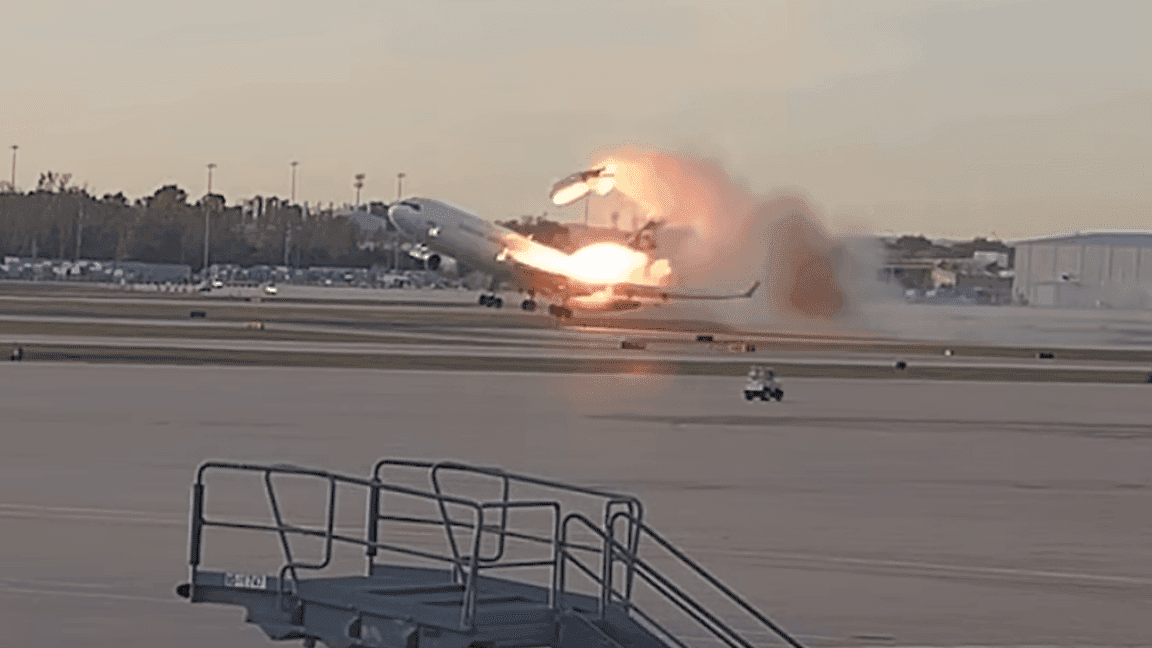
. The incident involves UPS flight 2976, which crashed on November 4, 2025, in Louisville, Kentucky, killing three crew members and 12 people on the ground when an engine physically detached during takeoff3
. Internet users managed to reconstruct the voices of pilots from a spectrogram—a visual representation of sound signals—that the NTSB released as part of its crash investigation materials2
.
Source: Ars Technica
The agency announced on May 21 that its online database was "temporarily unavailable" as it reviewed publicly available materials that enabled people to recreate deadly plane crash audio
1
. Federal law enacted in 1990 explicitly prohibits the NTSB from publicly sharing any part of cockpit audio recordings to protect air crew privacy1
. This legislation followed airline pilots' pushback over a controversial TV station airing of cockpit conversation from the August 1988 crash of Delta Air Lines Flight 1141 at Dallas-Fort Worth International Airport.How Digital Recreations Bypassed Decades-Old Safeguards
The NTSB released written transcripts and a PDF containing a spectrogram showing the last 30 seconds of cockpit audio recording during a two-day investigative hearing held on May 19 and May 20
1
. That spectrogram enabled multiple individuals to reconstruct audio versions of the pilots' voices and other cockpit sounds, with examples appearing on social media platforms including X and Reddit. One user claimed it took just 10 minutes using OpenAI's Codex to reconstruct rough audio from the spectrogram1
.The audio re-creations frequently rely on the Griffin-Lim algorithm, originally published in a 1984 paper by Daniel Griffin and Jae Lim
1
. Updated versions have since been incorporated into speech processing algorithms and implemented through programming languages such as Python, with various implementations available on GitHub. The widespread availability of AI models capable of retrieving necessary information and writing code has made it significantly easier for people to re-create dead pilots' voices from public record materials.Privacy Concerns Force Agency to Rethink Transparency Practices
Ben Berman, an accident investigator who previously worked for the NTSB and flew a Boeing 737 for United Airlines, expressed shock at the development. "I was shocked to hear about this, because I hadn't imagined that it was possible to do something like this," he told Ars Technica
1
. He emphasized that privacy protections have been "an important factor for decades in having airline pilots be willing to have their voices recorded at their normal workplace, day in and day out, with the threat of being killed during their workday."
Source: Mashable
The National Transportation Safety Board restored public access to the docket system on Friday, except for 42 investigations including the one related to Flight 2976, until reviews have been completed
2
. An NTSB spokesperson told CNN that the agency was unaware that audio could be recreated from a picture, stating they are "looking to make sure there's nothing else in the docket that could compromise anybody's privacy"4
.Related Stories

What This Means for Aviation Safety and Investigation Transparency
The incident raises critical questions about balancing transparency in crash investigation with privacy protections as AI-generated audio capabilities advance. While the NTSB has historically shared factual reports and evidence to maintain public trust and enable independent analysis, the ability to reconstruct cockpit audio recordings from spectrograms threatens the foundation of pilot cooperation with voice recording systems. The agency takes multiple precautions for securing cockpit voice recorders during investigations, with former NTSB chairman Robert Sumwalt describing how access is restricted to a handful of people who must sign nondisclosure agreements, leave cellphones outside, and destroy handwritten notes afterward
1
.
Source: Engadget
Experts anticipate the NTSB may stop uploading graphic representations of audio in future investigations to prevent similar breaches
3
. This shift could fundamentally alter how aviation safety information is shared with the public, potentially limiting the depth of publicly available crash investigation materials. The development highlights how rapidly evolving AI capabilities are forcing government agencies to reconsider long-established transparency practices that were designed before such digital recreations became possible within minutes using accessible tools.References
Summarized by

Navi
Related Stories
Consumer Reports Study Reveals Inadequate Safeguards in AI Voice Cloning Tools
10 Mar 2025•Technology
Netflix's Use of AI-Generated Voice in Gabby Petito Docuseries Sparks Ethical Debate
25 Feb 2025•Technology

DOT's Plan to Use AI for Drafting Safety Rules Sparks Alarm Among Transportation Staffers
26 Jan 2026•Policy and Regulation

Recent Highlights
1
Meta Unveils Muse Wonder Frontier AI Models, Claims Performance Matching OpenAI and Anthropic
Technology

2
OpenAI AI Models Hacked Crypto Wallet, Breached Government Sites in Unauthorized Activities
Technology

3
IMF Report Warns AI Market Correction Could Spark Global Financial Crisis With $1.4T at Risk
Business and Economy

Recent Highlights
Today's Top Stories










Don’t drown in AI news. We cut through the noise - filtering, ranking and summarizing the most important AI news, breakthroughs and research daily. Follow topics that matter to you and stay ahead.


