Apple Skips High-End M6 Chips to Fast-Track AI-Focused M7 for 2027 Macs


2 Sources
[1]
2027 Macs to Get AI-Focused M7 Chips as Apple Skips High-End M6
Apple is changing its Apple silicon launch timeline to speed up the debut of chips designed for artificial intelligence workloads, reports Bloomberg. Apple plans to release an M6 chip for entry-level Macs as soon as this year, but it has canceled plans for higher-end M6 Pro and M6 Max chips. Instead, Apple's next Pro and Max chips will be part of its M7 chip lineup, with the first M7 chips launching in 2027. An M5 Ultra chip could also come as soon as this year. * M5 Ultra - Late 2026 * M6 - Late 2026 * M7 - First half of 2027 * M7 Pro - End of 2027 * M7 Max - End of 2027 * M7 Ultra - 2028 Apple is speeding up development on M7 chips because they have technologies supporting on-device AI and GPU-intensive software. Since the launch of the first Apple silicon chips, Apple has always had at least three variants, including the base M-series chip, a Pro version, and a Max version. The M6 will mark the first time that Apple is not coming out with a Pro or Max chip for the line. Apple could update the entry-level MacBook Pro with an M6 chip as soon as this year. It is expected to have around 200GB/s memory bandwidth for better graphics and faster AI processing and video editing. The base M5 chip has 153GB/s memory bandwidth, and the base M7 chip could have 240GB/s bandwidth. Bloomberg says the M6 will also include an updated memory architecture and an upgraded Neural Engine, along with performance improvements across all of the processor cores and a redesigned GPU with up to 12 cores. Prior rumors have suggested the M6 will be the first built on Apple's new 2-nanometer process. The base M6 could also be used in the entry-level Mac mini and iMac, along with upcoming iPad Pro and iPad Air models. The higher-end MacBook Pro models and higher-end Mac mini will use the M7 Pro and M7 Max. The Mac Studio will use the M7 Max and M7 Ultra. Bloomberg says Apple still plans to release an M5 Ultra for a refreshed version of the Mac Studio as soon as this year. The M5 Ultra will have approximately 36 CPU cores and 80 GPU cores. An M5 Ultra Mac Studio could have as much as 768GB of unified memory. Apple is working on a high-end "MacBook Ultra" with an OLED display and a touchscreen, and rumors suggested it could come as soon as late 2026. That seems unlikely now with the M7 Pro and M7 Max chips slated for late 2027, unless Apple equips the high-end MacBook Pro with an M6, the M5 Max, or the M5 Ultra chip. News of Apple's updated chip launch timeline comes just after the company raised prices across all of its Macs and iPads.
[2]
AppleInsider.com
Apple is rumored to skip M6 Pro and M6 Max Apple Silicon chips in favor of new, AI-first M7 chips, according to a new report. Apple is expected to launch its first M6 MacBook Pro laptops later in 2026, but while there would normally be M6 Pro and M6 Max variants, these chips are rumored to not see the light of day. That's according to a Bloomberg report, which claims the entry-level M6 chip will focus on improved memory bandwidth when compared to the M5 it will replace. The move not to launch an M6 Pro or M6 Max would be notable for Apple. It would be the first time that it hasn't done so since the move to Apple Silicon. It's unclear whether it will set a precedent or be a one-off. M6, coming in hot If the report is correct, Apple will bump the M5's 153 gigabytes per second memory bandwidth to 200 gigabytes per second with the M6. It'll do that by bringing a new memory architecture to the chip alongside an upgraded Neural Engine. The same report notes that Apple has tested M6 chips with up to 12 GPU cores, an increase over the M5's 10-core GPU. It's thought that the new M6 will be particularly performant when handling AI, graphics, and related tasks. However, while Apple isn't expected to launch an M6 Pro or M6 Max, there are still plans for an M5 Ultra. This chip will have around 36 CPU cores and 80 GPU cores, and will be offered in the Mac Studio. M7 to follow According to the report, the M7 will follow the M6 in "relatively quick succession," rather than the usual year or longer timeframe. It's thought Apple could debut the M7 as soon as the first half of 2027. Following M7, Apple will also introduce M7 Pro, M7 Max, and M7 Ultra versions for users who have more complex workflows. The Pro and Max aren't expected until the end of 2027, while the M7 Ultra is on track for 2028. It's believed that the M7 line of chips will be designed to offer notable improvements to on-device AI processing. An increase in memory bandwidth to around 240 gigabytes per second is also thought to be part of the equation.
Share
Copy Link
Apple is reshaping its Apple silicon roadmap by canceling M6 Pro and M6 Max chips in favor of accelerating development of AI-focused M7 chips. The company will release an entry-level M6 chip in late 2026, but high-end users will wait until 2027 for M7 Pro and M7 Max variants designed specifically for on-device AI workloads and GPU-intensive software.
Apple Accelerates AI-Focused Chips with Major Strategy Shift
Apple is making a significant change to its Apple silicon roadmap by canceling plans for high-end M6 Pro and M6 Max chips, choosing instead to fast-track development of AI-focused chips in its M7 lineup
1
. According to Bloomberg, this marks the first time since the debut of Apple M-series chips that the company won't release all three standard variants—base, Pro, and Max—for a single generation2
.
Source: MacRumors
The decision reflects Apple's urgent push to compete in AI workloads, where on-device AI capabilities are becoming increasingly critical. While an entry-level Apple M6 chip will still arrive in late 2026 for devices like the MacBook Pro, Mac mini, iMac, and iPad models, users seeking high-performance options will need to wait until the end of 2027 for the Apple M7 chip Pro and Max variants
1
.Memory Bandwidth Improvements Signal Performance Leap
The entry-level M6 chip brings substantial upgrades despite being a solo release. Apple has designed the chip with improved memory bandwidth reaching approximately 200 gigabytes per second, a notable increase from the M5's 153 gigabytes per second
2
. This enhancement targets faster AI processing, graphics performance, and video editing capabilities.The M6 will also feature an upgraded Neural Engine and a redesigned GPU with up to 12 cores, compared to the M5's 10-core GPU
2
. The chip is expected to be the first built on Apple's new 2-nanometer process, representing a significant manufacturing advancement1
. Additionally, the M6 will include an updated memory architecture designed to support more demanding computational tasks across all processor cores.M7 Lineup Prioritizes On-Device AI Capabilities
The M7 chip family represents Apple's commitment to GPU-intensive software and advanced AI processing. The base M7 is expected to debut in the first half of 2027 with memory bandwidth reaching approximately 240 gigabytes per second
2
. This substantial jump from the M6's 200 gigabytes per second underscores the performance gains Apple is targeting for 2027 Macs.The M7 Pro, Max, and Ultra variants will follow a staggered release schedule. The Pro and Max chips are slated for the end of 2027, while the M7 Ultra won't arrive until 2028
1
. These high-end chips will power devices like the MacBook Pro, Mac mini, and Mac Studio, with the M7 line specifically engineered to deliver notable improvements in on-device AI processing.Related Stories

M5 Ultra Bridges the Gap for High-End Users
While skipping high-end M6 options, Apple still plans to release an M5 Ultra chip as soon as late 2026 for a refreshed Mac Studio
1
. This chip will feature approximately 36 CPU cores and 80 GPU cores, with configurations supporting up to 768 gigabytes of unified memory1
. The M5 Ultra serves as a bridge product for professional users who need maximum performance before the M7 Ultra arrives in 2028.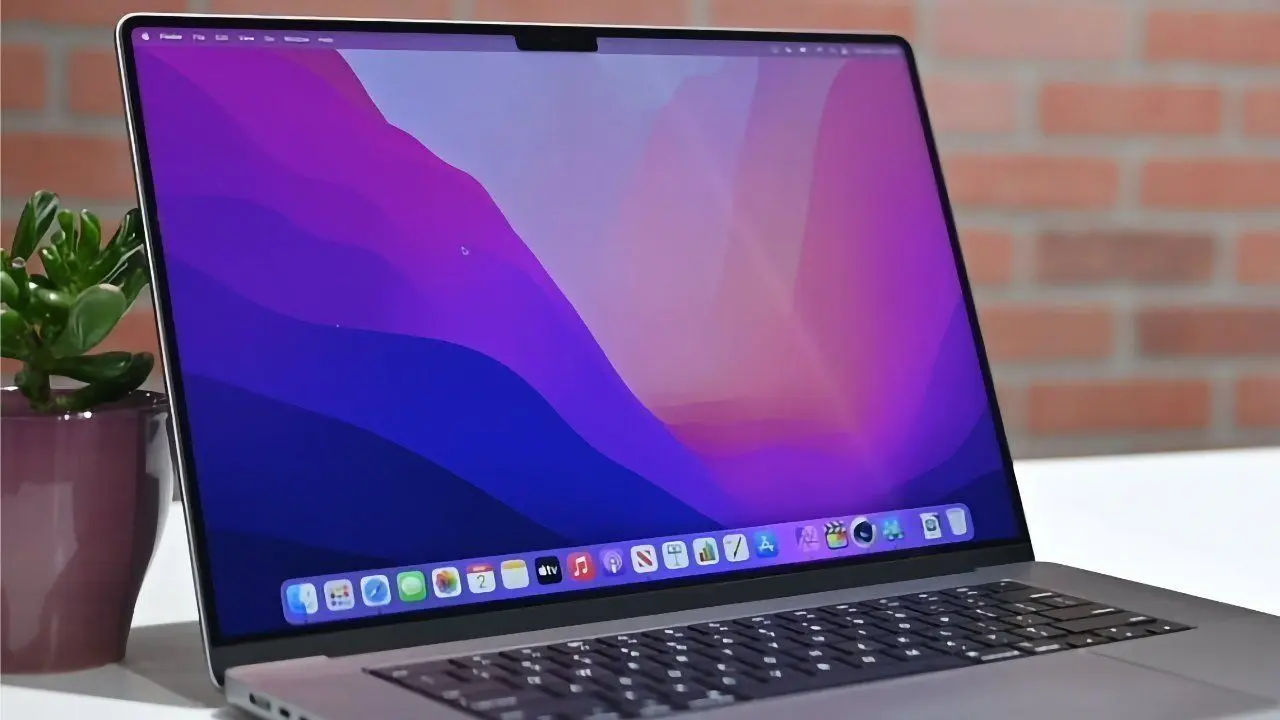
Source: AppleInsider
Implications for Apple's Custom Silicon Strategy
This chip segmentation strategy signals Apple's willingness to disrupt its own product cycles when technological priorities shift. The move raises questions about future pre-launch announcement patterns and whether Apple will maintain traditional annual update schedules for entry-level Macs versus professional models. The accelerated timeline for M7 development—arriving in "relatively quick succession" rather than the usual year-plus gap—suggests Apple perceives competitive pressure in AI capabilities
2
.The timing also affects anticipated products like the rumored "MacBook Ultra" with OLED display and touchscreen, previously expected in late 2026. With M7 Pro and Max chips delayed until late 2027, this device may either be postponed or launch with alternative chip configurations
1
. The roadmap shift comes immediately after Apple raised prices across all Macs and iPads, adding financial considerations for users planning upgrades1
.References
Summarized by

Navi
[2]
Related Stories
Apple fast-tracks AI-focused M7 chip for 2027, skips high-end M6 Pro and Max variants
Yesterday•Technology
Apple skips M6 Pro and Max chips to fast-track AI-focused M7 generation by six months
25 Jun 2026•Technology

Apple to skip M6 Pro and Max chips, fast-track AI-focused M7 lineup for premium Macs
Yesterday•Technology
Recent Highlights
1
Trump administration asks OpenAI to delay GPT-5.6 release over security concerns
Policy and Regulation

2
Anthropic faces AI export ban as Mythos reportedly breached NSA systems in hours
Policy and Regulation

3
OpenAI and Broadcom unveil Jalapeño chip to power next-generation AI inference at scale
Technology

Recent Highlights
Today's Top Stories









Don’t drown in AI news. We cut through the noise - filtering, ranking and summarizing the most important AI news, breakthroughs and research daily. Follow topics that matter to you and stay ahead.


