AI decodes complete Herculaneum scroll for first time, revealing lost texts from Vesuvius eruption


3 Sources
[1]
Ancient Roman scrolls destroyed by Mount Vesuvius digitally unrolled in full for first time
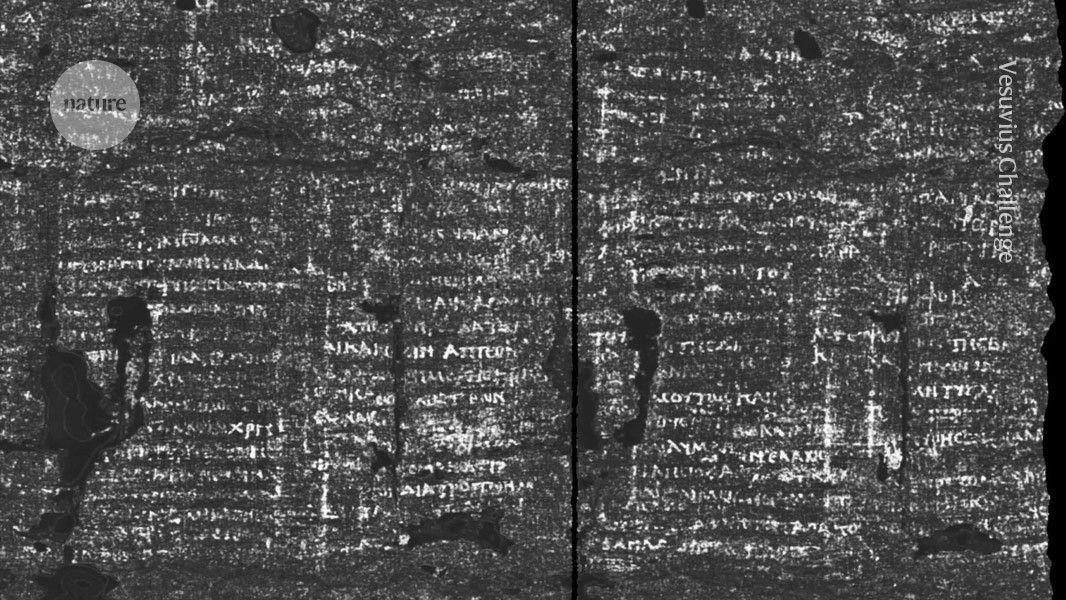
This Silicon Valley-backed venture is unraveling the mangled remains of scrolls ruined by the 79 C.E. eruption of Vesuvius that destroyed Herculaneum and Pompeii How do you read a book you can't open? That's precisely what Brent Seales, a professor at the University of Kentucky, has spent his career trying to figure out. And on Thursday, his life's work has reached a pinnacle: Seales, alongside a huge group of volunteers and scientists working as part of the Vesuvius Challenge, has helped developed technology to see inside books and scrolls we can't open without destroying them. At a press conference, Nat Friedman, one of the Challenge's main backers and former CEO of GitHub, unveiled several digitally unrolled scrolls from the ancient Roman town of Herculaneum, which was buried under lava by Mount Vesuvius in 79 AD. One of the scrolls, called PHerc 1667, can now be read in its entirety. "We were not only able to completely unroll this scroll, from end to end, but we were able to extract nearly all the text, and make it legible," Friedman said. The scroll has been digitally unwrapped using a technique pioneered by Seales called Volume Cartographer, which takes scans of a 3D manuscript, layer by layer, and then effectively flattens these into 2D images that can then be read. The scans are made by synchrotron scanners, which are massive particle accelerators that can beam high-power x-rays at the object, revealing its inner layers down to the atomic level. On supporting science journalism If you're enjoying this article, consider supporting our award-winning journalism by subscribing. By purchasing a subscription you are helping to ensure the future of impactful stories about the discoveries and ideas shaping our world today. What the Vesuvius Challenge has done is to take some two decades-worth of Seales' work and accelerate it -- in part by using artificial intelligence to help speed up and automate the work, and in part by getting a huge community of people to contribute to the Challenge. "AI has been a huge accelerator, and a huge accelerant, because the technique itself, we needed a breakthrough to amplify the way we could detect the ink inside these scans," explains Seale. "To go to scale, we needed a way to build a label set -- you know, here's ink, here's not ink -- much more effectively than doing things by hand." AI coding agents also mean the research team can try new techniques much faster than if they had to write all the code themselves, he adds. The achievement is remarkable considering the condition of the scroll: Called PHerc. 172, the scroll looks like a delicate piece of charred wood. It was among the hundreds of documents destroyed by the eruption of Mount Vesuvius, which obliterated Herculaneum and Pompeii, killing at least 1,500 people. As horrific as this disaster was, the volcanic ash also preserved everything in the towns where it lay, including the burnt scrolls. They were found inside a villa that has become known as the Villa dei Papiri, or Villa of the Papyrus. Some 400 of these papyrus scrolls remain intact, says Seales. And now, he and the Vesuvius Challenge can read them for the first time in nearly 2,000 years. "To restore these lost voices, I feel like I myself am finding mine," says Seales. Among the digitally unwrapped scrolls that the Challenge unveiled on Thursday is a previously unknown text by Philodemus, a leading Epicurean philosopher, called, "On the Gods, Booke Eight." In fact, scholars had no idea that Philodemus had written any volumes "On the Gods," let alone eight of them. Papyrologist Federica Nicolardi said on Thursday at the same event that the team has already identified a number of intriguing passages, including some on the nature of deities and providence. "These are no longer anonymous ancient books," she said. "Imagine being able to recover the titles of hundreds of still unopened scrolls. It would be like reconstructing the catalogue of an ancient library." The achievement comes some two years after the Vesuvius Challenge first announced that three volunteers, Luke Farritor, Youssef Nader and Julian Schilliger, had managed to clearly pick out the ink on one of the Herculaneum scrolls' layers of papyrus, making it legible by papyrologists for the first time. The manuscript, a treatise of Epicurean philosophy also likely written by Philodemus, was entirely unknown to scholars before the Challenge. Seales says that having the Silicon Valley-backed competition may seem risky or unfamiliar to other academics used to more traditional research funding structures. But he felt confident in all the work his team at the University of Kentucky had done before Friedman and the Challenge's co-founder, Daniel Gross, a tech investor who has led AI development at Apple, actually approached him. "I may not have taken that risk earlier in my career, but at the point where I'm at now, I felt that this was absolutely a really fun thing to try, and you know, it ended up being a home run," he says. "I think it can be a pattern for others who are in the right place in the right moment." Now, Seales and his team have scanned 45 scrolls. Already, papyrologists are deciphering new texts that indicate other possible authors in the Herculaneum collection, including one of the leaders of the Stoic philosophy school. For Seales, this feels like the moment where his work is effectively done -- and others can now take the lead on reconstructing the voices within these scrolls. "There's this deep-seated feeling of completion that I haven't had in a really long time, because Vesuvius has been looming over my life for two decades," Seales says. "We always go into our fields thinking that the field we go into is really the one we're going to change, right? But it turns out I'm changing the field of classical philology and papyrology, and I'm not any of those things," he says. "I've created a field of people who are like me ... I've created a community, and we're going to share this experience, so that feels really great." Seales is excited to take the technology and apply it to collections of photographic negatives from the birth of photography, such as by Eadweard Muybridge, whose 1878 "The Horse in Motion" is considered the first example of using photography to study a body in motion. These kinds of old negatives are often stored inside cans and are so fragile they can't be unrolled without destroying them, Seales says. "I think we never understand origins very well, right? Like, what were these guys really photographing on a bad day? What did they think they were just going to throw away? Sometimes that's the most interesting stuff."
[2]
Scientists decipher new secrets from ancient scrolls scorched by Vesuvius eruption: "Finally able to read them"
Kerry Breen is a news editor at CBSNews.com. A graduate of New York University's Arthur L. Carter School of Journalism, she previously worked at NBC News' TODAY Digital. She covers current events, breaking news and issues including substance use. A University of Kentucky project using artificial intelligence to help decode an ancient Roman mystery has led to a major discovery, researchers announced Thursday. In 79 A.D., the eruption of Mount Vesuvius buried the Roman city of Pompeii and the nearby town of Herculaneum. During a dig in Herculaneum in the 18th century, archaeologists found 1,800 papyrus scrolls in an intact ancient library, deep under the site of a villa that was destroyed by Vesuvius' eruption. But reading them was impossible: The scrolls are brittle and charred, and unravelling them turns them into ash. For centuries, researchers have worked to interpret the scrolls. Recent technology led to a breakthrough: A particle accelerator and AI were used to identify ink, even faint traces, allowing researchers to virtually unwrap the delicate scrolls. But interpreting the ancient language is another project entirely. In 2023, Brent Seales launched the Vesuvius Challenge, a global competition offering prize money for those who can help interpret the writing. Three college students became the first to extract words from a carbonized scroll in 2024. But they only interpreted about 5% of one scroll. The second phase of the challenge led to Thursday's major discovery. The University of Kentucky's Stanley and Karen Pigman School of Engineering, which leads the research in collaboration with the Biblioteca Nazionale di Napoli Vittorio Emanuele III in Naples, said that experts have virtually unwrapped one entire scroll, recovered more than 70 columns of text from another, identified two new books from ancient Rome, and recovered "sufficient text to support new critical scholarly editions." The virtually unwrapped scroll, PHerc. 1667, is one of the oldest in the collection, Nicolardi said. Now that it has been unrolled, efforts to determine the authorship of the paper is underway. One of the books revealed that the philosopher Philodemus wrote an eight-book series. Only one book had been previously known to exist. "For nearly two millennia, many of these texts have been physically preserved but intellectually inaccessible," Seales said in a news release. "Today -- after years of interdisciplinary work combining advanced imaging, artificial intelligence (AI), academic research and an innovation contest -- we are finally able to read them." The amount of text revealed means scholars can read the scrolls as complete arguments, rather than as fragments. Federica Nicolardi, an assistant professor in papyrology at the Università degli Studi di Napoli Federico II in Naples, said that marks a "transformational shift" for researchers. "Today, we are hearing voices that have been silent for 2,000 years," Seales said. "For the first time, we are uncovering and reading them -- but most importantly -- we are beginning to understand them." Still, more than 600 scrolls remain unopened and unread. Giorgio Angelotti, a project lead with the Vesuvius Challenge, said the effort is "ongoing" and that archaeologists need "everyone's help to read the scrolls." Seales said he believes the entire library can be deciphered. "This is no longer just about imaging or machine learning," Seales said. "Now we need experts who can read, edit and understand what they are saying."
[3]
AI helps recover complete text of Herculaneum scroll burnt by Mount Vesuvius
Researchers using artificial intelligence and advanced imaging said on Thursday they had achieved the first complete reading of a closed Herculaneum scroll burnt by the eruption of Mount Vesuvius nearly 2,000 years ago. The breakthrough marks a major step toward deciphering hundreds of ancient manuscripts found at Herculaneum, the Roman town destroyed along with Pompeii in the 79 CE disaster. Looking to speed up the scholarship, the Vesuvius Challenge, which is promoting new technologies to try to understand the carbonized text, said it would place all its data, code and models of the papyri online and offer a $1 million prize to the first person or team to read in full any other scroll. "Just a year ago it would have been crazy for any of us to believe that there would be a complete scroll read completely non-invasively with hundreds of columns of text," said Brent Seales, professor of computer science at the University of Kentucky and one of the founders of the project. "Today we have shown you that that is possible," he told a conference streamed from Naples. "I believe we're going to read every single one of the scrolls in the collection." Uncovered text explores ethics, art, human behavior The blackened, fragile scrolls cannot be physically opened without severe damage. Researchers have instead used high-resolution scans and computational techniques to "virtually unwrap" them and detect ink on the papyrus layers. So far, about 45 papyrus scrolls and scroll fragments have been scanned. More than 600 unopened scrolls remain, and large parts of the villa where they were discovered have yet to be excavated, raising the possibility that more could yet be found. The Vesuvius Challenge has already awarded $1.8 million in prizes for work linked to unmasking the Herculaneum texts, but Nat Friedman, a US technology executive and founding sponsor of the project, said new insight would lead to major advances. "We think it is possible to dramatically improve the algorithms that we have ... and we think that the ink detection techniques that we're using could probably be greatly advanced," he said, encouraging more computing experts to get involved. Among the new material presented on Thursday were 70 columns of text from "On Vices, Book 1," attributed to the Epicurean philosopher Philodemus. Nearly 1.5 meters of readable text across 20 columns was also recovered from a document dated to 200-300 BCE, the oldest Herculaneum scroll yet unwrapped, exploring ethics, arts and human behavior. New tech is 'transformative,' says lead researcher Federica Nicolardi, lead papyrologist for the Vesuvius Challenge, said new technologies were transformative. "Even with the most successful methods available ... to physically unwrap the scrolls and read them, one had to damage them. But with virtual unwrapping, we are no longer forced to choose between preserving and reading these extraordinary artifacts. We can do both," she said. Nicolardi said progress was snowballing, with researchers in the last 24 hours unwrapping the full length of one scroll, producing about 140 columns of new text. Until recently, they were only uncovering about 10% of columns, she added. "Literally last night, in front of Mount Vesuvius, something, or I should say everything, changed," she said.
Share
Copy Link
Researchers backed by Silicon Valley have achieved a breakthrough in reading ancient Roman scrolls carbonized by Mount Vesuvius nearly 2,000 years ago. Using artificial intelligence and advanced imaging, the Vesuvius Challenge team has digitally unrolled an entire scroll for the first time, recovering previously unknown philosophical texts by Philodemus and opening new possibilities for deciphering hundreds more unopened manuscripts.
AI Unlocks Ancient Voices Silent for Two Millennia
Researchers working with the Vesuvius Challenge announced Thursday they have achieved the first complete reading of a Herculaneum scroll destroyed by Mount Vesuvius in 79 CE, marking a transformative breakthrough in digital archaeology
1
. The ancient Roman scrolls, discovered in the 18th century within the Villa dei Papiri in Herculaneum, have remained unreadable for nearly 2,000 years because their carbonized, brittle condition makes physical unwrapping impossible without turning them to ash2
.
Source: Jerusalem Post
Brent Seales, a professor at the University of Kentucky who has dedicated his career to reading books that cannot be opened, unveiled the achievement alongside Nat Friedman, former CEO of GitHub and a main backer of the project
1
. "For nearly two millennia, many of these texts have been physically preserved but intellectually inaccessible," Seales said. "Today we are finally able to read them"2
.Virtual Unwrapping Technology Transforms Archaeological Research
The digitally unrolled scrolls were decoded using a pioneering technique called Volume Cartographer, developed by Seales over two decades
1
. This method takes scans of a 3D manuscript layer by layer using synchrotron x-rays from massive particle accelerators that can reveal inner layers down to the atomic level, then effectively flattens these into readable 2D images1
.
Source: Scientific American
Artificial intelligence has accelerated this painstaking work dramatically through AI-driven ink detection and AI-powered text extraction capabilities. "AI has been a huge accelerator because we needed a breakthrough to amplify the way we could detect the ink inside these scans," Seales explained
1
. AI coding agents now allow the research team to test new techniques much faster than writing code manually, while machine learning helps build label sets distinguishing ink from non-ink areas at scale.Federica Nicolardi, lead papyrologist for the Vesuvius Challenge, emphasized that advanced imaging techniques have created a "transformational shift" for researchers. "With virtual unwrapping, we are no longer forced to choose between preserving and reading these extraordinary artifacts. We can do both," she said
3
.Previously Unknown Philosophical Texts Emerge from Scrolls Destroyed by Mount Vesuvius
One scroll, designated PHerc. 1667, has now been read in its entirety from end to end
1
. The team also recovered more than 70 columns of text from another scroll containing "On Vices, Book 1," attributed to the Epicurean philosopher Philodemus3
. Perhaps most remarkably, researchers uncovered a previously unknown text by Philodemus called "On the Gods, Booke Eight." Scholars had no idea Philodemus had written any volumes on this topic, let alone eight books in a series1
.
Source: CBS
Nearly 1.5 meters of readable text across 20 columns was recovered from a document dated to 200-300 BCE, making it the oldest Herculaneum scroll yet unwrapped
3
. This ancient text explores ethics, arts and human behavior. Nicolardi noted that researchers have identified intriguing passages on the nature of deities and providence, adding that "these are no longer anonymous ancient books"1
.Related Stories



Silicon Valley Competition Accelerates Breakthrough
The Vesuvius Challenge, launched in 2023 by Seales with backing from Friedman and tech investor Daniel Gross, has already awarded $1.8 million in prizes for work linked to decoding the carbonized texts
3
. In 2024, three college students became the first to extract words from a scroll, though they only interpreted about 5% of one manuscript2
. The second phase of the challenge produced Thursday's major discovery.The project now offers a $1 million prize to the first person or team to read any other scroll in full, and has placed all data, code and models online to encourage broader participation
3
. "Just a year ago it would have been crazy for any of us to believe that there would be a complete scroll read completely non-invasively with hundreds of columns of text," Seales told a conference streamed from Naples3
.Hundreds More Scrolls Await Decoding
About 45 papyrus scrolls and fragments have been scanned so far from the collection of approximately 1,800 scrolls discovered during 18th-century excavations
2
. More than 600 unopened scrolls remain unread, and large portions of the villa where they were found have yet to be excavated, raising the possibility that additional manuscripts could still be discovered3
.Nicolardi reported that progress is accelerating rapidly. Researchers recently unwrapped the full length of one scroll in just 24 hours, producing about 140 columns of new text, compared to previously uncovering only about 10% of columns
3
. "Literally last night, in front of Mount Vesuvius, something, or I should say everything, changed," she said.Seales expressed confidence about the project's future scope: "I believe we're going to read every single one of the scrolls in the collection"
3
. However, he emphasized that the challenge is evolving beyond technology alone. "This is no longer just about imaging or machine learning. Now we need experts who can read, edit and understand what they are saying"2
.References
Summarized by

Navi
[1]
Related Stories
Recent Highlights
1
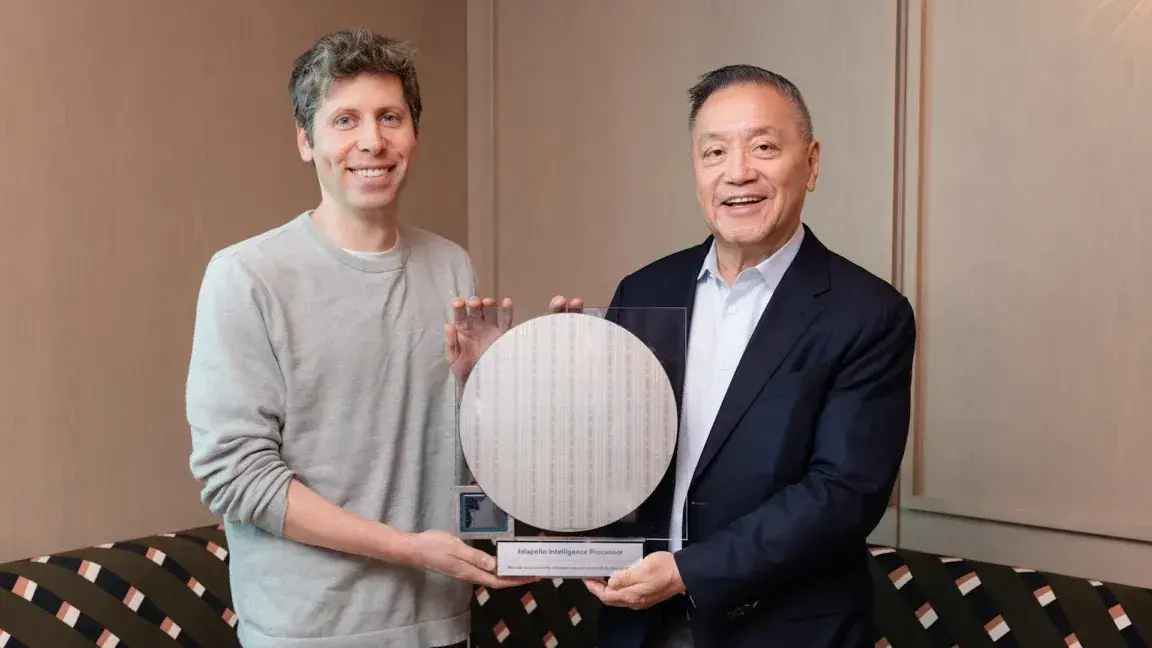
OpenAI and Broadcom unveil Jalapeño chip to power next-generation AI inference at scale
Technology
2
Anthropic faces AI export ban as Mythos reportedly breached NSA systems in hours
Policy and Regulation

3
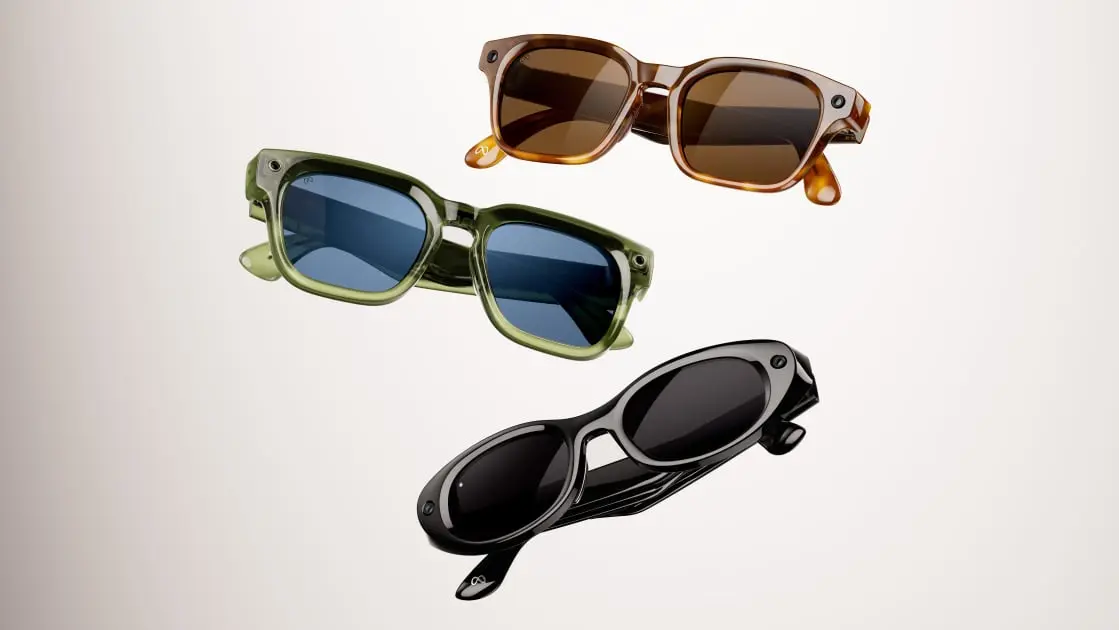
Meta launches AI-powered glasses at $299, ditching Ray-Ban to expand smart glasses market
Technology
Recent Highlights
Today's Top Stories





Don’t drown in AI news. We cut through the noise - filtering, ranking and summarizing the most important AI news, breakthroughs and research daily. Follow topics that matter to you and stay ahead.


