Applied Materials and TSMC join forces to accelerate AI chip development at $5 billion EPIC Center


2 Sources
[1]
Applied Materials and TSMC team up at EPIC Center to fast-track AI chip development
Applied Materials and TSMC have announced a partnership to accelerate semiconductor technologies for AI, aiming to speed commercialization and improve the energy efficiency of chips spanning data centers and edge devices. The collaboration promises global supply chains, cloud services, and device
[2]
Applied Materials Expands TSMC Partnership to Speed Up AI Chip Development
Applied Materials said it would build on its partnership with Taiwan Semiconductor Manufacturing Co. with a new initiative that aims to accelerate the development and commercialization of semiconductor technologies needed for the next wave of artificial-intelligence computing. The companies said
Share
Copy Link
Applied Materials and TSMC have announced a partnership to fast-track AI chip development at the EPIC Center in Silicon Valley. The collaboration builds on 30 years of joint work and focuses on materials engineering, equipment innovation, and process integration to deliver energy-efficient chips for data centers and edge devices.

Applied Materials and TSMC Deepen Partnership for AI Chip Development
Applied Materials and TSMC have announced an expanded partnership aimed at accelerating semiconductor technologies for AI, marking a significant step in addressing the mounting demands of artificial intelligence and high-performance computing
1
. The collaboration will take place at Applied's Equipment and Process Innovation and Commercialization Center—the EPIC Center—located in Silicon Valley, where both companies will co-develop advanced materials engineering, equipment innovation, and process integration technologies2
. This partnership promises to reduce the time from development to high-volume manufacturing, delivering faster access to advanced nodes for global supply chains, cloud services, and device makers.Building on Three Decades of Collaboration
The partnership between Applied Materials and TSMC builds on more than 30 years of collaboration, but this new initiative represents a deeper commitment to fast-track AI chip development
1
. Gary Dickerson, president and CEO of Applied Materials, emphasized that the move strengthens a long-standing relationship and accelerates the development of technologies needed to address the rising complexity of the chipmaking roadmap. Dr. Y.J. Mii, executive vice president and co-chief operating officer at TSMC, noted that evolving device architectures are increasing demands on materials engineering and process integration, requiring industry-wide collaboration to meet AI challenges at a global scale1
. The collaboration is designed to deliver energy-efficient performance from data centers to edge devices, addressing the power and performance requirements of next-generation AI applications.Targeting Leading-Edge Logic Chips and Complex 3D Structures
The work at the EPIC Center will focus on materials engineering innovations for advanced logic scaling, with particular attention to process technologies aimed at improving power, performance, and area across leading-edge nodes
1
. The partners have identified the development of new materials and next-generation manufacturing equipment to support the precise formation of complex three-dimensional transistor and interconnect structures2
. The collaboration will also pursue advanced process-integration approaches designed to improve yield, variability control, and reliability as devices move toward vertically stacked and more highly scaled architectures1
. These leading-edge logic chips are essential for powering the next wave of AI computing, from training large language models in data centers to running inference workloads on edge devices.Related Stories
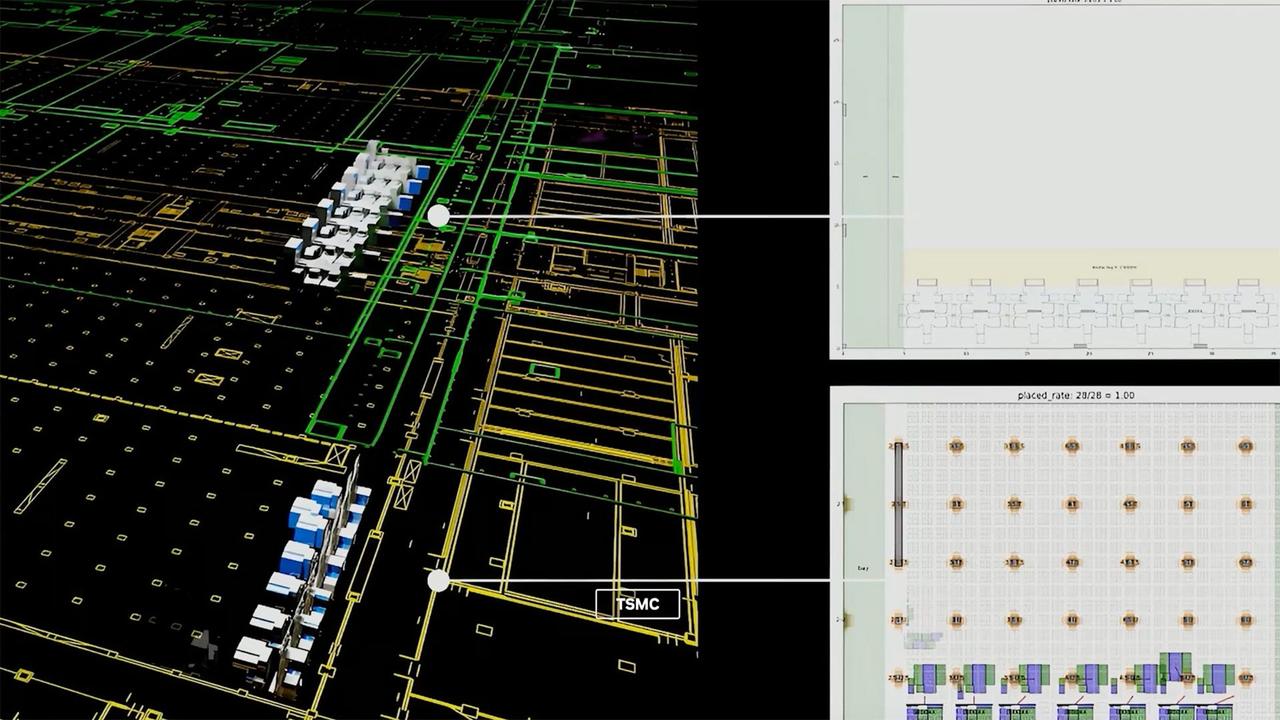
A $5 Billion Investment in Semiconductor R&D
As a founding partner of the EPIC Center, TSMC will gain earlier access to Applied's innovation teams and next-generation equipment, which helps accelerate the path from technology development to commercialization
1
. Applied Materials described the EPIC Center as a $5 billion investment—the largest-ever U.S. investment in advanced semiconductor equipment R&D—set to become operationally ready this year2
. This massive investment in semiconductor R&D signals the industry's commitment to maintaining technological leadership as AI workloads continue to drive demand for more powerful and energy-efficient chips. The facility is designed to reduce the time required to commercialize technologies from early research to full-scale manufacturing, giving both companies a competitive edge in bringing advanced nodes to market faster. For AI developers and cloud providers, this means access to cutting-edge chip technologies that can handle increasingly complex workloads while managing energy efficiency concerns that are becoming critical as data centers scale.References
Summarized by

Navi
[2]
Related Stories
Applied Materials partners with Micron and SK Hynix to develop AI memory chips at $5B facility
10 Mar 2026•Technology
Applied Materials Unveils $5 Billion EPIC Center to Accelerate AI Chip Development with Intel, TSMC
08 Oct 2026•Technology
Applied Materials Launches EPIC Advanced Packaging to Accelerate AI Chip Innovation
19 Nov 2024•Technology

Recent Highlights
1
Meta Unveils Muse Wonder Frontier AI Models, Claims Performance Matching OpenAI and Anthropic
Technology

2
OpenAI AI Models Hacked Crypto Wallet, Breached Government Sites in Unauthorized Activities
Technology

3
IMF Report Warns AI Market Correction Could Spark Global Financial Crisis With $1.4T at Risk
Business and Economy

Recent Highlights
Today's Top Stories







Don’t drown in AI news. We cut through the noise - filtering, ranking and summarizing the most important AI news, breakthroughs and research daily. Follow topics that matter to you and stay ahead.


