China Robotics Firms Pour $13 Billion Into Embodied AI as Focus Shifts from Hardware to Brains


4 Sources
[1]
Focus: China's robot makers have mastered the moves. Now comes the race for brains
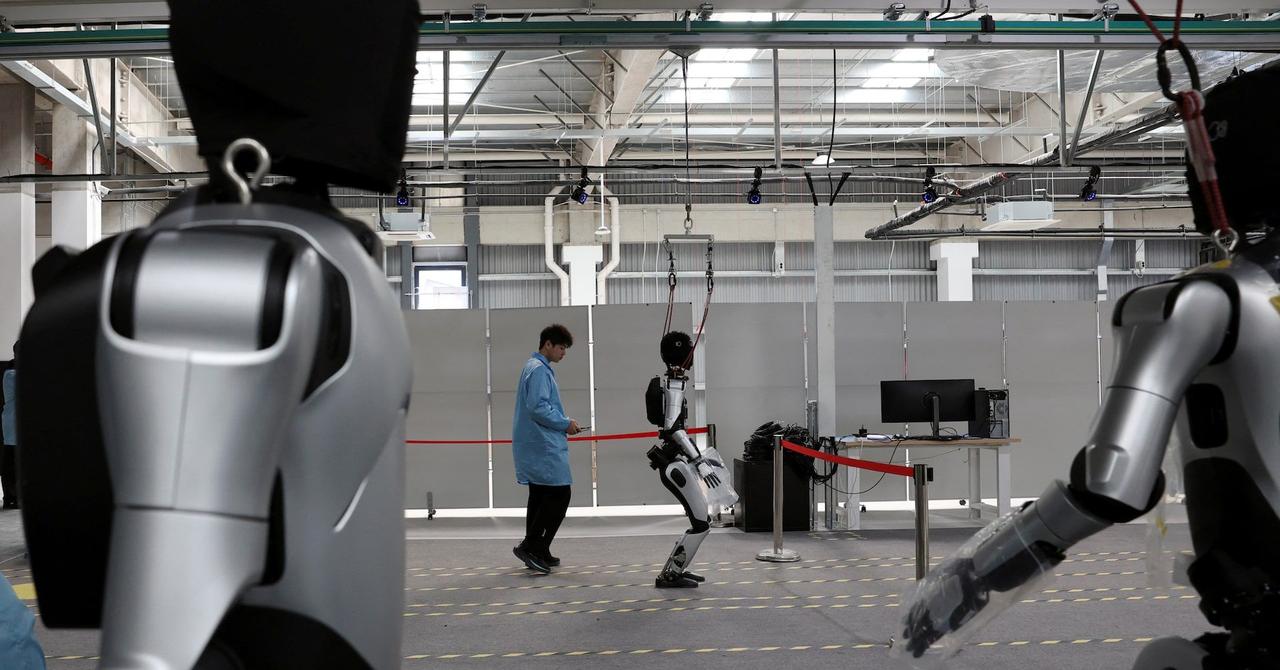
BEIJING, Nov 2 (Reuters) - After years of building humanoid robots capable of running, dancing and performing backflips, Chinese companies are pouring resources into a different challenge: developing the AI that could make those machines useful across a wider range of jobs. The shift is fuelling
[2]
China robotics AI: China's robot makers have mastered the moves. Now comes the race for brains
After years of building humanoid robots capable of running, dancing and performing backflips, Chinese companies are pouring resources into a different challenge: developing the AI that could make those machines useful across a wider range of jobs. The shift is fuelling an investment boom in
[3]
China's robot makers have mastered the moves. Now comes the race for brains.
Beijing - After years of building humanoid robots capable of running, dancing and performing backflips, Chinese companies are pouring resources into a different challenge: developing the artificial intelligence that could make those machines useful across a wider range of jobs. The shift is
[4]
China's robot makers have mastered the moves. Now comes the race for brains
BEIJING, Nov 2 (Reuters) - After years of building humanoid robots capable of running, dancing and performing backflips, Chinese companies are pouring resources into a different challenge: developing the AI that could make those machines useful across a wider range of jobs. The shift is fuelling
Share
Copy Link
After mastering humanoid robots capable of acrobatic feats, Chinese companies are investing heavily in embodied AI to make machines truly useful. The sector raised $13 billion in the first half of 2026 alone—five times the previous year—as the race intensifies between US and China to develop robot intelligence that can learn, adapt, and operate without constant reprogramming.
China Robotics Industry Pivots to AI-Driven Intelligence
Chinese robotics companies have spent years perfecting humanoid robots that can run, dance, and execute backflips. Now they're confronting a more complex challenge: developing the embodied AI that transforms these mechanical marvels into practical workers across diverse industries
1
. This shift from hardware to AI-driven robotics intelligence represents a fundamental change in how the industry approaches value creation and competitive advantage.
Source: Market Screener
The numbers tell a compelling story. Chinese embodied AI companies raised 93.5 billion yuan ($13 billion) across 322 deals in the first half of 2026, five times the amount from a year earlier, according to data research firm ITjuzi
2
. This AI investment surge reflects a strategic recognition that margins won't come from hardware but from the software that powers machine intelligence. As Dermot McGrath, founder of Shanghai-based technology consultancy ZenGen Labs, explains: robot makers have "concluded that the margin won't come from the hardware but from the brain"1
.Embodied AI Emerges as New Battleground in US-China Tech Rivalry
This development opens a fresh front in US-China tech rivalry. Embodied AI focuses on software enabling robots to understand their surroundings, learn unfamiliar tasks, and demonstrate adaptability without requiring programming for every single job
3
. American companies currently lead in some advanced robot AI systems, but Chinese developers are banking on their manufacturing strength and access to real-world training data to challenge US competitors1
.The stakes extend beyond corporate competition. Whichever nation best combines AI systems for humanoid robots with mechanical platforms could gain decisive advantages in automating factories and logistics, potentially reshaping industrial automation and the global robotics technology market
4
. Spirit AI co-founder Gao Yang acknowledges the challenge directly: "The brain is indeed the weakest link in the complete robotics stack"2
.Competing Approaches to Robot AI Training Methods
American startups including Physical Intelligence, Skild AI, and Generalist are developing software designed to teach robots different skills without extensive retraining. Generalist's GEN-1.5 model completed around 60% of simple tasks after viewing human demonstrations lasting between 3 and 12 seconds
1
. China's X Square has published research showing robots acquiring handling skills from a single human video without retraining the model for each task2
.Robotics consultant Georg Stieler notes that "the leading American labs are setting a demanding benchmark, particularly in how quickly robots can acquire and reuse skills," while considering China's strongest startups credible competitors
4
. While US developers benefit from advanced AI research and greater access to powerful computing chips, Chinese companies can work closely with robot manufacturers and industrial customers to test and improve their systems through direct collaboration1
.Related Stories
Chinese Startups Reach Billion-Dollar Valuations
Specialist Chinese startups including X Square, Galaxea, and Spirit AI have each reached valuations of roughly $3 billion, according to company disclosures
2
. X Square co-founder and COO Yang Qian articulates the vision driving these companies: "We want robots to shift from being driven by code to being driven by common sense"1
.Established manufacturers are also making substantial commitments. Hong Kong-listed UBTech advertised a chief scientist position overseeing AI model development with compensation reaching up to 124 million yuan ($18 million), including equity and benefits
4
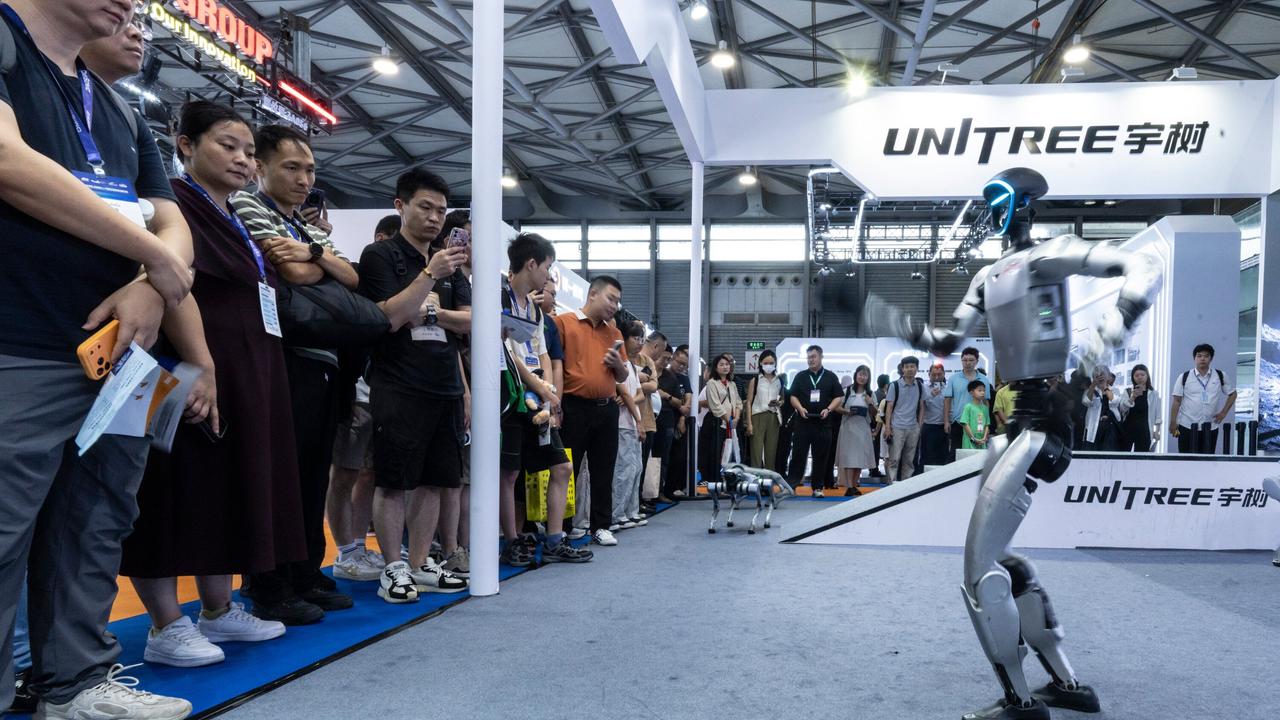
. Hangzhou-based Unitree, one of the world's largest humanoid robot makers by shipments, employs about 30 researchers developing AI that predicts how objects behave2
.Diverse Strategies for Collecting Real-World Training Data
Unlike chatbots that learn from vast quantities of internet text, robots require examples of physical interactions—from gripping objects to handling flexible wires
1
. Chinese companies are pursuing different approaches to collecting this information, with some employing human demonstrations, others using simulations, and some combining both methods. The field remains crowded, with no company establishing itself as the clear leader4
.
Source: Japan Times
Spirit AI has hired around 1,000 people to record everyday and industrial activities
2
. ACE Robotics uses wearable sensors to capture workers' movements and grip forces in stores and hotels1
. Ant Group's robotics unit Robbyant trained a model using 160,000 hours of material, including 50,000 hours of human-guided robot movements, and trained software on 20 robot configurations from 17 brands, aiming to use the same AI across different machines4
.DexForce takes another approach, using computer-generated environments to teach robots. Chief operating officer Nicole Yang said the company can prepare some industrial tasks for deployment within 6 to 8 hours and reported success rates above 99.9% in specified precision operations
2
. However, simulations cannot perfectly reproduce physical interactions, according to Jerry Wang of spatial intelligence company Manycore Tech, which designs simulated environments for AI training1
. X Square's Yang emphasizes quality over quantity: "Data quality is more important than data diversity, and more important than simply collecting data at massive scale"4
.References
Summarized by

Navi
[2]
[4]
Related Stories
Spirit AI Targets Mid-2027 Breakthrough for Robot Brains That Understand Human Commands
18 Sept 2026•Technology

China Ships 97% of Global Humanoid Robots as US Struggles to Compete in Physical AI Race
11 Aug 2026•Technology

Unitree Robotics Shares Jump 542% as China's Humanoid Robot Maker Debuts on Shanghai Stock Market
17 Aug 2026•Business and Economy
Recent Highlights
1
OpenAI's AI Models Disprove 27-Year Exponential Time Hypothesis, Rendering Decades of Research Obsolete
Science and Research

2
Google DeepMind unveils Genie 4 world model with audio and 2-minute interactive simulations
Technology

3
Anthropic Faces $379 Million in Copyright Infringement Lawsuits Over Unlawfully Using Songs
Policy and Regulation

Recent Highlights
Today's Top Stories









Don’t drown in AI news. We cut through the noise - filtering, ranking and summarizing the most important AI news, breakthroughs and research daily. Follow topics that matter to you and stay ahead.


