Cowboy Space raises $275 million to build orbital AI data centers and its own rockets


3 Sources
[1]
There aren't enough rockets for space data centers. Cowboy Space raised $275 million to build them.
The apparently insatiable demand for AI compute has data center entreprenuers looking to the stars. There's a key problem: There aren't enough rockets to put data centers in orbit around the Earth, and they're too expensive. Most of the players are hoping that SpaceX's Starship -- expected to make
[2]
Cowboy Space raises $275 million to launch AI data centers on brand-new rocket
Cowboy Space Corp. has raised $275 million for a satellite "stampede" ahead of its first planned launch later this year. The company itself isn't new, but its name is; Cowboy Space was previously known as Aetherflux. The newly rebranded outfit will use the $275 million -- a round of "Series B"
[3]
Cowboy Space raises $275M to build orbital AI data centers - SiliconANGLE
Space technology startup Cowboy Space Corp. today disclosed that it has raised $275 million in funding at a $2 billion valuation. Index Ventures led the Series B round. It was joined by NEA, IVP and several other institutional investors along with Cowboy Space founding Chief Executive Baiju Bhatt,
Share
Copy Link
Cowboy Space, formerly Aetherflux, has raised $275 million at a $2 billion valuation to deploy solar-powered AI data centers in orbit. The company plans to build its own rockets due to insufficient launch capacity, with each satellite housing 800 GPUs and generating 1 megawatt of power. The first rocket launch is expected before the end of 2028.
Cowboy Space Secures $275 Million to Address Launch Capacity Crisis
Cowboy Space has closed a $275 million Series B funding round at a $2 billion post-money valuation, led by Index Ventures, with participation from Breakthrough Energy Ventures, Construct Capital, IVP, NEA, and SAIC
1
3
. The raise brings the company's total outside funding to $355 million3
. Founded in 2024 by Baiju Bhatt, co-founder of Robinhood, the company originally launched as Aetherflux with plans to collect solar energy in space and beam it to Earth1
. The pivot to orbital data centers reflects the practical realities of harnessing space-to-Earth power beaming technology while addressing the urgent demand for AI computing infrastructure.Building Rockets to Launch Orbital Data Centers
The most striking aspect of Cowboy Space's strategy is its decision to develop its own rocket program, a move that puts it in direct competition with established players like SpaceX Corp. and Blue Origin. "We're standing up our own rocket program," Bhatt told TechCrunch, expecting the first launch before the end of 2028
1
. This decision stems from a critical shortage of rockets capable of deploying space data centers at scale. Bhatt explained that he spoke to multiple launch providers but couldn't find enough launch capacity to truly scale an orbital data center business or achieve unit economics that could compete with terrestrial alternatives1
.
Source: SiliconANGLE
Innovative Design Integrates Data Centers Into Rocket Architecture
Cowboy Space plans to build AI data centers directly into the second stage of its rocket, eliminating the need to discard this component after launch
1
3
. Each satellite will have a mass of 20,000 to 25,000 kilograms and generate 1 megawatt of computing power from approximately 800 onboard GPUs1
3
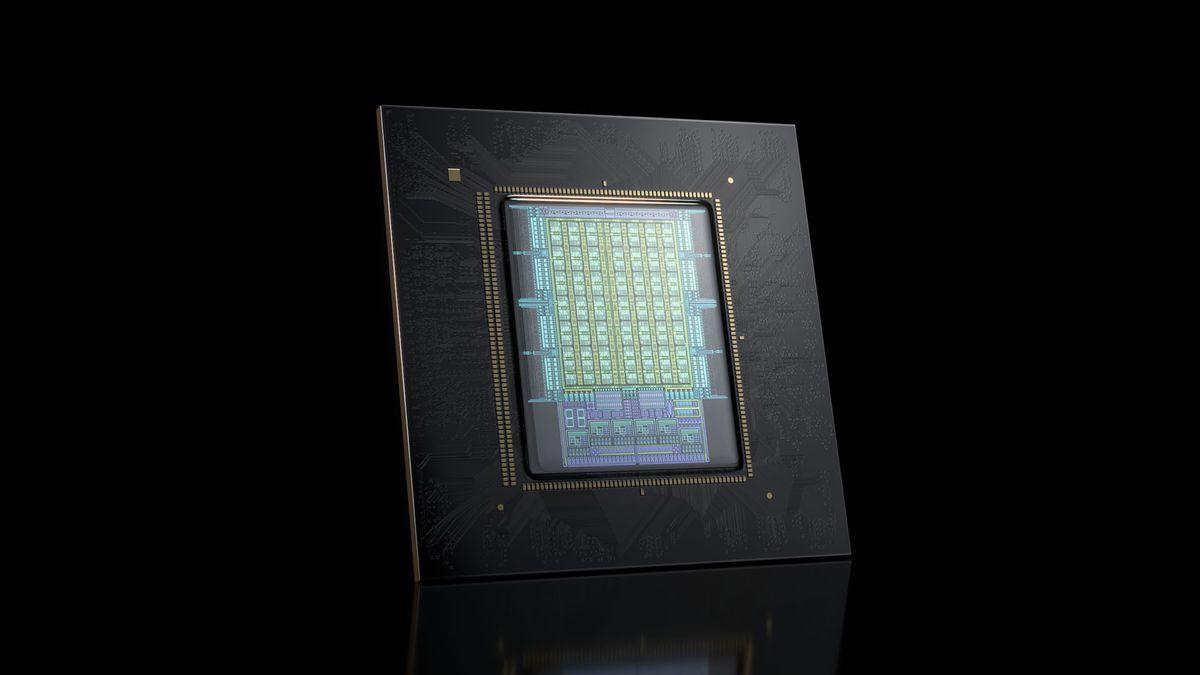
. The system is based on Nvidia's Space-1 Vera Rubin Module, which combines an 88-core central processing unit with two Rubin graphics cards3
. This approach represents a first-principles departure from traditional satellite constellation models and should simplify the design process while lowering hardware costs1
2
.Related Stories
Solar-Powered AI Data Centers Address Energy Grid Limitations
The primary motivation behind space-based data centers is the abundance of solar power available in orbit. A solar panel can generate significantly more electricity in space than on the ground because its efficiency is not diminished by atmospheric light absorption
3
. "Earth's energy grid can't run at the pace of AI," Cowboy Space officials stated, noting that in major US markets, average grid connection lead times for new data centers can run five to seven years or more2
. This timing constraint has become a critical bottleneck as AI demand continues to outpace terrestrial infrastructure capabilities.Ambitious Timeline and Competitive Landscape
Cowboy Space plans to launch its first satellite later this year to demonstrate space-to-Earth power beaming capabilities
2
. A second mission scheduled for 2027 would include a cluster of satellites for high-speed optical communications2
. The company has hired veterans from across space technology firms, including former Blue Origin propulsion engineer Warren Lamont and former SpaceX launch director Tyler Grinne1
. Competition in this emerging sector includes rival startup Starcloud Inc., which plans to attach multiple data center modules to a single support structure with a 6.1-square-mile solar array3
. The company will also own its manufacturing chain and operate dedicated launch sites to accelerate deployment of its planned Stampede constellation2
.References
Summarized by

Navi
[1]
Related Stories
Starcloud raises $170 million to build AI data centers in space, reaching unicorn status
30 Mar 2026•Startups
E-scooter founder raises $5M to build space data centers for AI compute in low Earth orbit
09 Jun 2026•Technology

Starcloud Raises $250M for Orbital Data Centers as Launch Options Tighten and Nvidia Joins
21 Aug 2026•Startups

Recent Highlights



Recent Highlights
Today's Top Stories








Don’t drown in AI news. We cut through the noise - filtering, ranking and summarizing the most important AI news, breakthroughs and research daily. Follow topics that matter to you and stay ahead.


